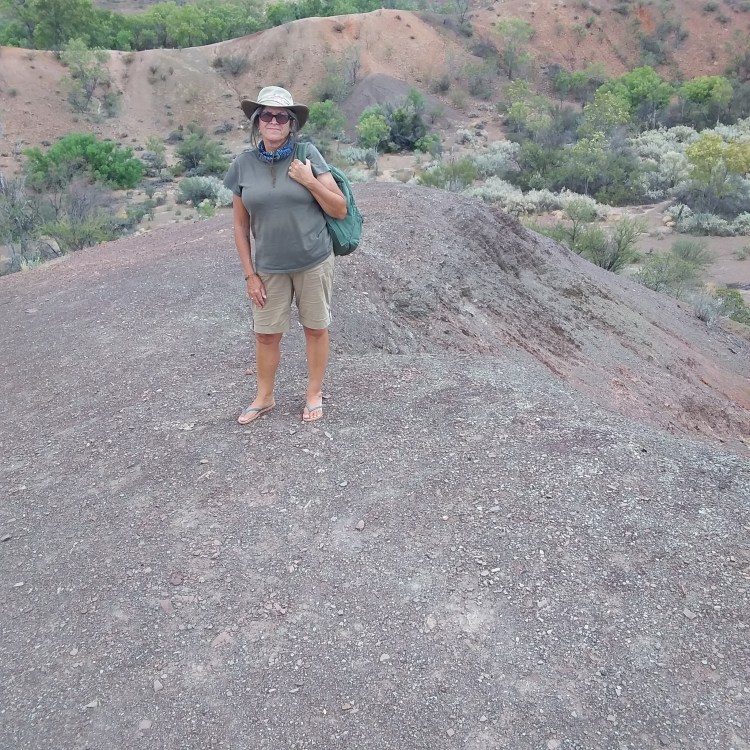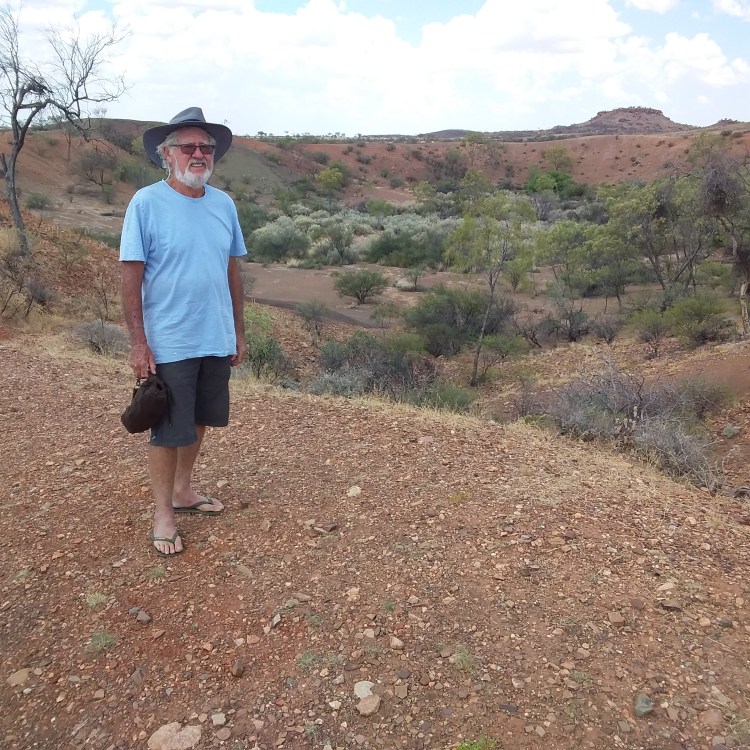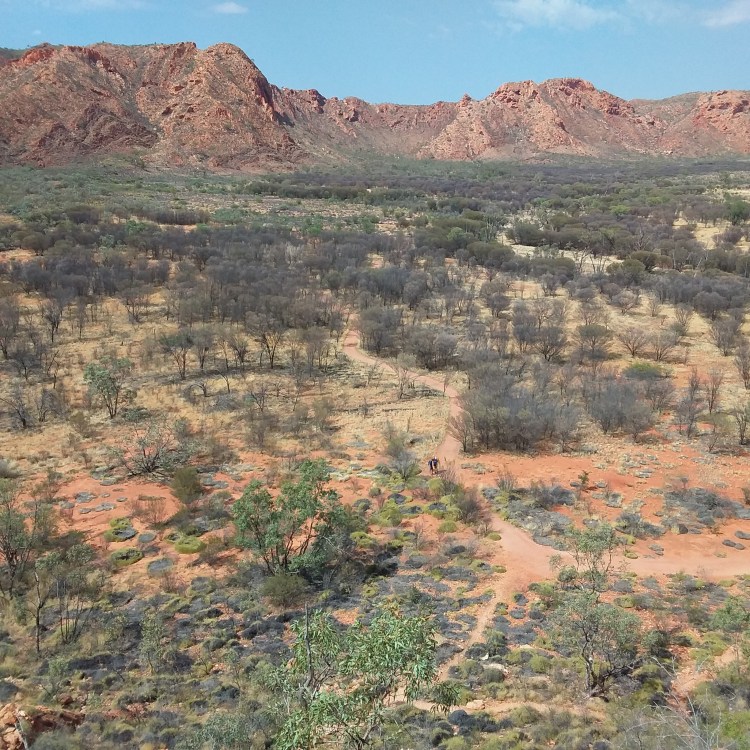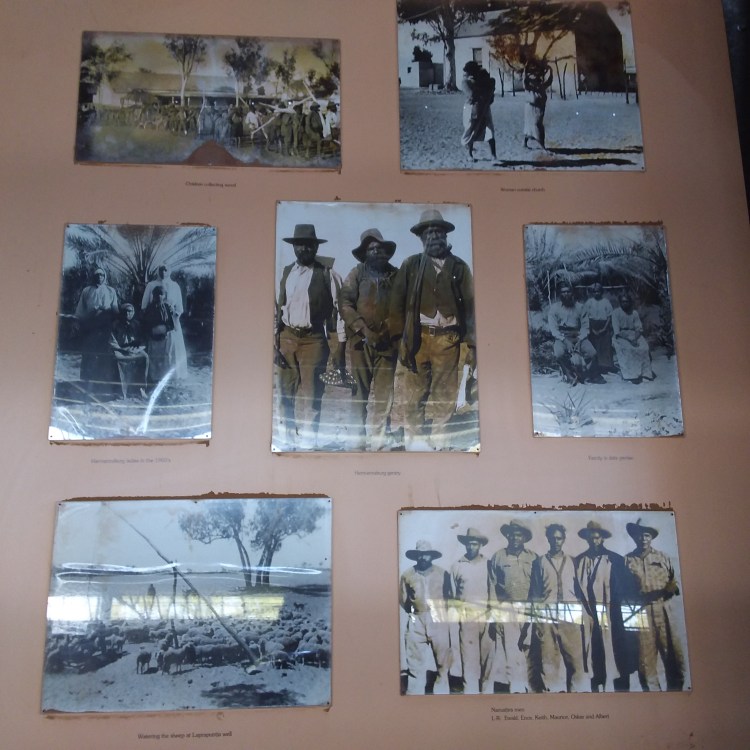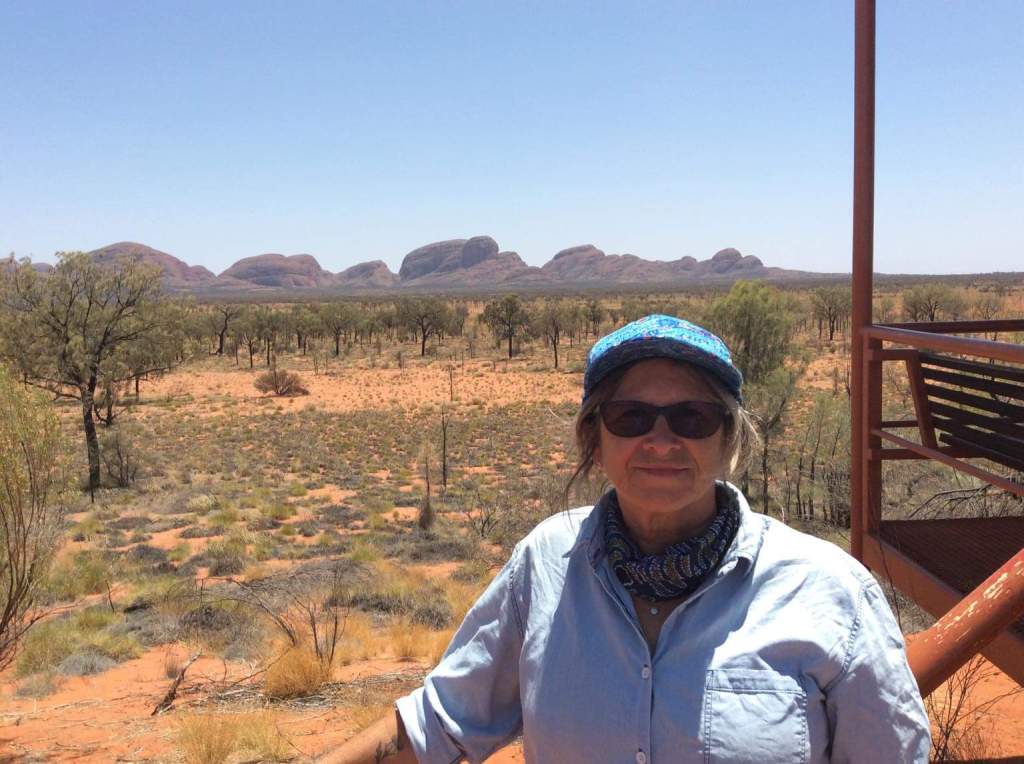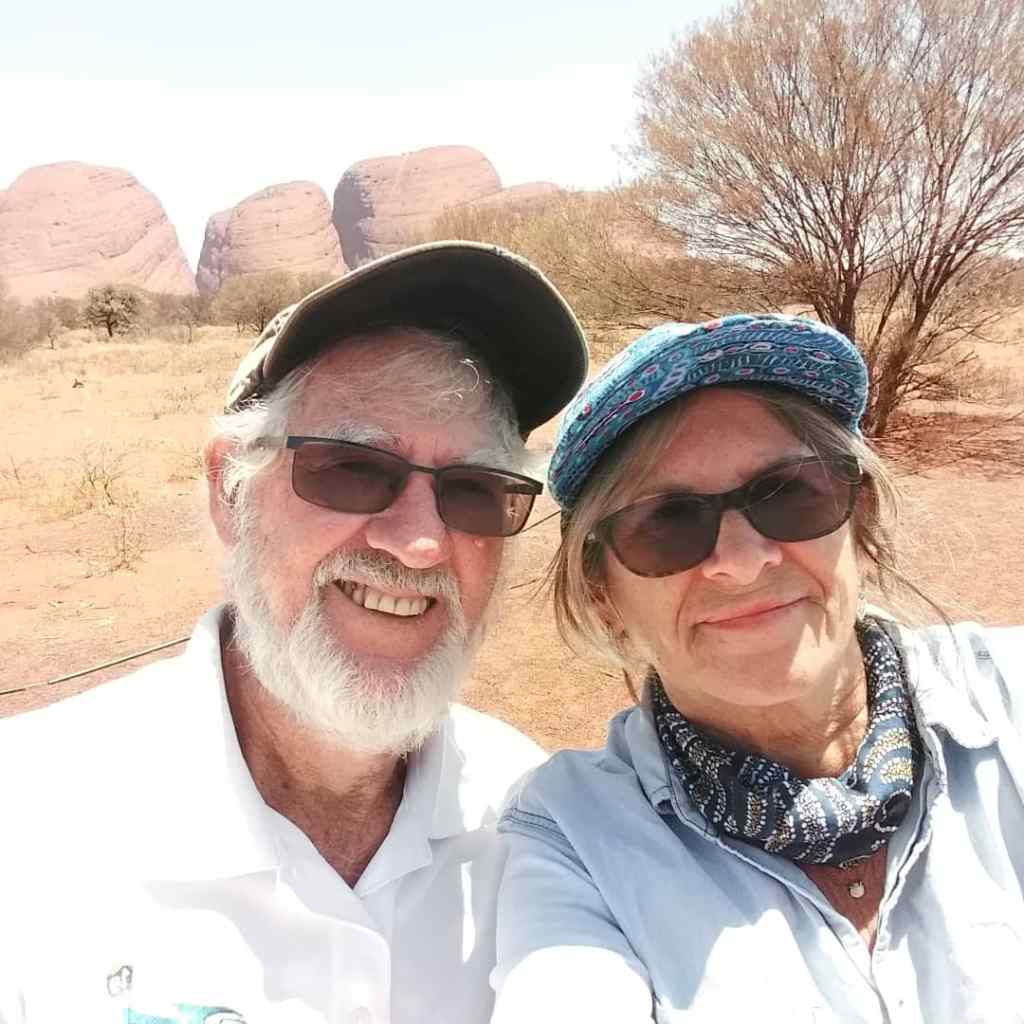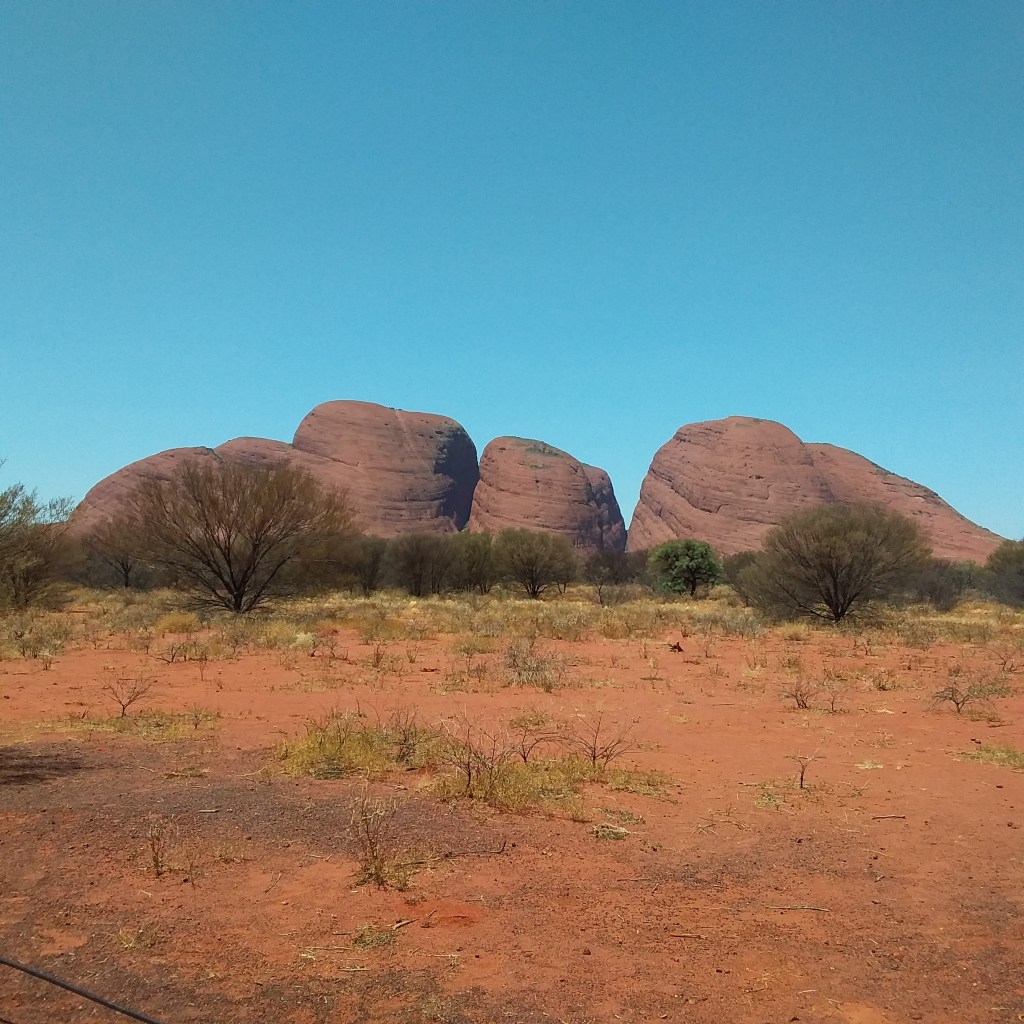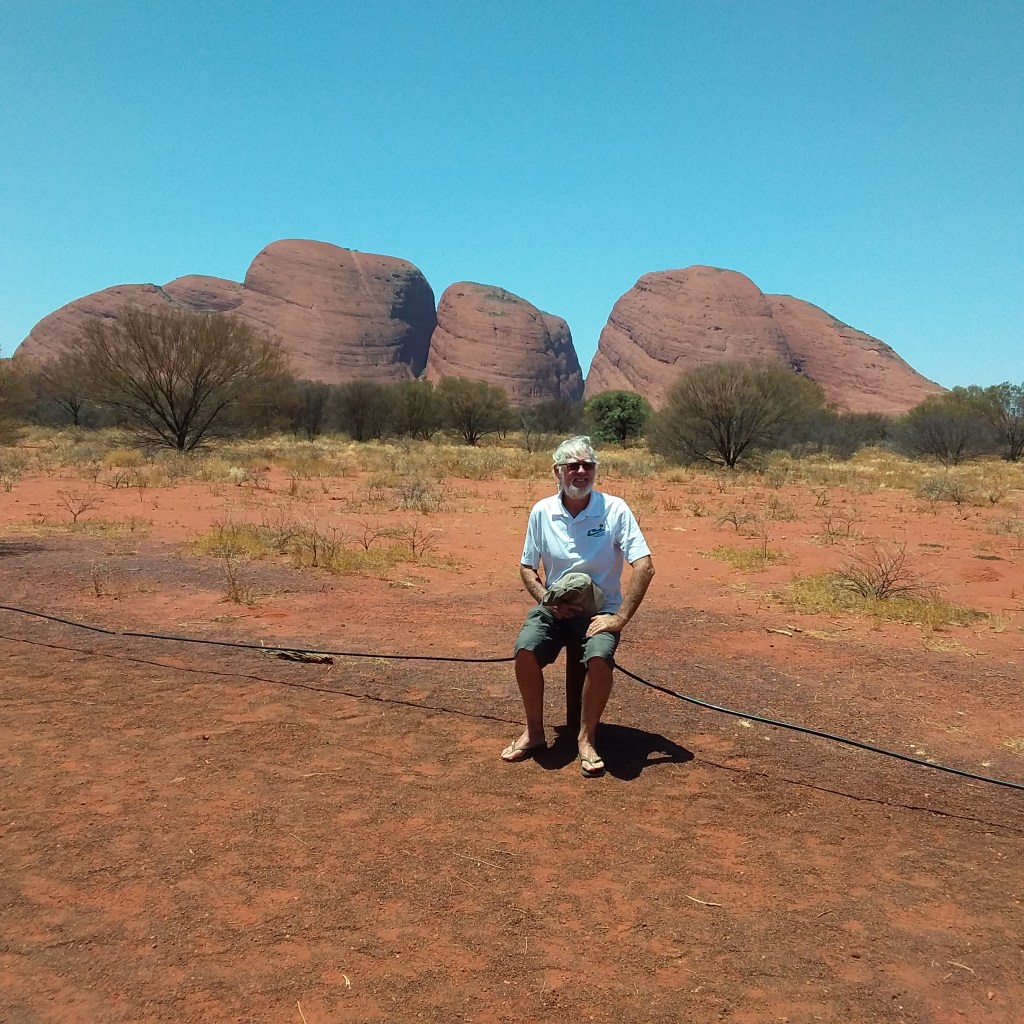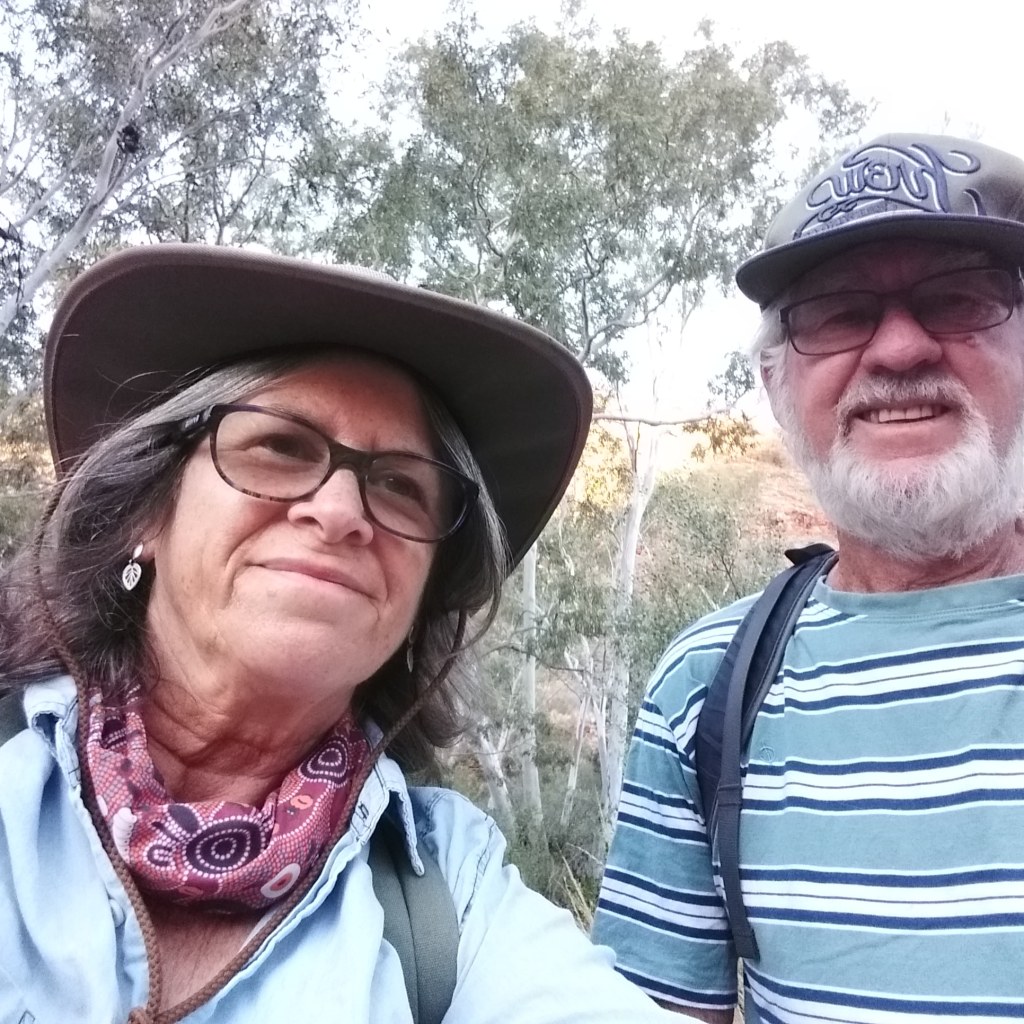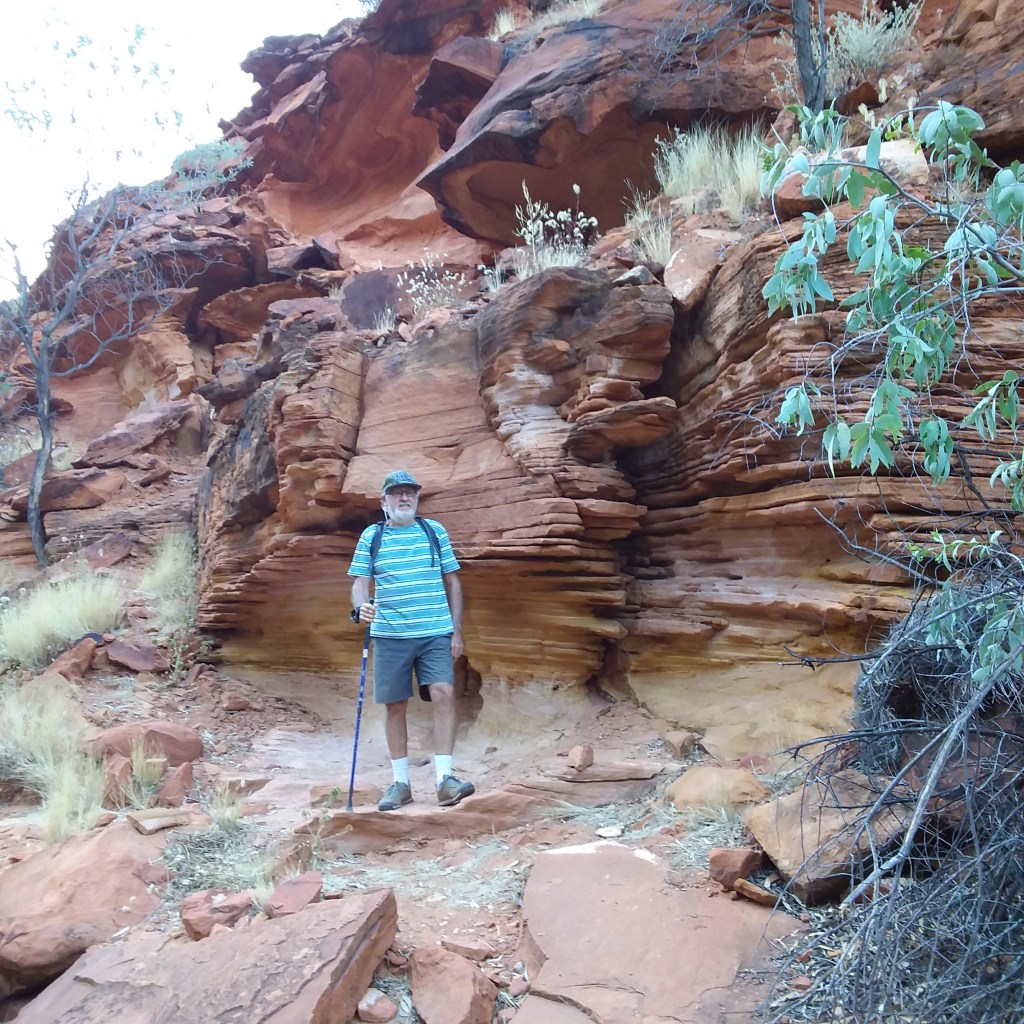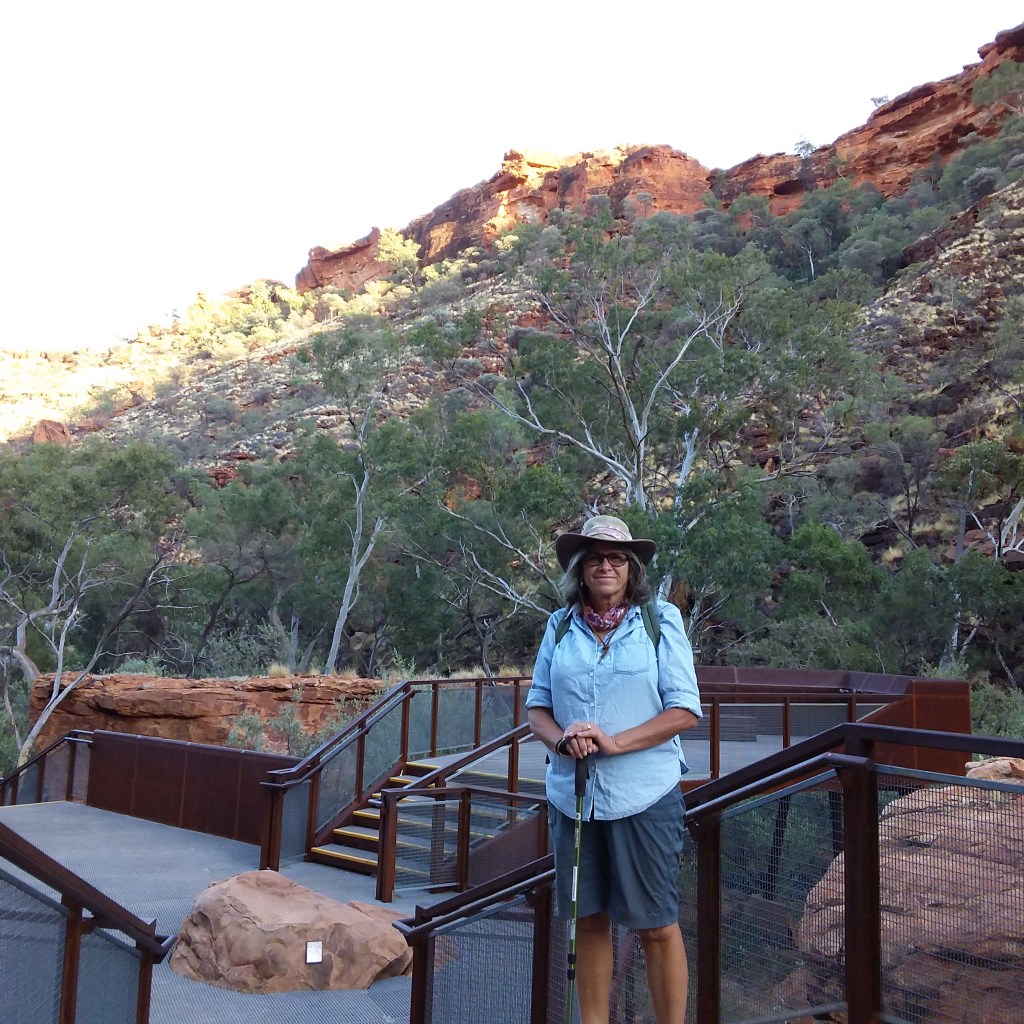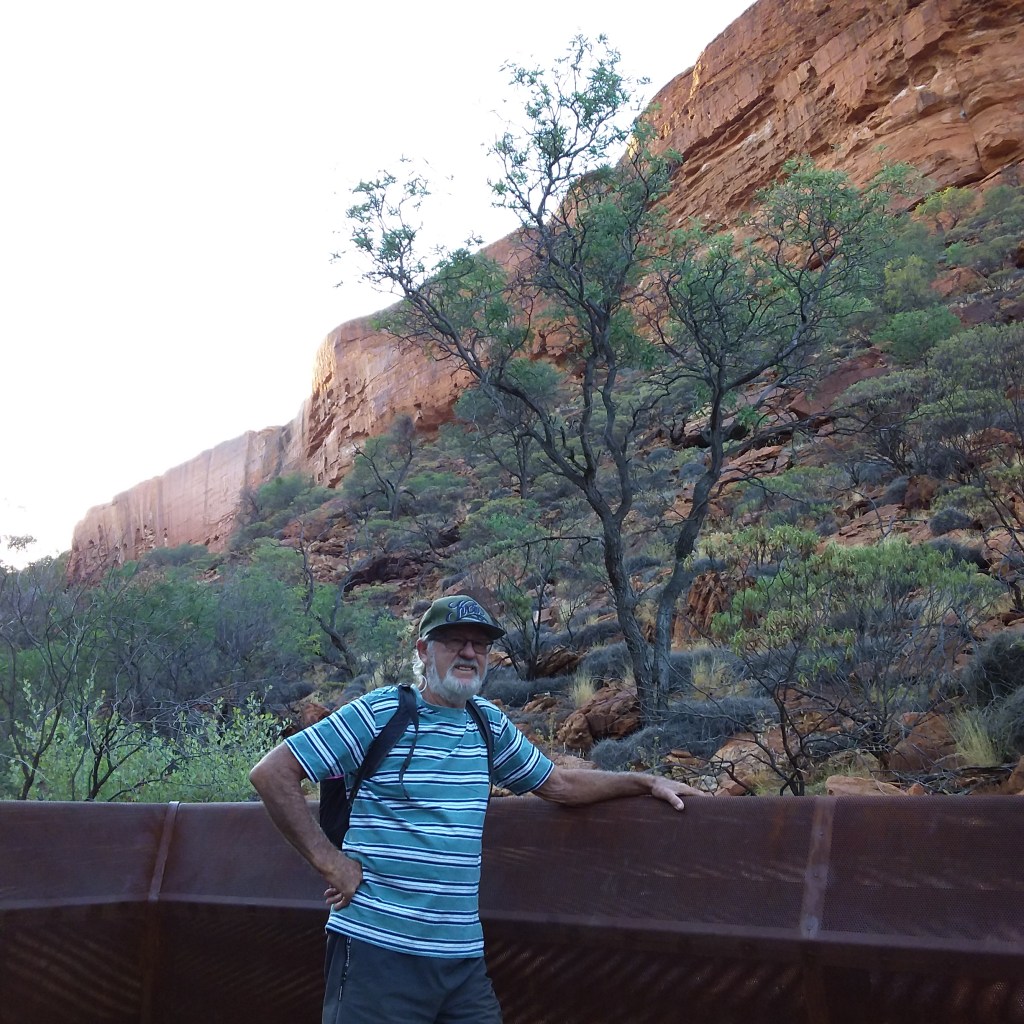
King Ash Bay and a modern day drover!

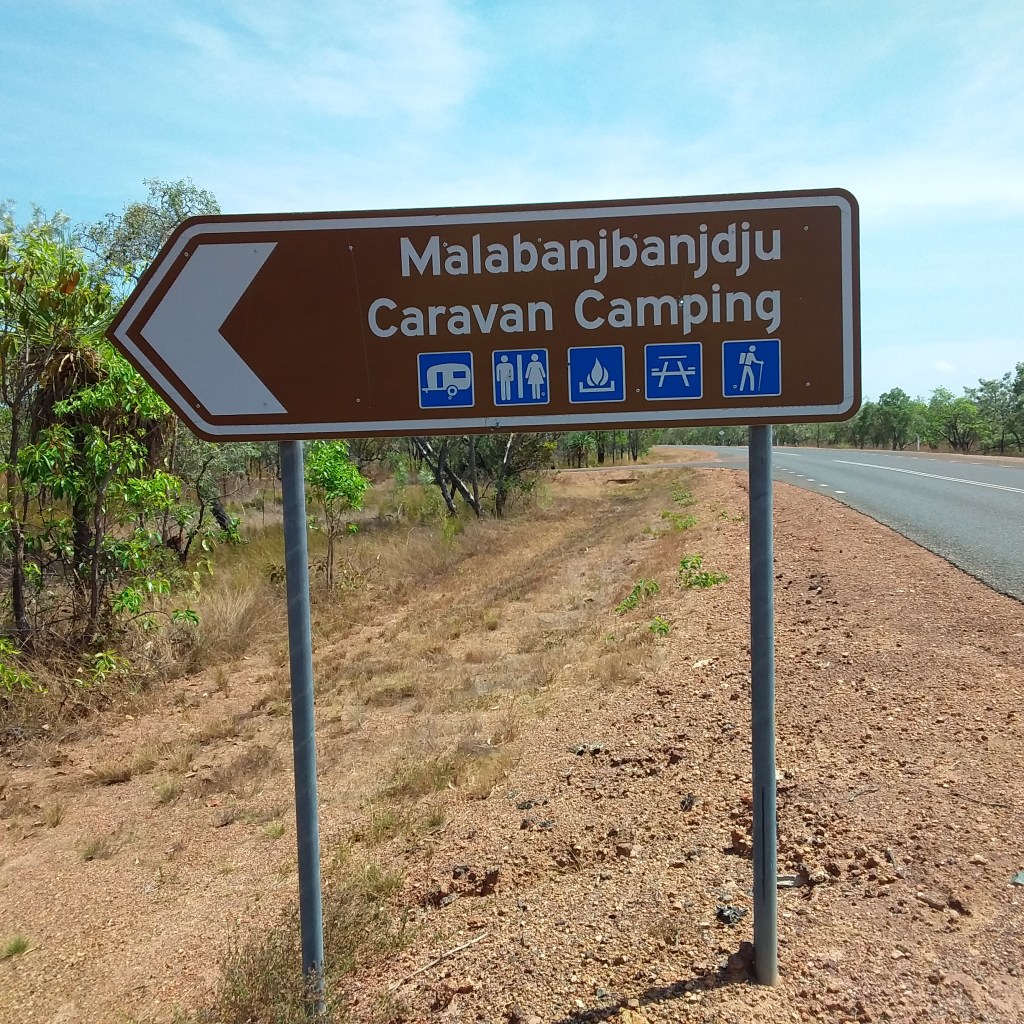
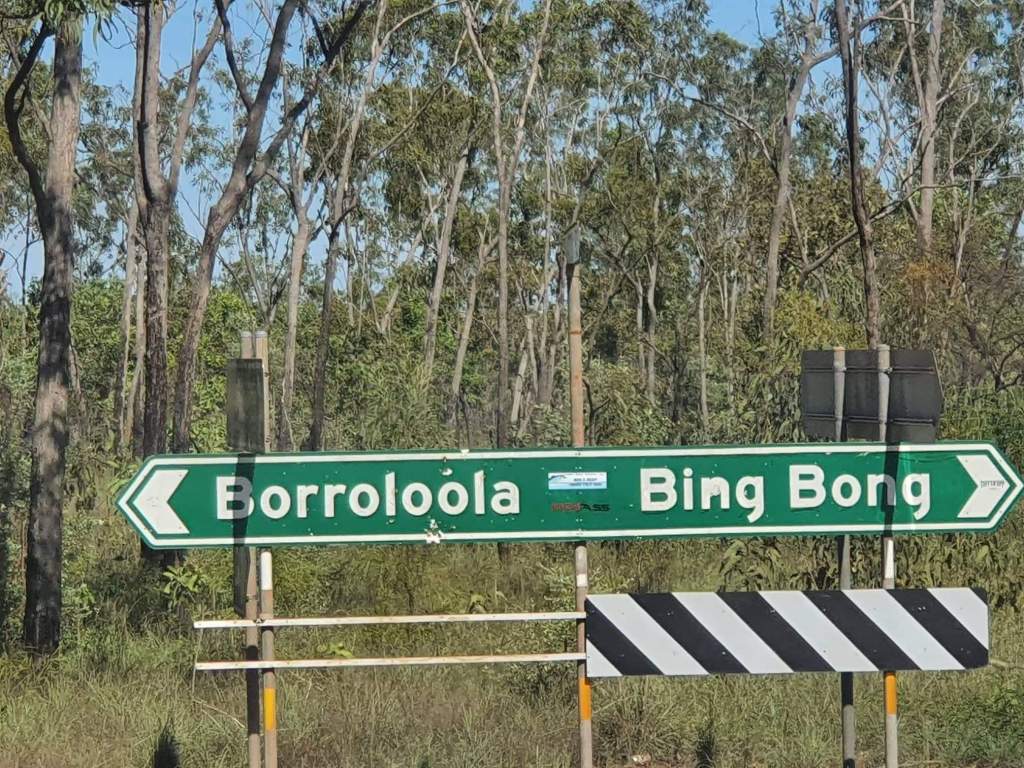
Borroloola turned out to be small Indigenous community with a nice caravan park and not much else. There is a river apparently full of Barramundi but we couldn’t find a good spot to fish. We decided to move on to King Ash Bay, a very remote fishing club on the river with plenty campsites.

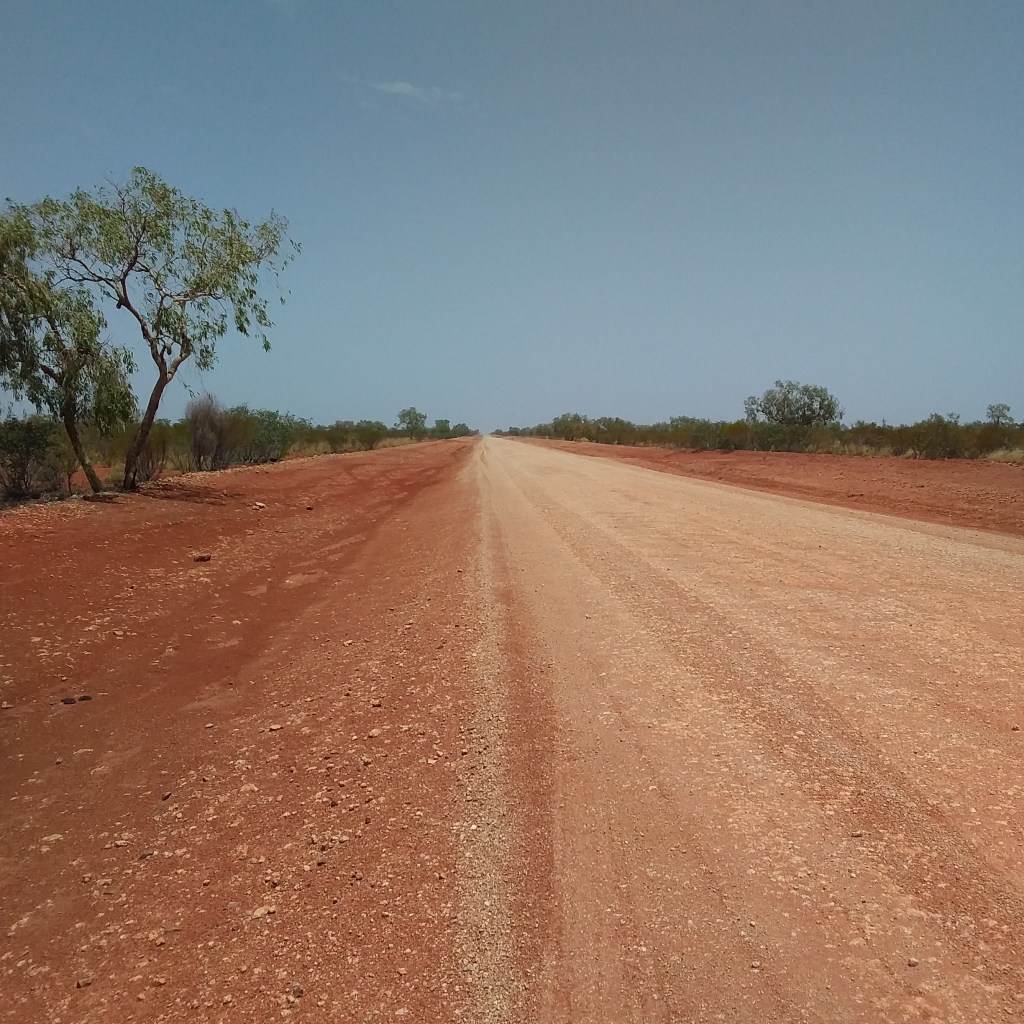
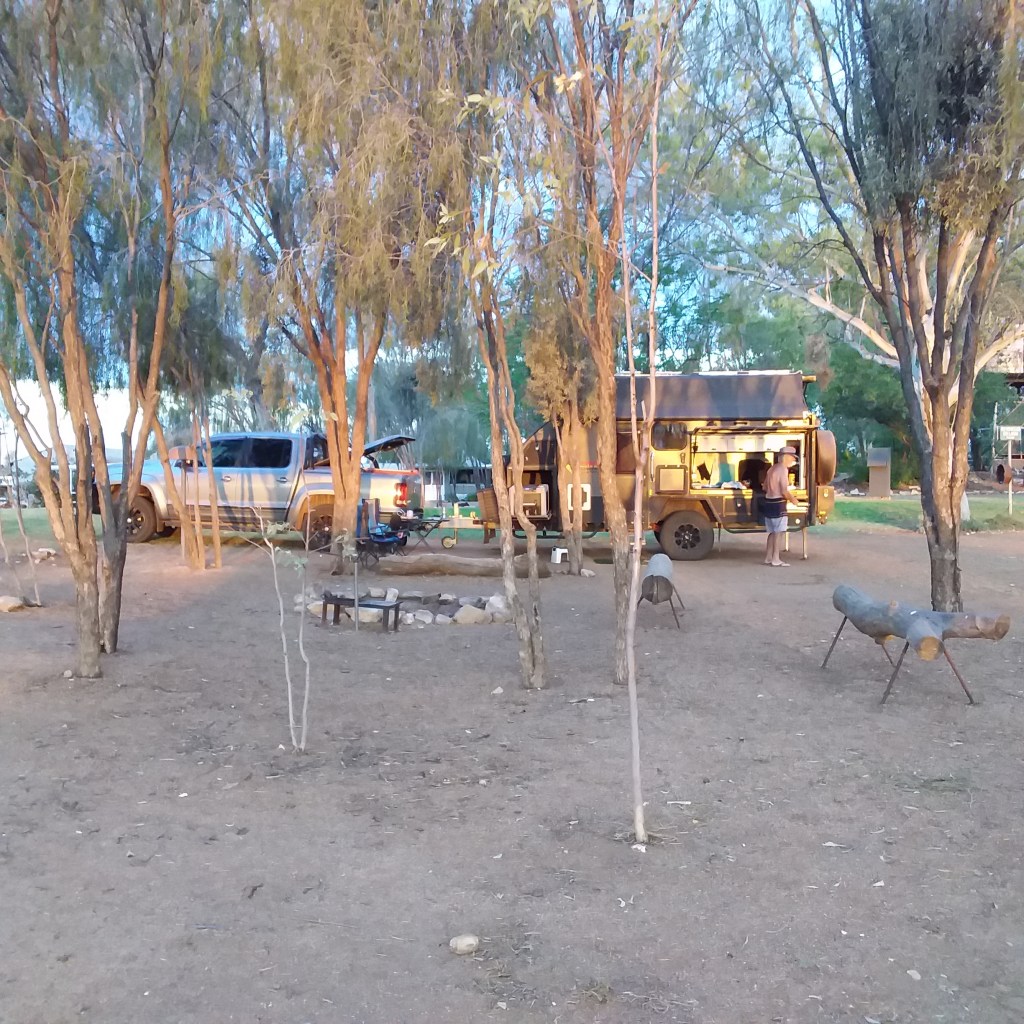
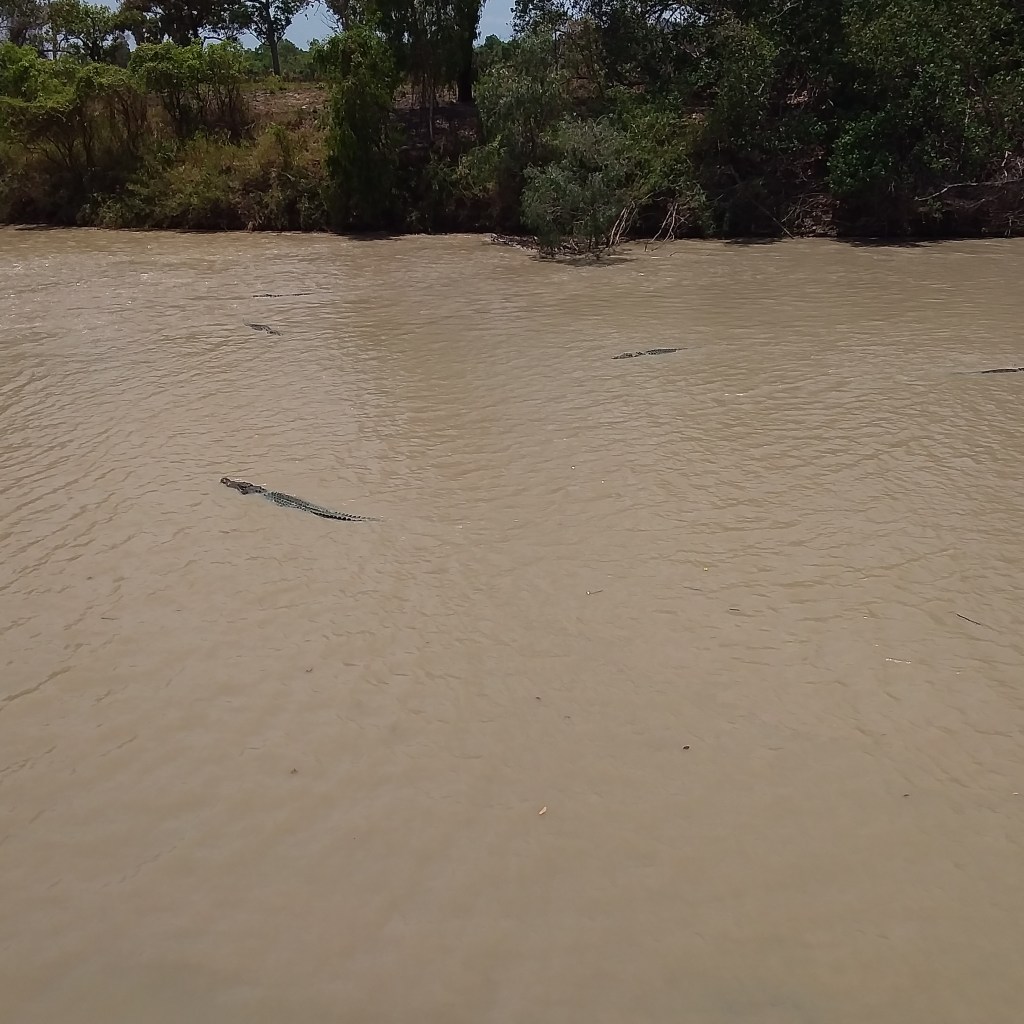
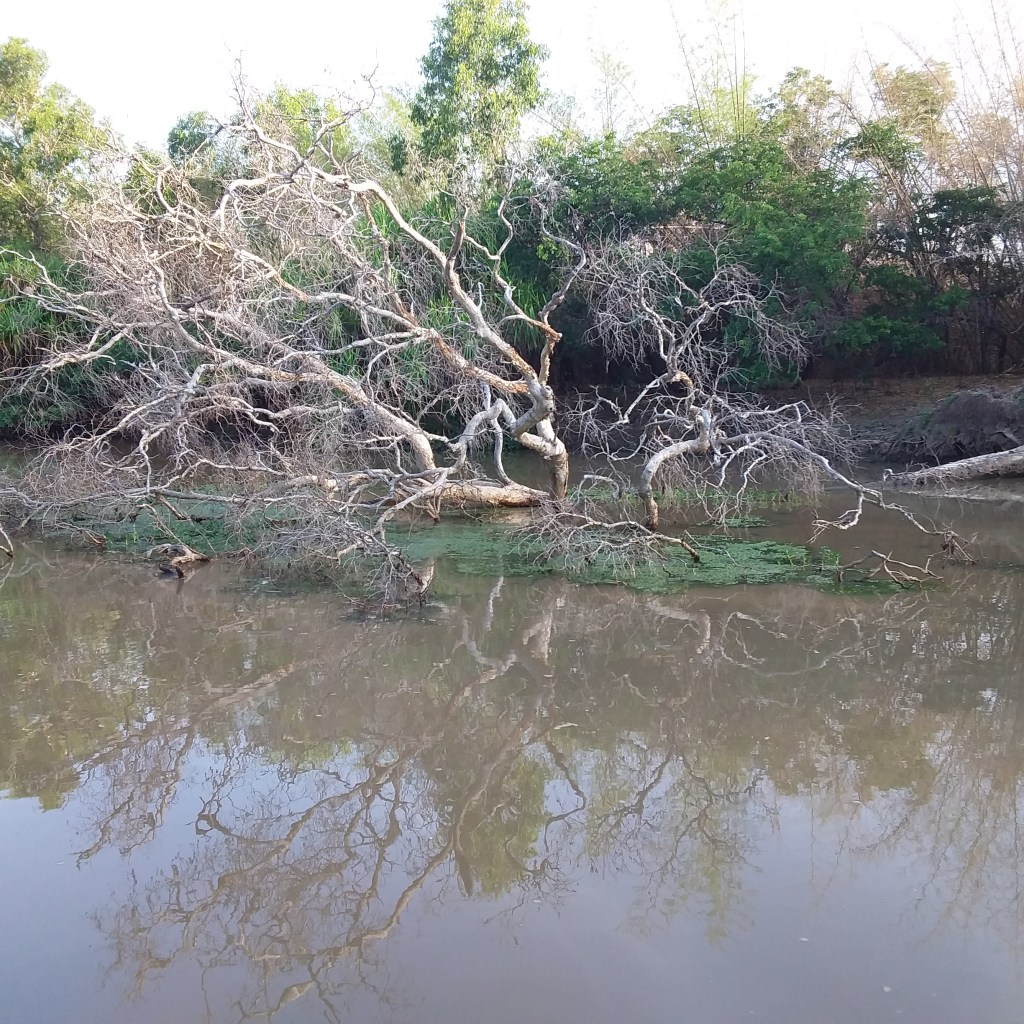
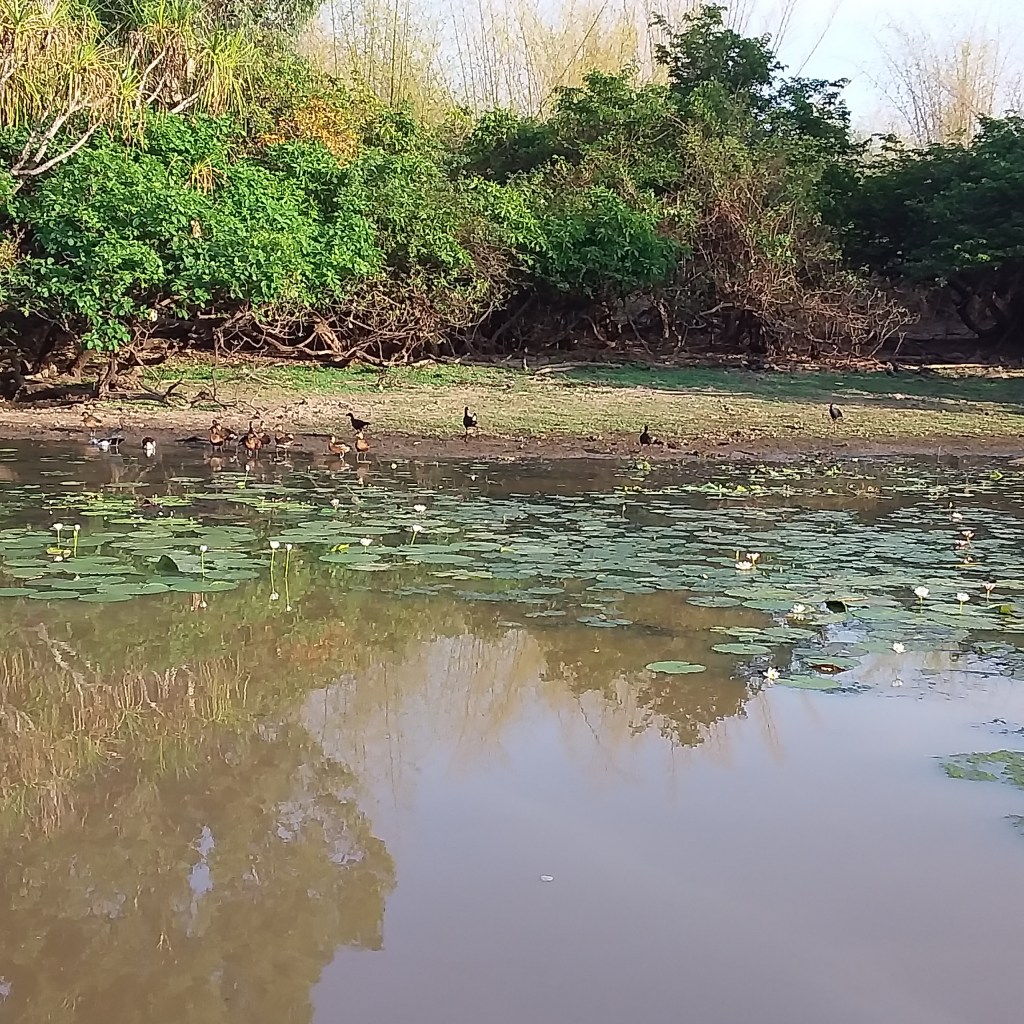
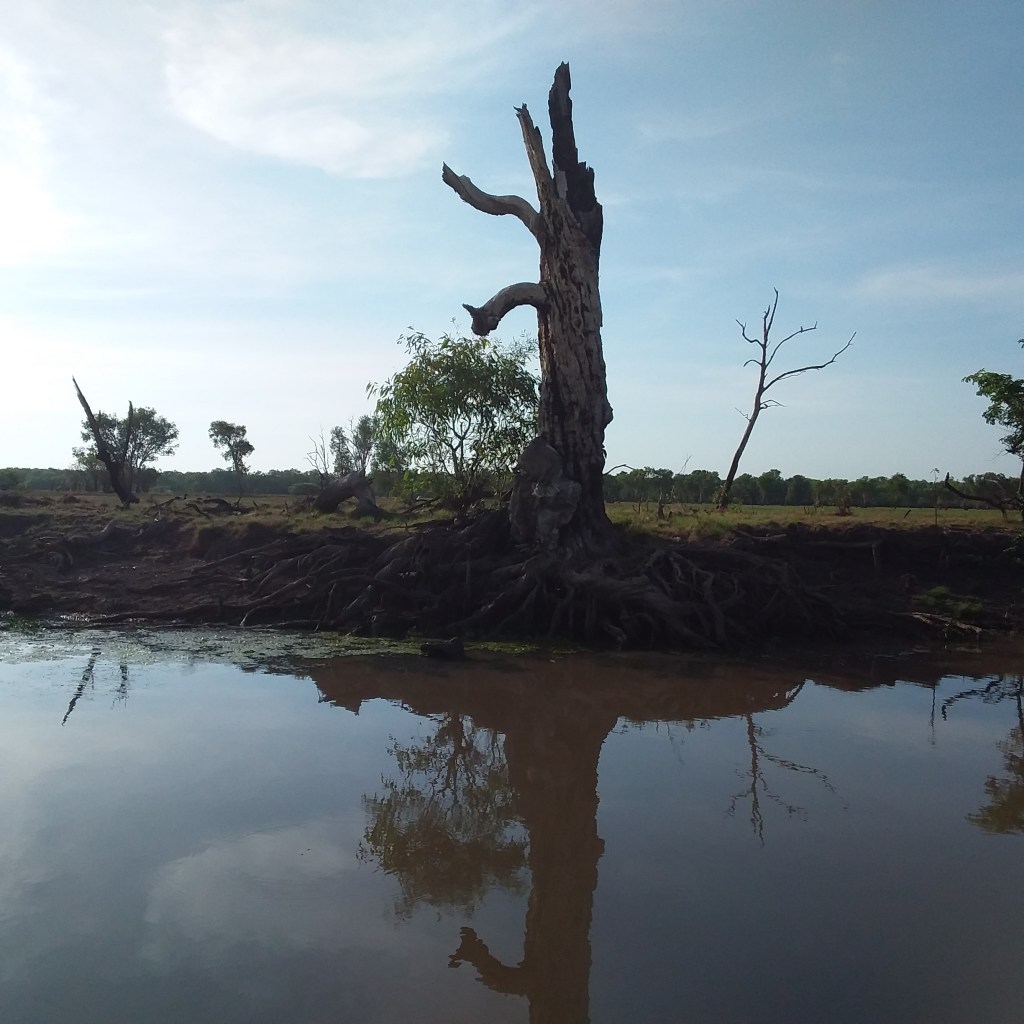
A mostly gravel road took us into King Ash Bay. With so few people travelling in the Northern Territory, we had our pick of camping spots. Once again we discovered it wasn’t easy to fish without a boat due to crocs, so we didn’t. What we did do was read, walk and go to the club for dinner. The club overlooked the river and it was such a warm evening. A lovely evening.

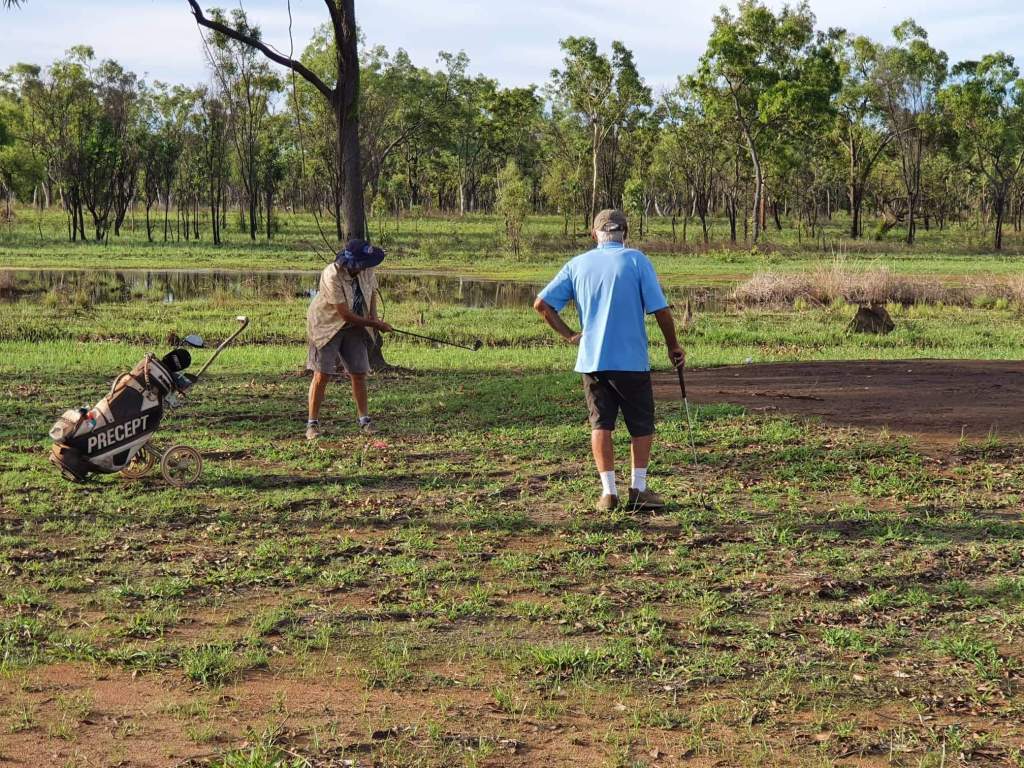
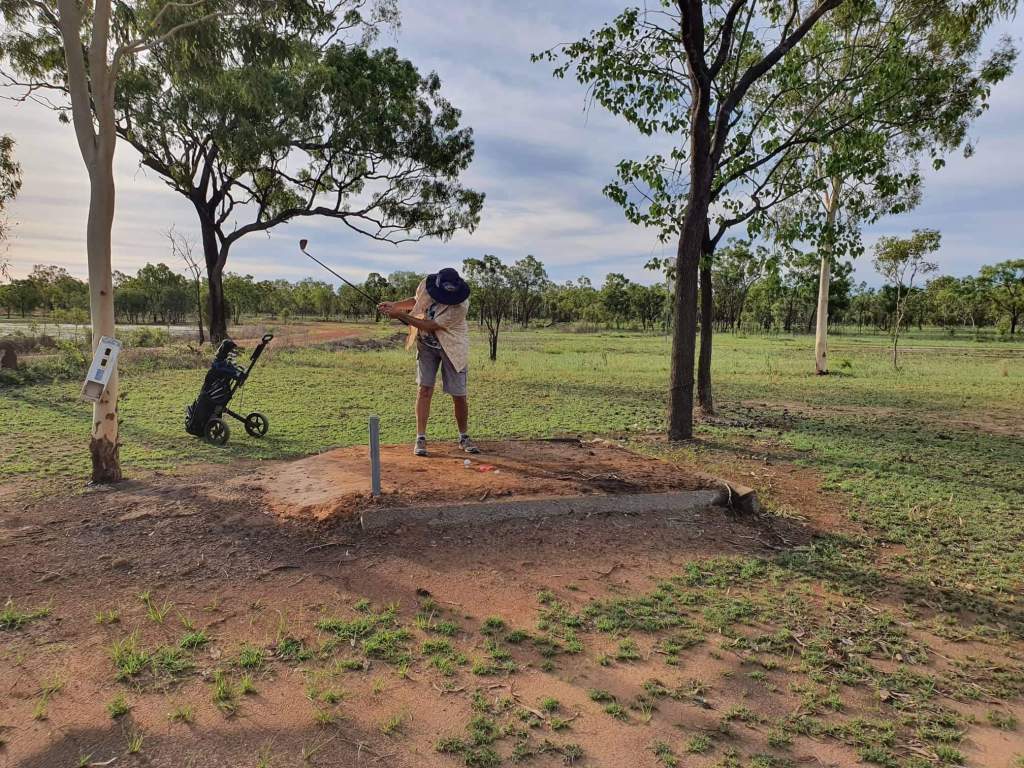
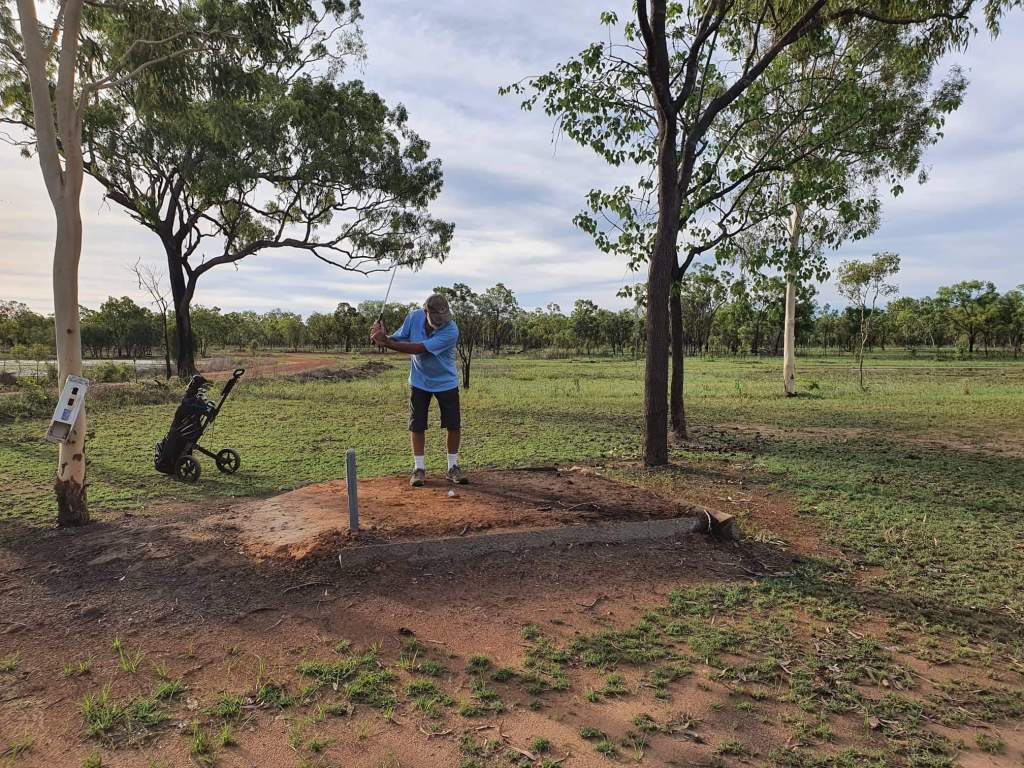
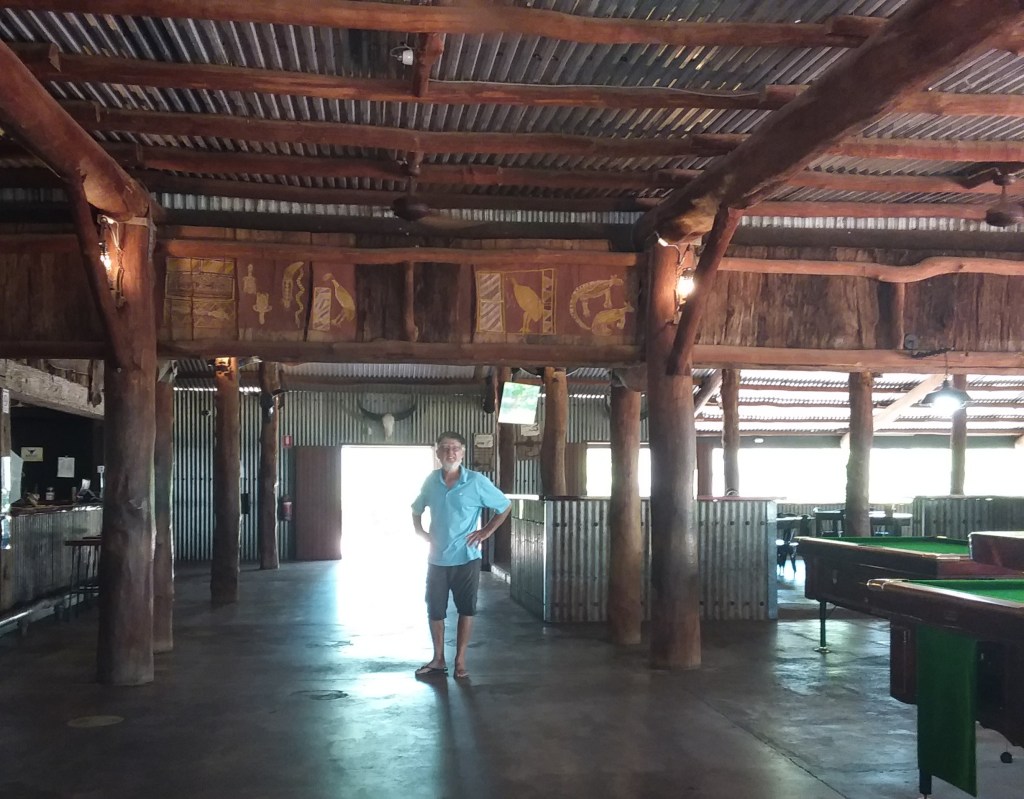
John wanted to check out the golf course so we wandered up. It wasn’t quite what he is used to. Two holes were completely under water! We had a chuckle about the club house!
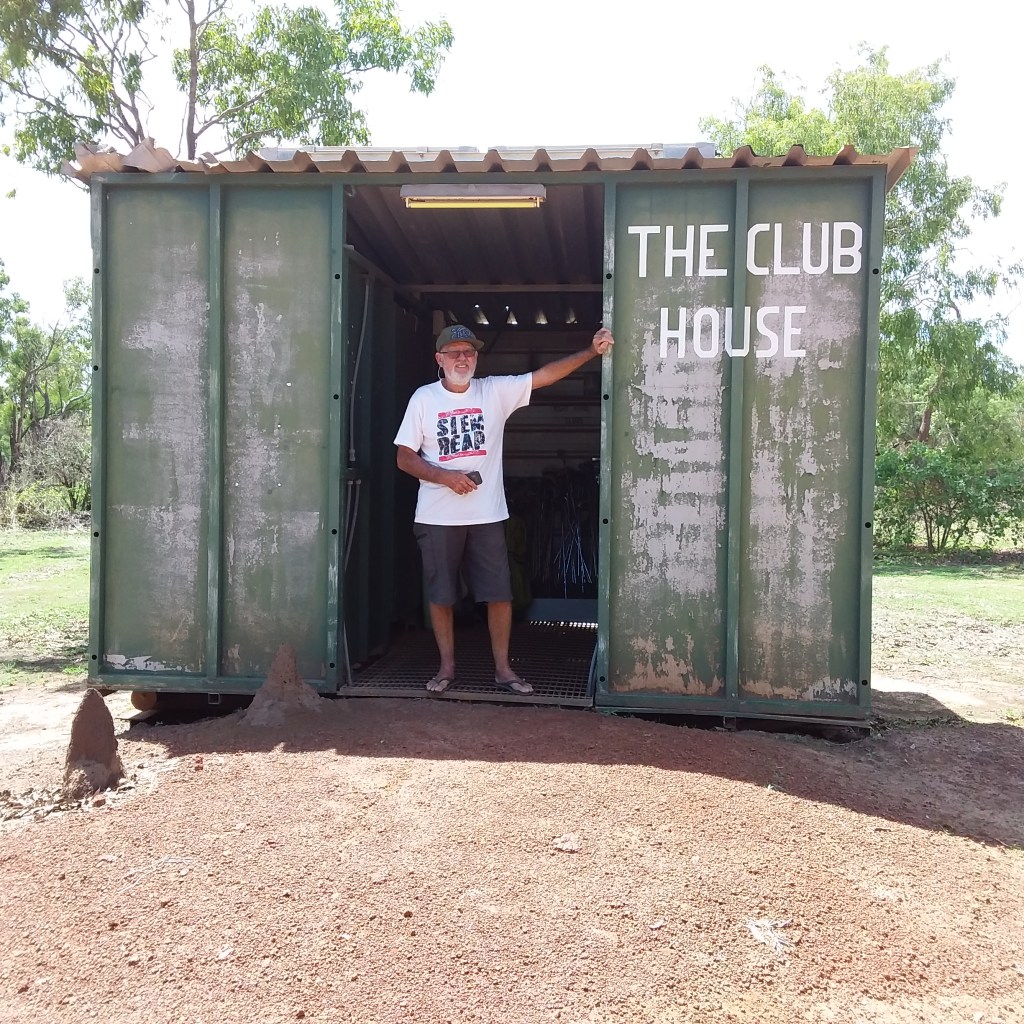
The Club House, Kings Ash Bay Golf Club

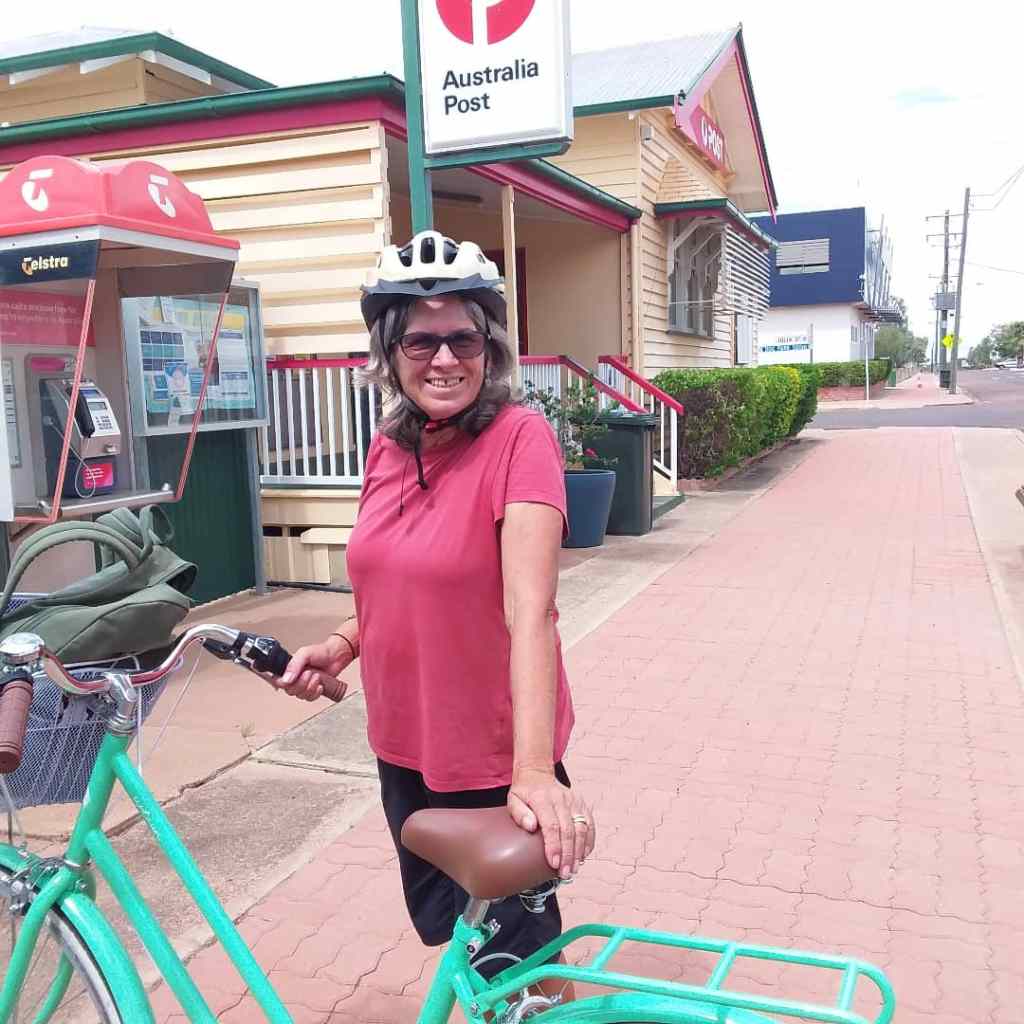
We met a lovely lady, Michelle, who stopped by our van as she was cycling passed. She told us a little bit about her history and what brought her to King Ash Bay. She lived alone at the park – which seems to be a lovely little community with a mix of permanent residents, regular and occasional visitors like ourselves. During the conversation, we mentioned that we had checked out the golf course. Michelle jumped at the chance to invite us for a game that afternoon. John eventually accepted the invitation.

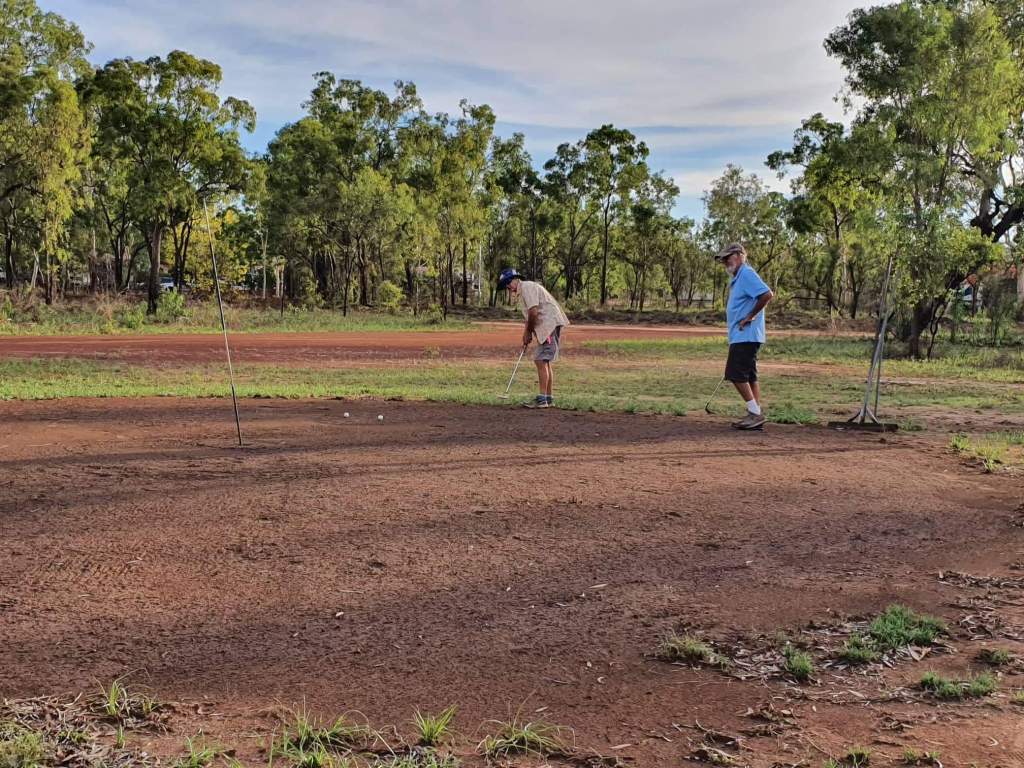
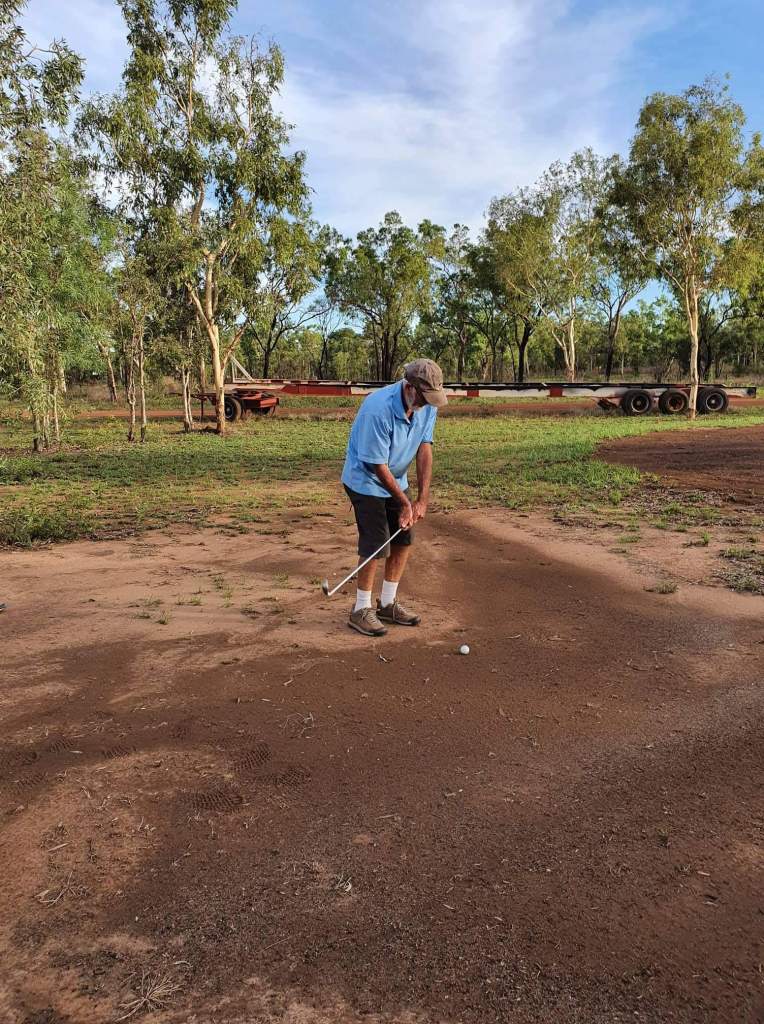
I went along for the exercise although it was very hot. It is a nine hole course but, as I mentioned two of the holes were under water and the others were hard to find! But we had fun and learned lots about the area from Michelle.
After the game, we walked over to Michelle’s for a beer and to use her Telstra 4g! She told us of rumours that several covid cases had been discovered in Katherine (which is where we planned to head towards the next day) and an Aboriginal community. Health Workers were moving into Borroloola to vaccinate the residents there. We weren’t sure if we were in lockdown or not. The news confirmed the rumours but we were free to leave at this stage.

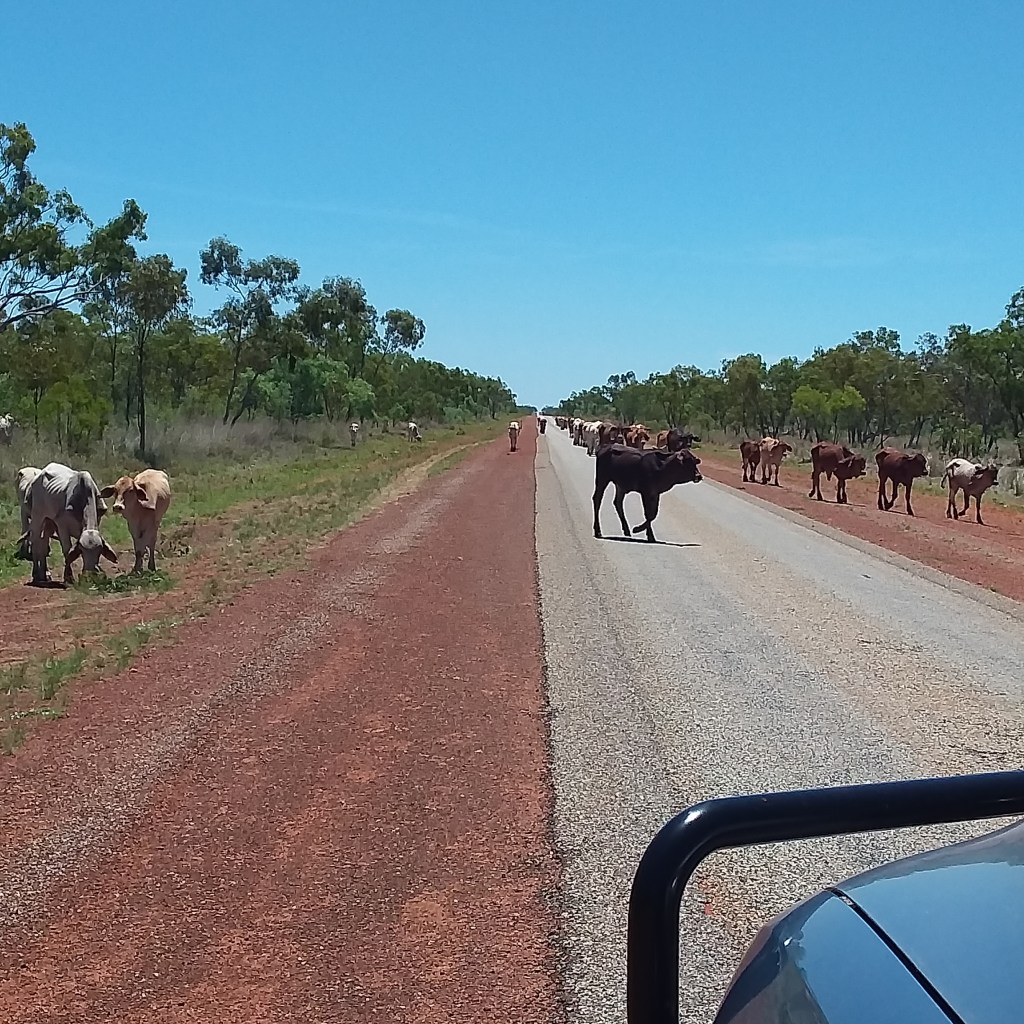
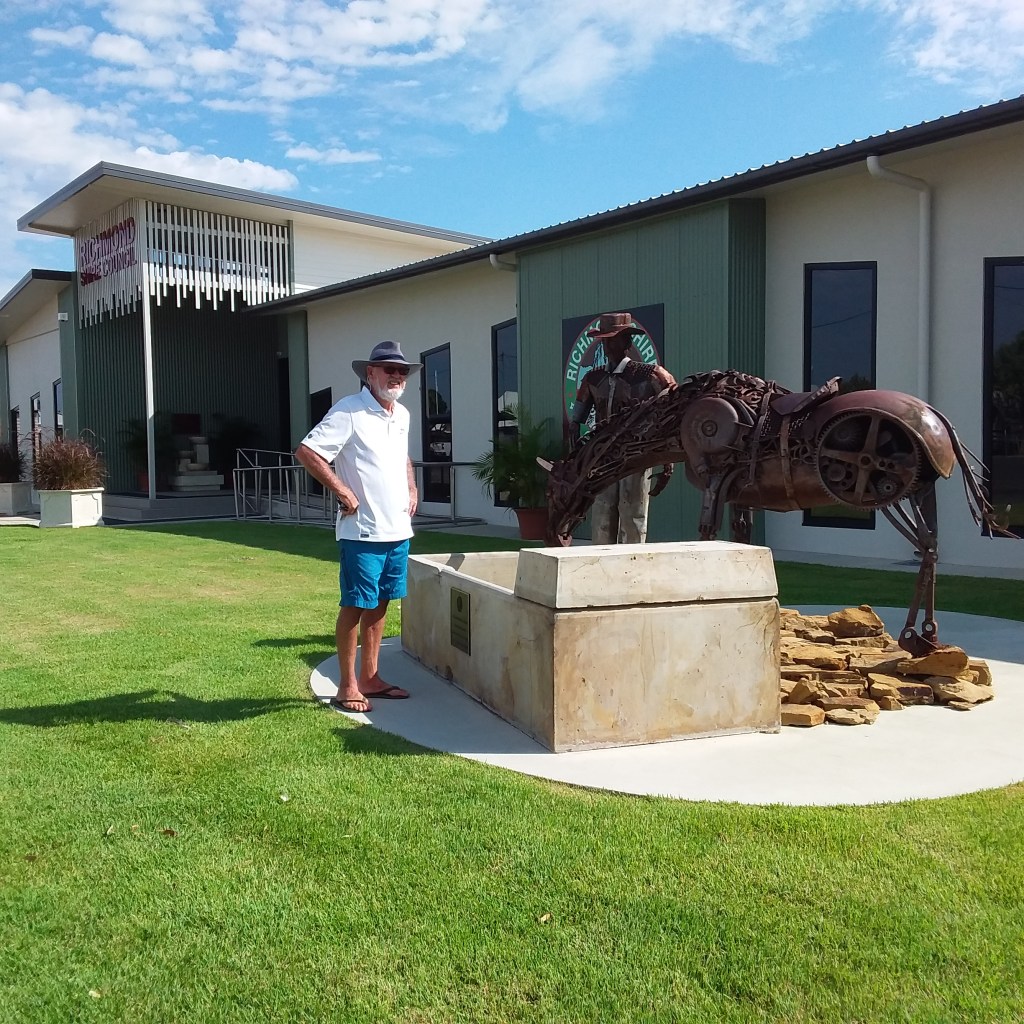
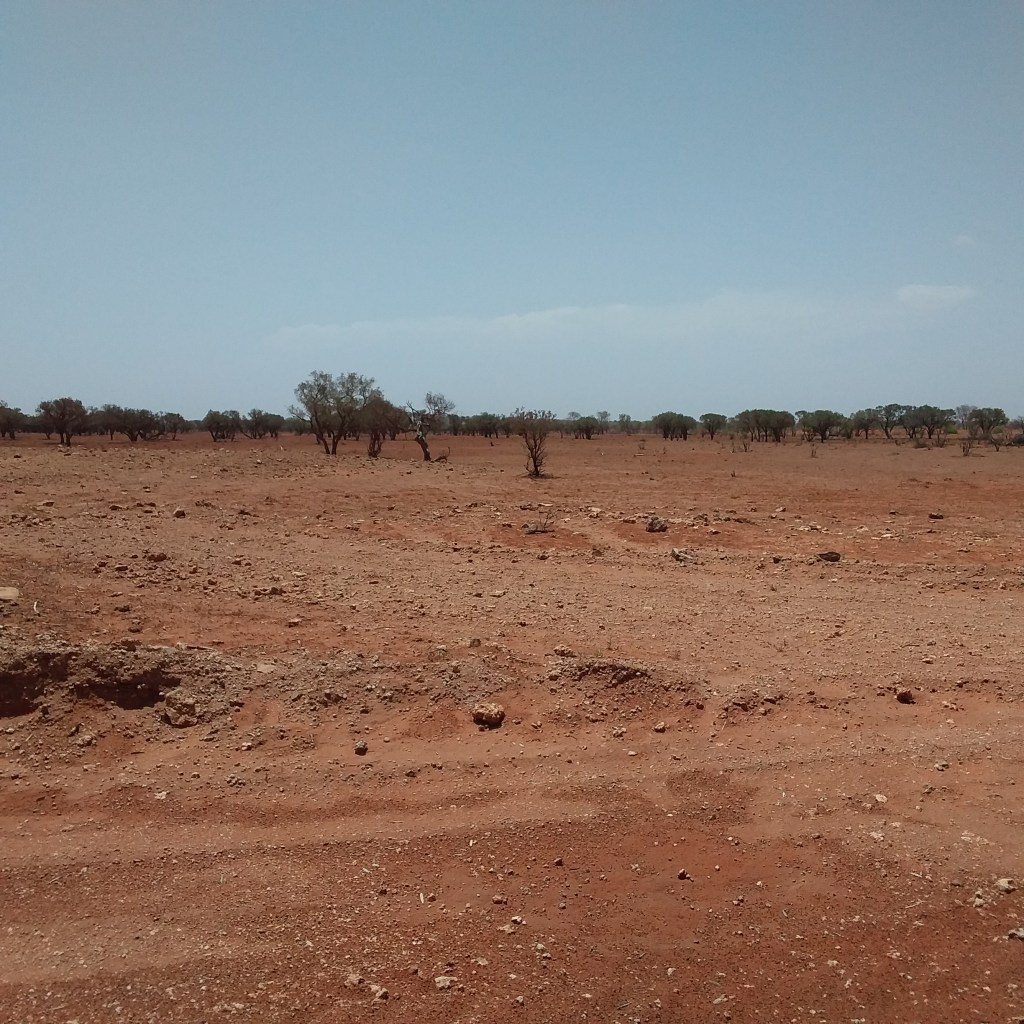
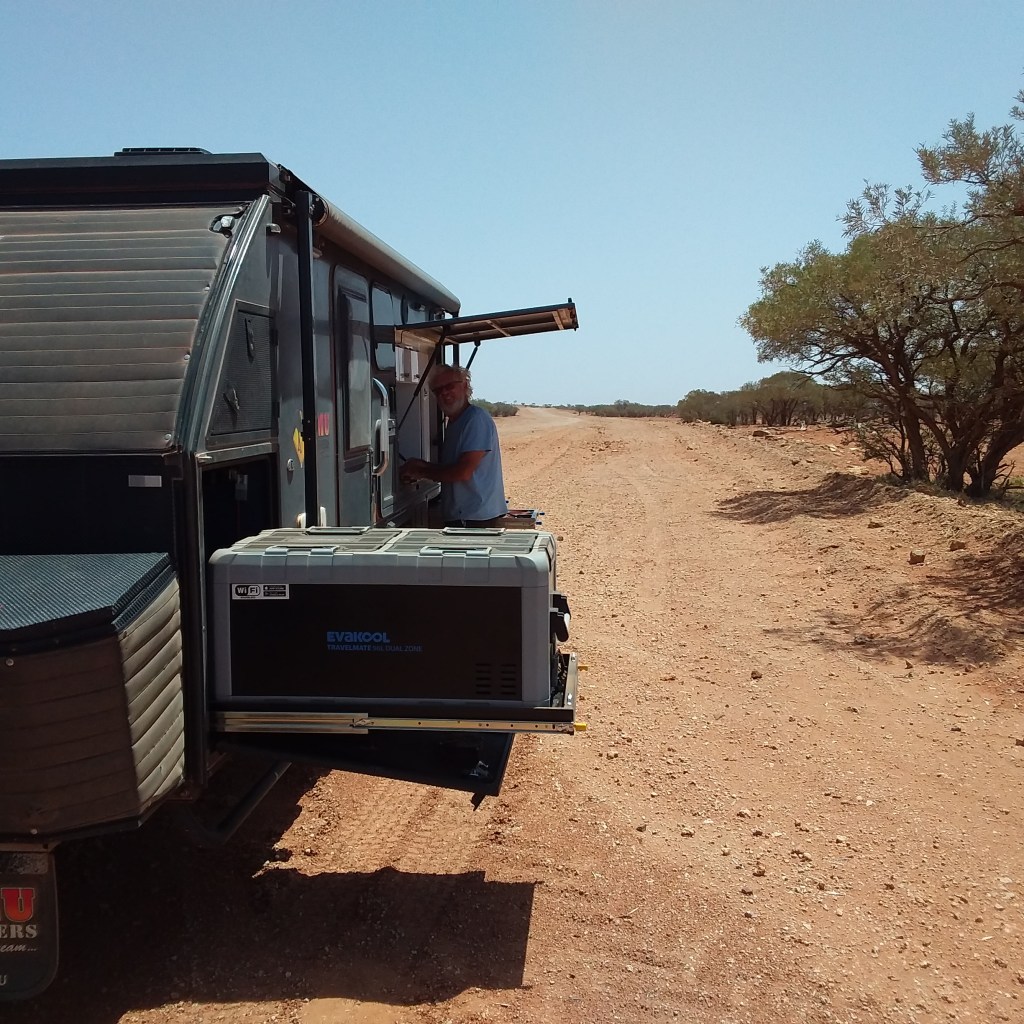
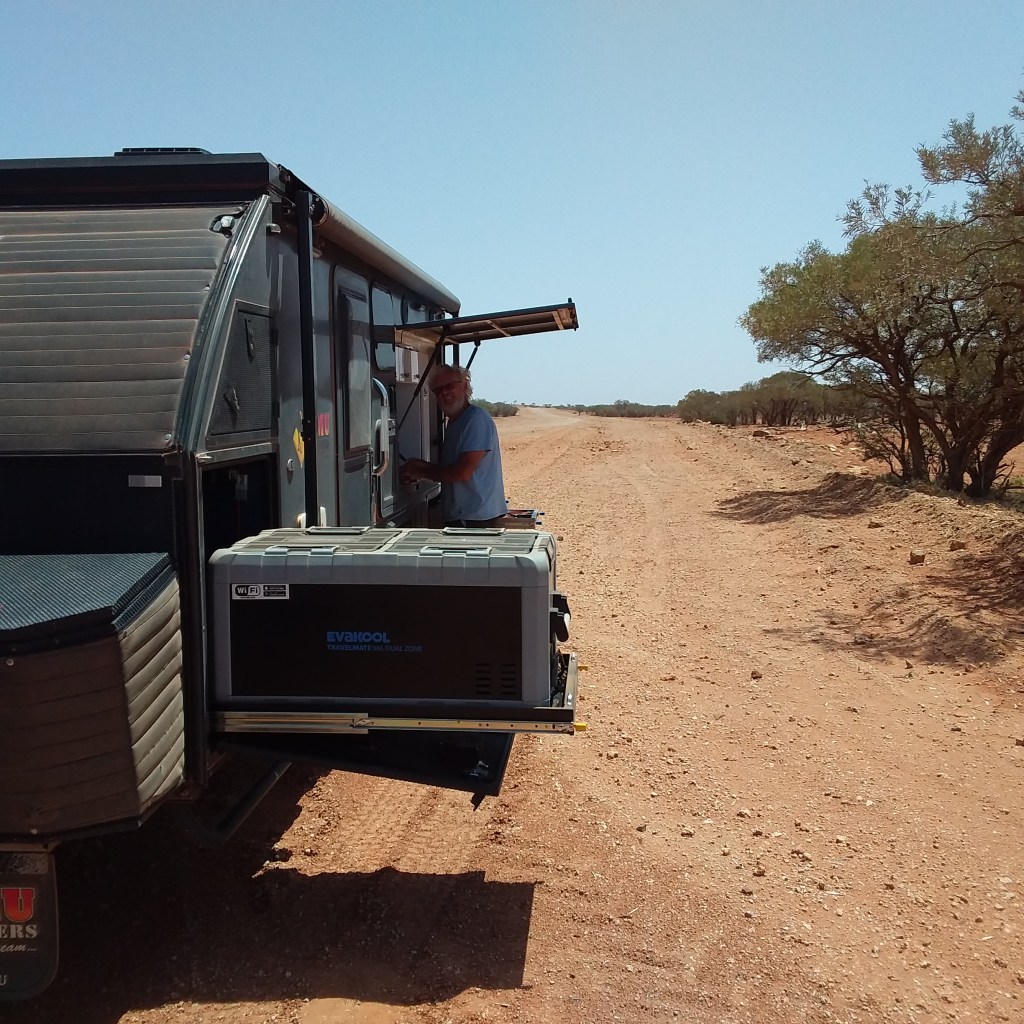
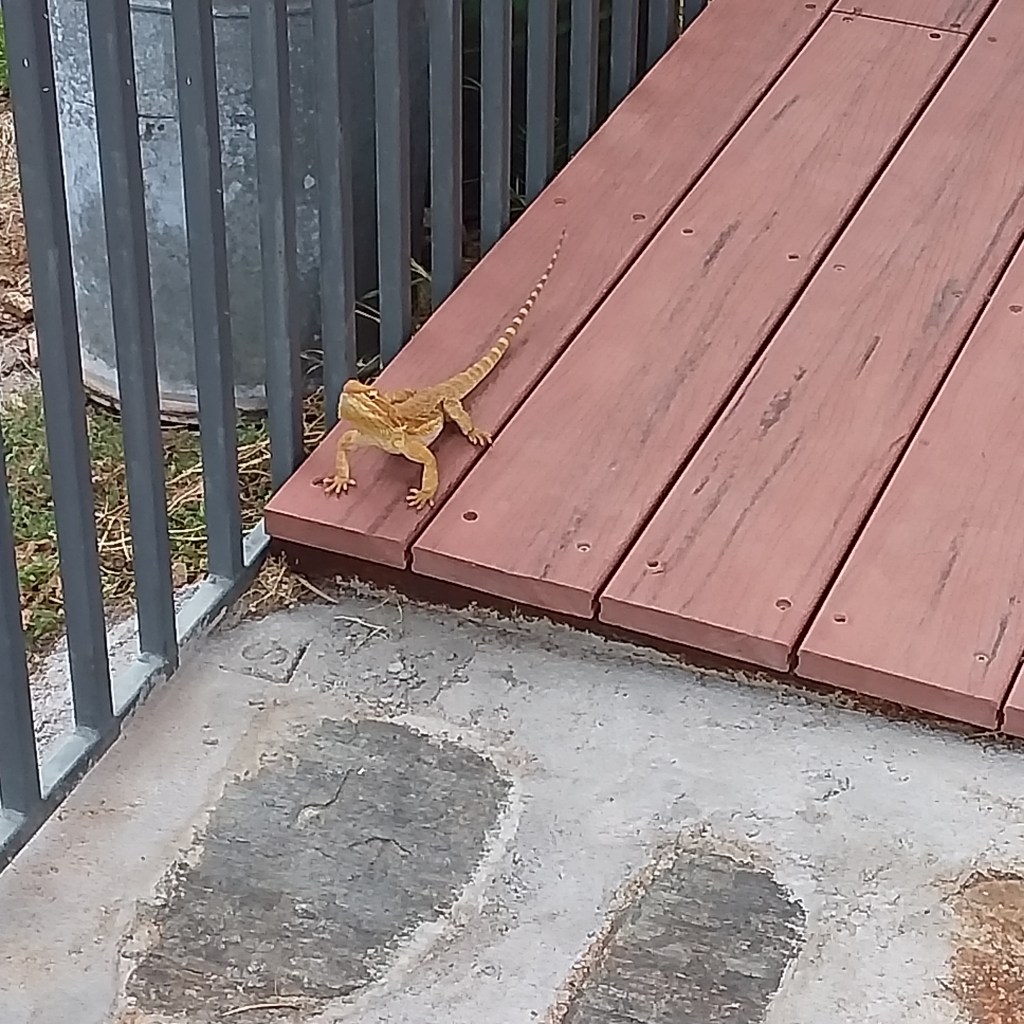
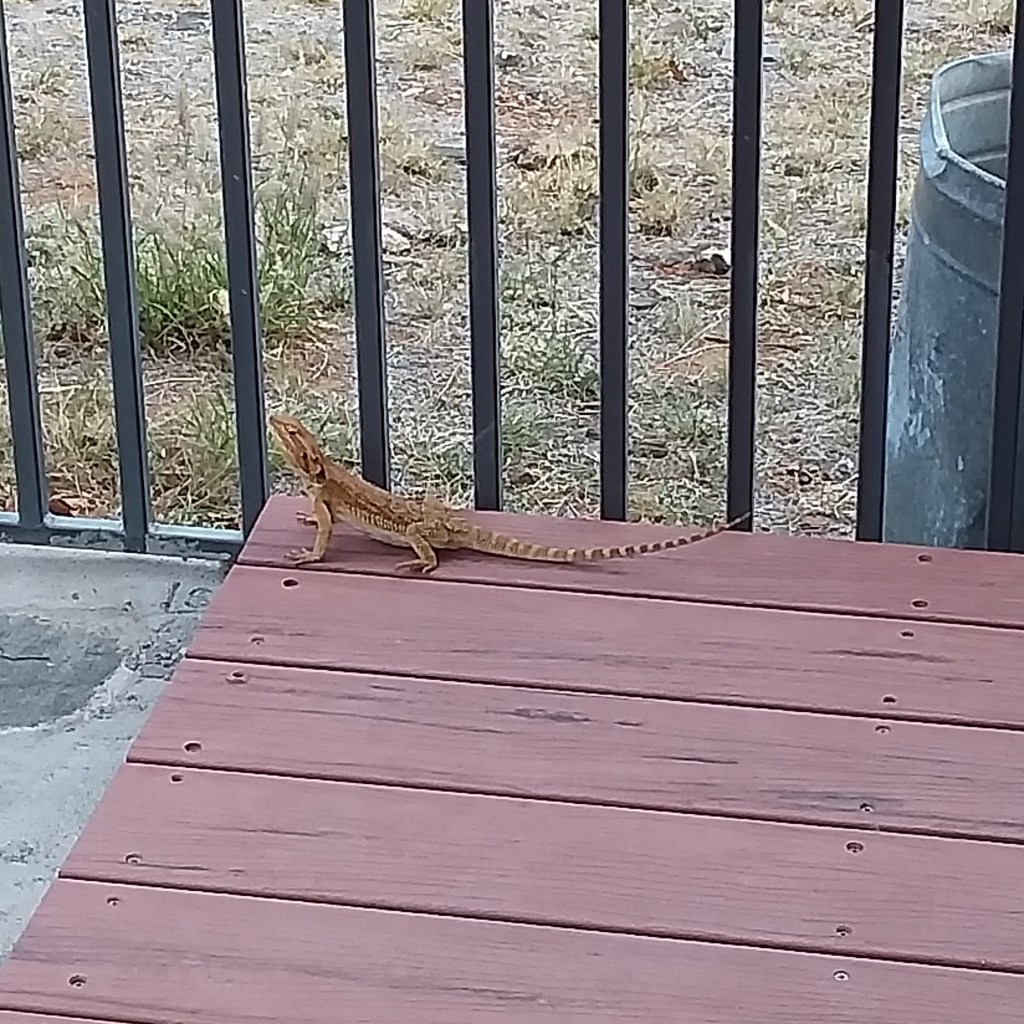
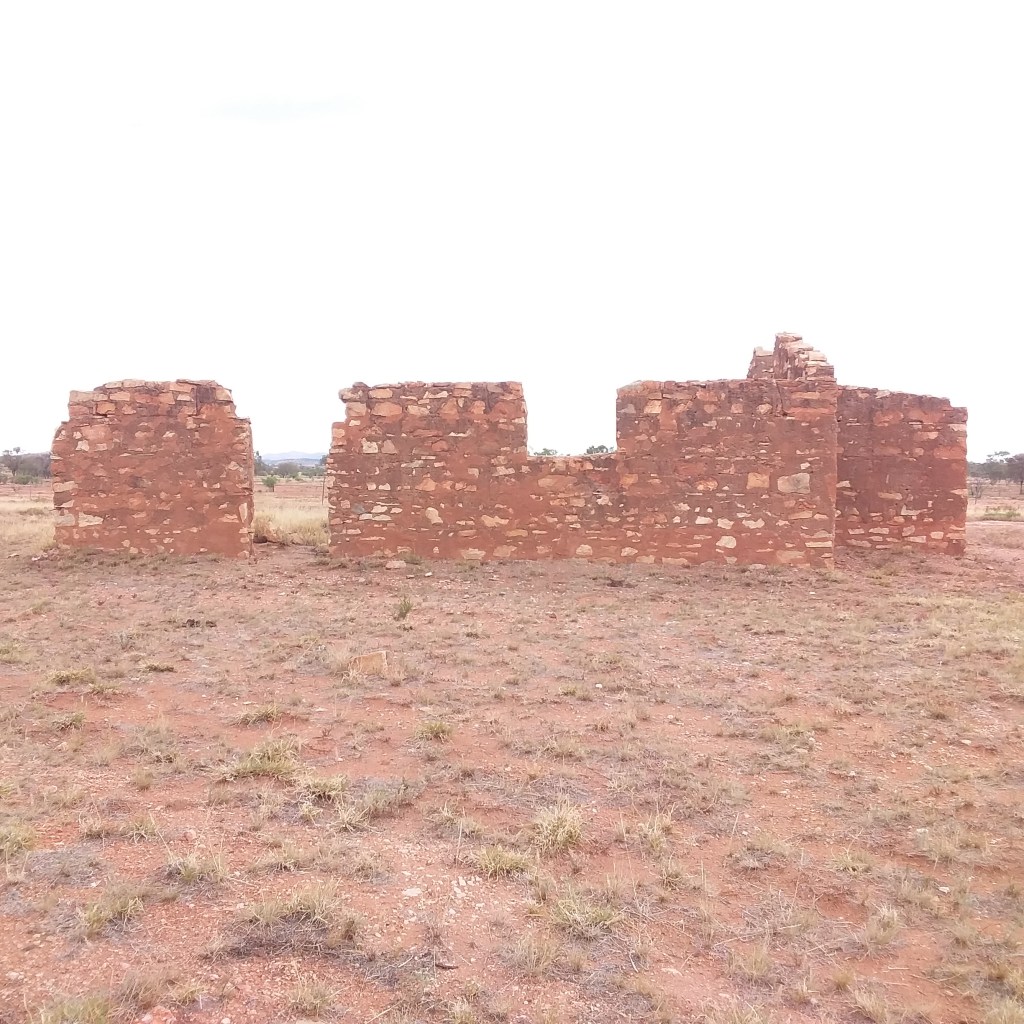
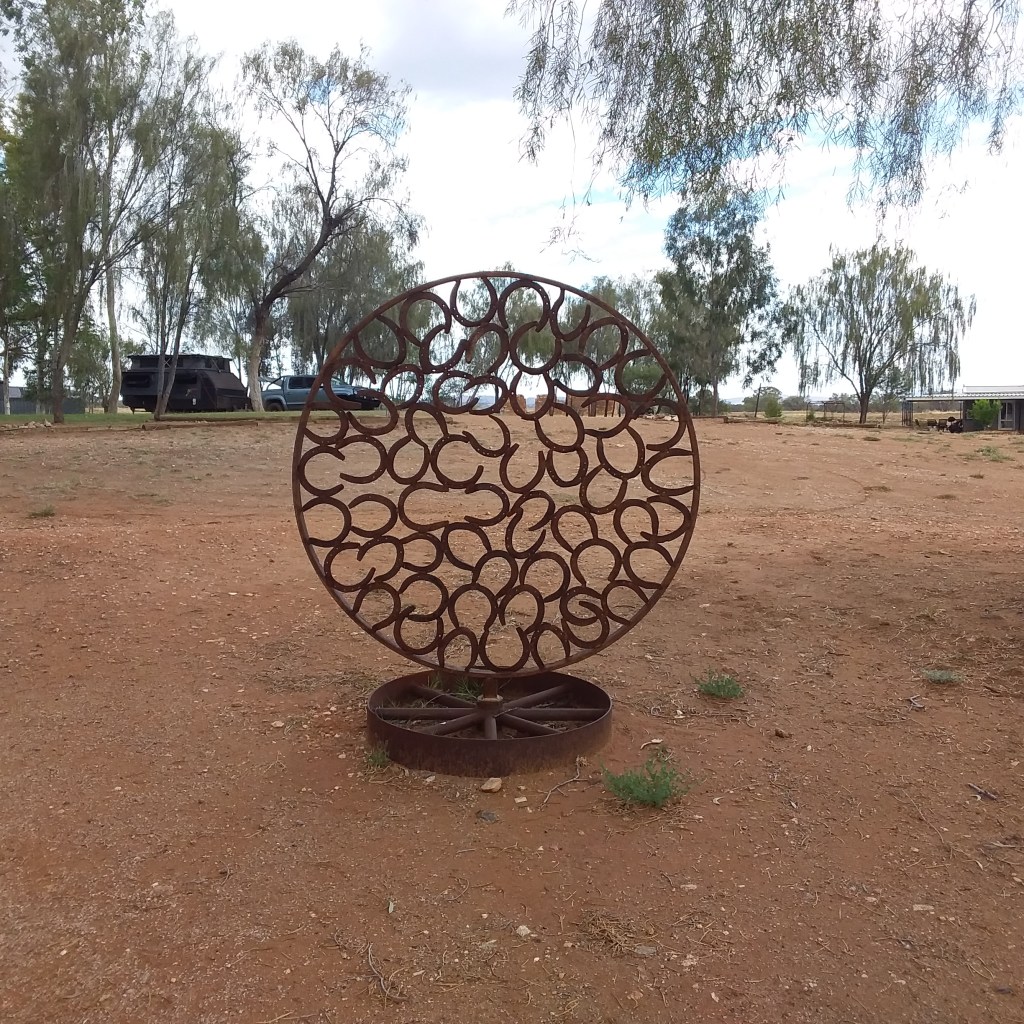
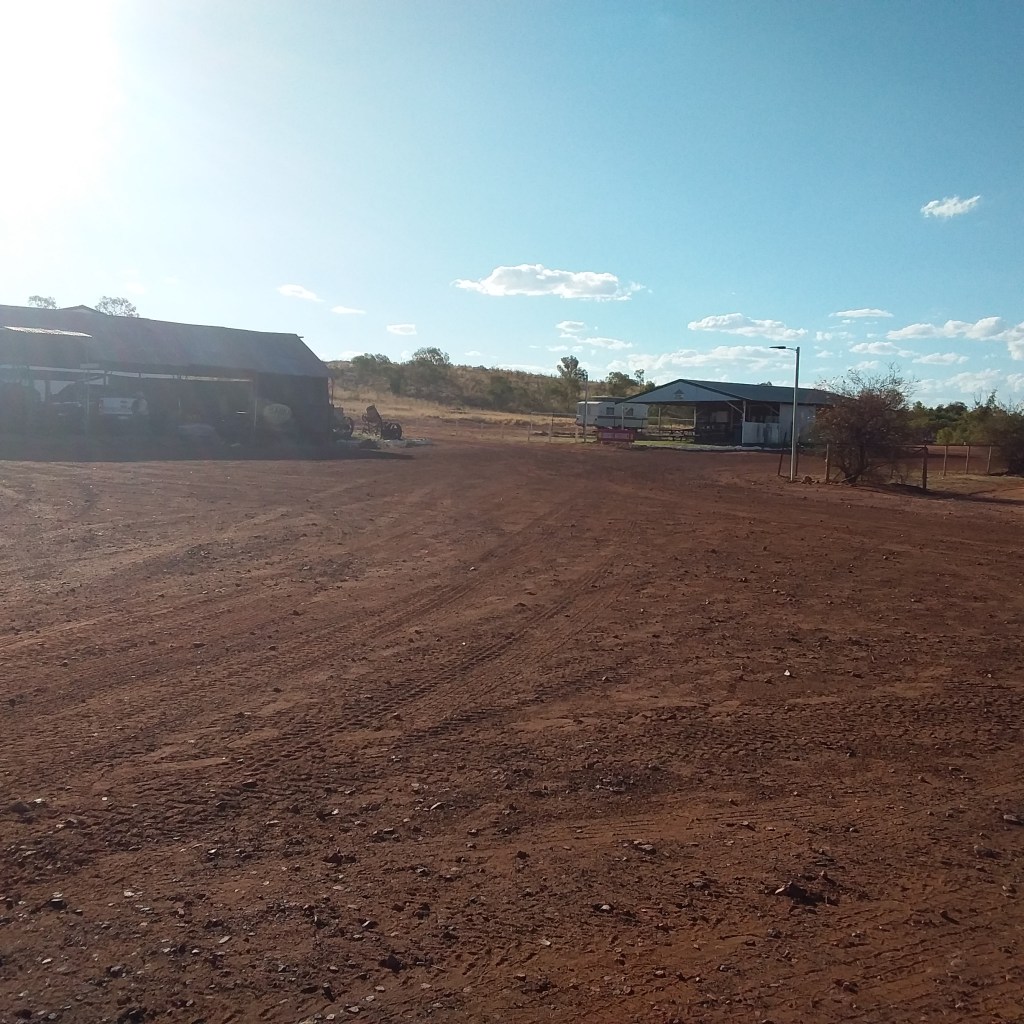
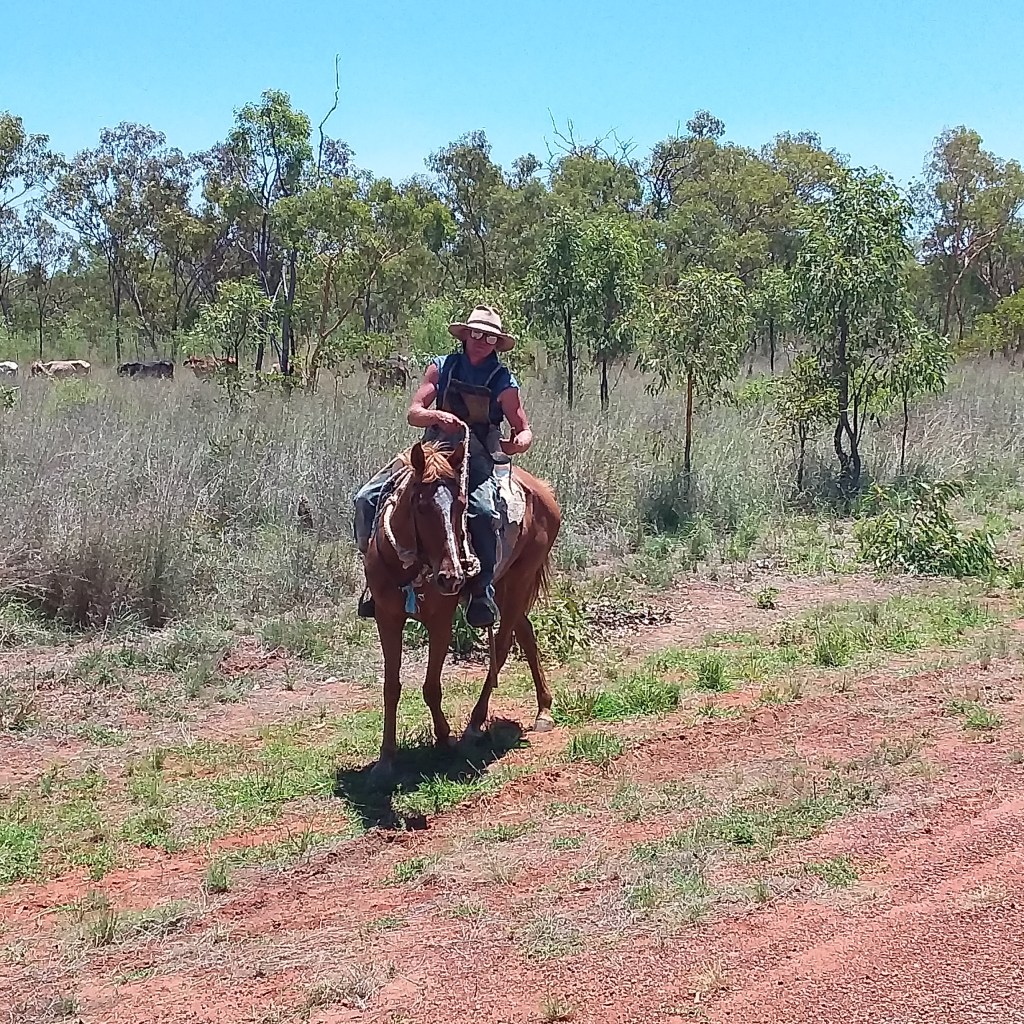
We hadn’t gone very far when we came across a drover moving his cattle. We stopped to let them all pass and he had a chat with us. It was great to see a modern day drover after learning so much of their history in the small outback towns.
Mining town of Mount Isa

Where the last few towns we have visited have been lovely, clean and refreshing after the long drive through the desert, Mount Isa is very different. Being a mining town, it is pretty grey and industrial looking. We had some things to do in a big town like this so booked into the AAOK Moondarra Caravan Park just out of town. As someone said on Wkicamps ‘it’s the best park of a bad bunch’.

Mount Isa from the lookout

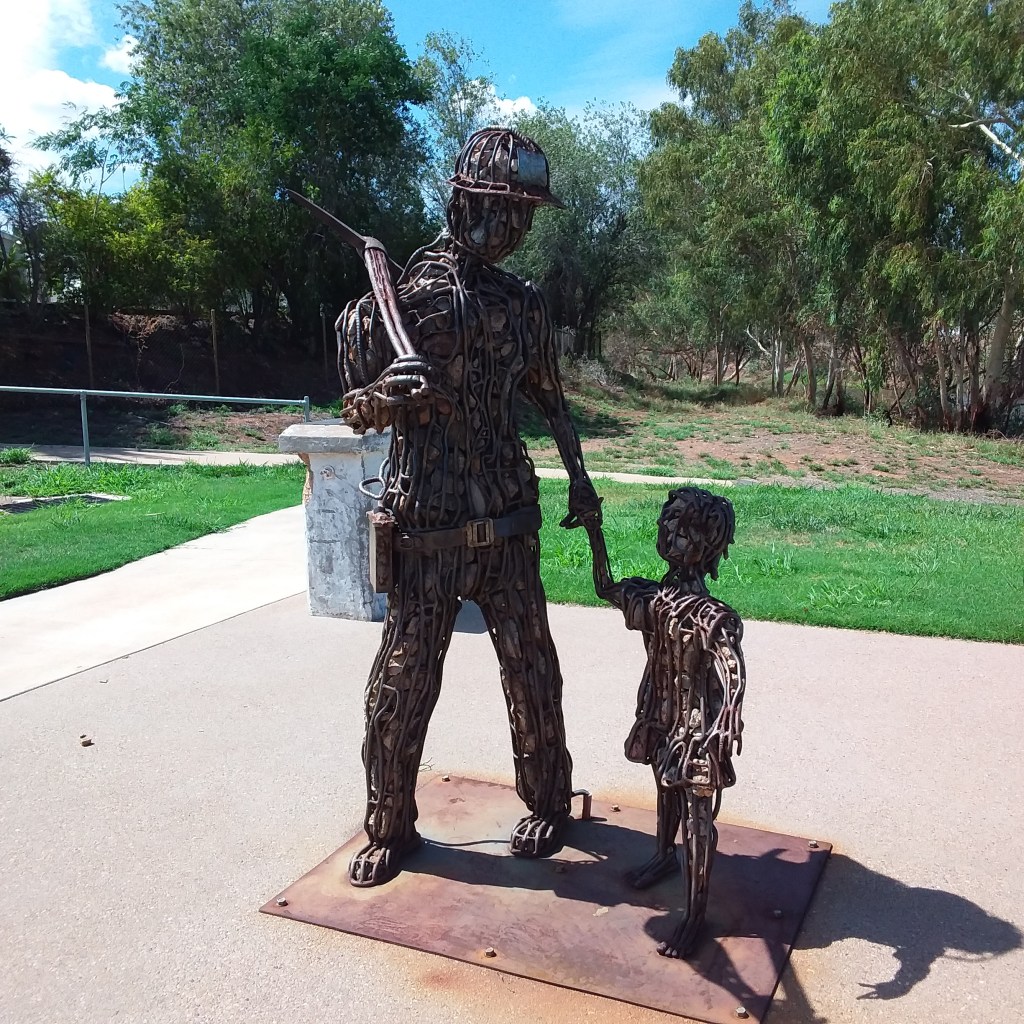
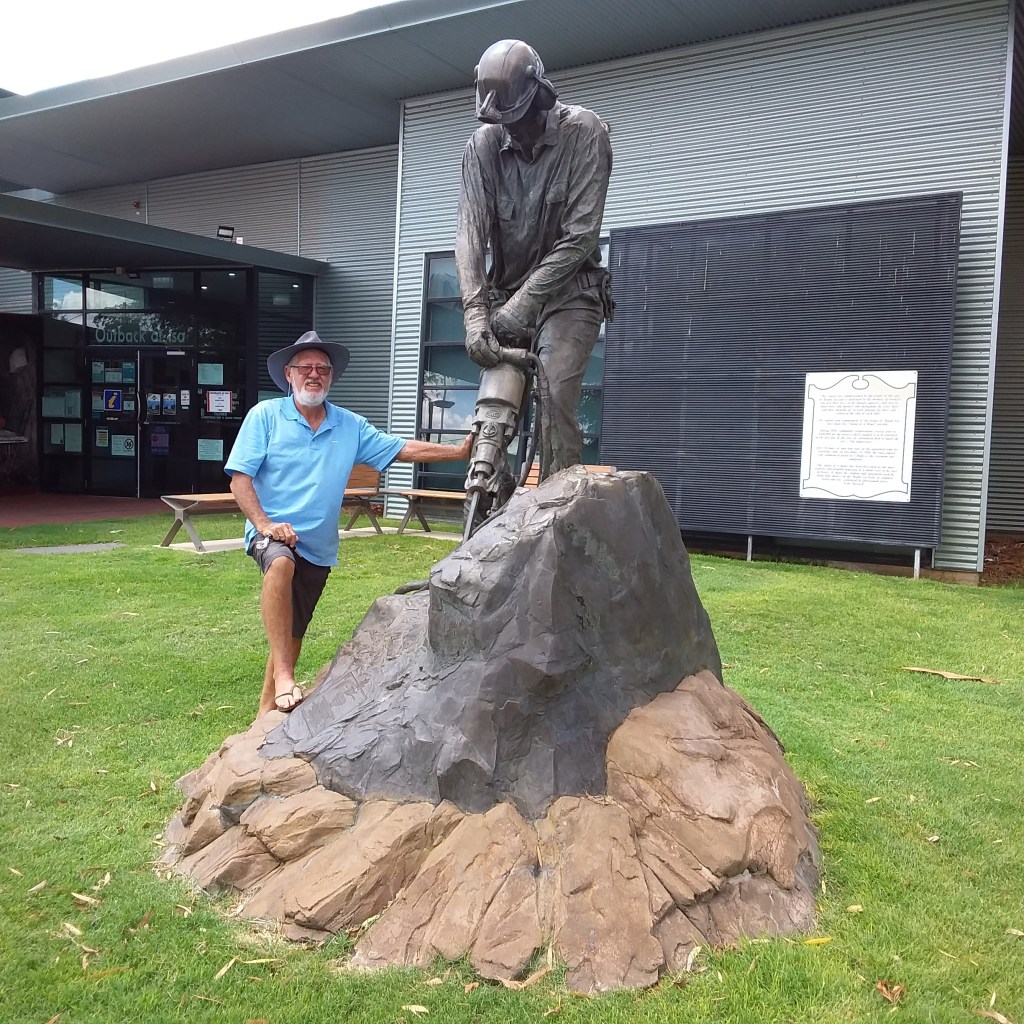
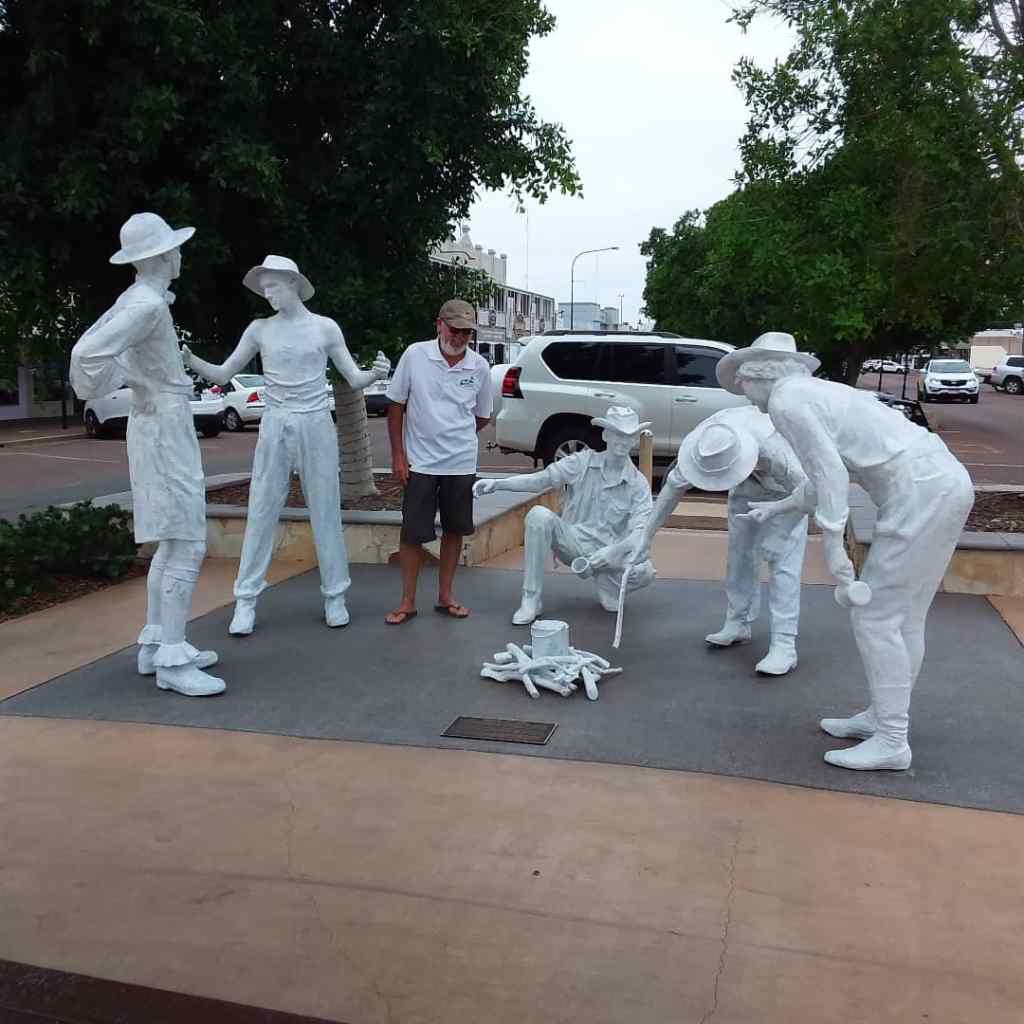
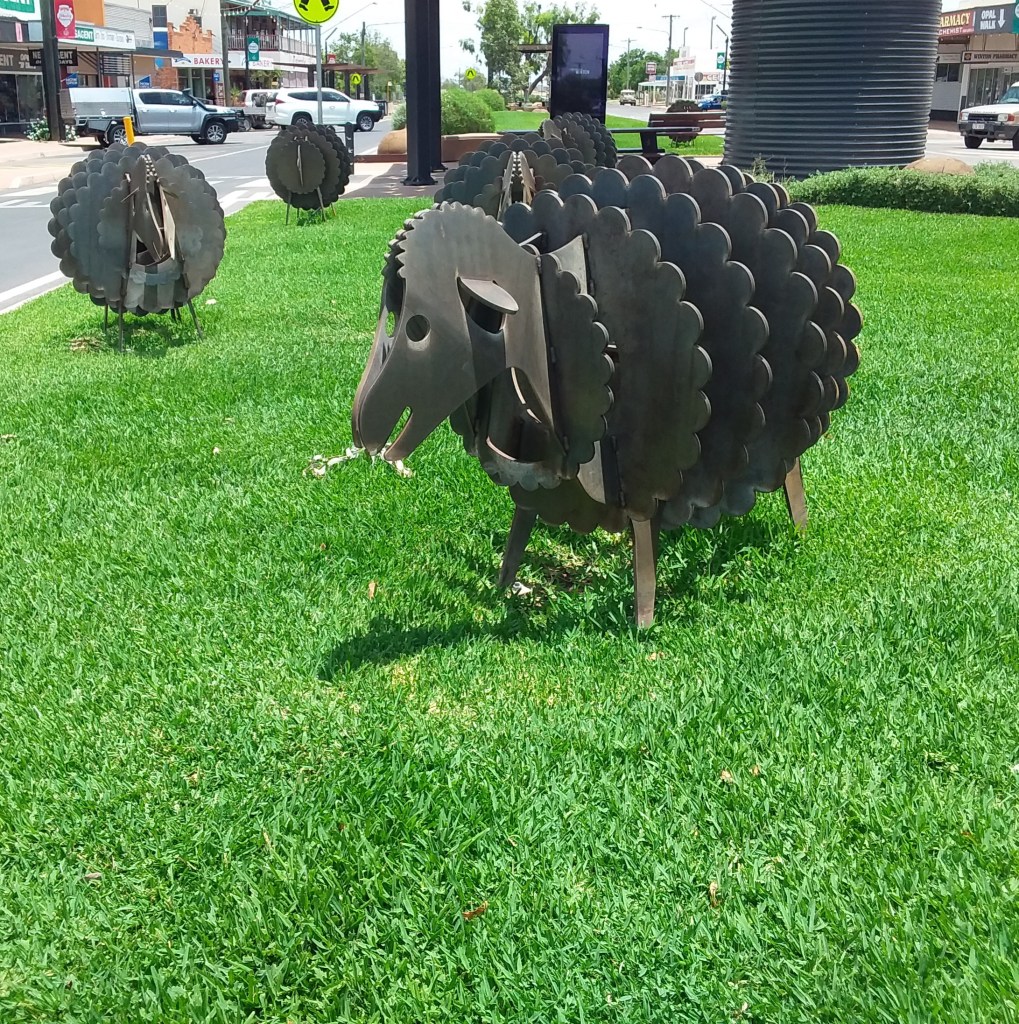
Of course, everything here revolves around mining and there is some great artwork depicting it.

Miner and child

A main event held in Mount Isa every year is the Rodeo, where celebrations last for a week. This is an important event for them as the rodeo is the biggest and richest in the southern hemisphere. Along Rodeo Drive there are plaques on the footpaths of people who have won the rodeos.

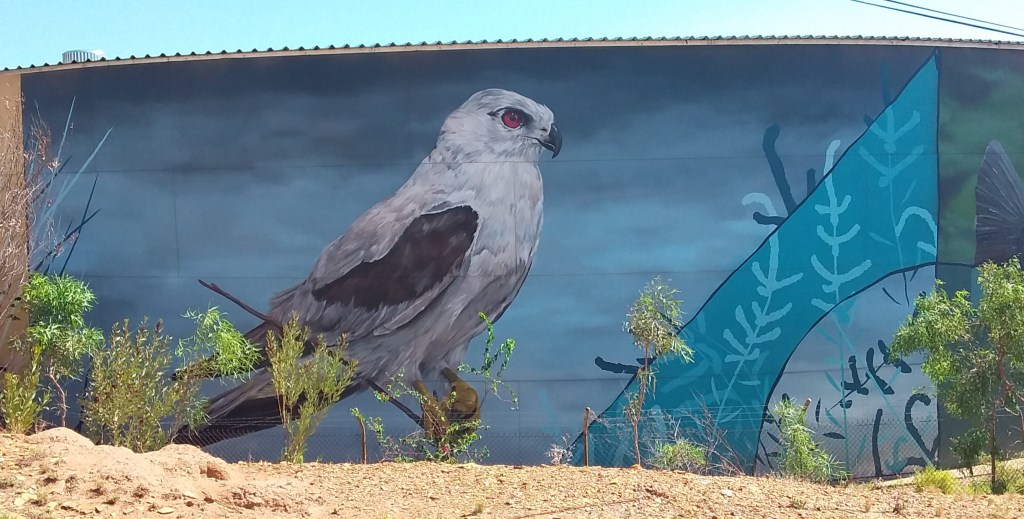
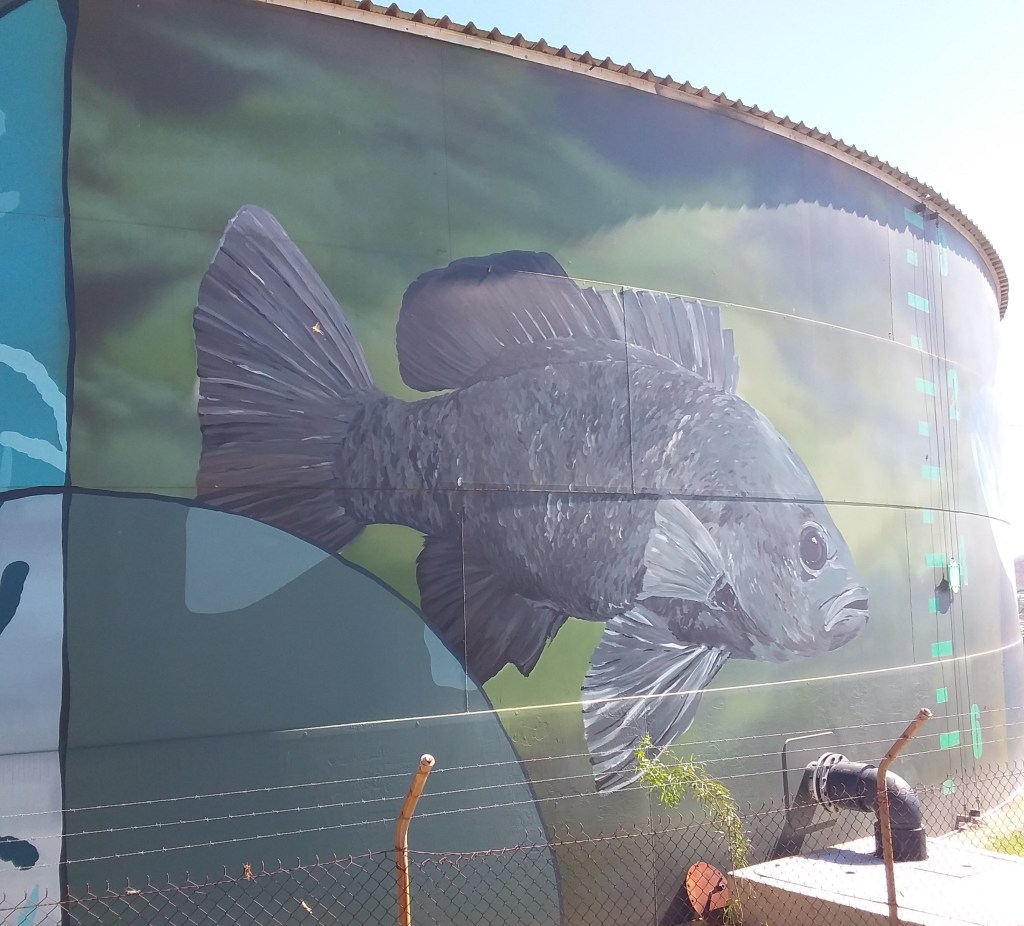
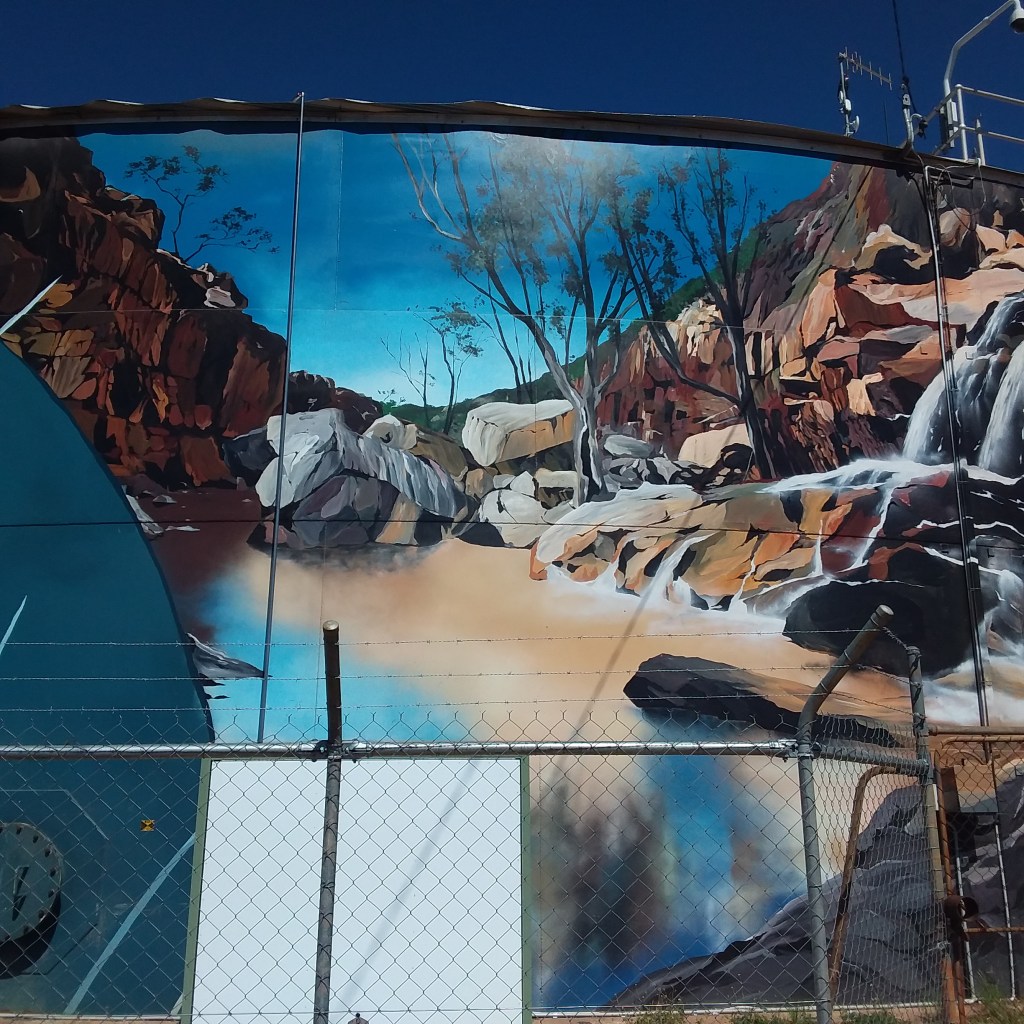
The painted silo at ‘The Gap’ gives the town a bit of a lift.

Just outside of Mount Isa, we came across a monument dedicated to explorers Burke and Wills to commemorate when they came through this area. Just sad that they died soon after.

Wednesday brought a big change in the weather. We could feel the start of the wet season building for a while and have been wakened during the night with loud thunderstorms but no rain. But for two nights it absolutely poured down. Our caravan leaked above our bed on the first night but luckily John fixed the problem by the second night. Many farmers will be happy but, for others, I think the rain has come a bit too early.

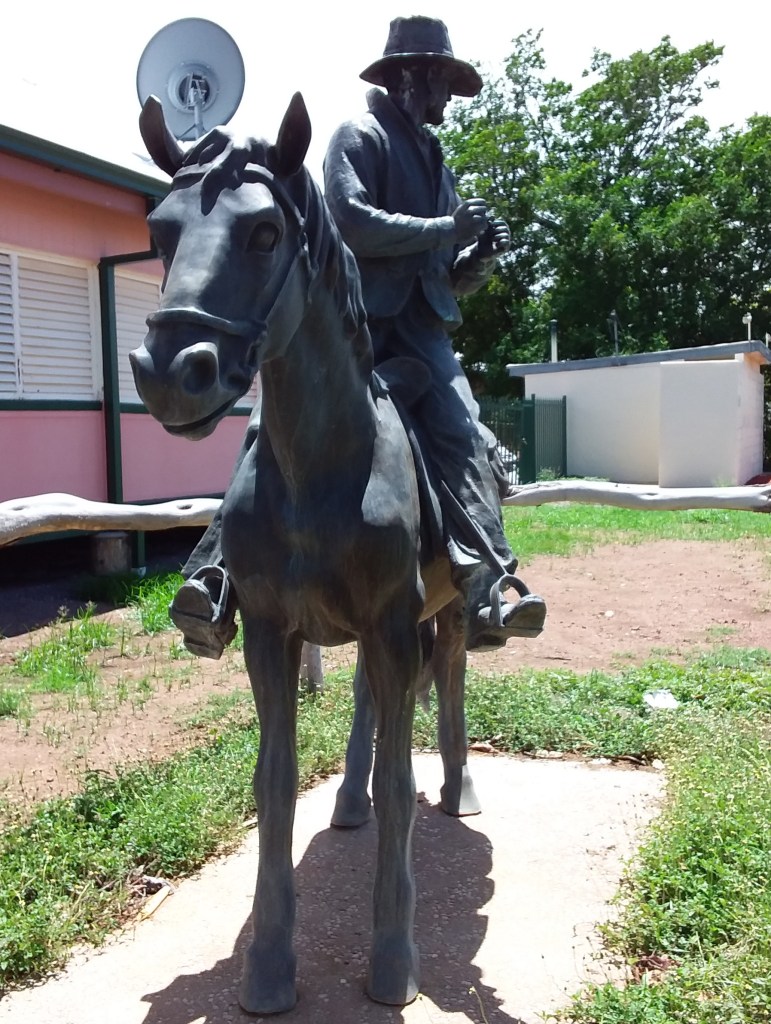
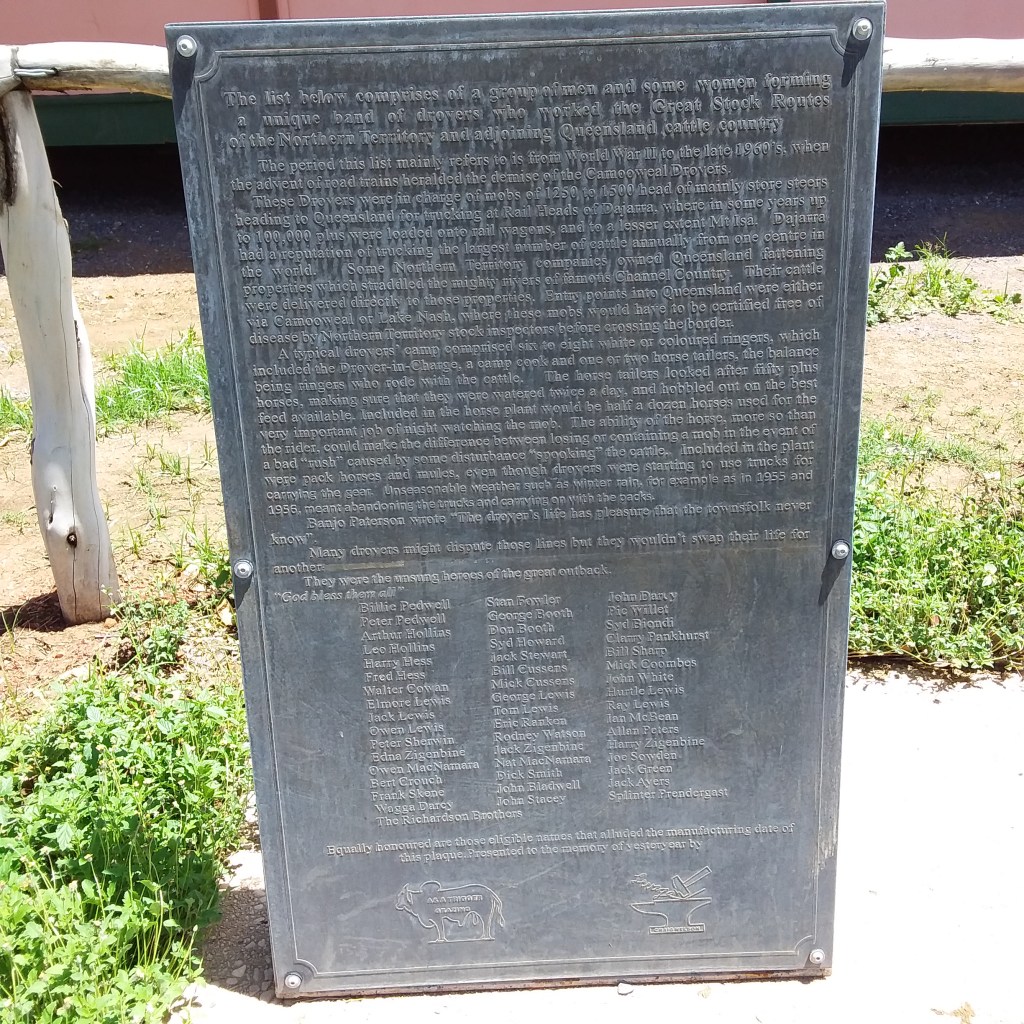
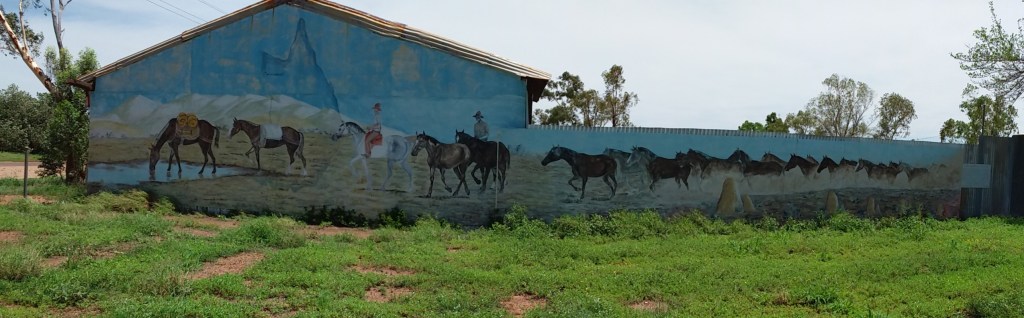
We didn’t mind Mount Isa but were happy to move on back towards the Northern Territory. The first little town we passed through, just before the border, was Camooweal. Blink and you’ll miss it. However, like many of these outback towns, they like to remember the Drovers. They even have a plaque naming many of them.

A mural on the main street depicting the Drovers

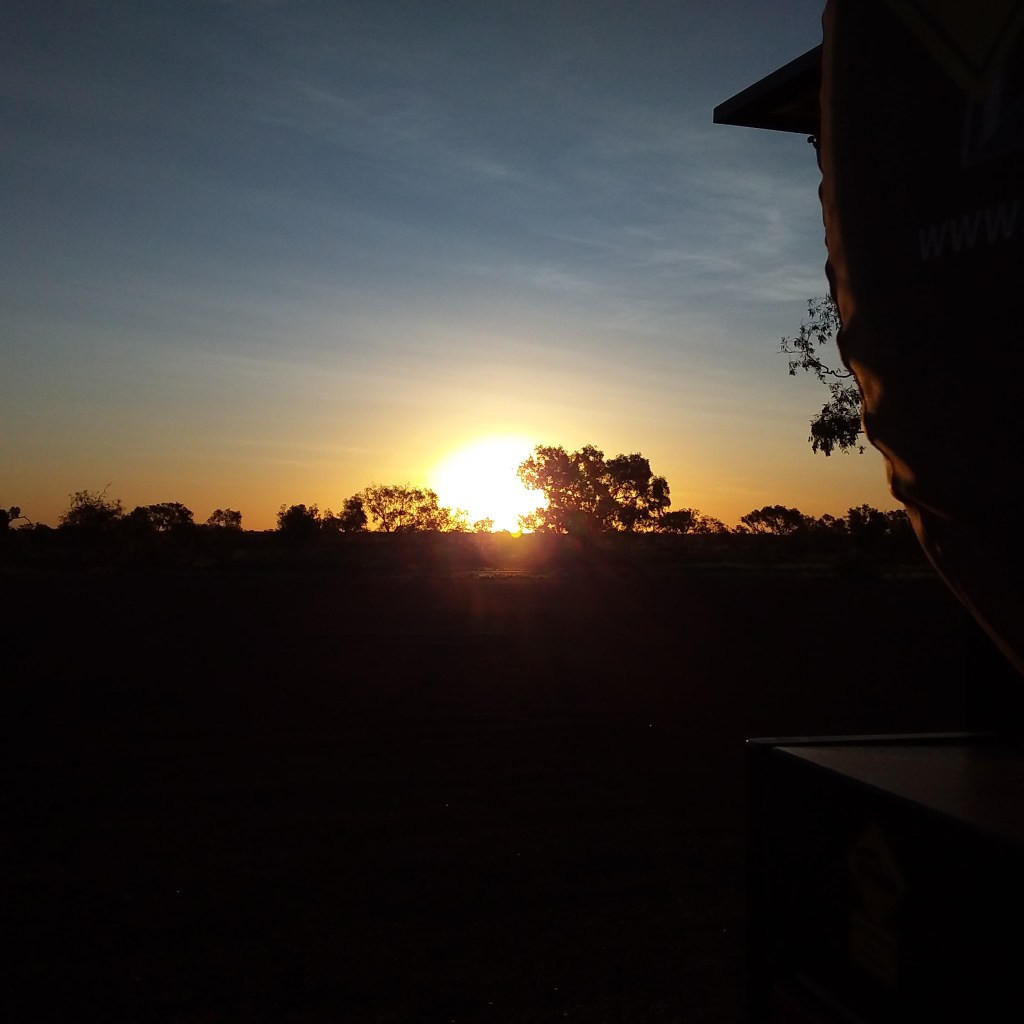
Having organised our ‘Good to Go’ permits, we had no problem getting back into the NT. We drove for some hours to the Barkly Homestead then decided to push on along the Tablelands Highway until we found a quiet place to camp beside the road. It was very peaceful and we watched a lovely sunset over the desert.

The next morning we took off for Borroloola.

Just passing through

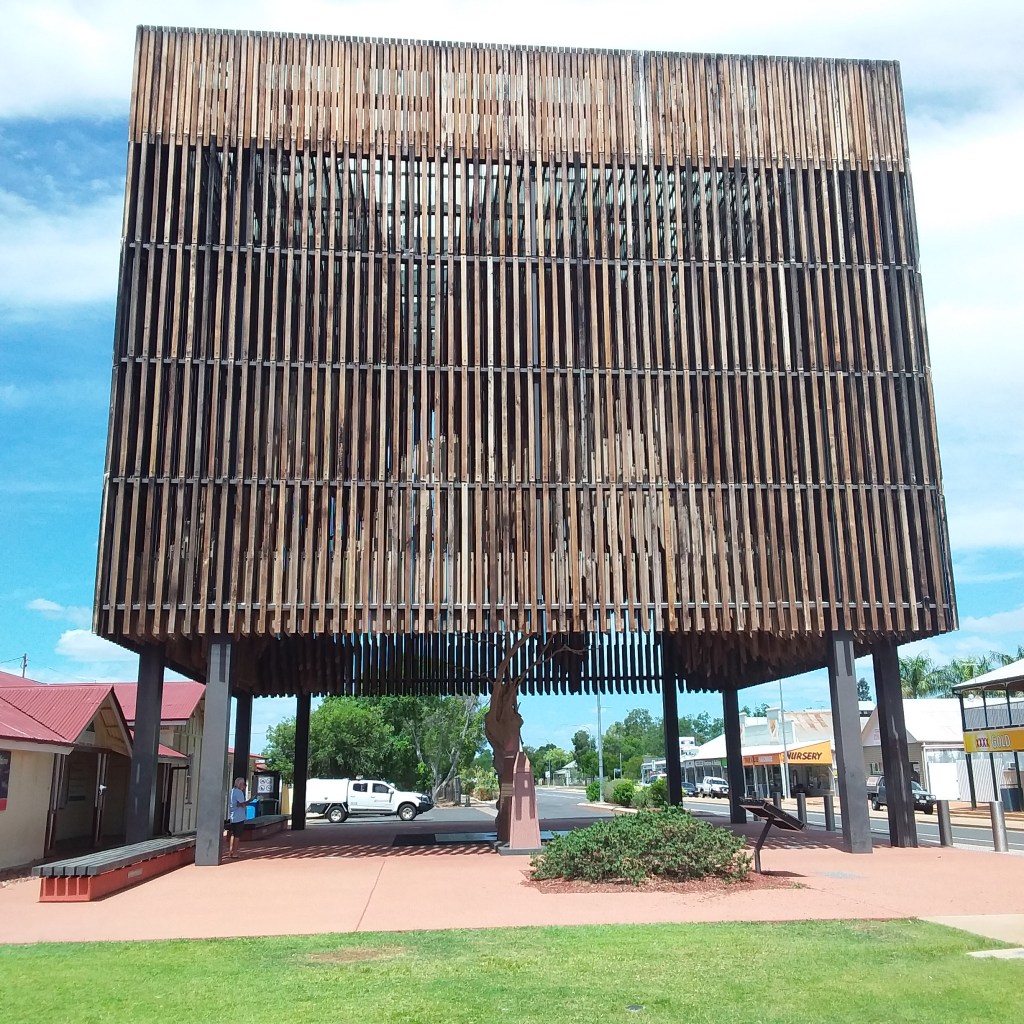
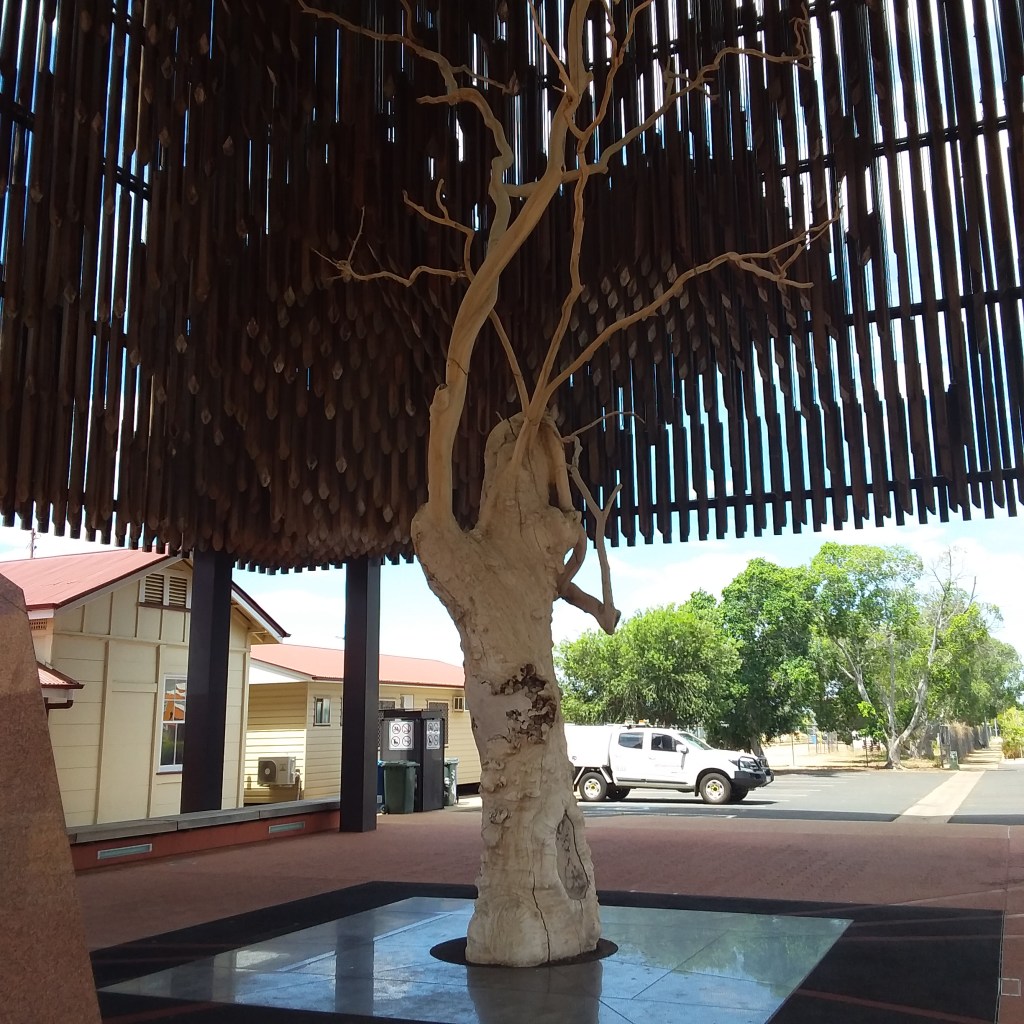
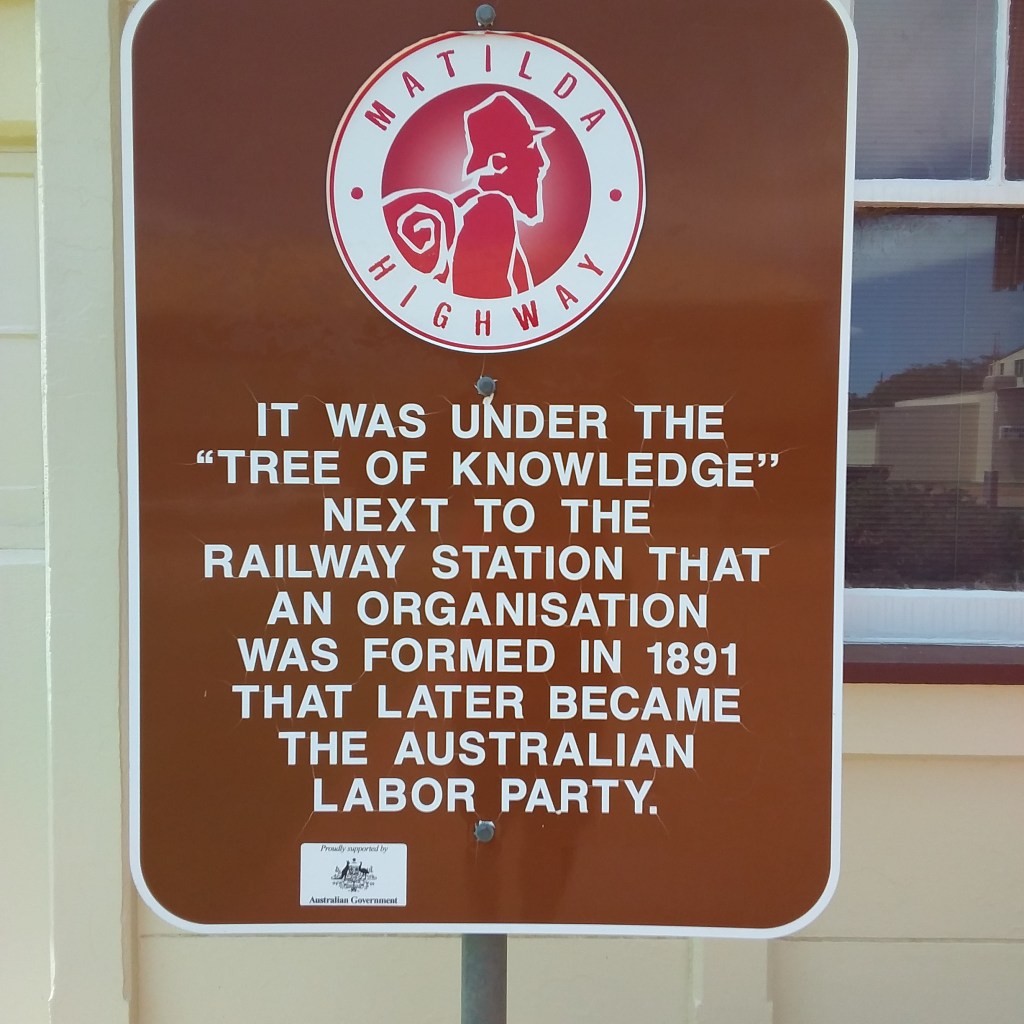
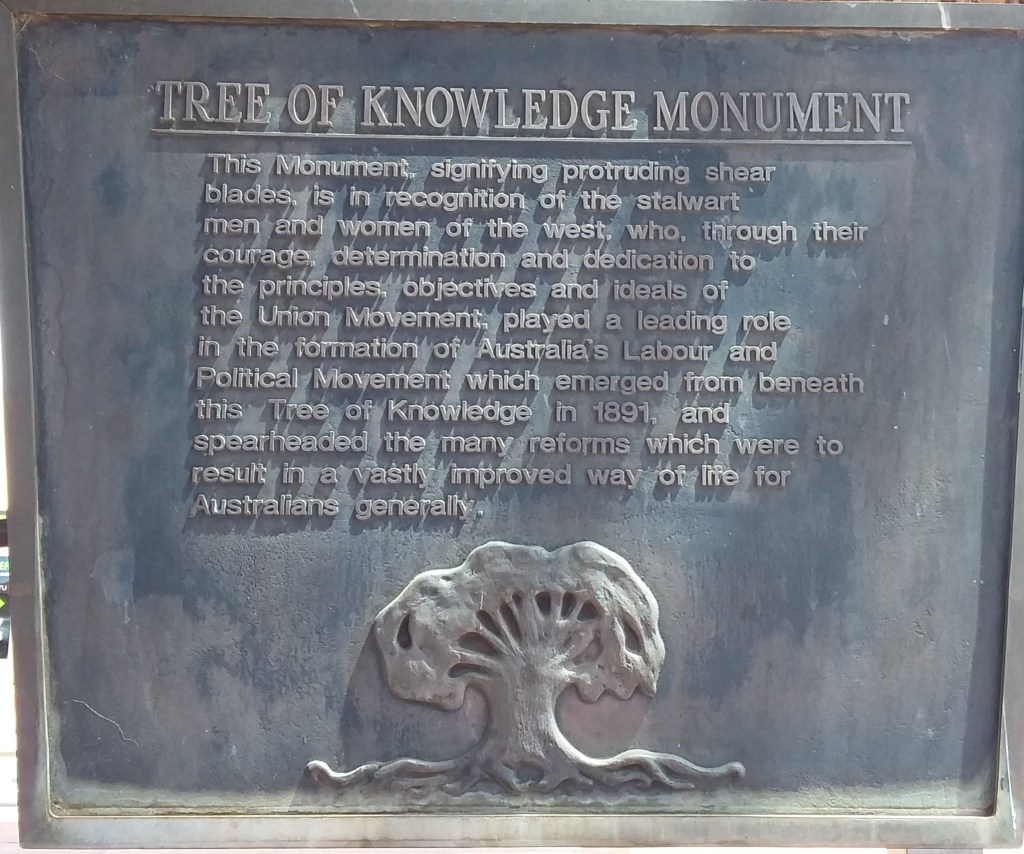
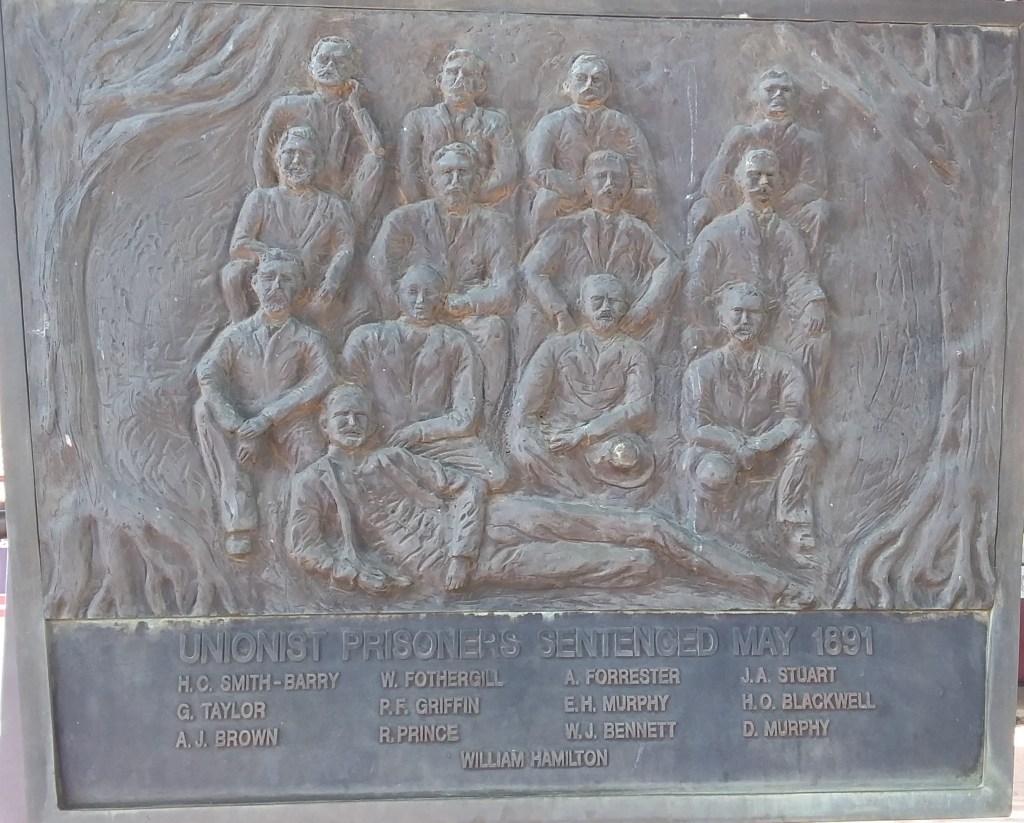
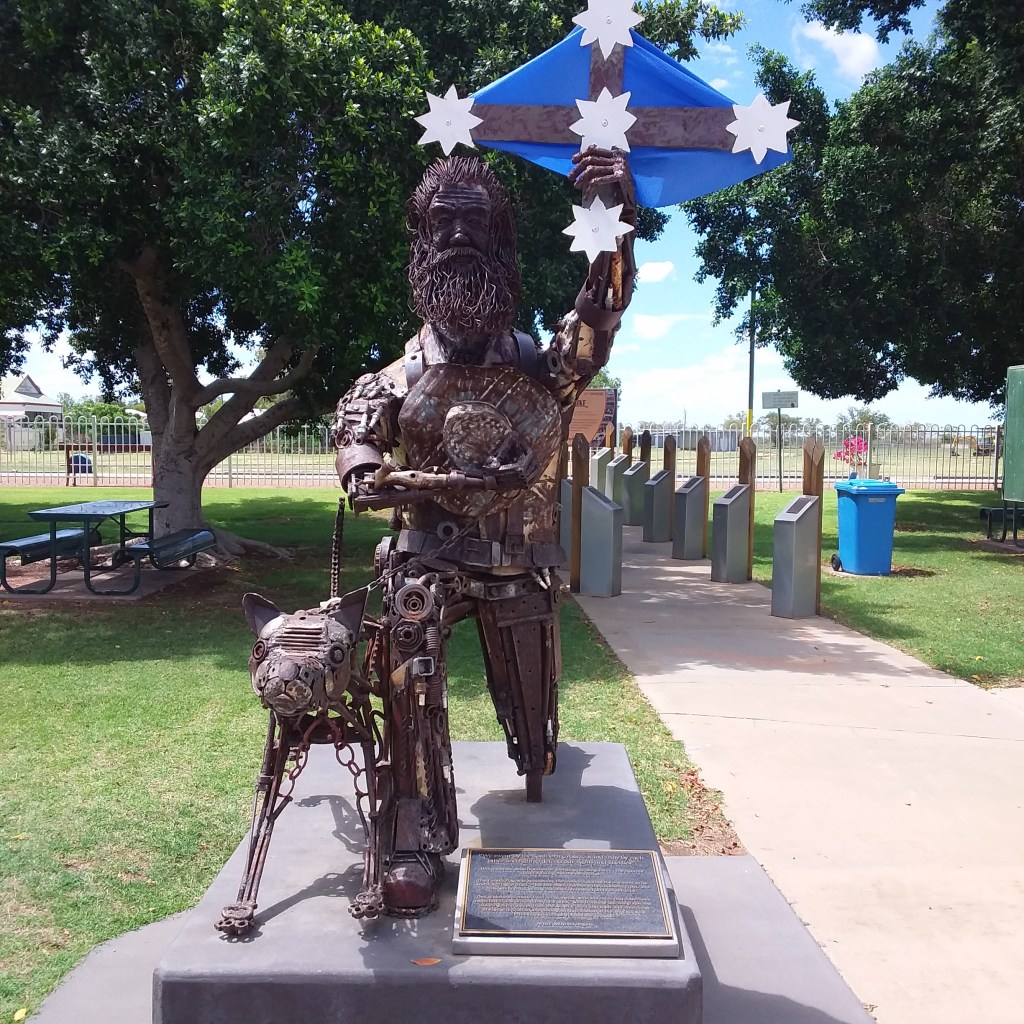
We left Longreach to begin making our way towards Charters Towers then Mount Isa before returning to Nhulunbuy for December and January. On the way we stopped at a little town called Barcaldine and visited the Tree of Knowledge. I didn’t know about this event in history.

At the Drovers’ Hall of Fame in Longreach, we heard about the Shearers’ Strike of 1891. We learned more about it here. Around one thousand shearers marched through Barcaldine demanding better conditions for graziers. Thirteen men were sentenced to three years hard labour. This strike led to the formation of the Australian Labor Party

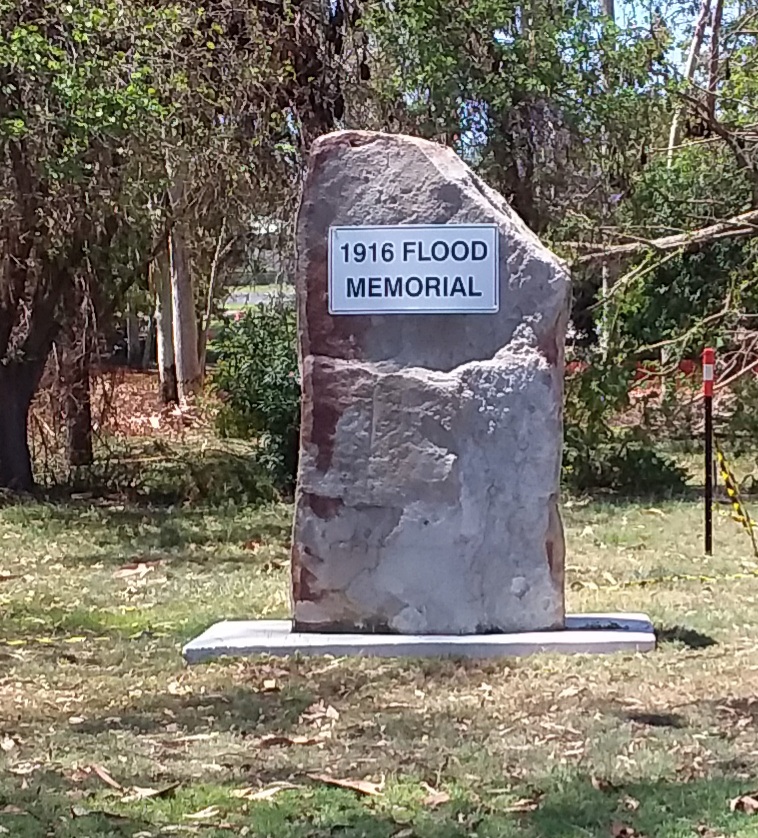
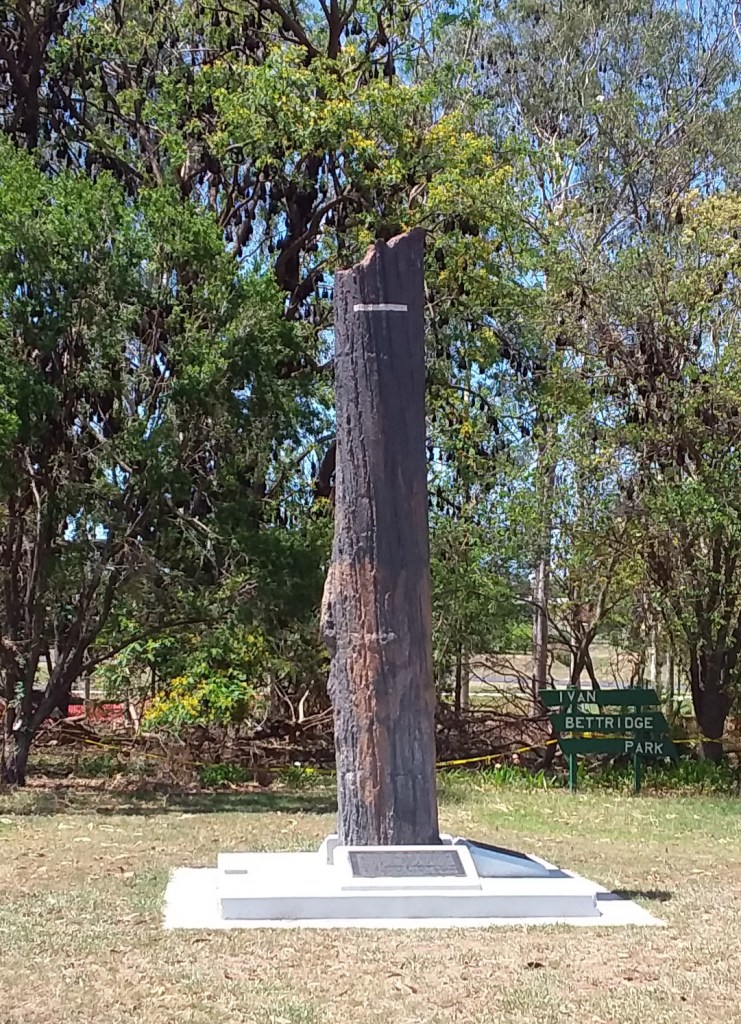
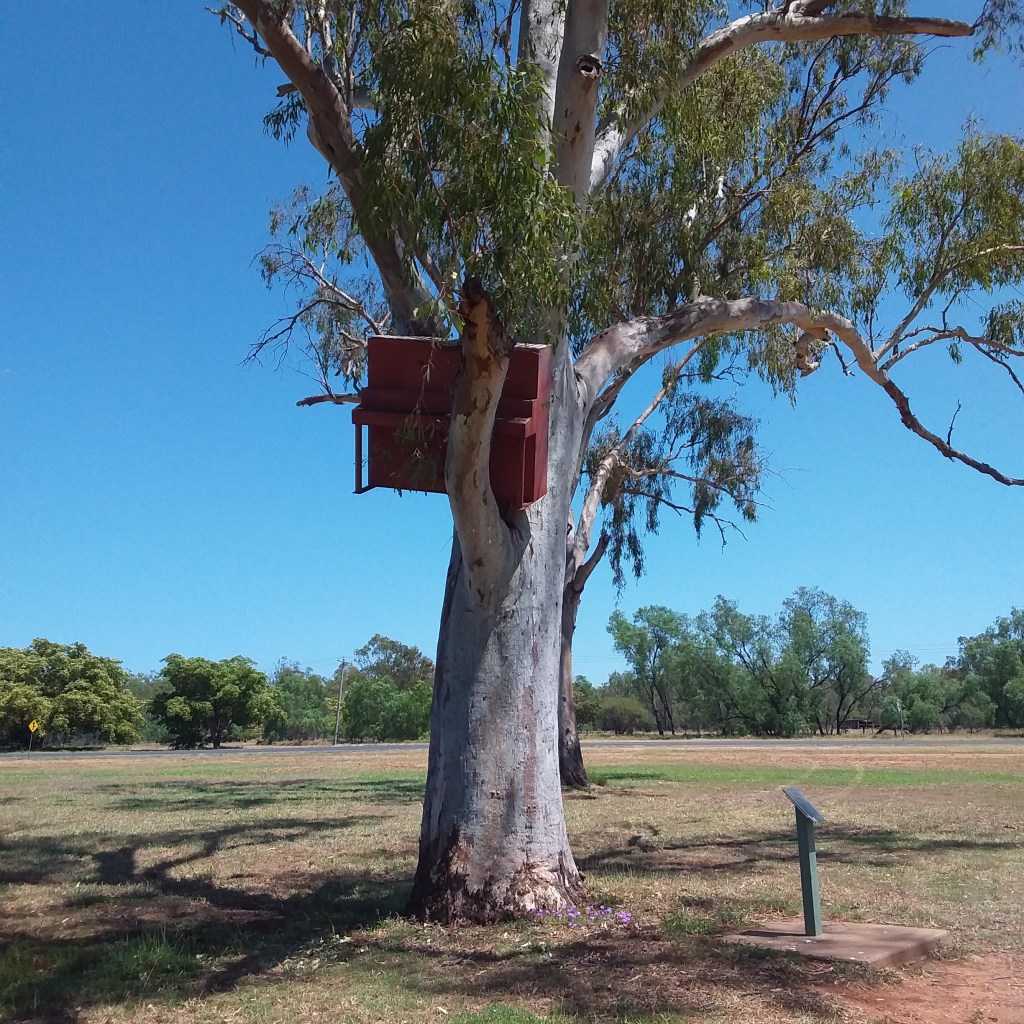
Later we stopped at the lovely town of Clermont. We visited the memorial of the 1916 flood. This is another important piece of Australian history I knew nothing about, yet it is, I believe, the second worst flood in Australia in terms of number of people killed. When the town of Clermont was being planned, the local Aboriginal people warned them that they shouldn’t build the town on the flat, flood prone area. They were ignored and in 1916 when a cyclone hit the coast, a wall of water flooded Clermont, destroying the town and killing 65 local residents. (Clermont was rebuilt nearby in a safer spot).

The ‘piano tree’ photo on the right is a replica of the photo on the left taken just after the flood. A piano was wedged into the tree from the force of the water!

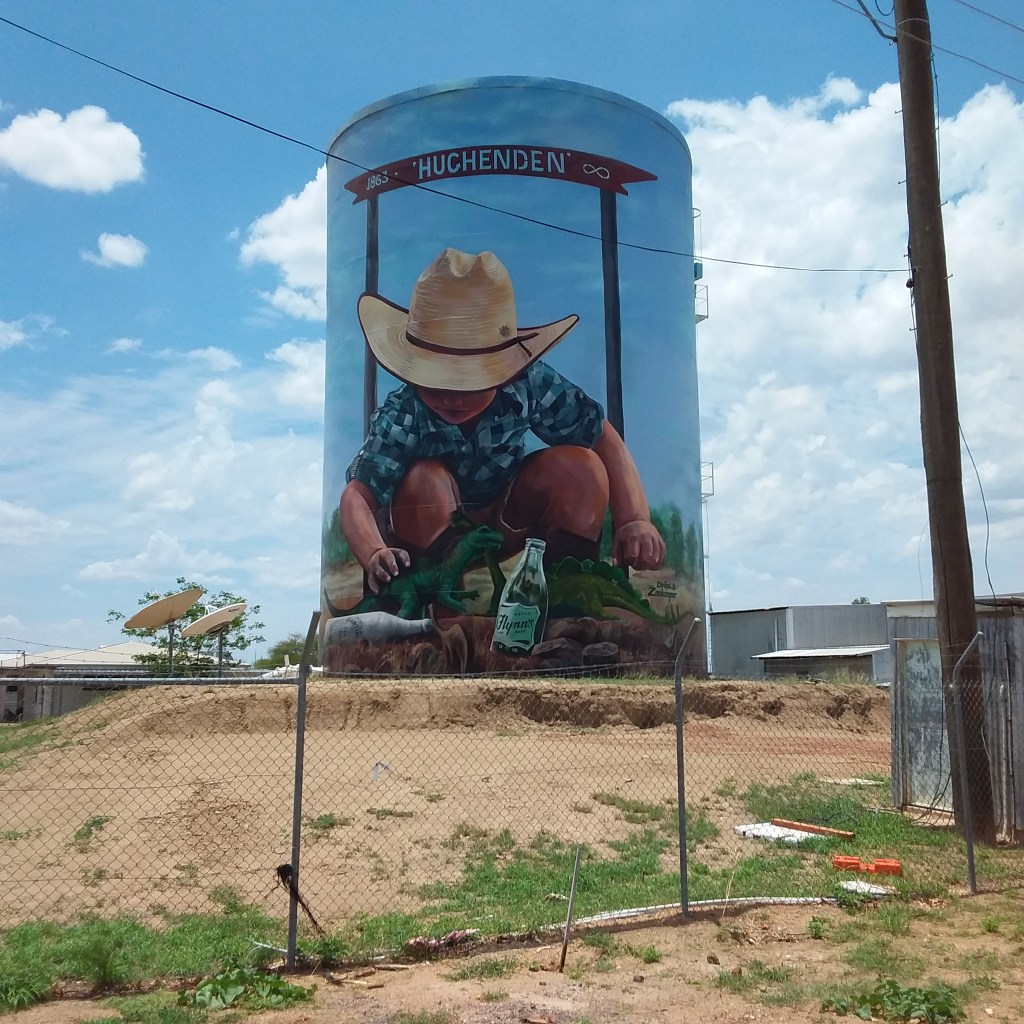
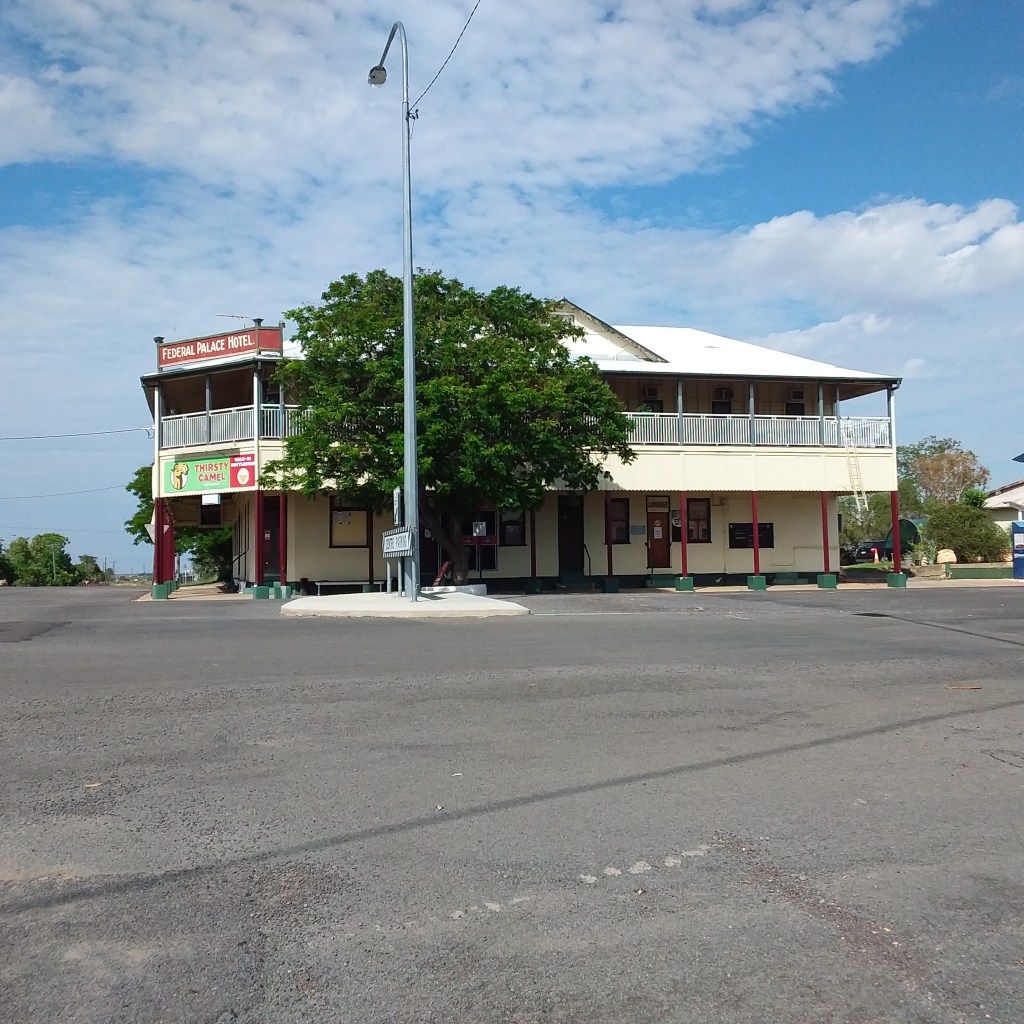
All the little towns we drove through looked nice. Most have something to set them aside from the others. Hughenden, for example, has a beautifully painted water tank.

We stayed overnight in Richmond at a lovely (very reasonably priced) caravan park. We really liked this town. Again it has the wide streets, is very clean and friendly. The buildings are a reminder of the old days, and all along the street is information about historical events of the town.

Richmond is a lovely town

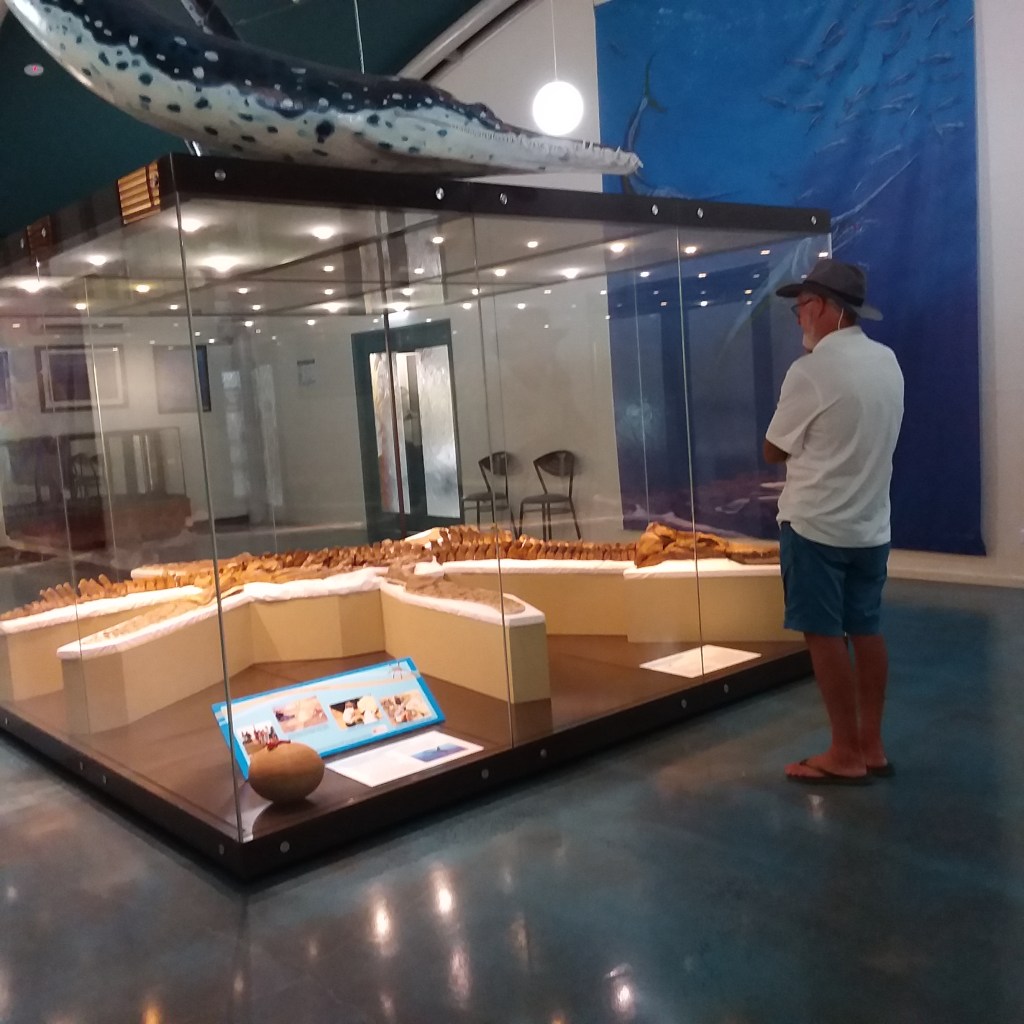
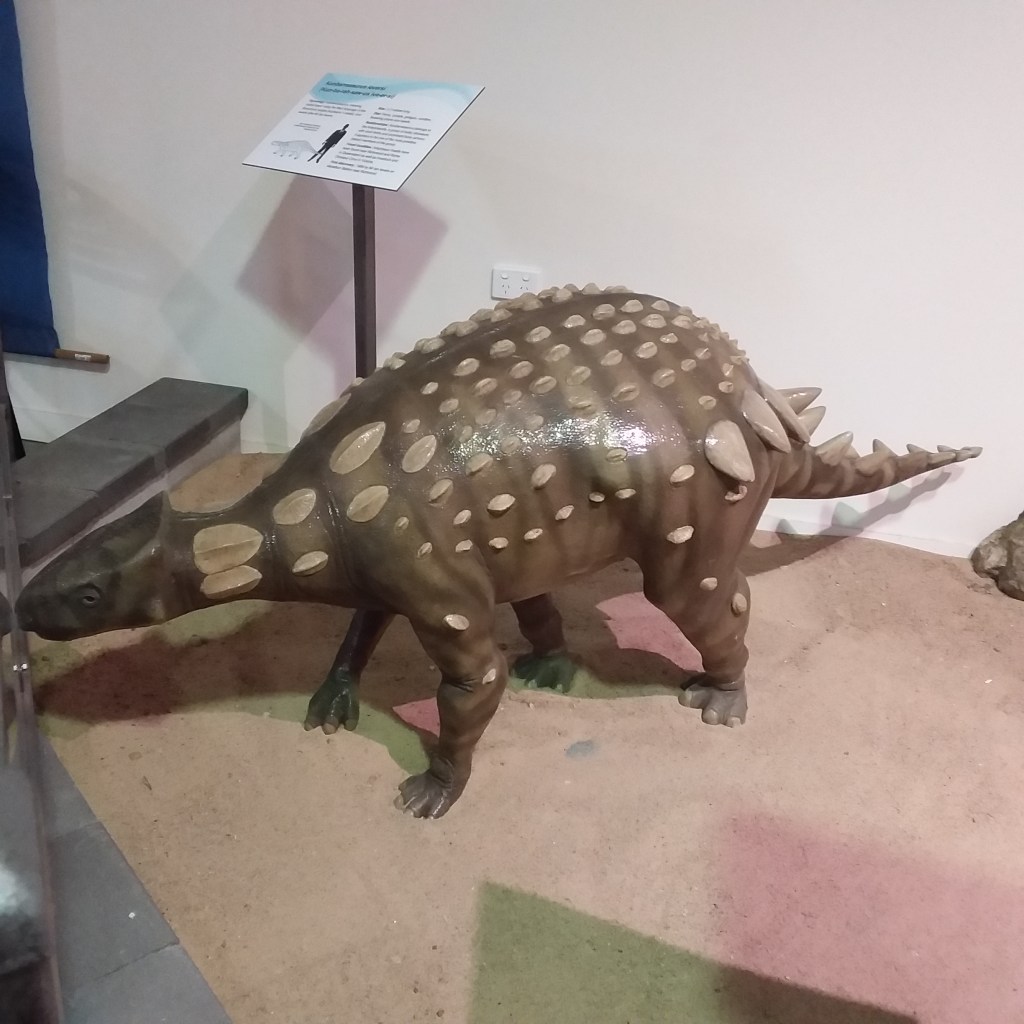
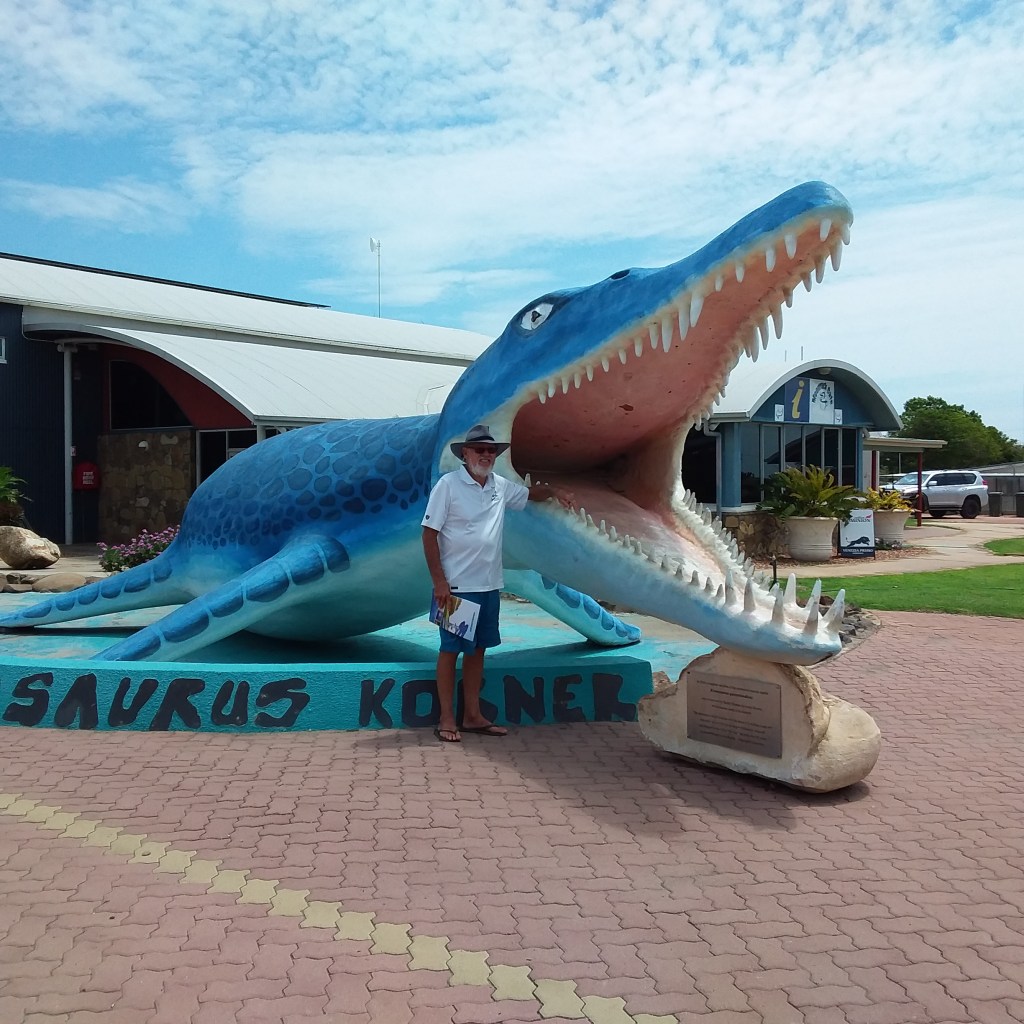
We had missed out on seeing the dinosaur museums in Winton but decided to visit the one here in Richmond. So we called into Kronosaurus Korner and spent a couple of very interesting hours in there. Many dinosaur fossils have been found in this area which was historically an inland sea. We were quite surprised at the amount of fossils and dinosaur bones found nearby.

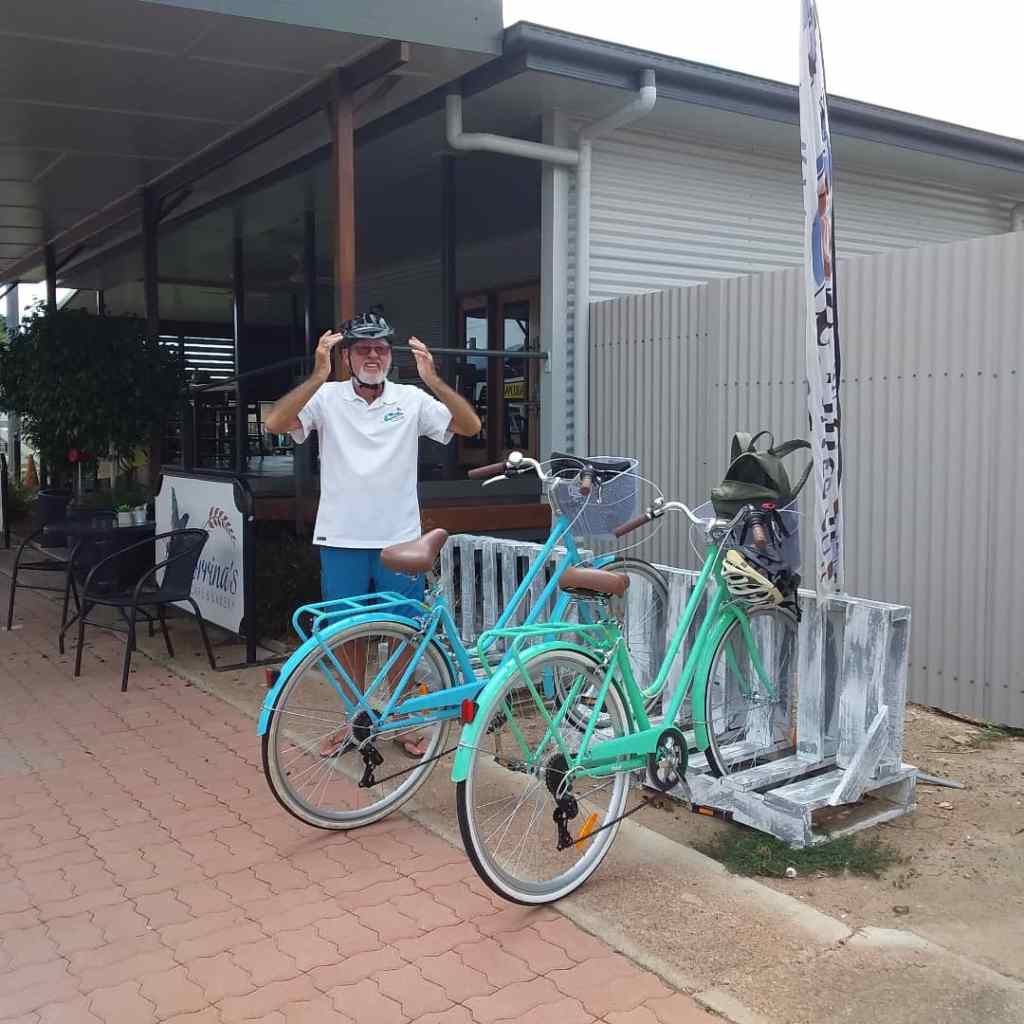
We left Richmond and drove to Julia Creek where we booked into the caravan park for the night. They had bikes available for use so we decided to ride into town which was close by.

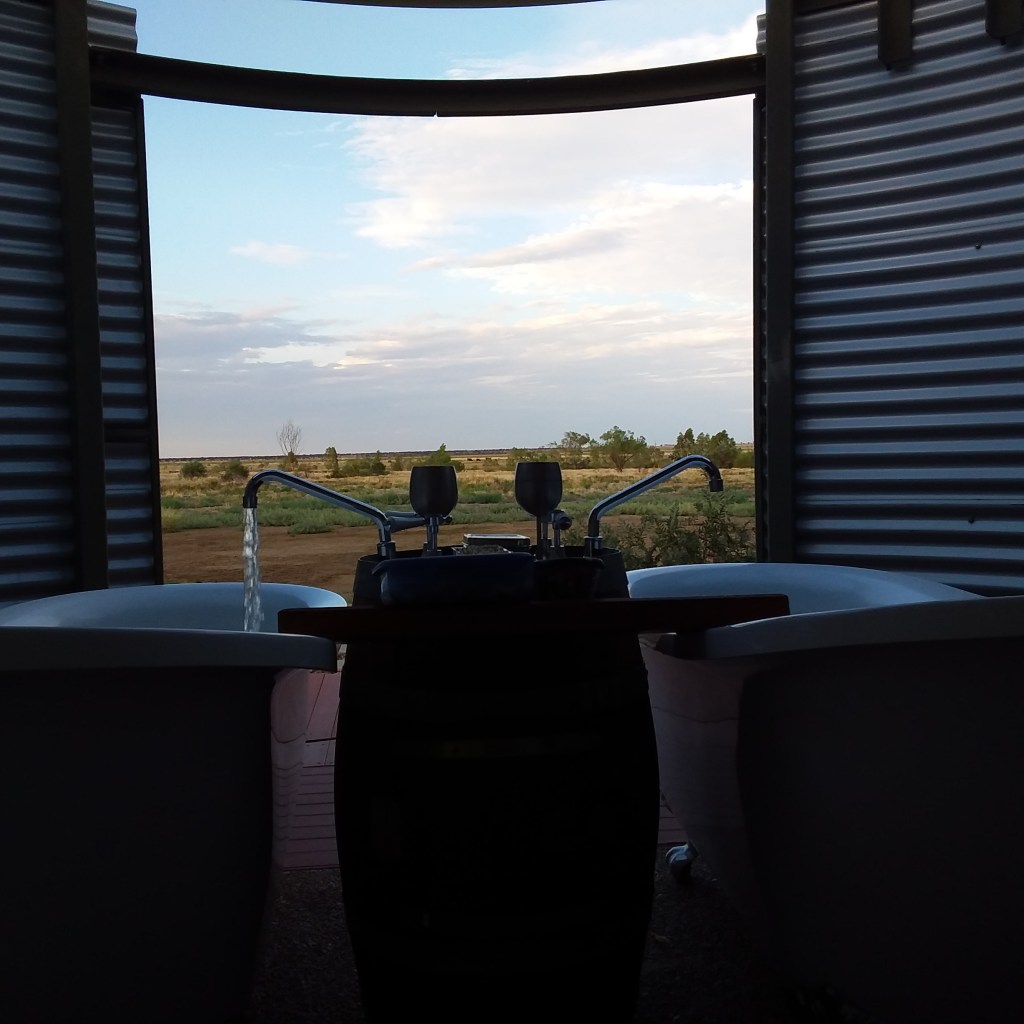
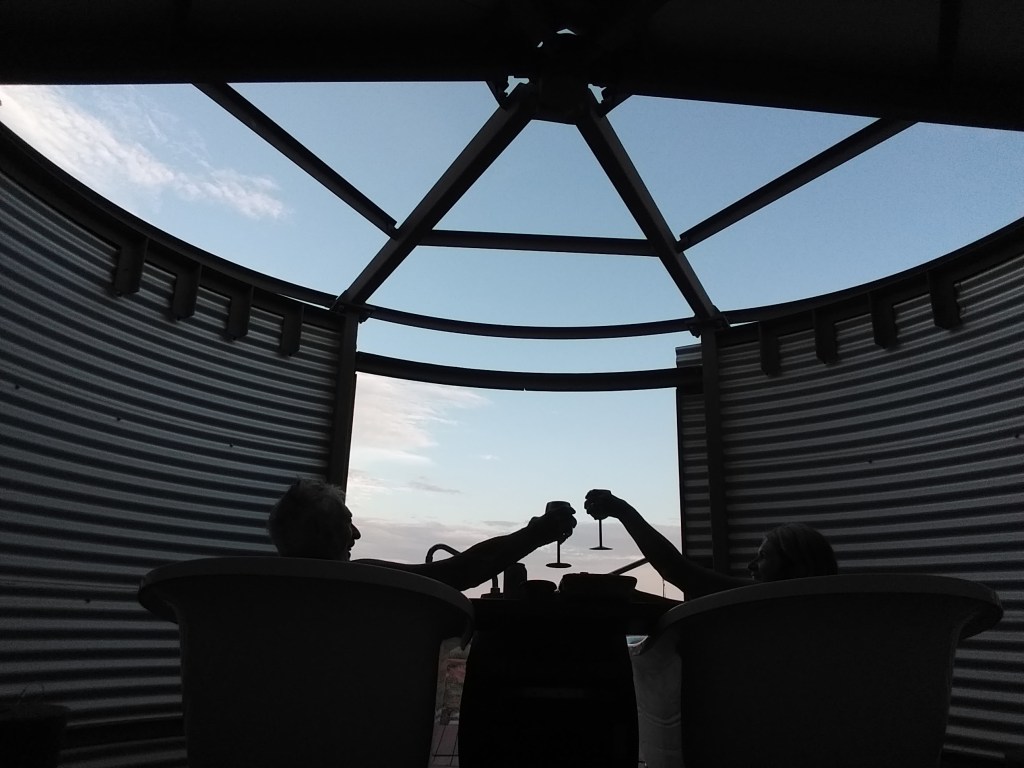
I knew that the caravan park had some Artesian Baths and I was really keen to book in. John was not so sure but willing to keep me happy. So I booked it for the evening and we took our own wine, cheese and biscuits. It was wonderful soaking in a bath overlooking the outback.

We have loved visiting these small outback towns, learning about their history and enjoying what they have to offer. We are now heading to a bigger town – Mount Isa.

Longreach – another lovely town in the outback

Longreach continues the theme of the Outback Pioneers. It is another town clearly proud of its history. We drove in, once again, to a lovely, clean town which was very welcoming. Much thought has gone into the planning here. The roads are wide, as are the footpaths. We saw two men on gophers, chatting to each other on the footpaths and there was plenty room to pass and window shop. There were women sitting chatting on benches and others having take away coffee sitting under the shade on the island in the middle of the road. Longreach is a very friendly town and a lady I spoke to in the craft shop told me she would never live anywhere else.

The main street of Longreach is very welcoming. A tribute to the Pioneers.

There were many things I noticed that made me think that this town cares about its visitors and locals. One was the CWA Rest Rooms! I was looking for a public toilet and came across this small building with not just a toilet but a shower and a little sitting area with some books and magazines. Very thoughtful. Another was the Apex Park where we camped for $5 per night. It was close to town and pleasant. We had the company of hens, brolga and wallabies.

Brolgas come to say hello

The shops in Longreach are lovely, and there’s a great bakery and nice cafes. We did try to give back to the town by buying coffees, lunch and little souvenirs. All the streets are named after birds which made it quite fun and easy to get around.

Swan Street
Duck Street

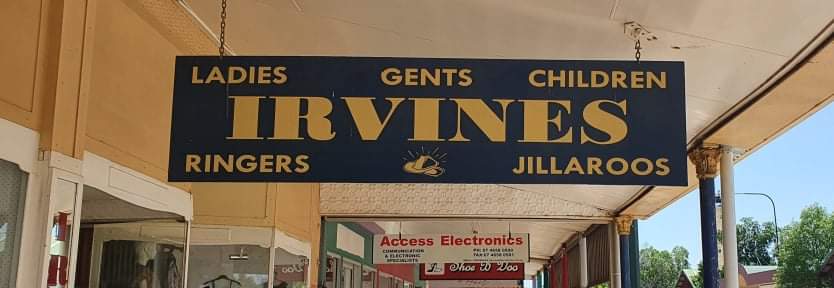
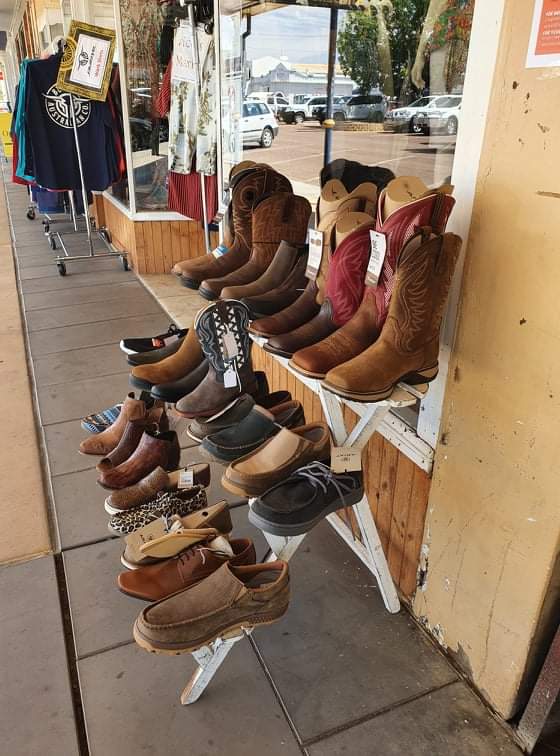
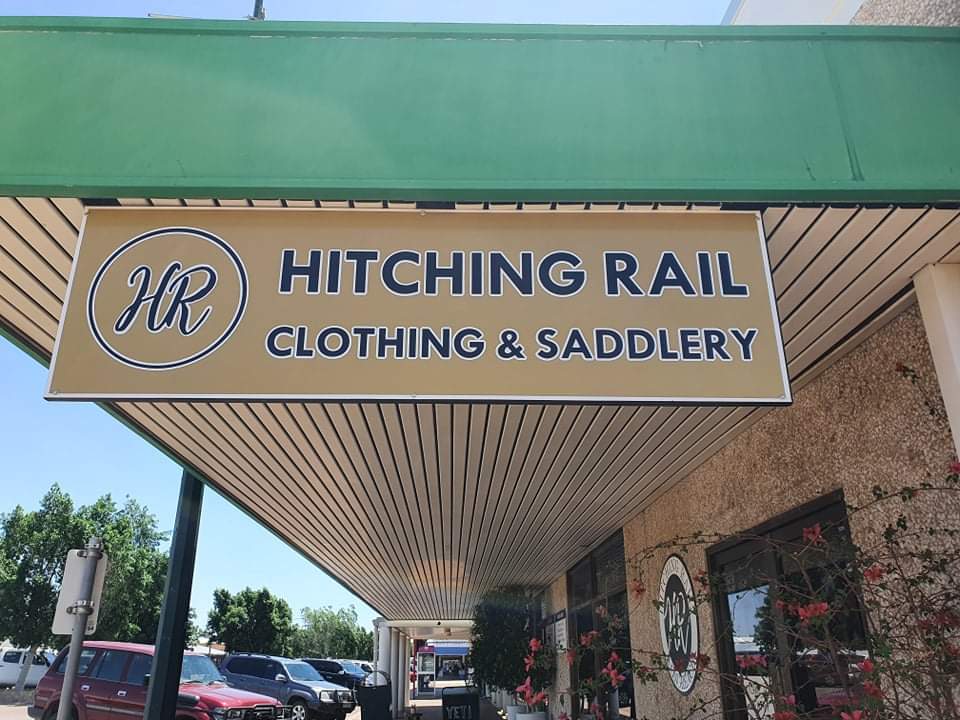
I loved that many of the shops and businesses still cater for stockmen and continue the historical theme of the outback pioneers.

The Outback Pioneering theme is a constant throughout the town.

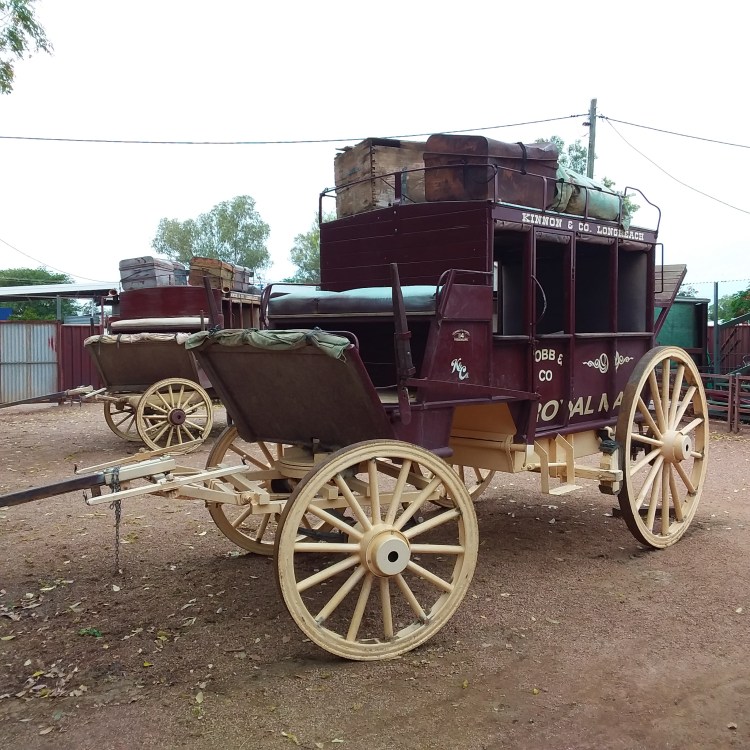
Longreach was also on the stagecoach route with plenty old stagecoaches still around town

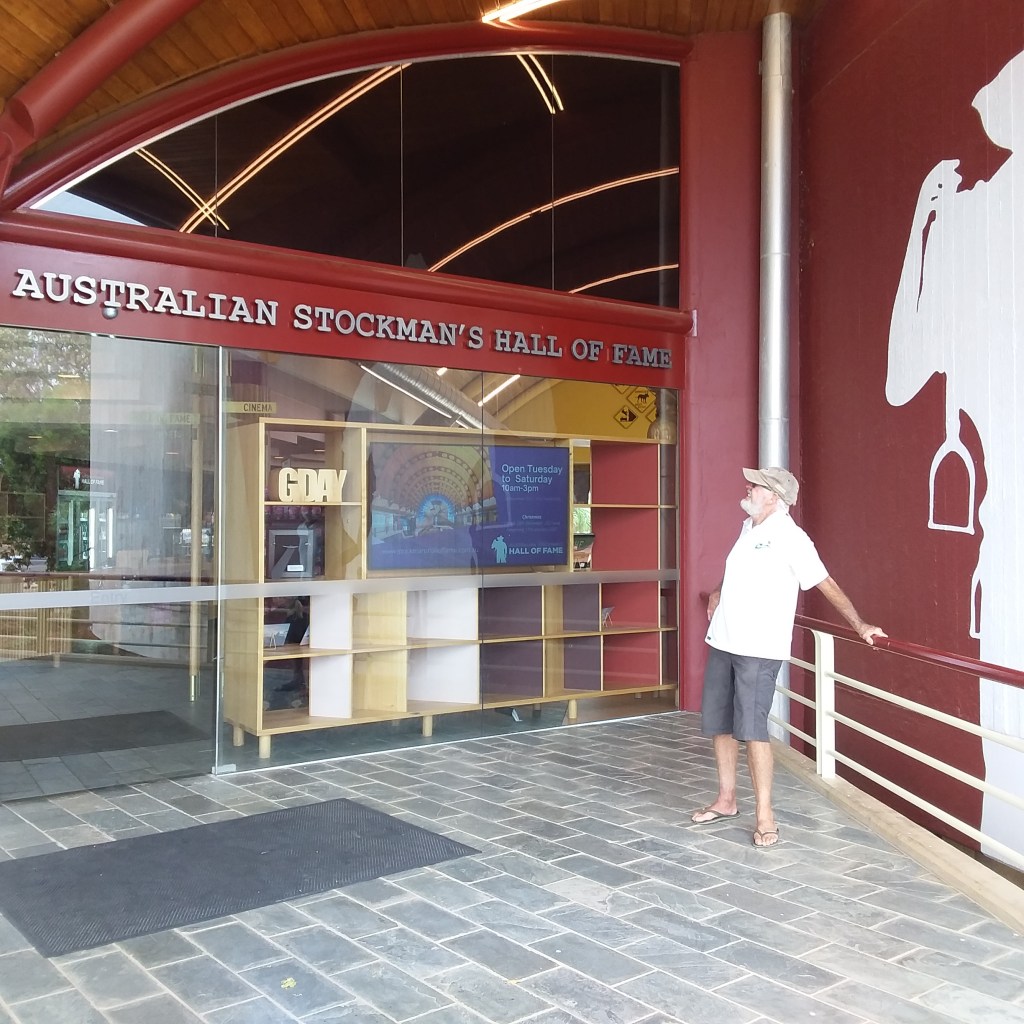
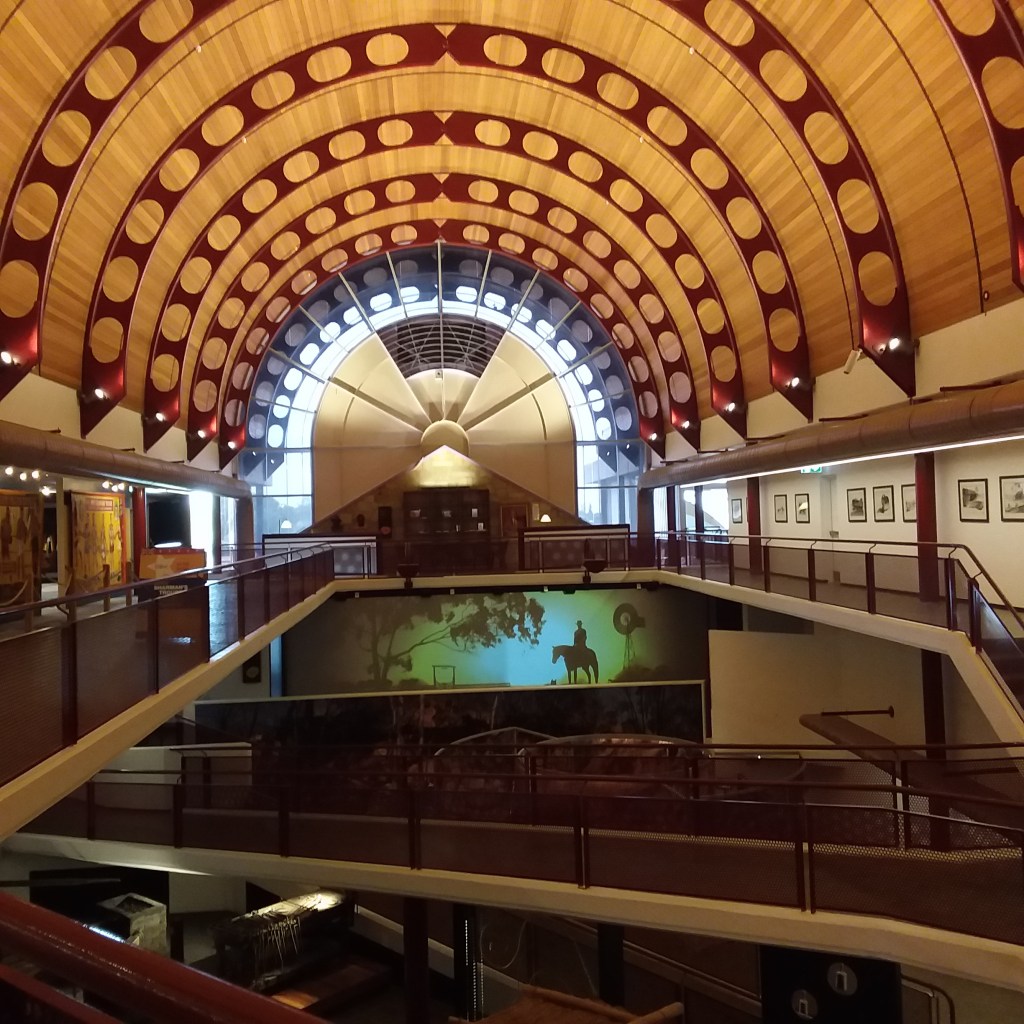
John was particularly looking forward to the Drovers’ Hall of Fame so we made our way there. Despite the fact that that the original exhibition burnt down, this one was excellent. We continue to be impressed by the effort these small towns put into teaching visitors about their history.

John was really looking forward to seeing this exhibition

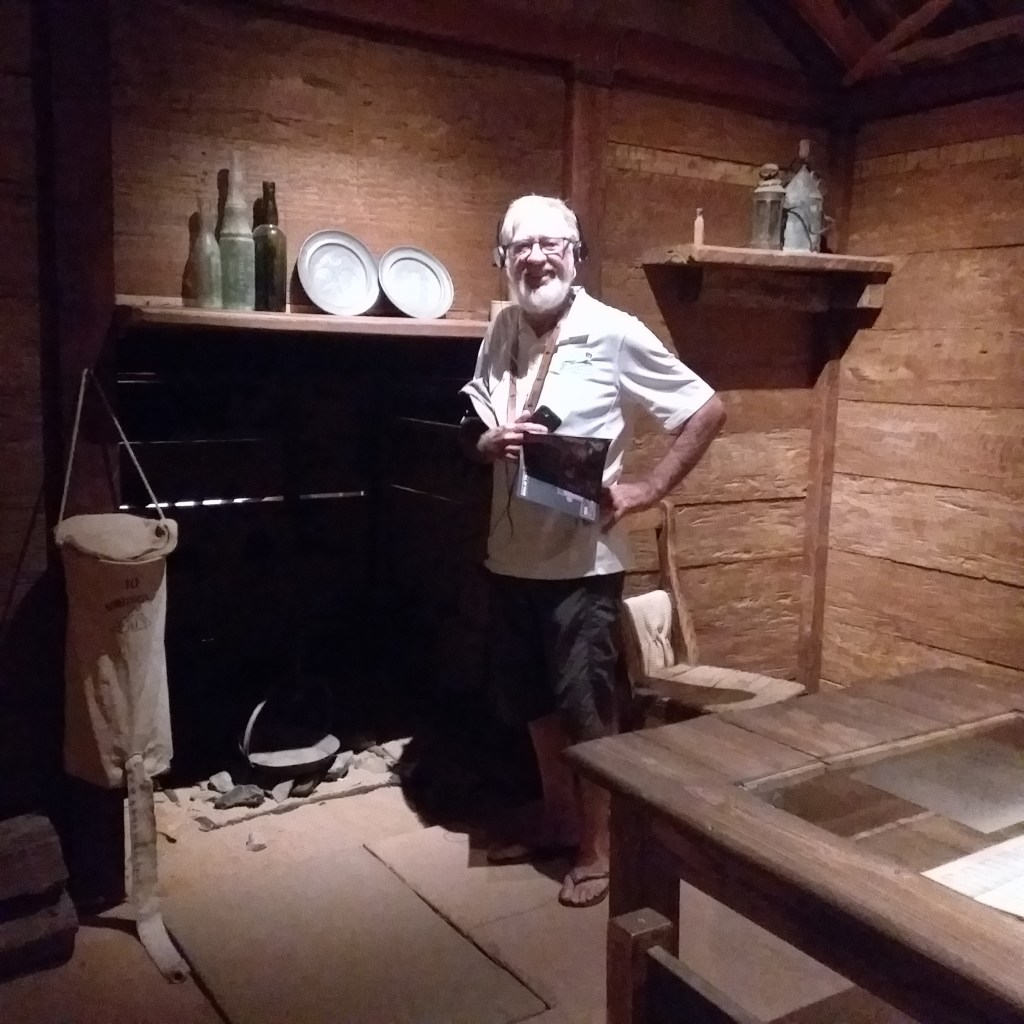
We enjoyed reading about the history of droving and looking at the exhibits; we also watched a film in one of their two cinemas that explained the beginning of droving cattle across Australia and how, over the years, things have changed. Although there are still jackaroos and jillaroos who muster cattle, many of the outback stations rely on helicopters to move their stock. Watching the film reminded me of my days as a jillaroo in the Snowy Mountains when I was young!

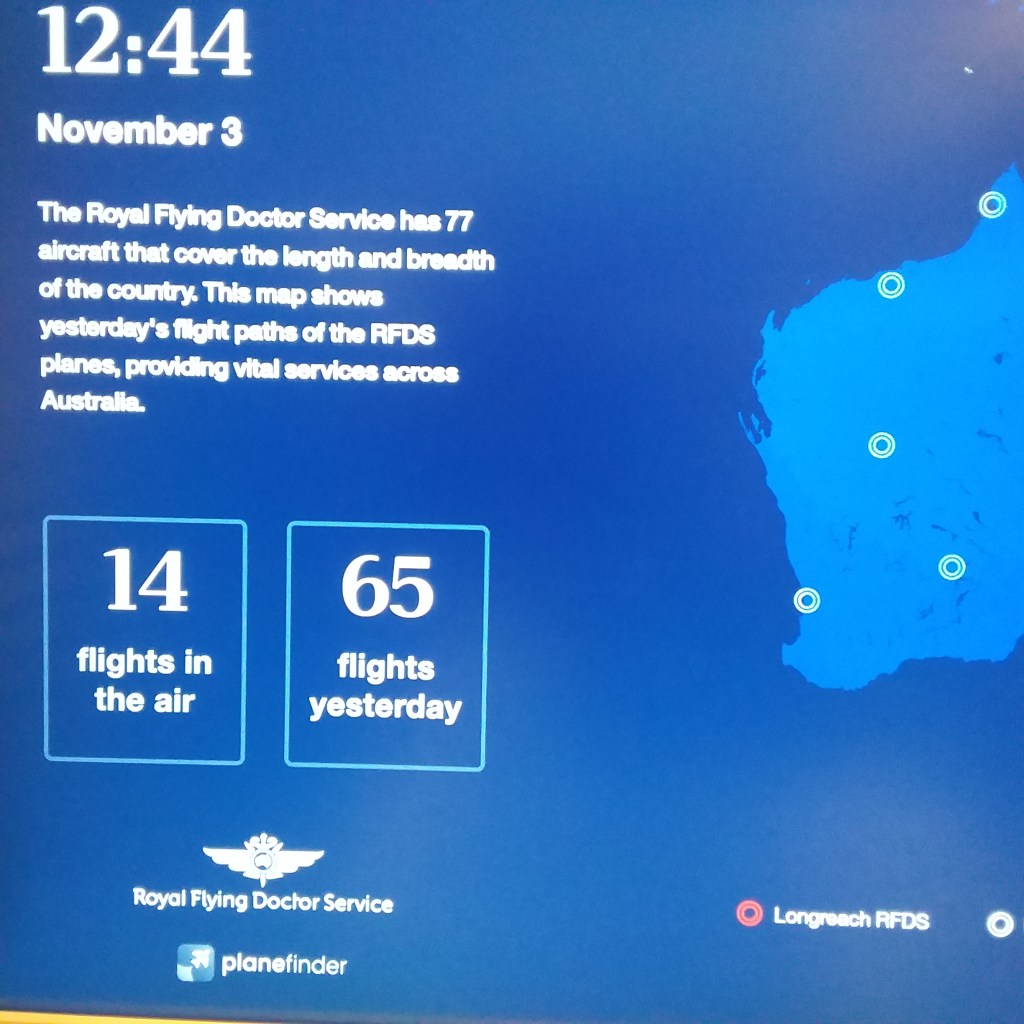
All museums we have visited in the outback have had a section dedicated to the Royal Flying Doctor Service because it is such a vital service, saving countless lives.

Impressive

We spent a couple of hours in the museum loking at the rest of the exhibits, had lunch and spent some time in the gift shop. It was a morning well spent.

Winton – a breath of fresh air in the desert

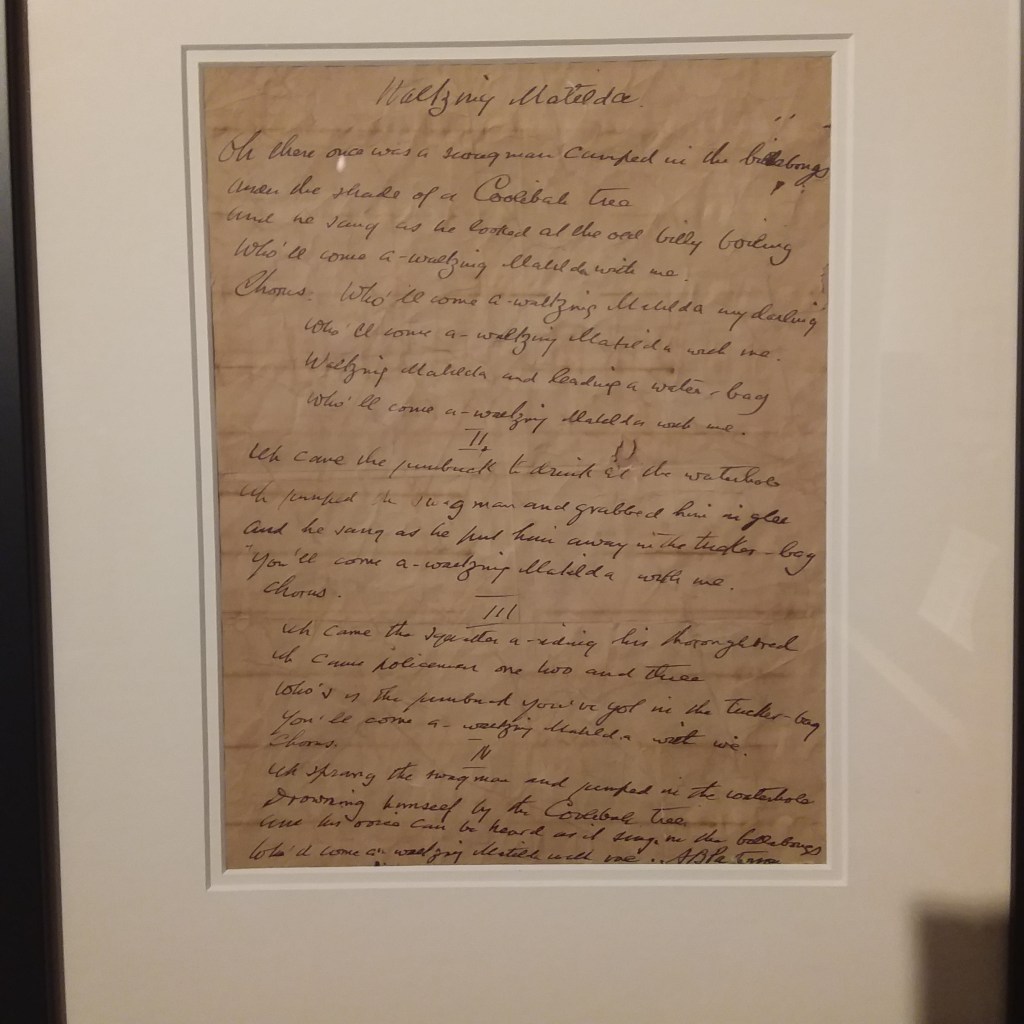
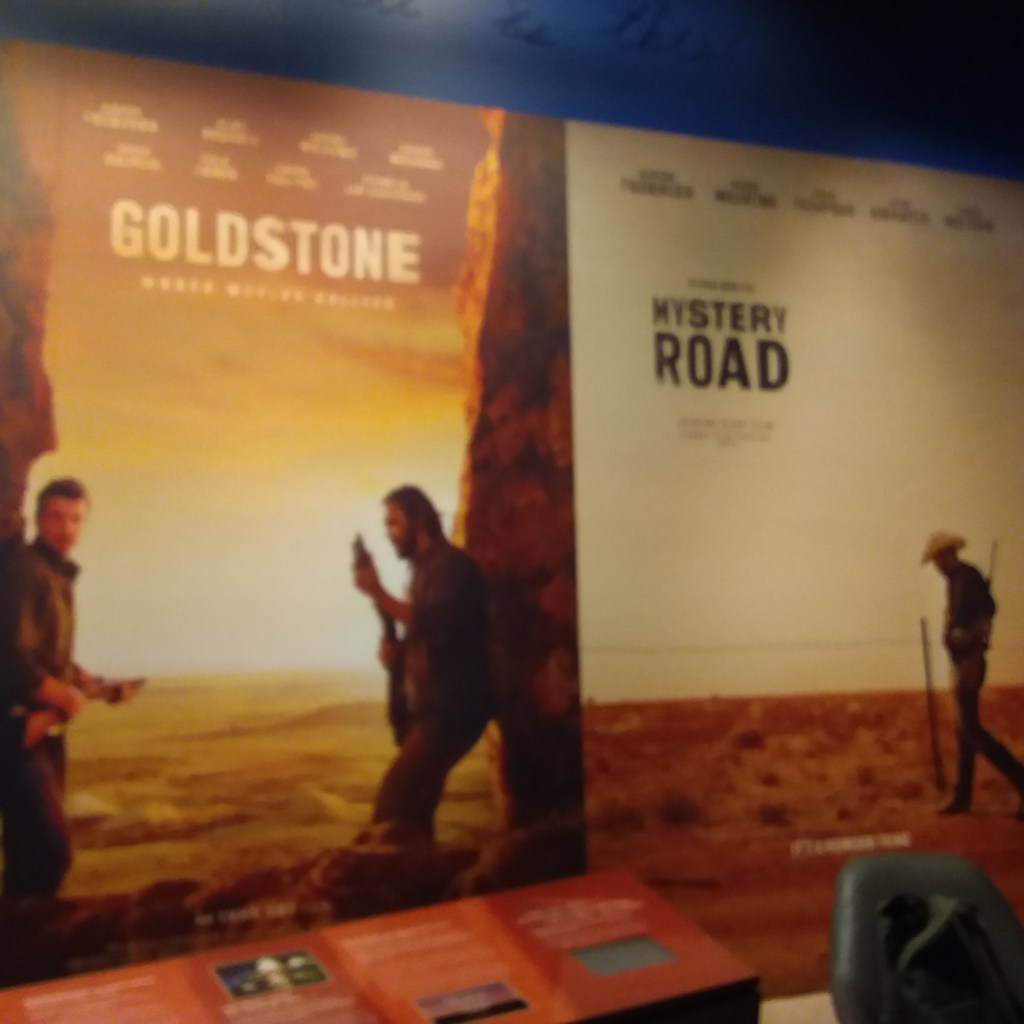
What a lovely little town Winton is! We came off the desert into this lovely, clean town with wide streets and interesting shopfronts. And very quickly we found out there is a lot to learn about Winton – Banjo Patterson wrote ‘Waltzing Matilda’ when he lived here; opals are found all over this area; Australian western films like ‘Mystery Road’, ‘Goldstone’ and ‘The Proposition ‘ were filmed in the desert around here; dinosaur fossils and footprints have been discovered close to town; and about a quarter of the population of this area joined the armed forces in the First World War with a similar number in the second war. I got a very strong feeling that the Winton locals are proud of their town and their history, and are keen to share it with visitors.

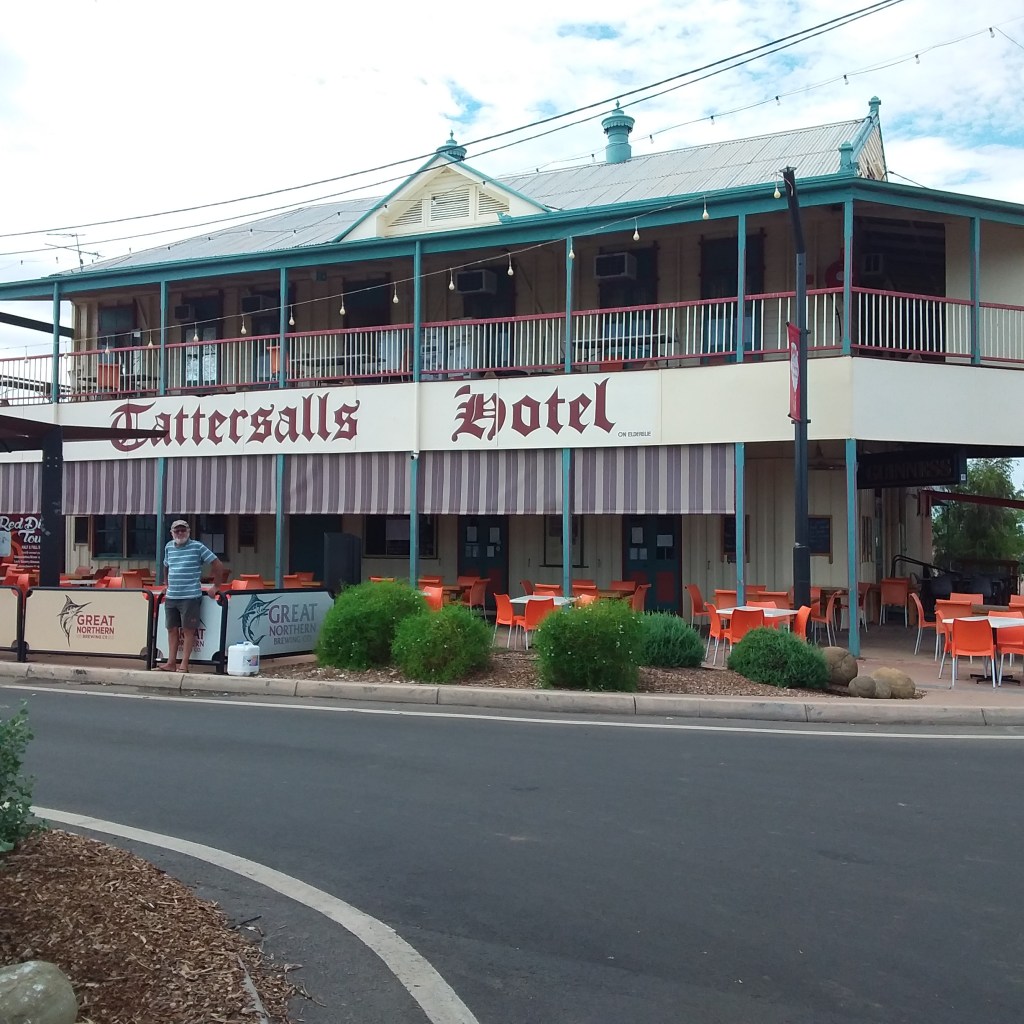
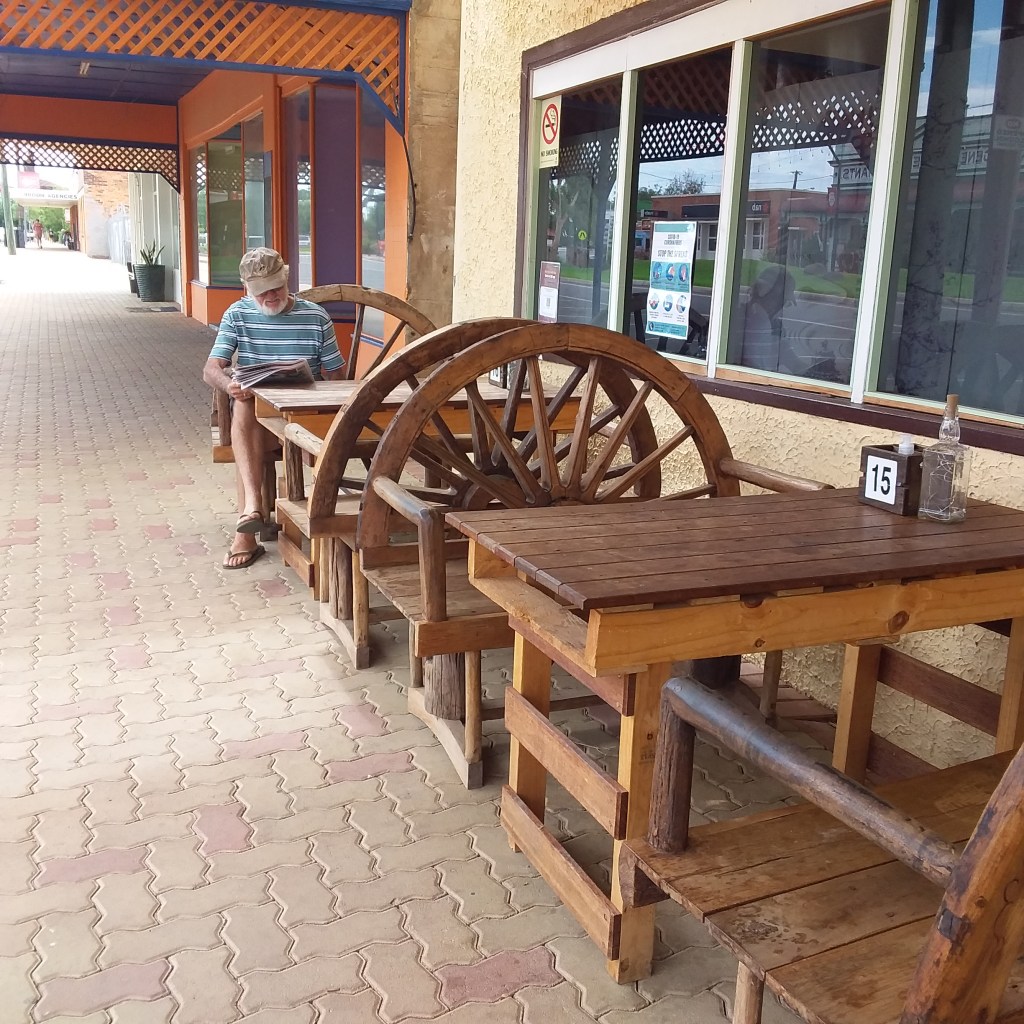
Winton has managed to mix the new with the old. The main street is welcoming and care has been taken to make it look interesting and inviting. I love the way it has, for example, a modern, well stocked chemist and newsagent interspersed with the old fashioned Tattersals Hotel, and the Australian Hotel with old Western style tables and chairs outside. The modern real estate office reminds us of the history with a couple of horse saddles perched outside.

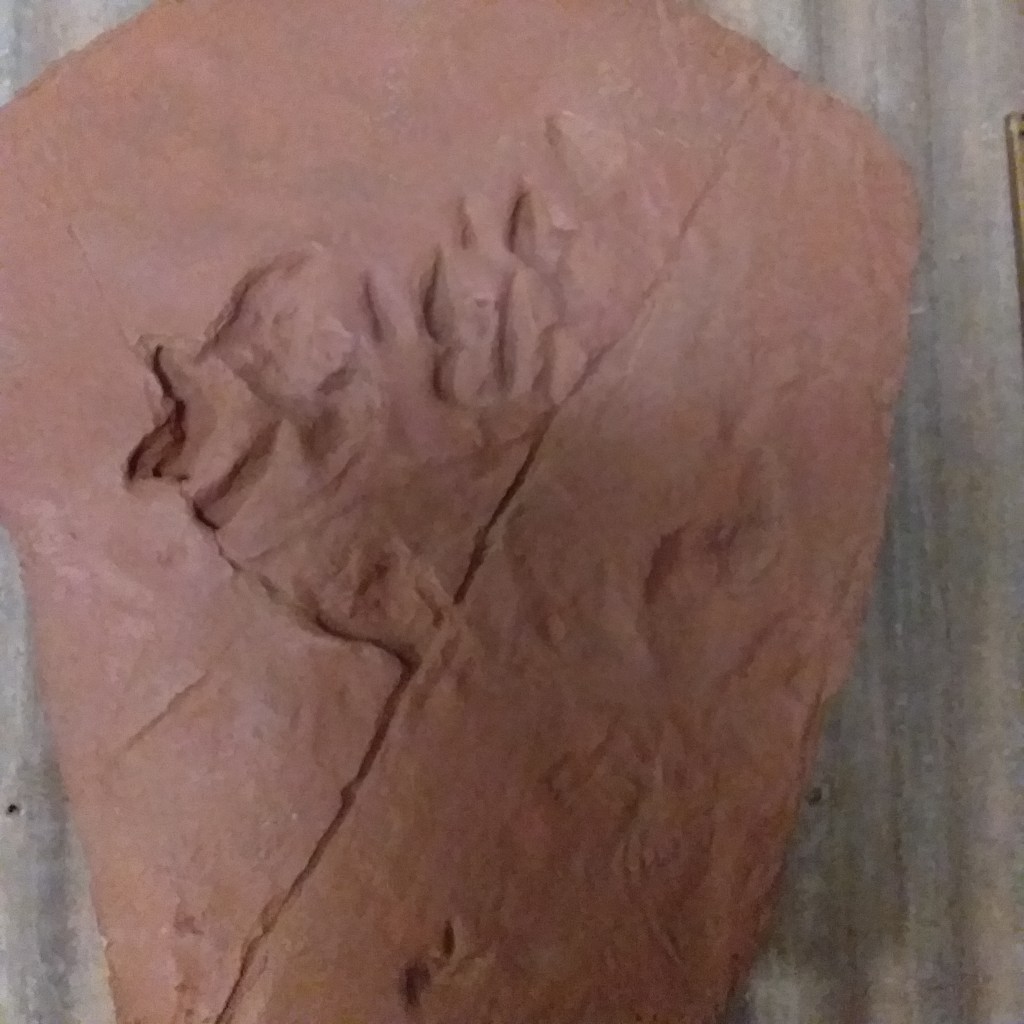
The biggest attractions in Winton I’m sure are the dinosaur exhibitions. We considered going to the ‘stampede’ but it was quite a way out of town and there were other things we wanted to see. An opal shop did have a plaque of the dinosaur footprints so that was fine for us!
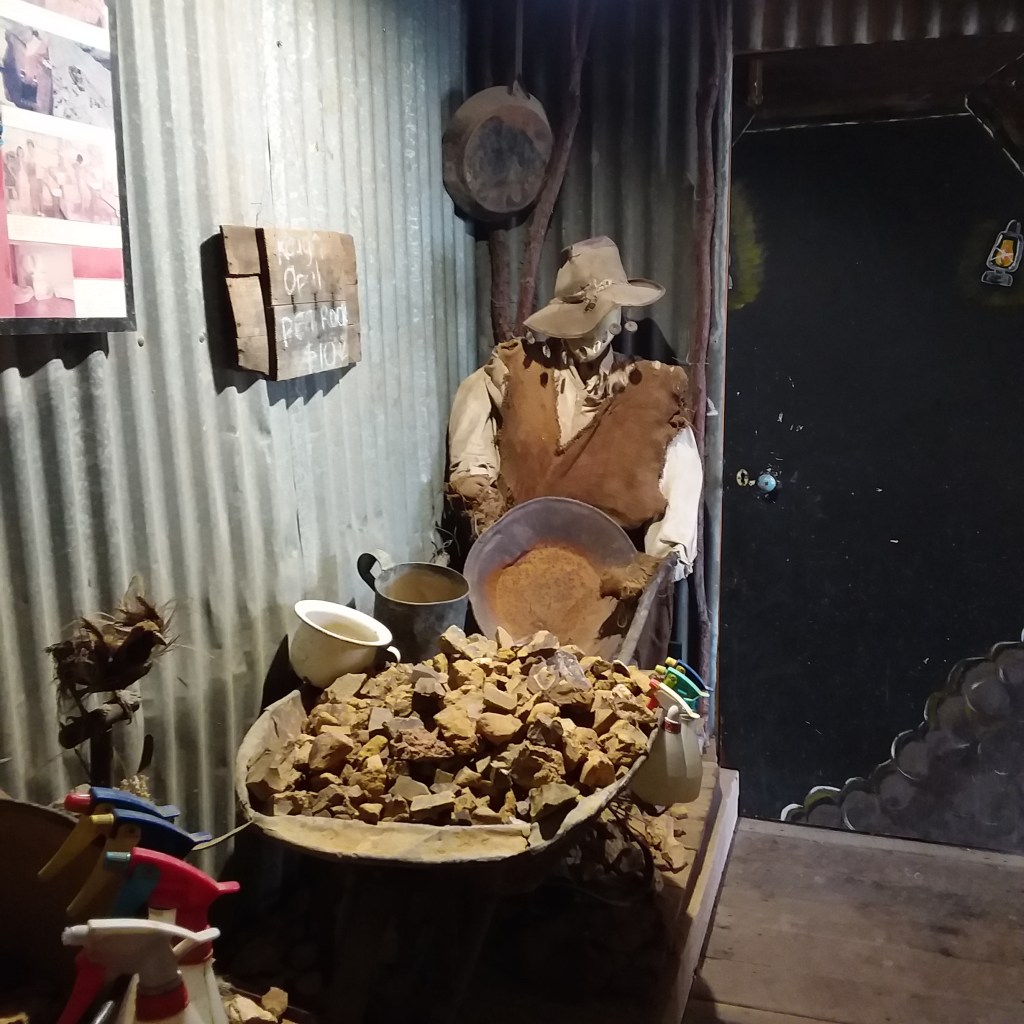
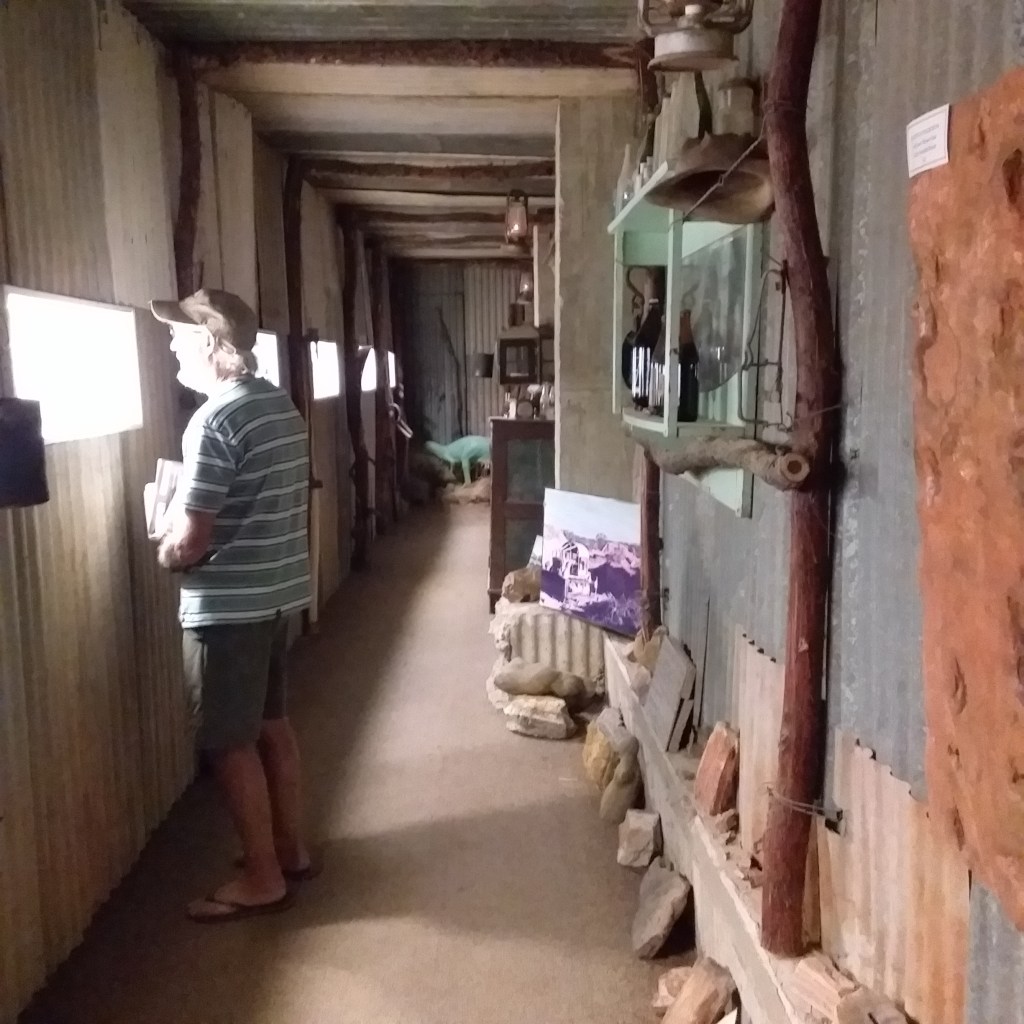
That same opal shop has a display of gorgeous modern opal jewelry but also has an exhibition on the mining of opals and a nod to the hot, dirty work it still is to find these semi-precious gemstones. It was so interesting.
Another attraction on the main street is the ‘Waltzing Matilda’ museum. They advertise themselves as being the only museum based on a song. I was hesitant about going in based on this but we do try to give to small communities and decided we would have a look. We are so glad we did, it was great. The exhibition, whilst based around Banjo Paterson and his famous song, also relates much of Winton’s history to words in the song.

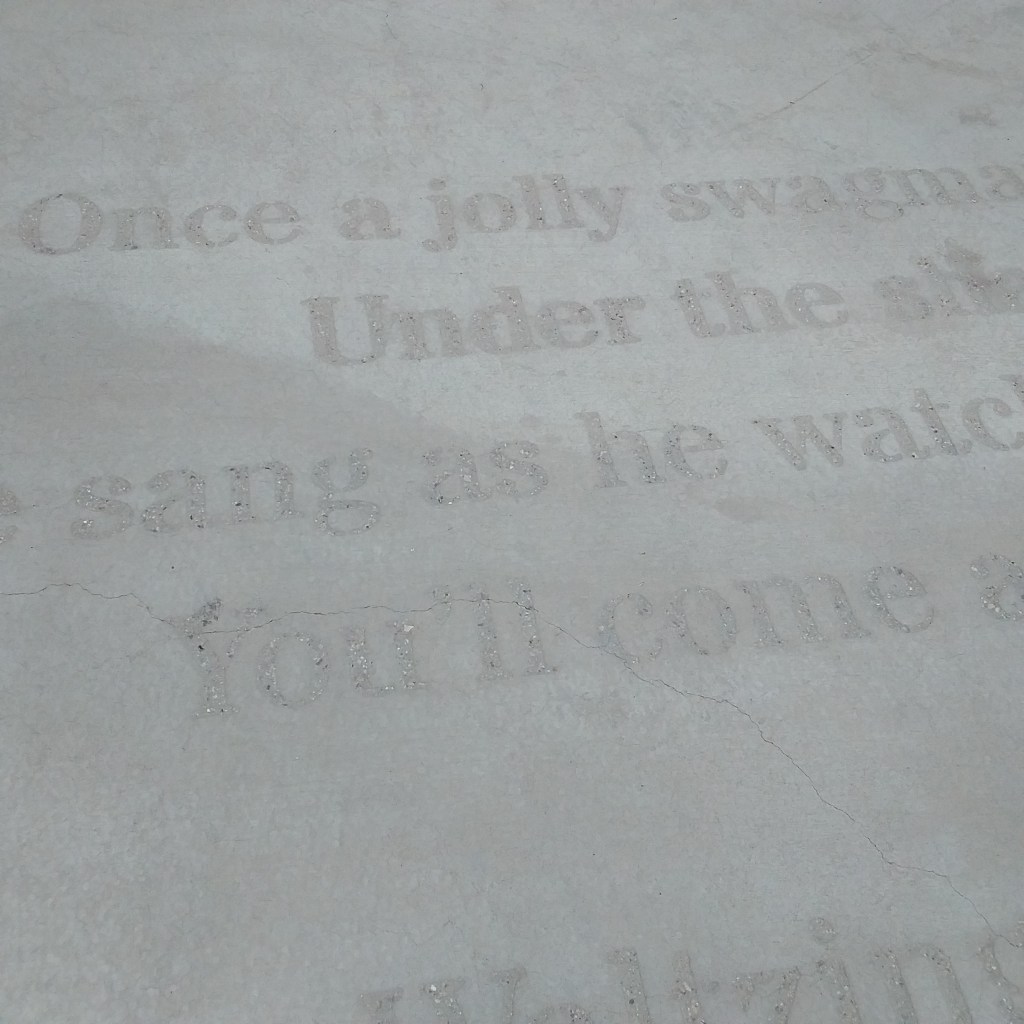
Outside the museum is a statue of Banjo Paterson. The words of Waltzing Matilda are carved into the footpath

Inside, the museum is beautifully done with four different sections. Of course a lot of the exhibits and information focus on Banjo Paterson’s time in Winton and his poetry, particularly Waltzing Matilda. However, there were also interesting relics from old Winton.
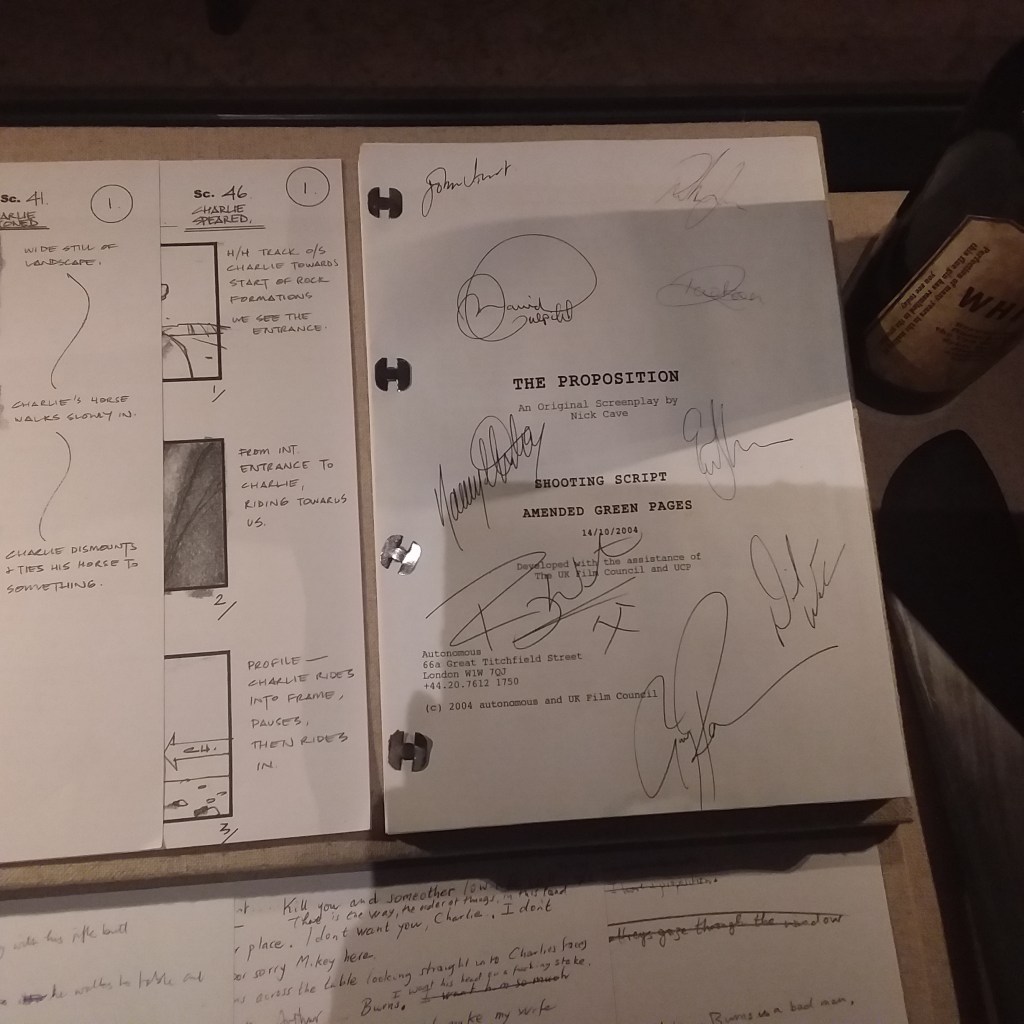
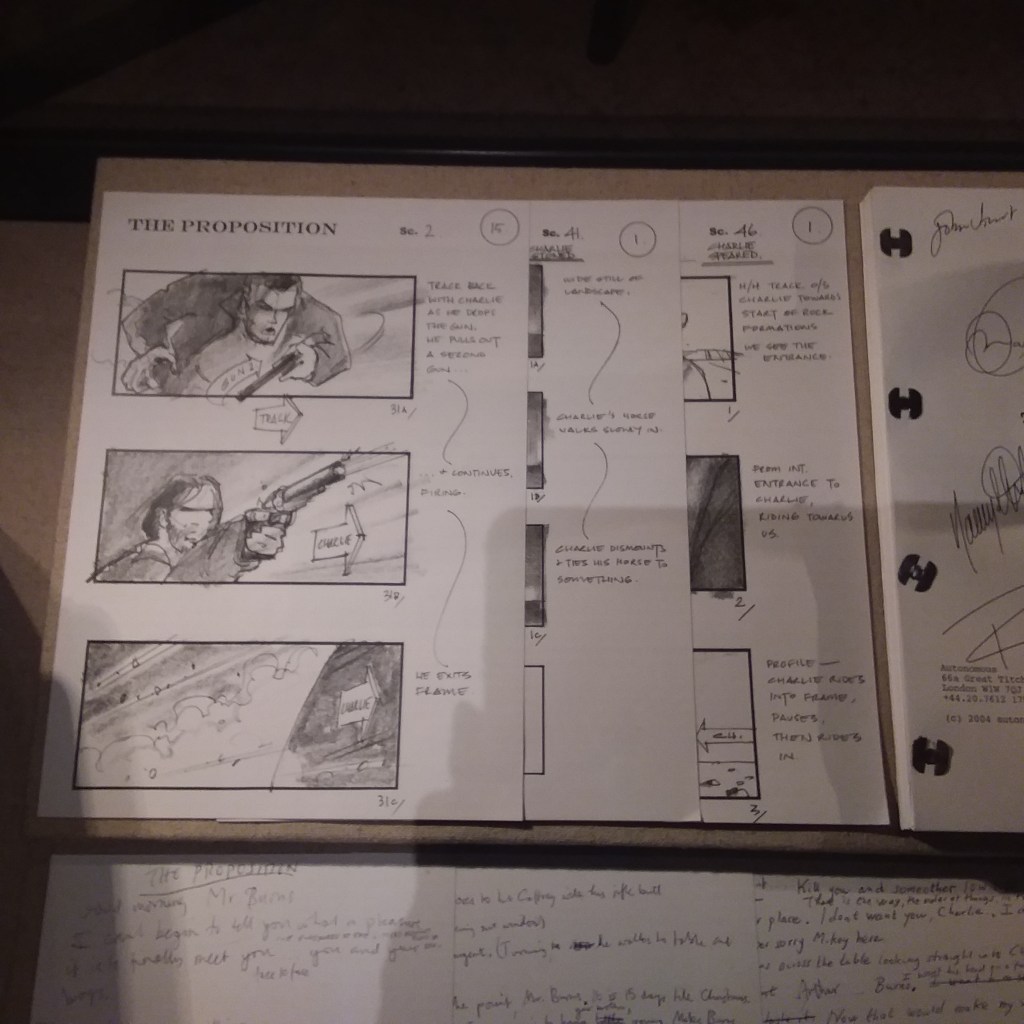
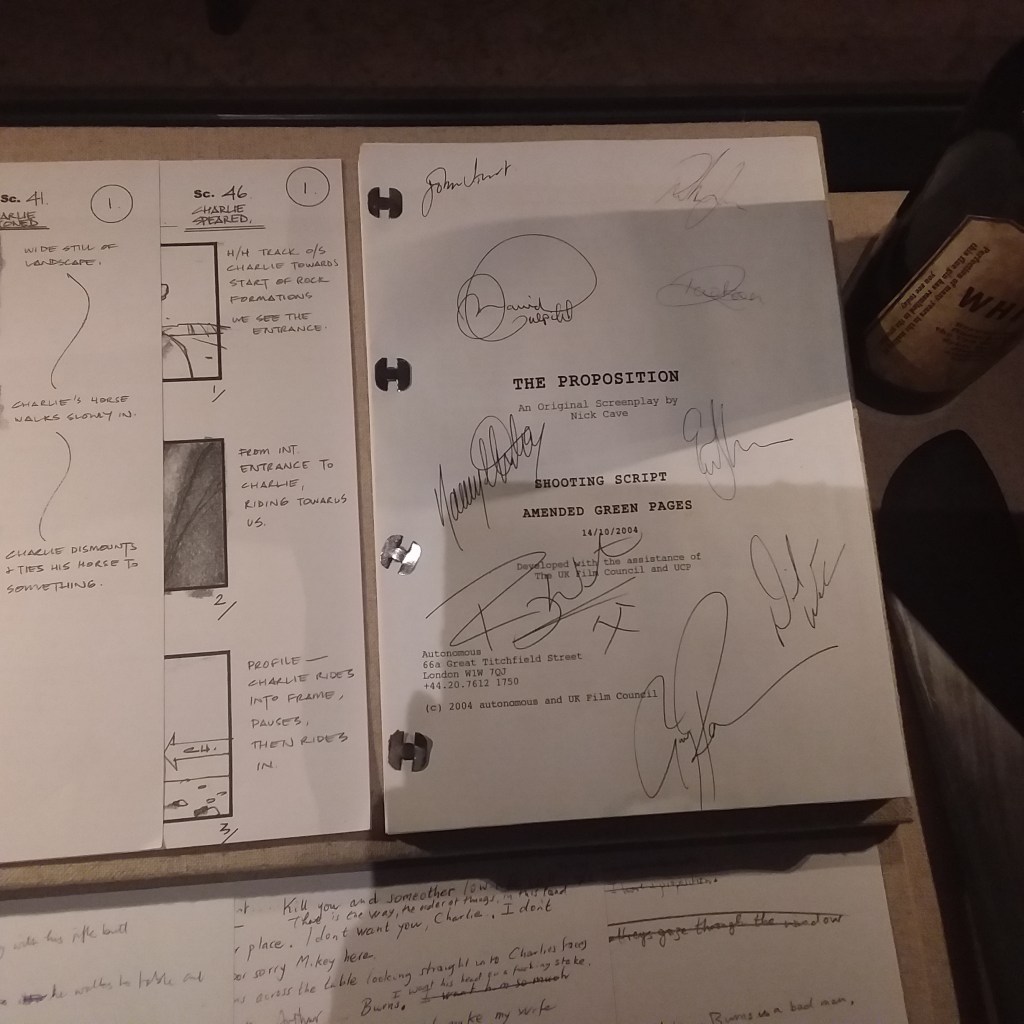
Among the exhibits about the various Australian westerns made between Middleton and Winton, was the script for ‘The Proposition’ plus the storyboard.

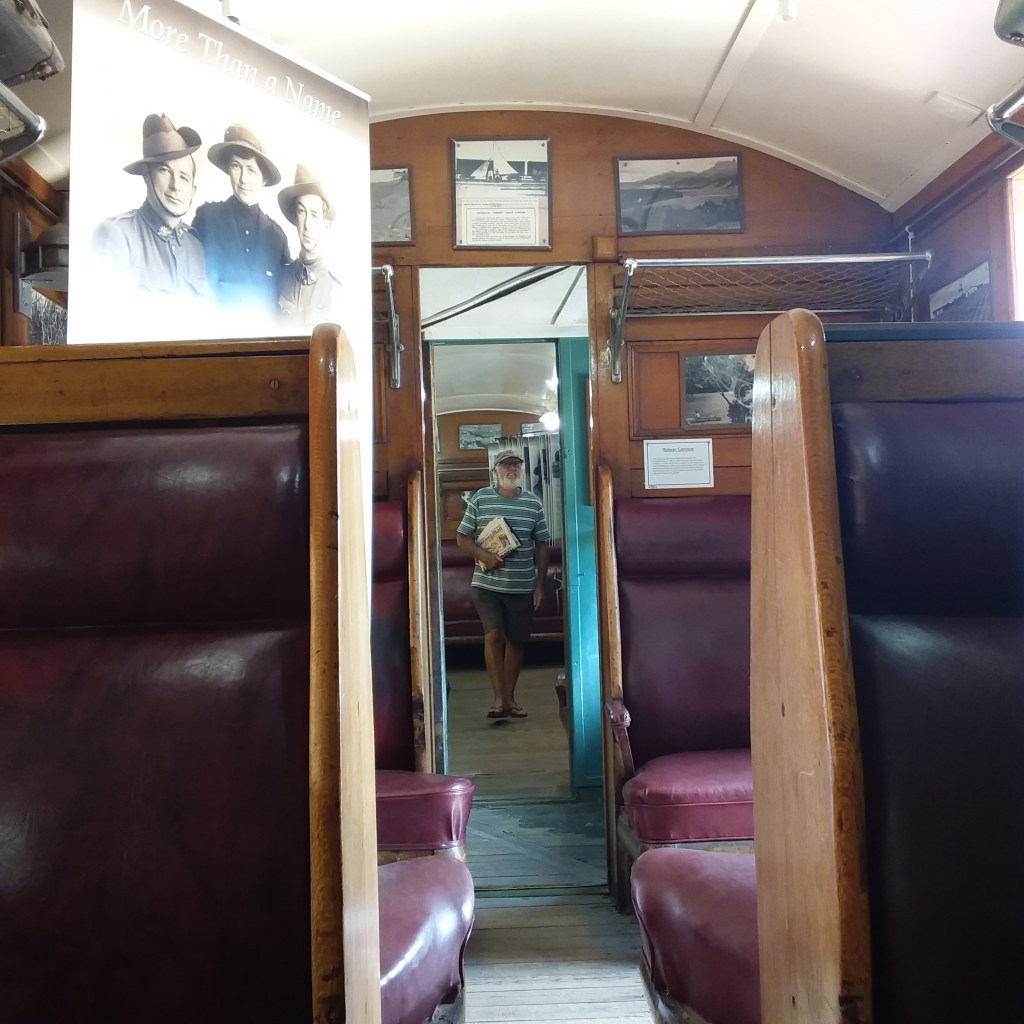
The museum had acquired the old Winton train, together with ticket office. They had turned the carriages into a tribute to the Winton men and women who went to war. It was beautifully done with photos and stories.
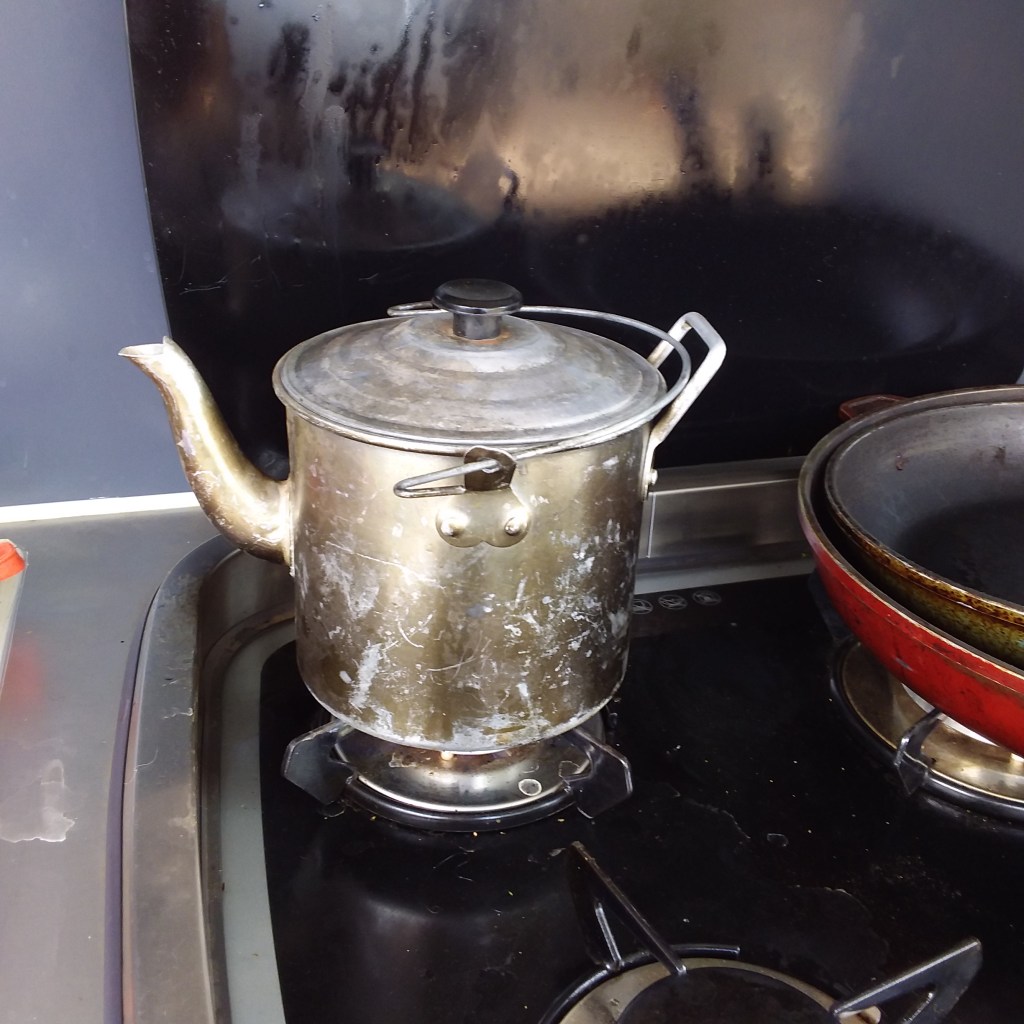
This was a museum worth visiting. We both thoroughly enjoyed it but, just like the swagman, we went back to the caravan to wait for our Billy to boil!

Crossing the Simpson Desert

(decidedly dry, dusty and deserted!)

Cawnpore Lookout

We left Alice Springs for the last time to head to Queensland. Our first camp was at Gemtree Fossicking Roadhouse and Caravan Park (thanks Wendy for the tip). It was a real outback camping ground and we stayed two nights. We would have gone fossicking with the park owners but there was a sudden death the night we arrived so we had a quiet couple of days. The place was deserted, like most places we’ve been to recently.

Gemtree Roadhouse and Caravan Park

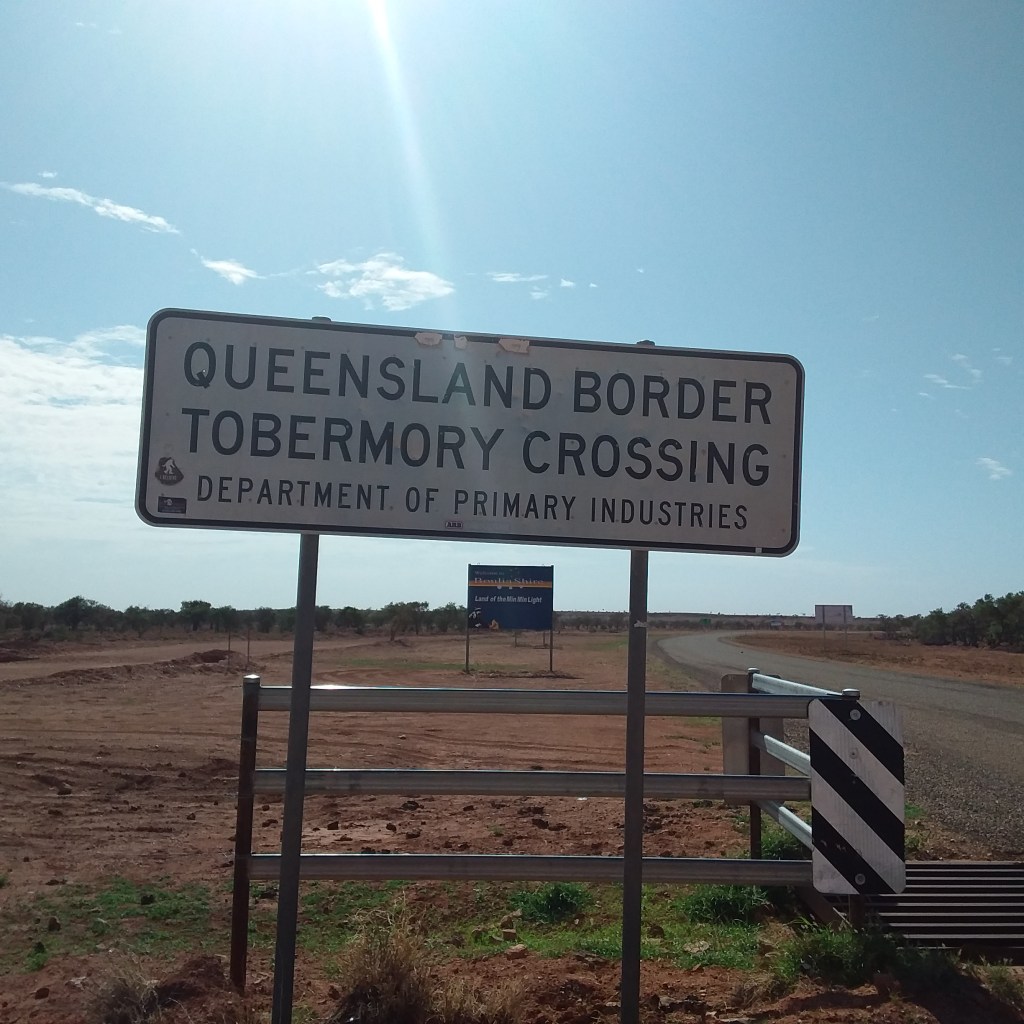
We moved on, camping at good old Tobermorey – not the one on the Isle of Mull in Scotland but the one in the middle of the desert in Australia! The drive took most of the day but wasn’t as bad as we expected. The track was a combination of corrugations, sand, rocks and occasionally bitumen. The car and van handled it fine.

Tobermorey is just four kms before the border so we entered Queensland early the next morning.

I loved crossing the desert! You think its going to be boring but it’s not, it’s fascinating . The landscape does change even if it’s just the shade of the red dirt, or suddenly there is a rock formation in the vast flatness . And the cows kept us busy as they wander onto the road. We saw very few cars but one we did see coming towards us skidded to a stop in front of us and did a u-turn, pulling over just in front of us. Two young Aboriginal men jumped out holding some kind of weapon that looked to me like a boomerang. They must have noticed a goanna or something on the side of the road because as we passed they were circling it ready to kill it presumably for dinner.

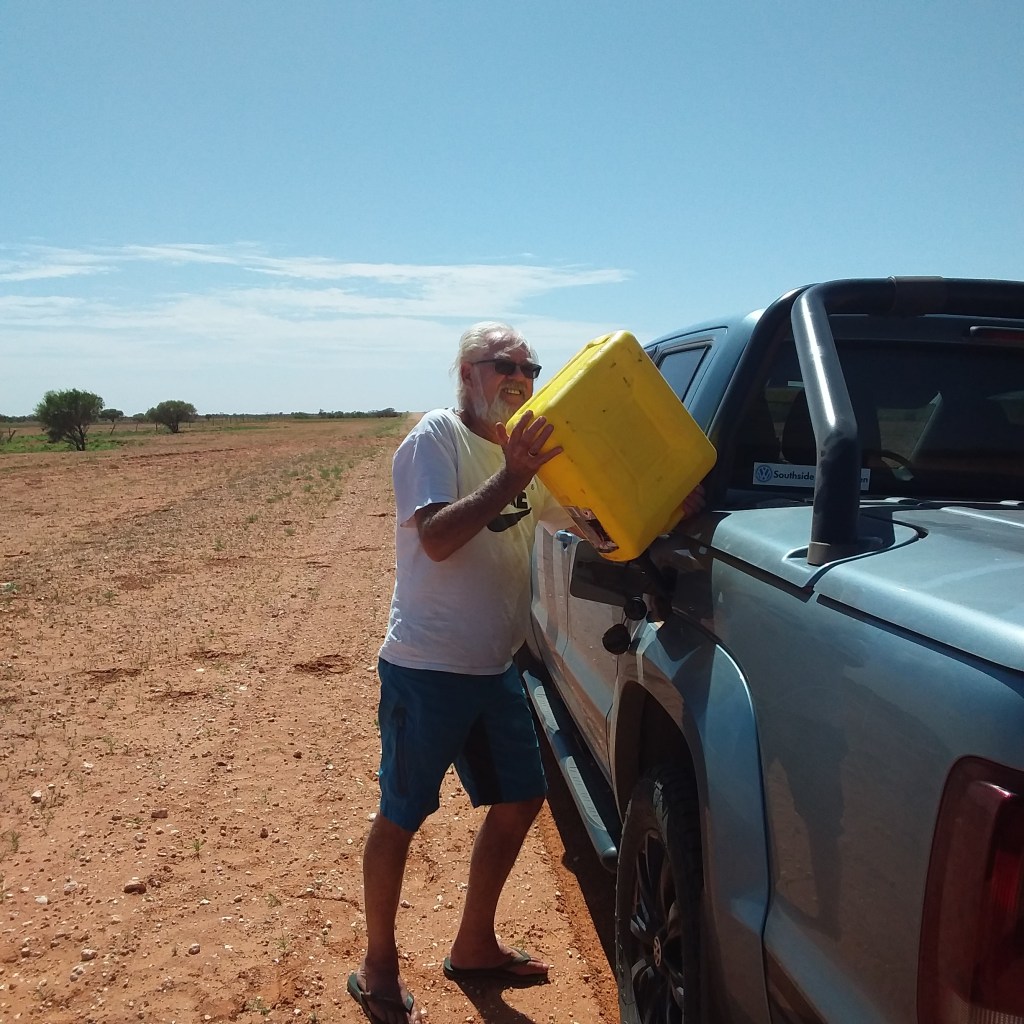
We camped at Tobermorey which was just a camping ground in the desert but also had diesel. (We always plan our next fuel and water stop even if we don’t know where we will camp). So before leaving the next morning, we went to fill up the car. The fuel pump was shut and the little shop had a sign saying it was closed for the day! I rang the bell but there was no-one around. We always carry an extra 20ltrs of diesel but, even with that, we weren’t sure we’d have enough to get to the next fuel stop at Boulia. I was confused about why they didn’t mention they would be closed when we booked in the previous evening.

As we drove through the desert, we watched the fuel gauge slip silently into the red zone but we tried to focus on our surroundings. We did stop and fill up from the jerry can.

Topping up the car with fuel and grabbing lunch too

We noticed a couple of cars at the side of the road and recognised them as belonging to some people we got talking to in the caravan park. We pulled over to check they were okay and they were . We told them our predicament with being low on fuel and they reassured us that they had spare and would follow us. Unbelievably we scraped in. When we finally crawled into the garage at Boulia, we put 83 litres of diesel into our 80 litre tank! As good as their word, the other two couples shadowed us right to the garage!

The campsite at Boulia was nice with various cute animals wandering around freely. We spotted a dog, two cats, a little black piglet and some calves. The town itself had nothing to offer us but the Min Min Exhibition which was closed unfortunately. So, early next morning we moved on towards Winton.

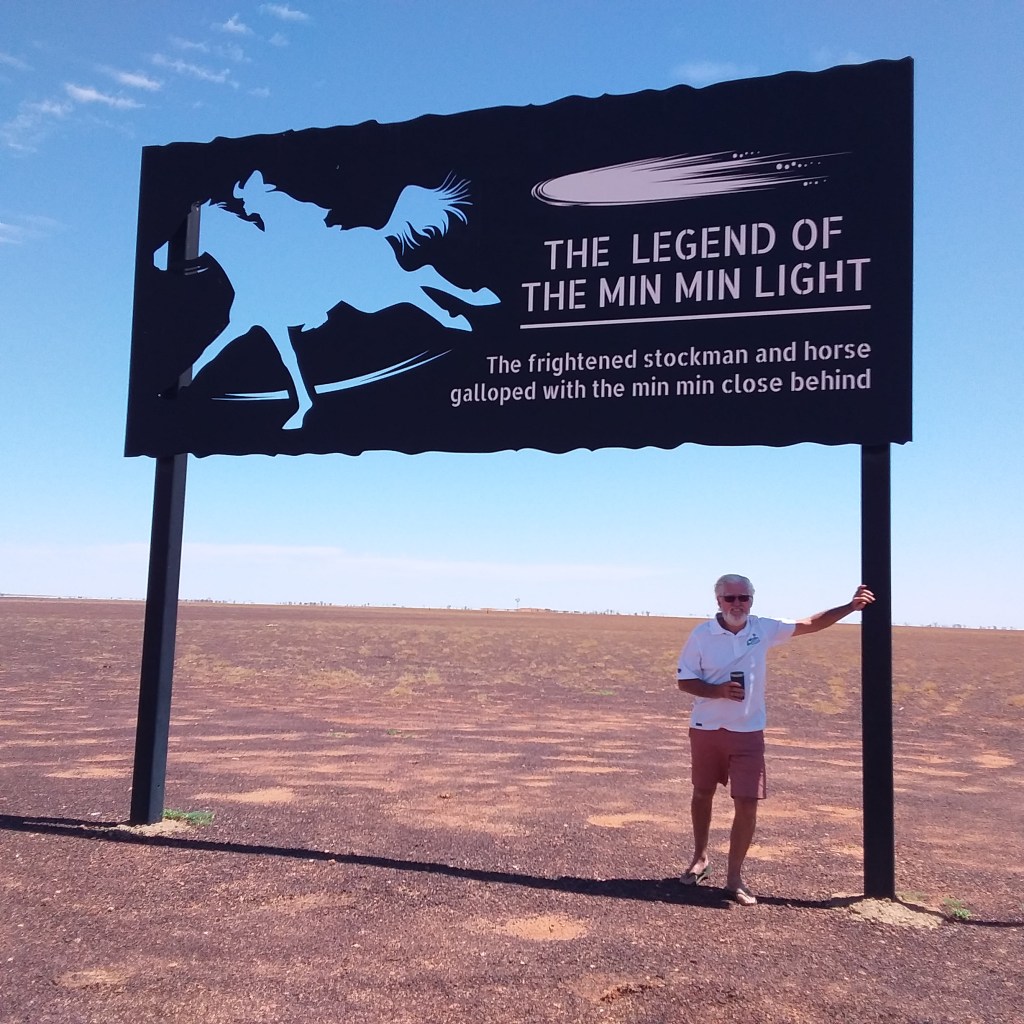
Although we missed out on seeing the Min Min Light Exhibition, we did stop at the site where the Min Min Light was apparently seen.

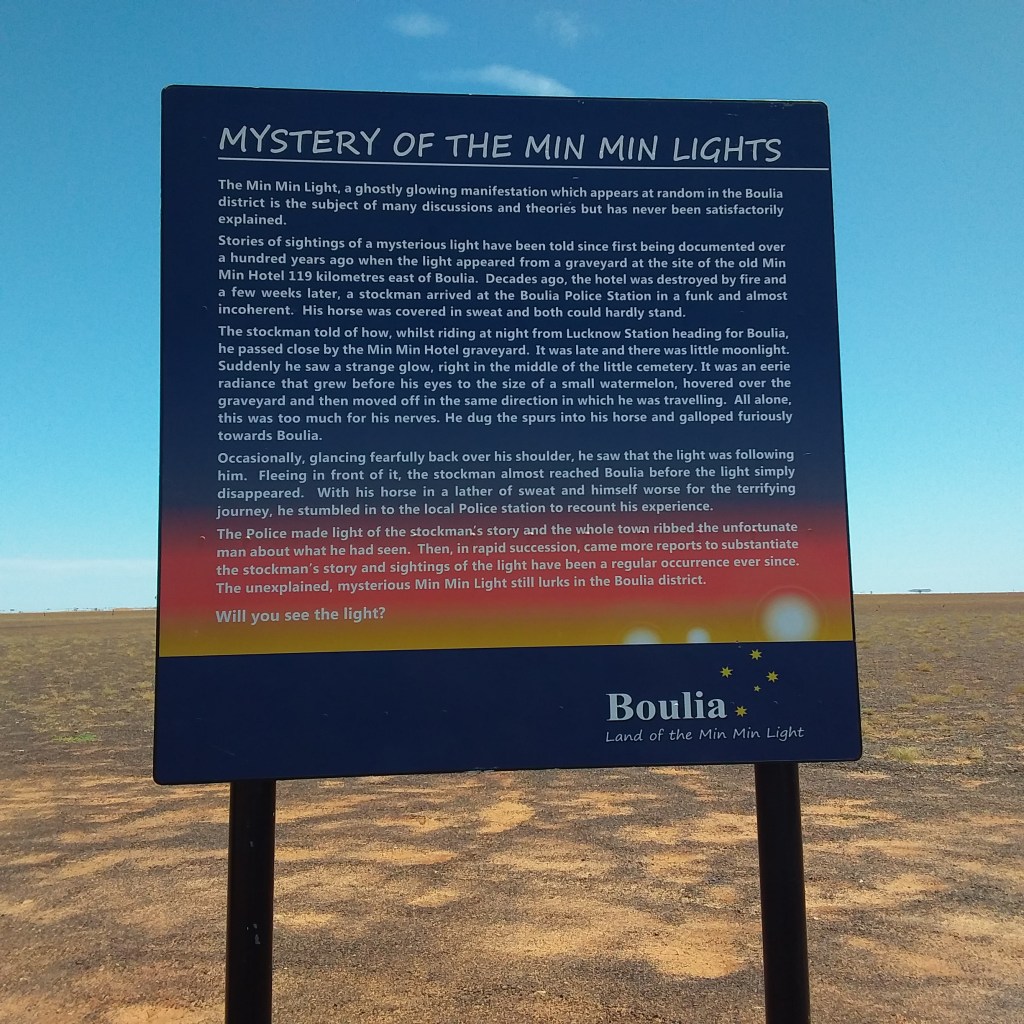
We stopped here on HALLOWEEN and read the story of the light above the grave!
An explanation of the Min Min lights

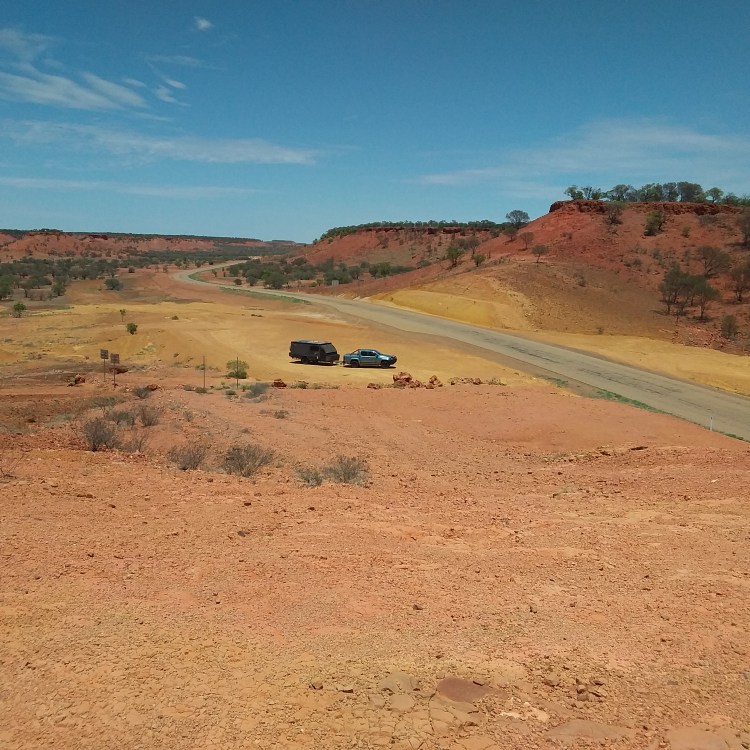
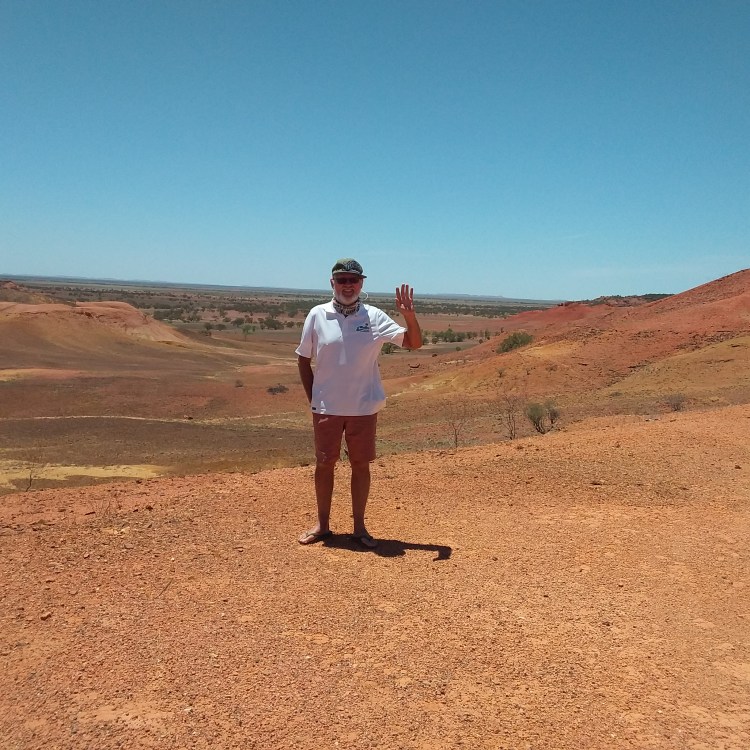
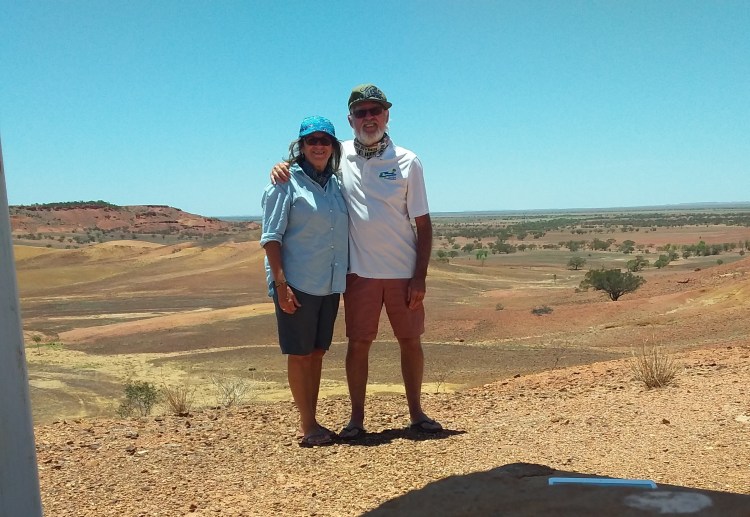
Further along the road we came to Cawnpore Lookout which had wonderful views of the area.

Cawnpore Lookout

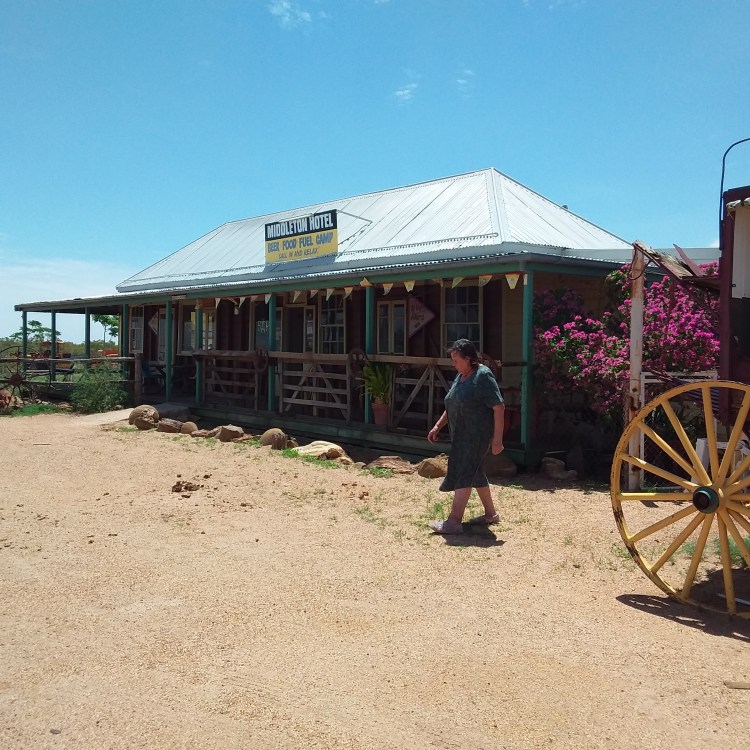
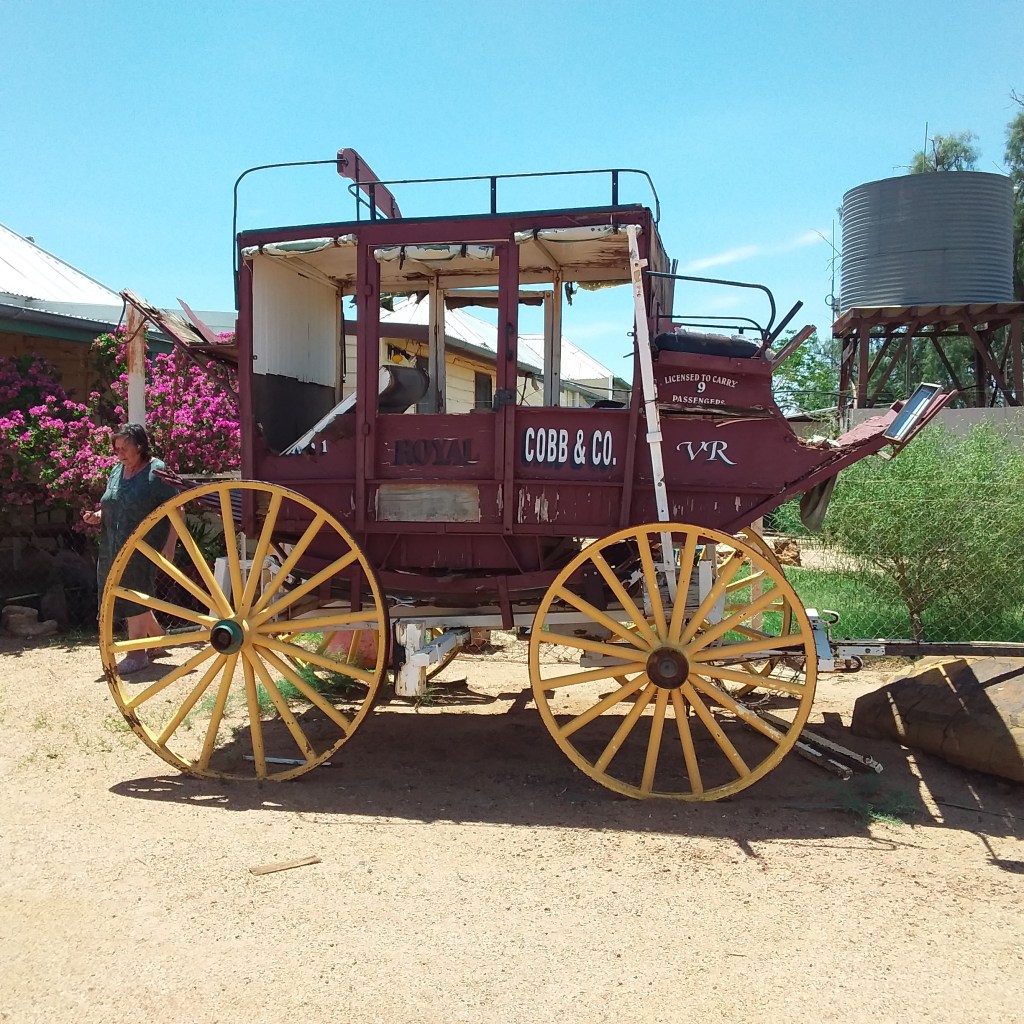
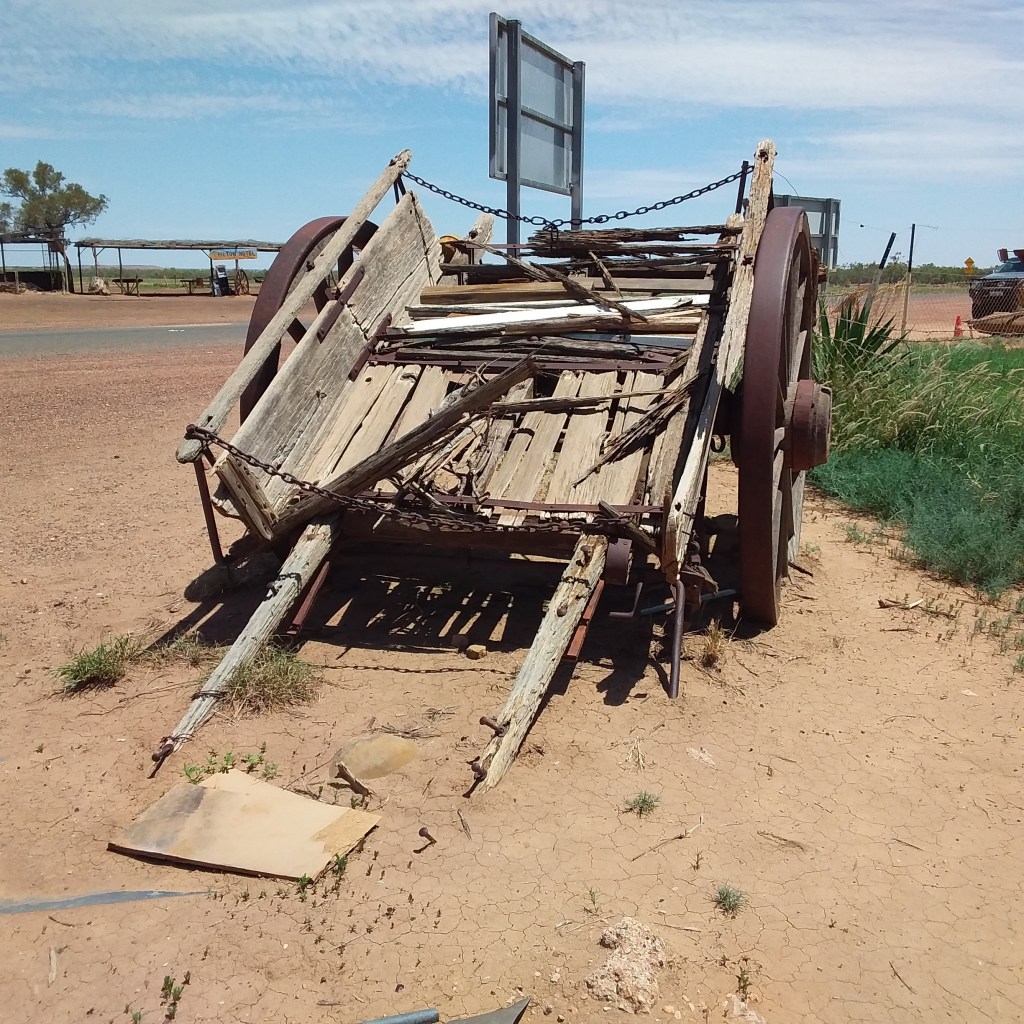
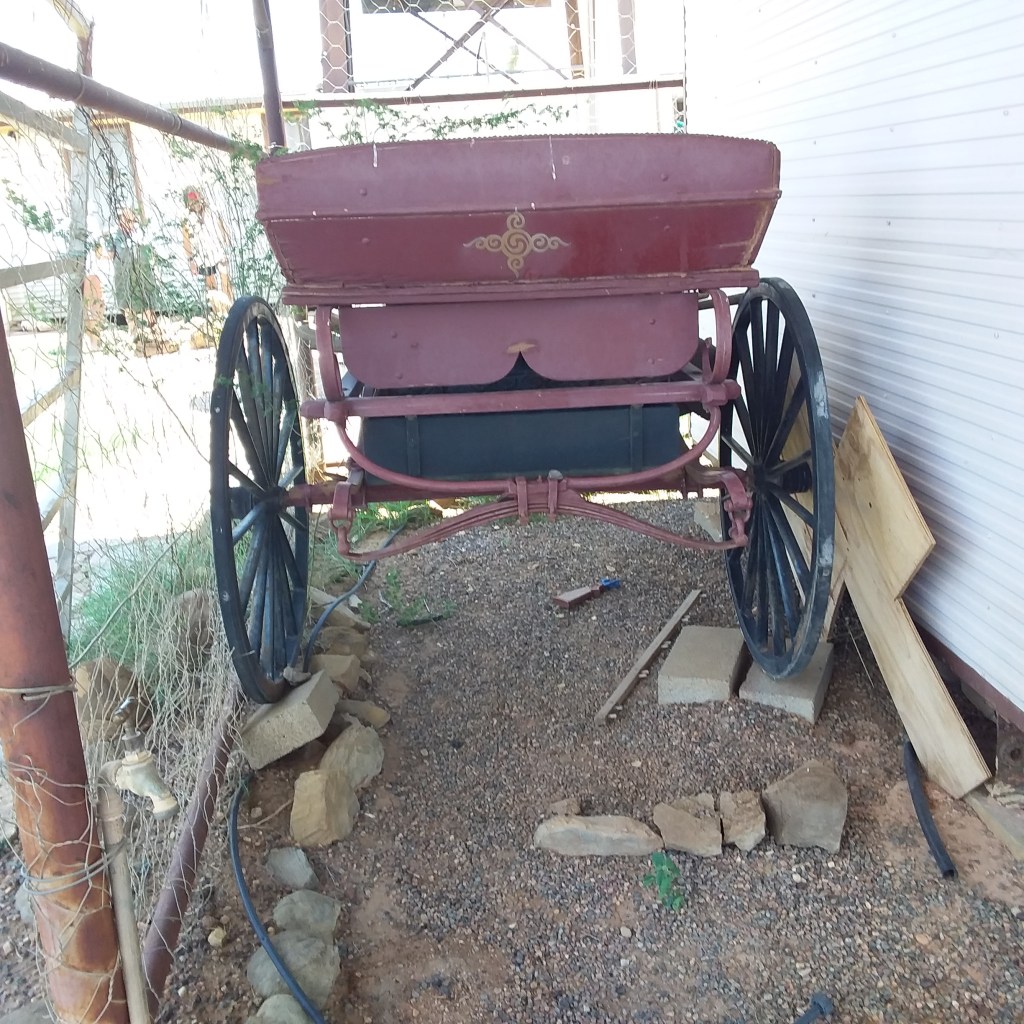
Our next stop was for lunch at the Middleton Hotel in the middle of absolutely nowhere. Apparently Middleton was a Cobb & Co. stagecoach stop in the old days, and there was some evidence of that around. We stayed over an hour chatting to Val who was relieving the new owner. She was lovely and showed us a fossil she believed to be a crocodile. Before we left, Val gave me some rock with opal in it. So kind.

Quirky Middleton Hotel
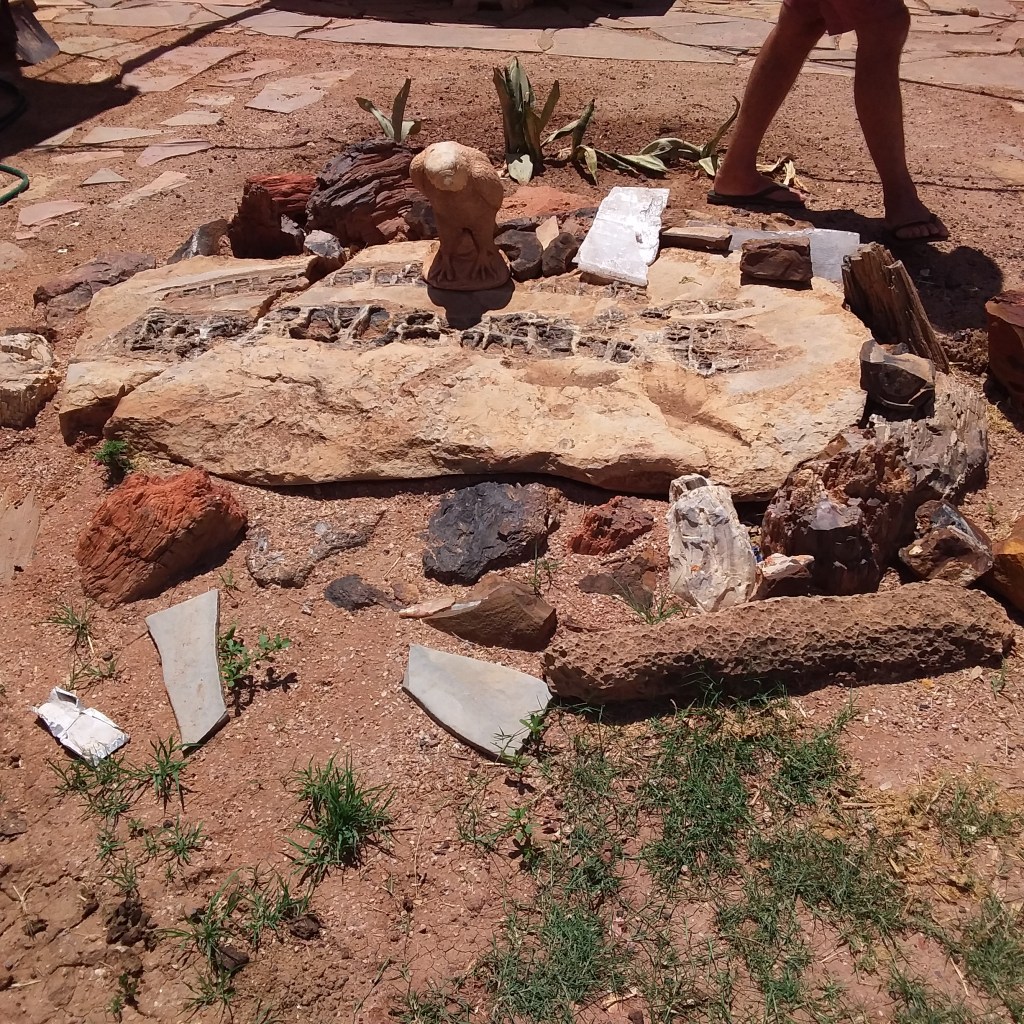
Could this fossil be a crocodile?

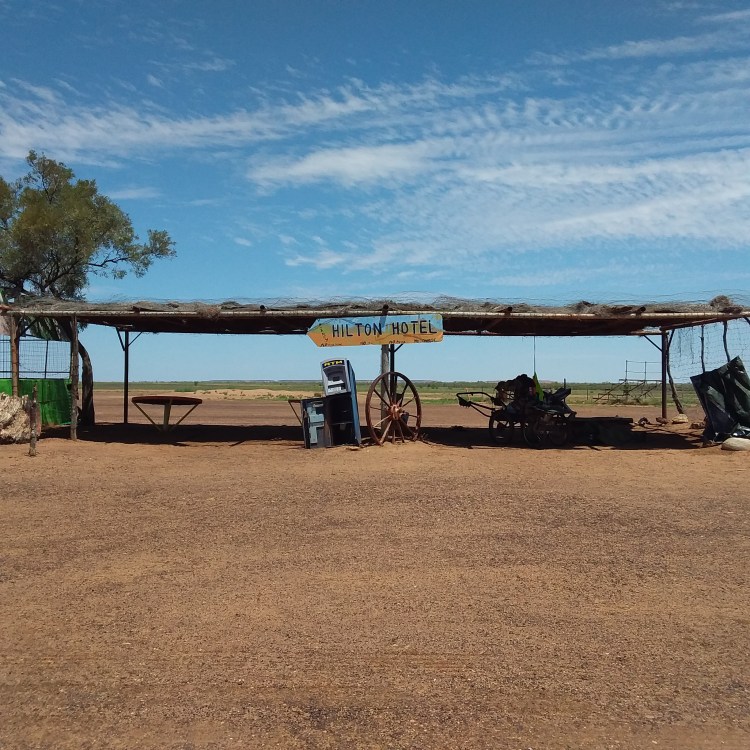
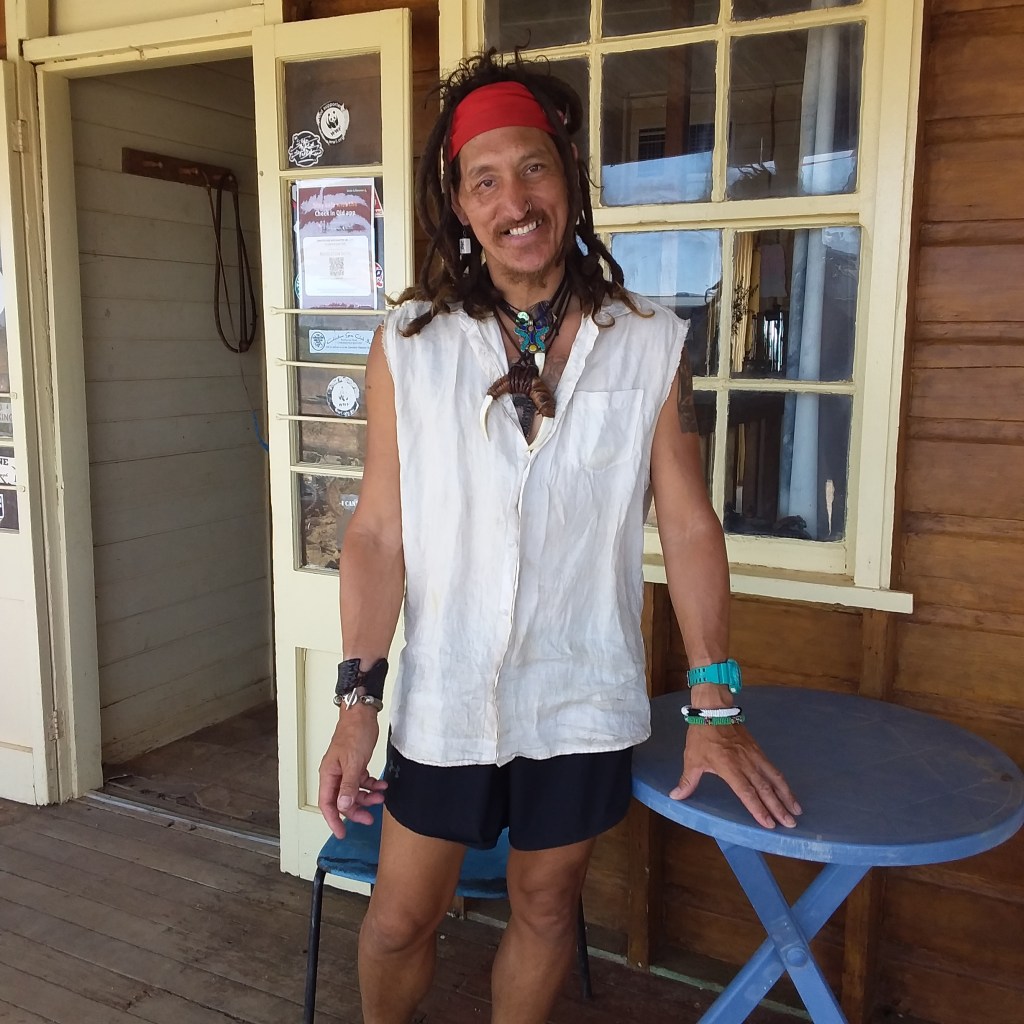
We also met Steve who was camped across the road at the ‘Hilton Hotel’ and helping Val by doing some cleaning. He told us he was walking around Australia and was planning to write a book.

Look out for Steve walking around Australia

After an enjoyable visit, we took off for the town of Winton.

Meteorites, a Mission and a Magnificent Artist (Albert Namatjira)

On our way back from Uluru towards Alice Springs, we called in to see the craters left by the Henbury Meteorites around 4,700 years ago. The site is just 15kms off the Stuart Highway. There are 12 craters altogether and we wandered around to have a look.

I find it staggering that in this day and age we know what happened so long ago. And the evidence is here.

As if finding out about meteorites hitting earth 4,700 years ago wasn’t exciting enough, the next day we drove out to Gosse Bluff to see a crater caused by a comet falling to earth about 142.5 MILLION years ago! Incredible! Apparently the crater used to be 20 kms wide but it has eroded over the years and is now just 2 kms wide. Still impressive though!

Gosse Bluff crater

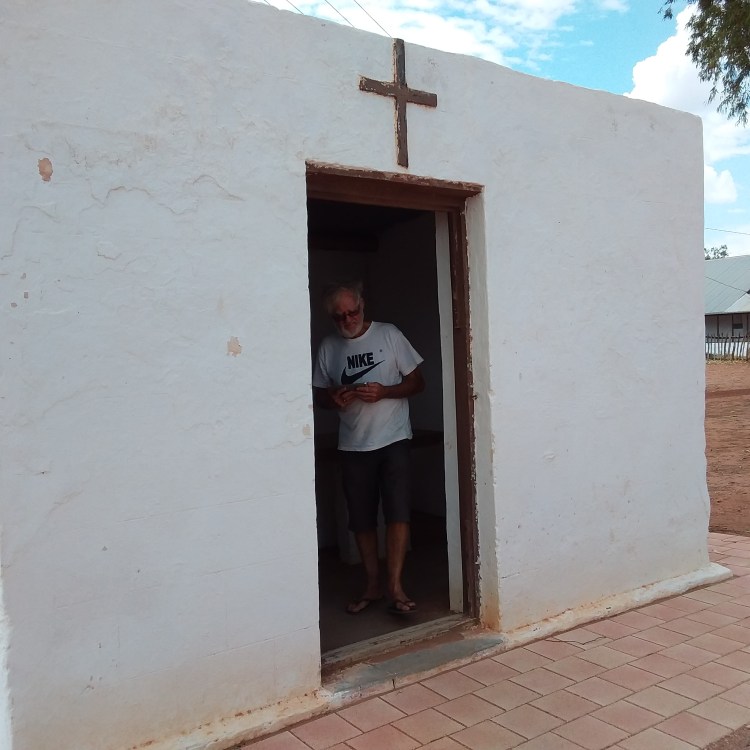
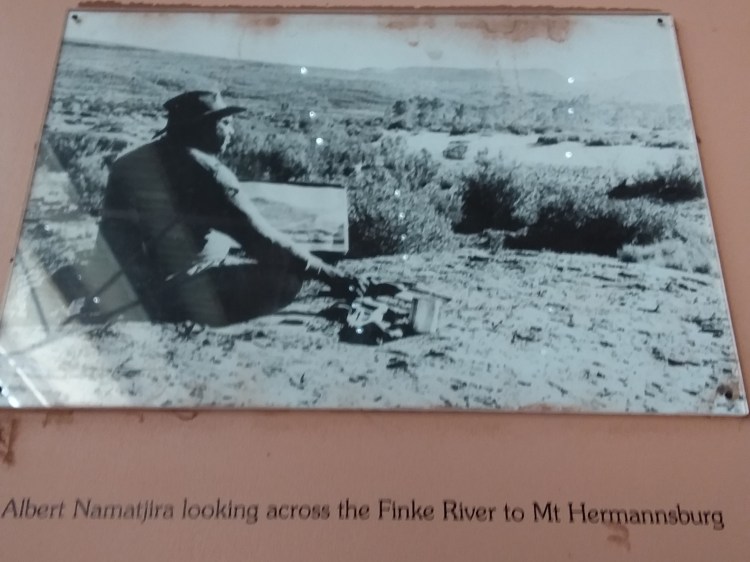
We moved on to Hermannsburg to find out about a more recent history. Hermannsburg Mission was set up by German Lutheran missionaries in 1877 to introduce religion to First Nations People. I expected to learn that the the locals were not treated well and perhaps their children were taken away. However, the opposite seems to be true. The Lutherans learned the language of the Arrarnta people and school was taught in both languages. Times were very hard; the environment was harsh and there were long periods of drought. But the missionaries took care of the Aboriginal people, feeding them, giving them shelter and protecting them from the violence of the frontier. They educated them and taught them trades such as tanning. They also introduced them to the arts, offering art lessons to those who were interested. One person who was interested was famous Aboriginal artist Albert Namatjira. He was born at the mission.

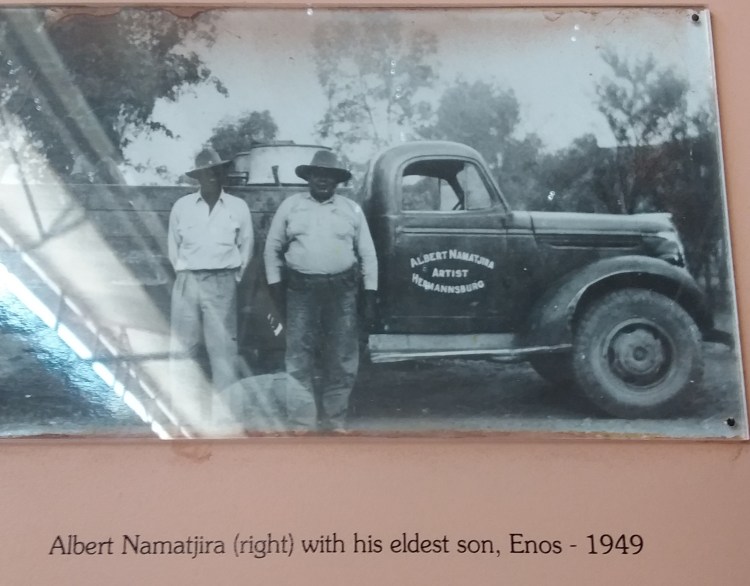
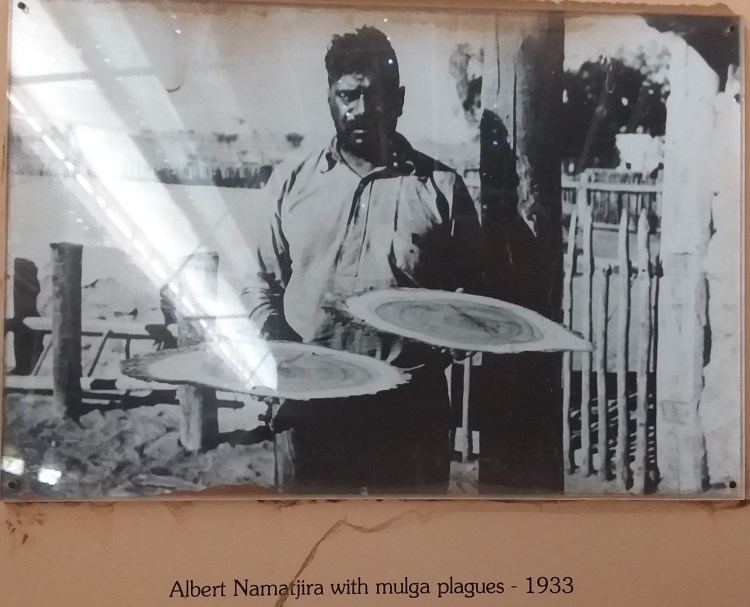
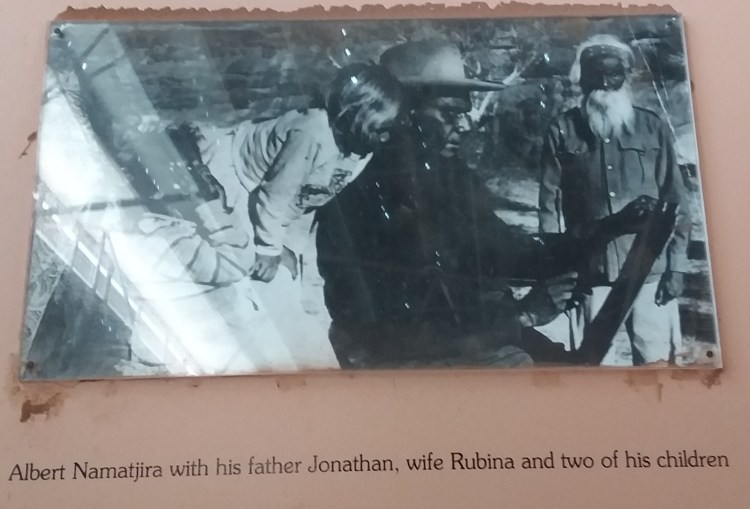
John and I wandered around and learned a lot about life here from old photos, information boards and old relics that have been retained. Albert Namatjira was prominent in many of the stories and photos on display. I didn’t know some of his children became artists too. I was very impressed with his son, Oscar Namatjira’s work.

We were reluctant to leave the mission as we found it so interesting. We spent some time in the shop which had some beautiful indigenous paintings. We were disappointed that we did not get to see Albert Namatjira’s paintings at the Cultural Centre in Alice Springs but we learned a lot about his life here and we were at least able to see some prints of his work. The two original works they had here previously had to be returned to their owners when covid19 hit.

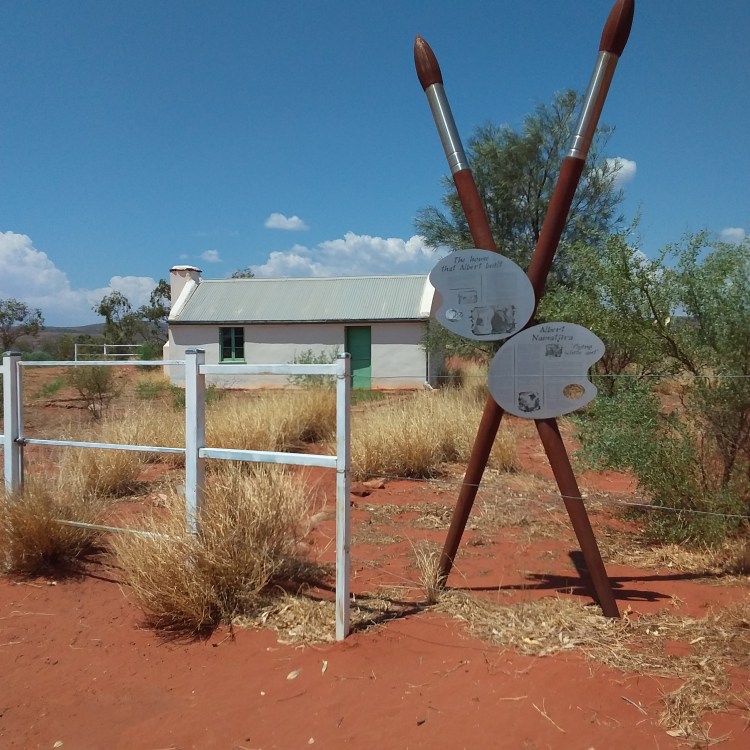
We left Hermannsburg to check out Albert Namatjira’s house. He built this tiny, two room home from the proceeds of 38 paintings! He, his wife and seven children lived there.

Before we left Alice Springs, we went to the cemetery to see Namatjira’s grave. It seemed a fitting way to end the day.

Unbelievably Unique Uluru

I am trying to think of other ways to describe the scenery we are seeing on this trip as I am definitely over-using the words – amazing, fantastic,  incredible and awesome. But it truly is ……remarkable!  So how can I possibly describe Uluru?

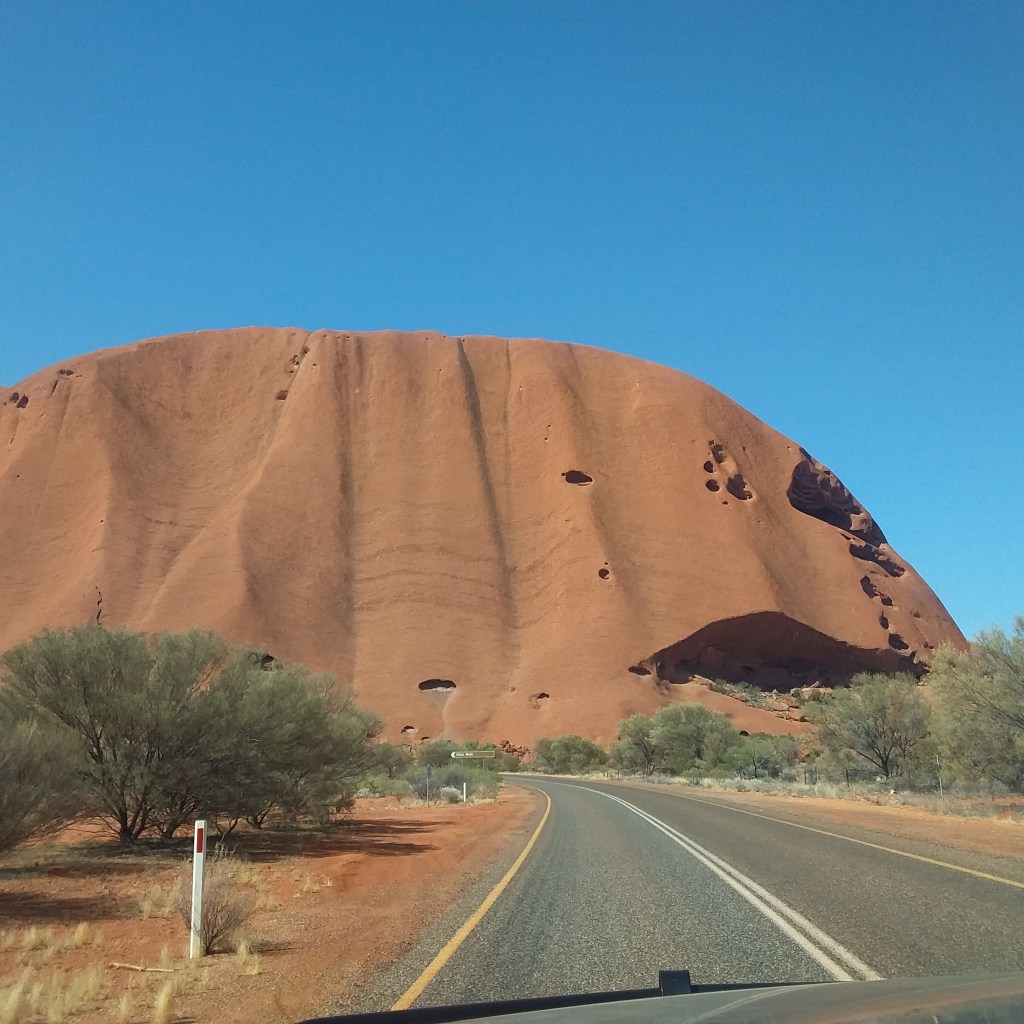
As we drove towards Ayers Rock Resort where we intended to camp, we first saw Mount Connor. For a moment I thought it must be Uluru as it was this amazing incredible awesome stunning mesa rising up from the desert. But it was the wrong shape so I realised it wasn’t. However, I’ve since read that Mount Connor is 700 million years old yet I have never even heard of it! Before long we did see the unmistakable red icon that is Uluru. It looked large and red and smooth, just like all the pictures I have seen. But was I in for a surprise.

Uluru

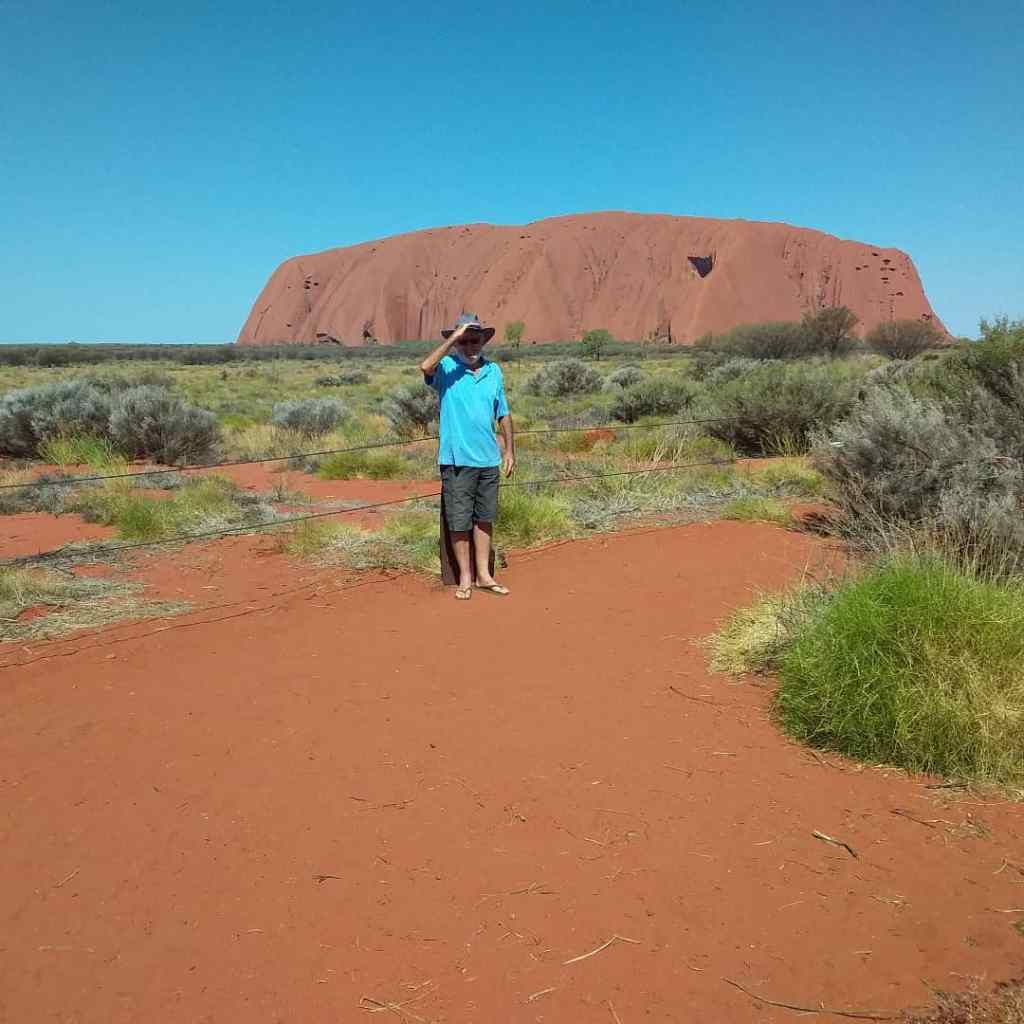
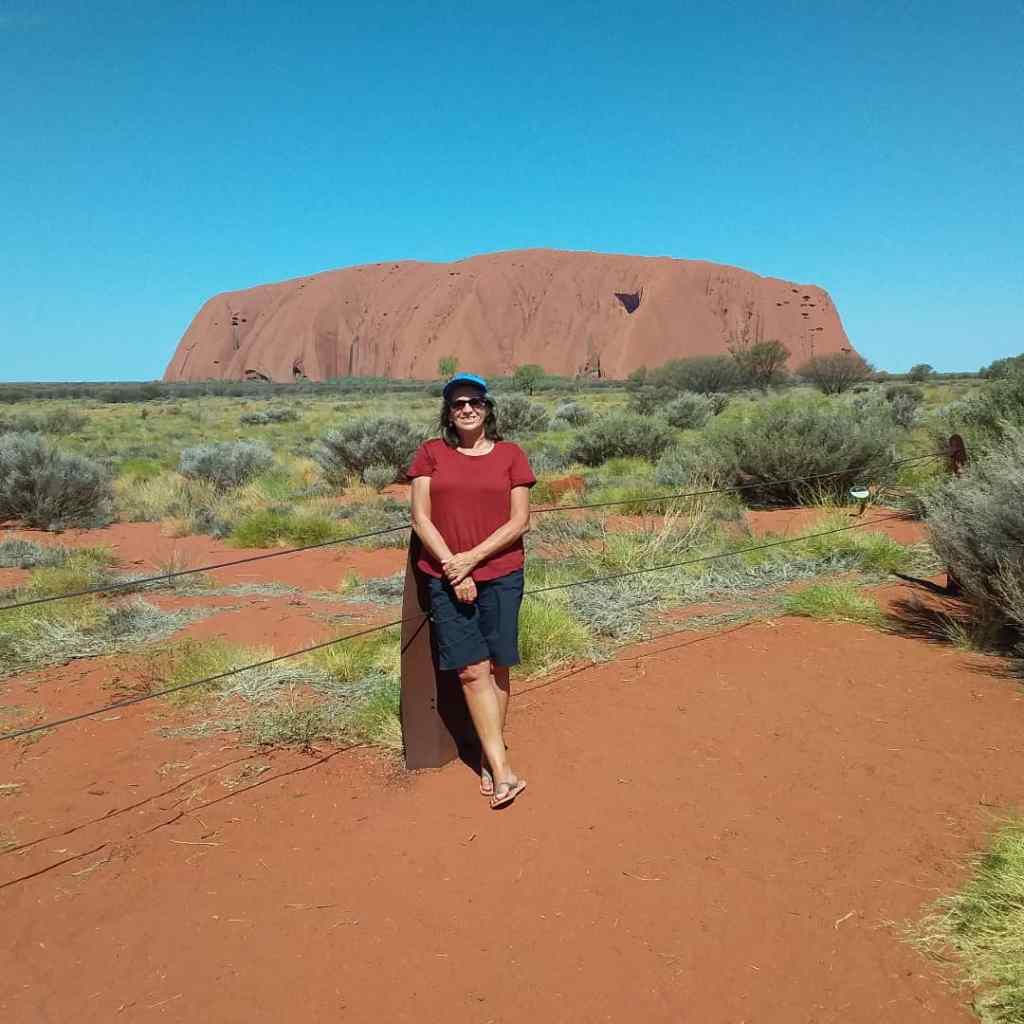
We were keen to get out to look at the rock up close and so set up camp quickly. We found the Visitors’ Centre in the Ayers Rock Resort and tried to book a segway tour for early the next morning. Because John finds it hard to walk far, we thought this would be an excellent way to see Uluru. Unfortunately the girl talked us out of it explaining that John was outside their age limit and, if he fell off he could really injure himself. Instead, we drove out there. We were more and more surprised the closer we got. The rock isn’t all smooth; it has holes and caves and ridges and even a few green bushes sprouting from it. These make it far more interesting, they kind of give it texture and character.

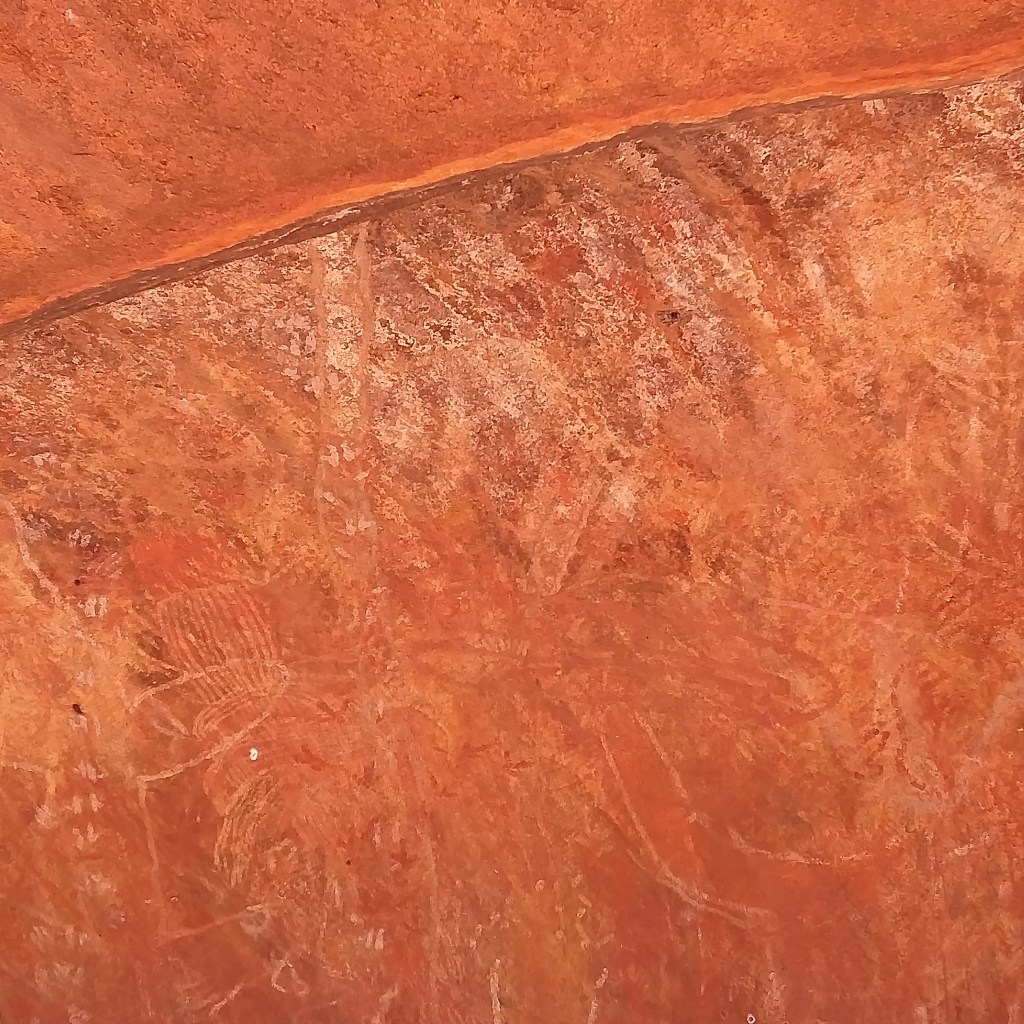
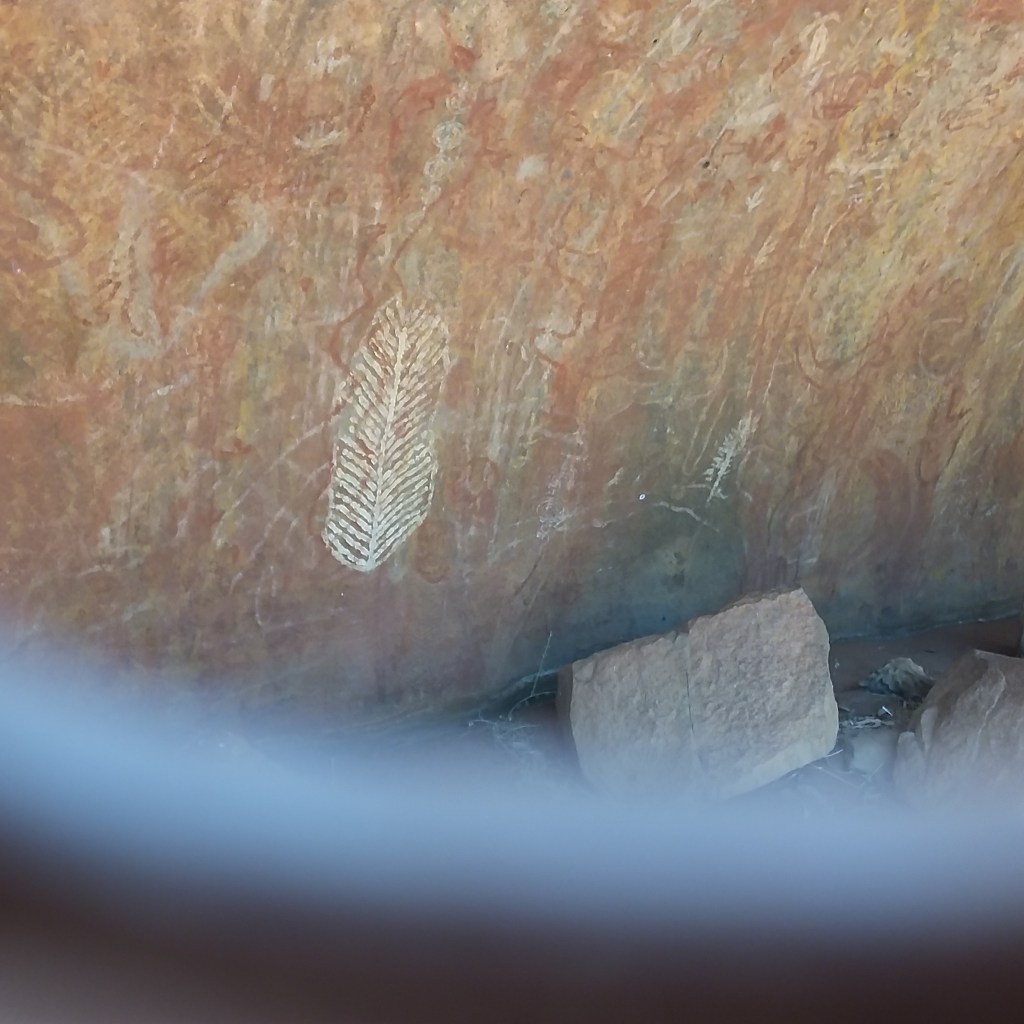
We drove around Uluru, getting out to walk sometimes. We found Aboriginal Rock Art in a cave which apparently was like a little classroom where the elders taught the young about hunting and gathering. The wall inside the cave was used as a sort of white board. The rock was fascinating,  we could not keep our eyes off it. I’m so pleased we are no longer allowed to climb it, it is a very spiritual place.

We also spent a couple of hours in the Cultural Centre which was great. Lots of information, art and a cafe where we enjoyed a coffee.

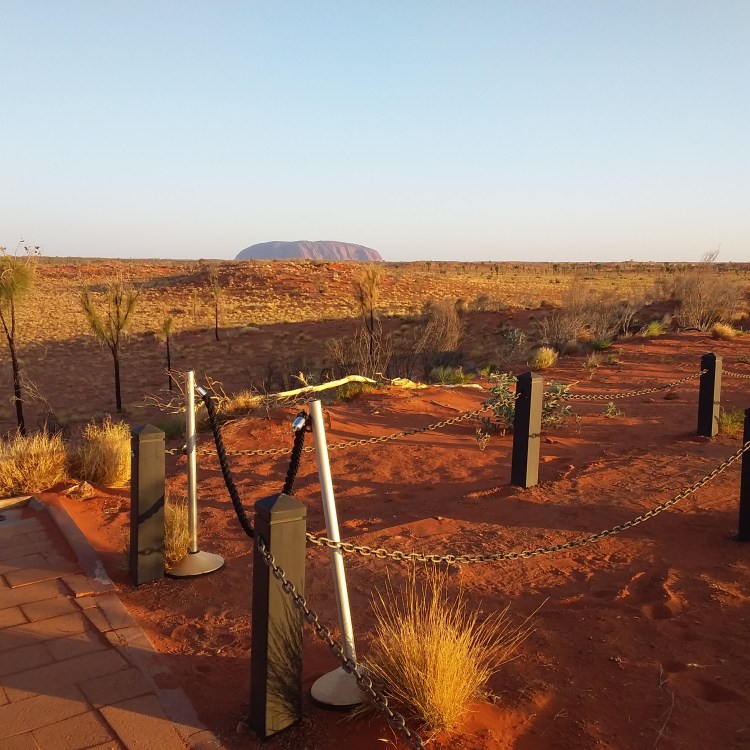
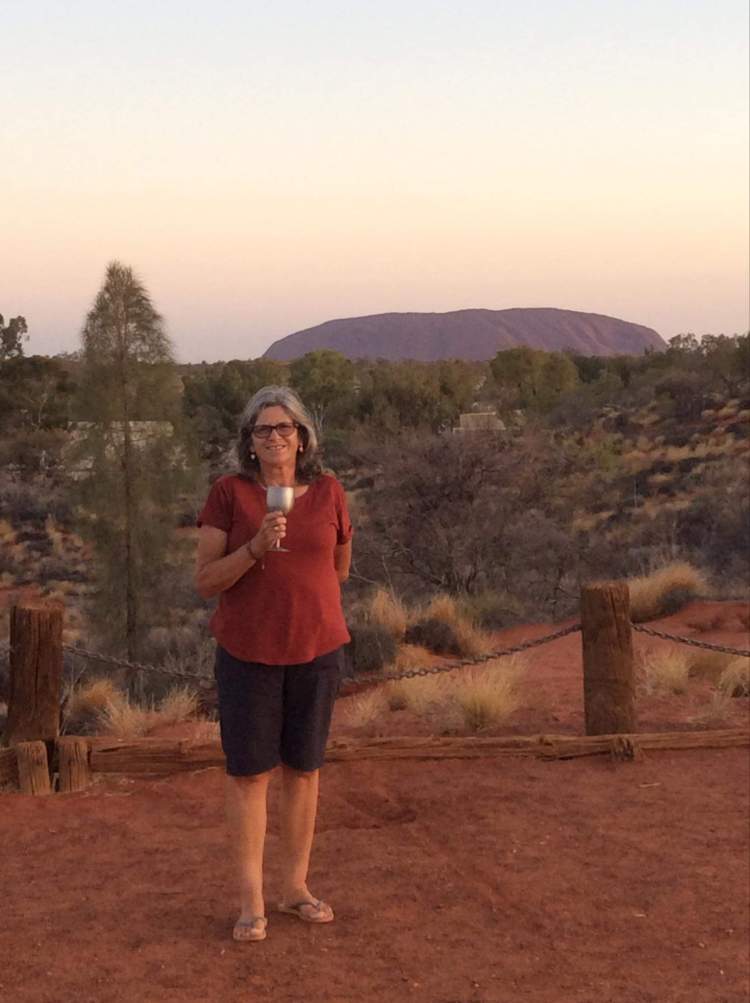
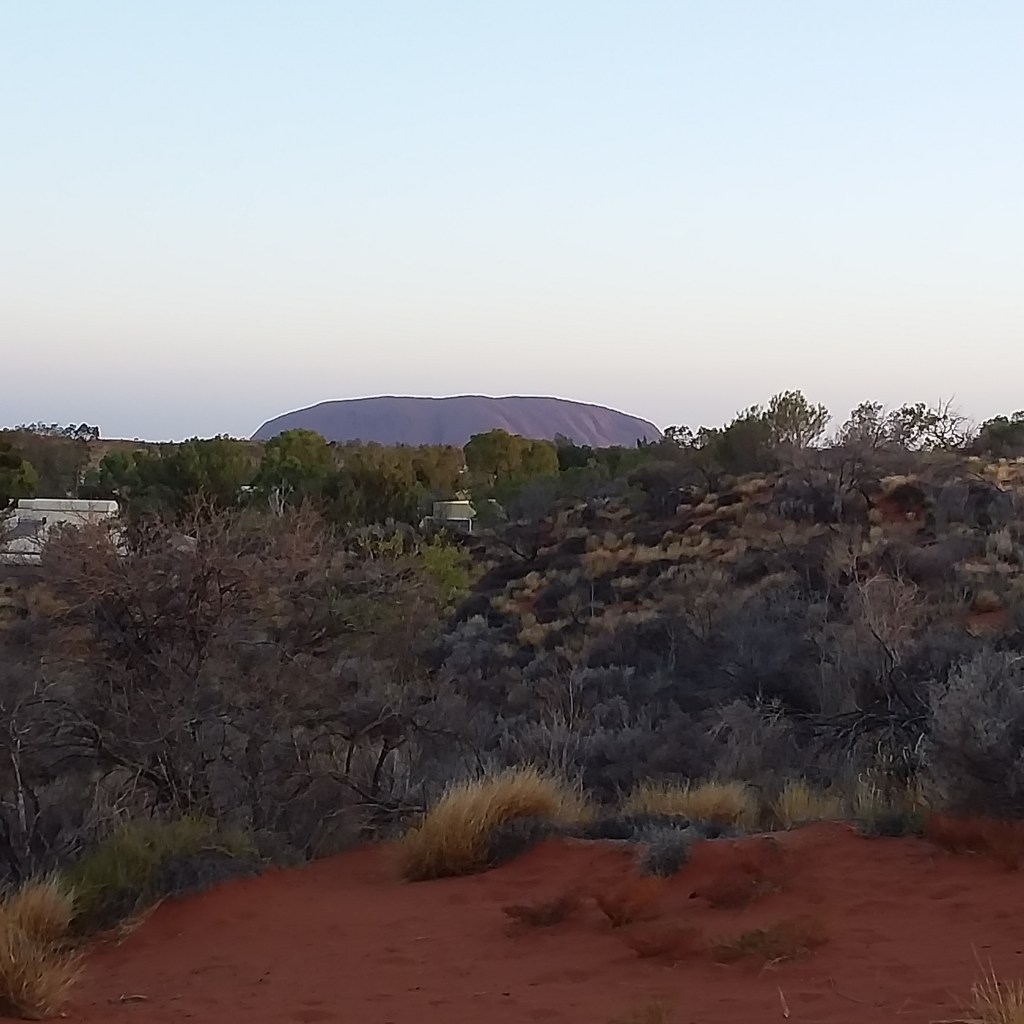
We dragged ourselves away and returned to camp for dinner. However,  there was a viewing platform at the campground and we walked up to see Uluru at sunset.

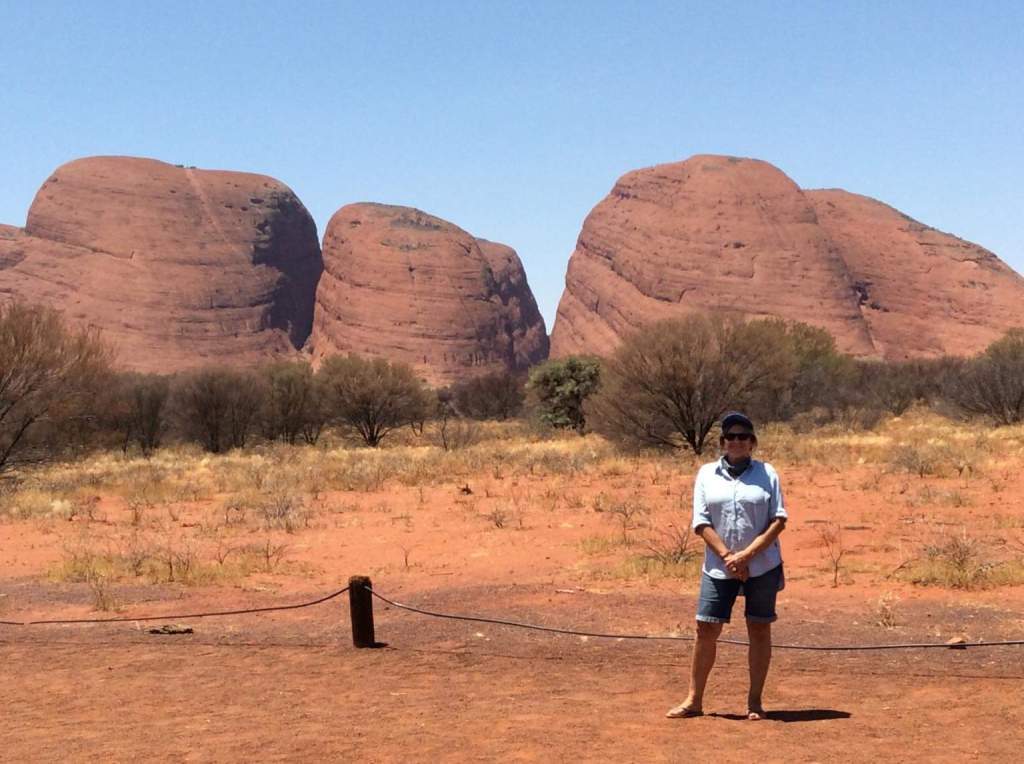
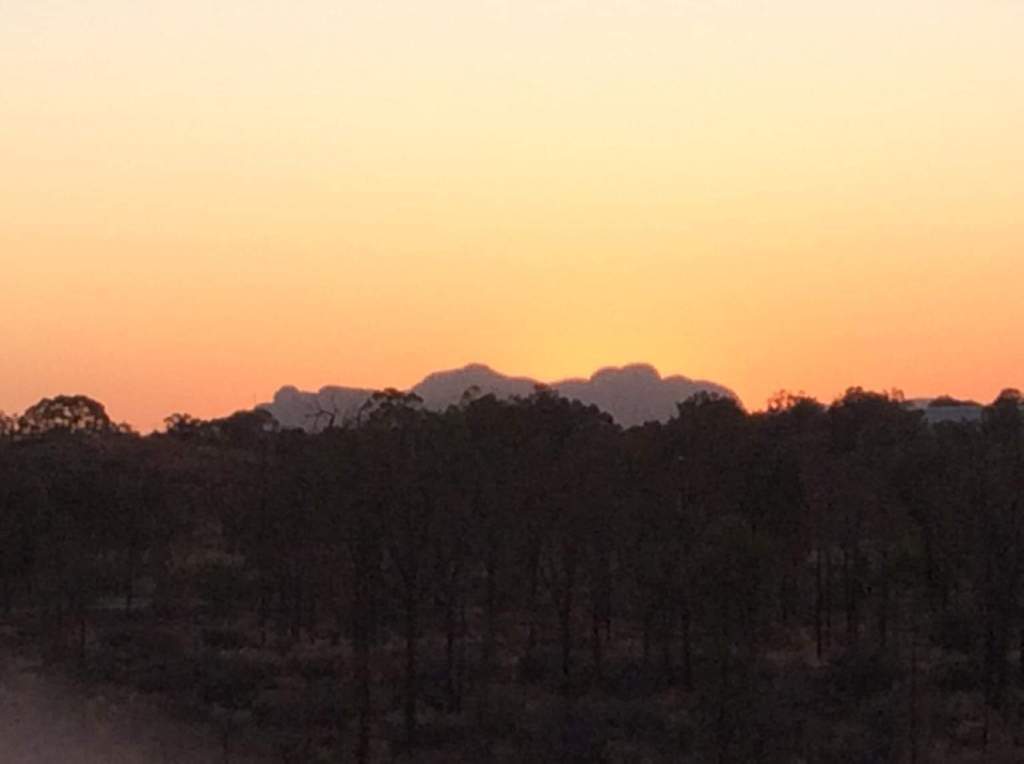
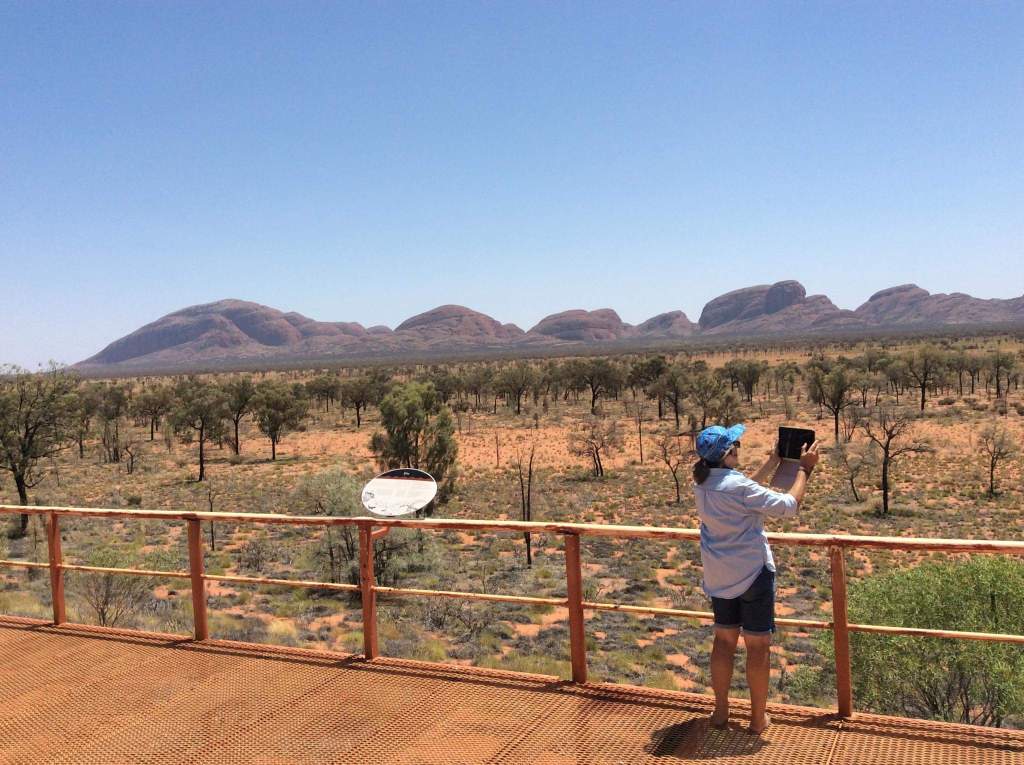
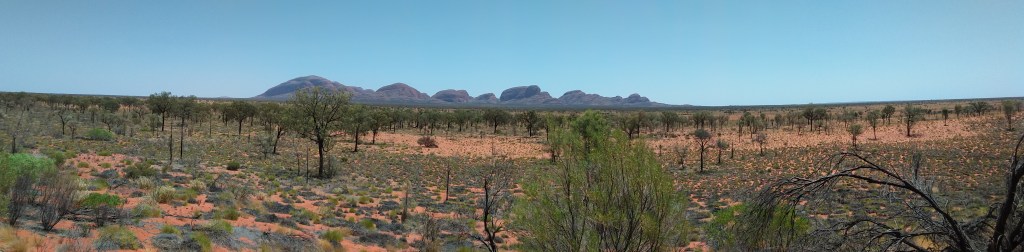
The next day we drove out to look at Kata Tjuta which is about 40kms from Uluru. It is just as beautiful both in daylight and at sunset.

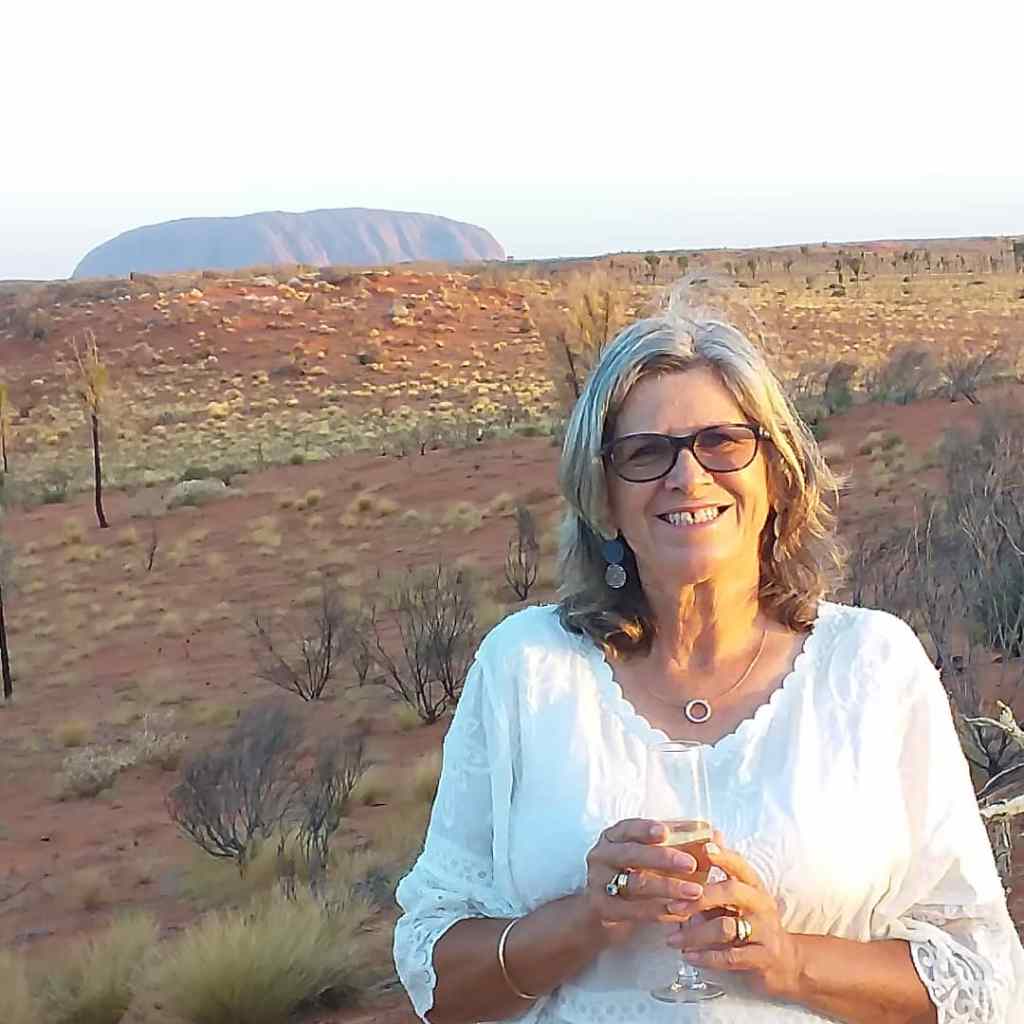
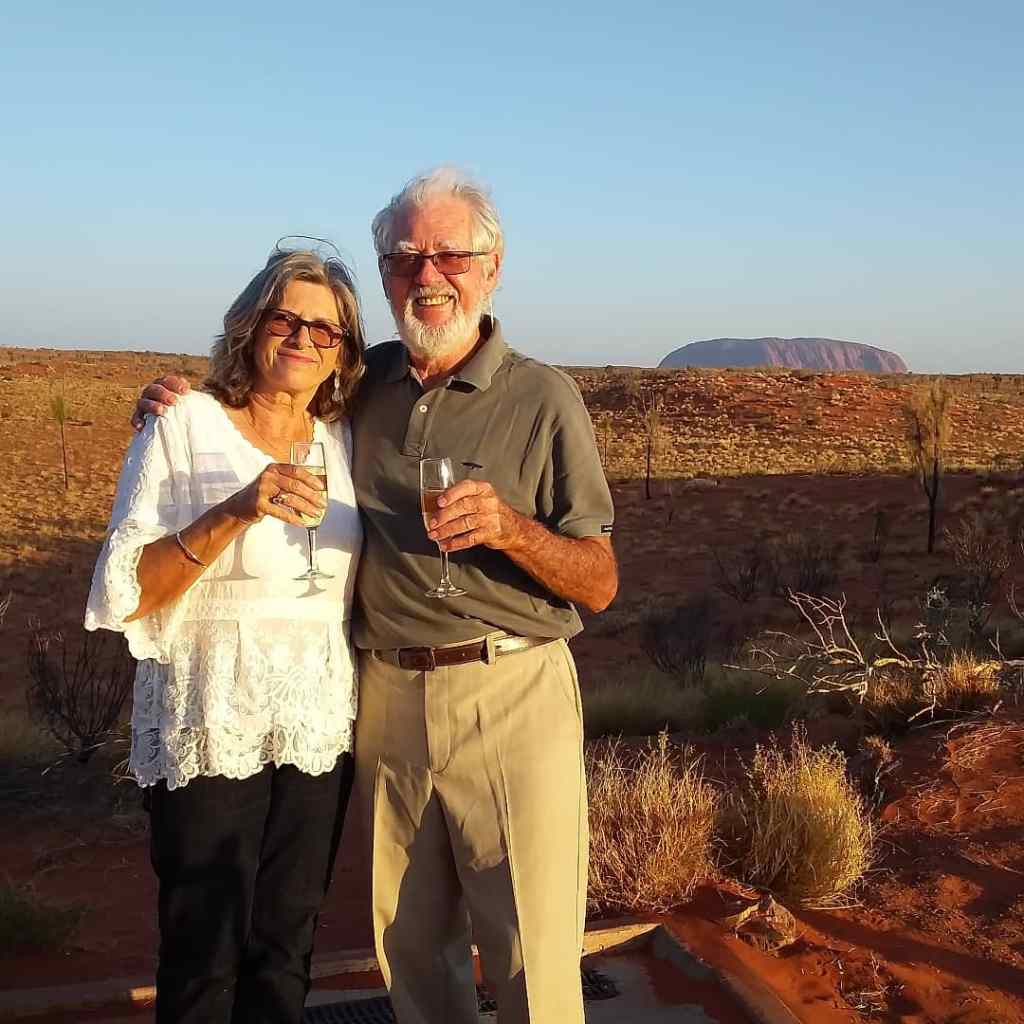
Since we couldn’t do the segway tour, we booked in for the Sounds of Silence Dinner, held in the desert between Uluru and Kata Tjuta. It took a while to locate a small bag of good clothes we had brought with us but had no reason to open. It was at the very back of the boot. We laid the clothes out on the bed to try to get rid of the creases. When we were ready to go, we made our way along to the pick up point near reception. A bus took us to the drop off point where we were met with champagne and canapes, and a superb view of both Uluru and Kata Tjuta. It was a perfect evening, warm with no wind or clouds.

We chatted to some other guests. Everyone was friendly.  I had read there could be three bus loads attending Sounds of Silence but there were only about 40 of us. The people we chatted to were travelling from all over the country including some from Tasmania. They were all very friendly and also interesting.

When the sun had set, we made our way to the dining area close by. The tables had white linen tablecloths, silver cutlery and wine glasses already being filled by the waiters. A man was serenading us with a didgeridoo.  As we got to know the other dinner guests at our table, we were served the first course – a bush tomato soup with roll and butter. It was delicious. This was followed by a help yourself buffet consisting of several main dishes,  vegetables and salads, all with a desert theme. I had tried the crocodile and kangaroo canapes and I also had the crocodile main course which was lovely. There was also chicken and lamb so plenty of choice.

The waiters cleared the tables then turned off the lights. The sky was awash with stars. We took a few minutes to enjoy them before a man called Luke began to tell us all about them, using a laser to point to various stars and galaxies. It was very interesting.  When he finished his talk he answered questions then invited us to look through his telescope after dessert. Once again there was a wonderful choice of desserts continuing the desert theme. The evening ended with port and coffee.

It certainly was a memorable evening with terrific food, amazing scenery and lovely people to share it with.

Kings Canyon, NT

We decided to stay a couple of nights at Kings Canyon Resort. It was double the price we normally pay for powered sites in caravan parks – $60 per night! We had intended going without power but that was $50 per night!!! With the very hot days and nights we have been having, it didn’t take much to talk us around; our van has aircon! Anyway it is a nice park with a pool, bar, cafe, bistro, shop and fuel ($2.20 a litre for diesel thank you very much).

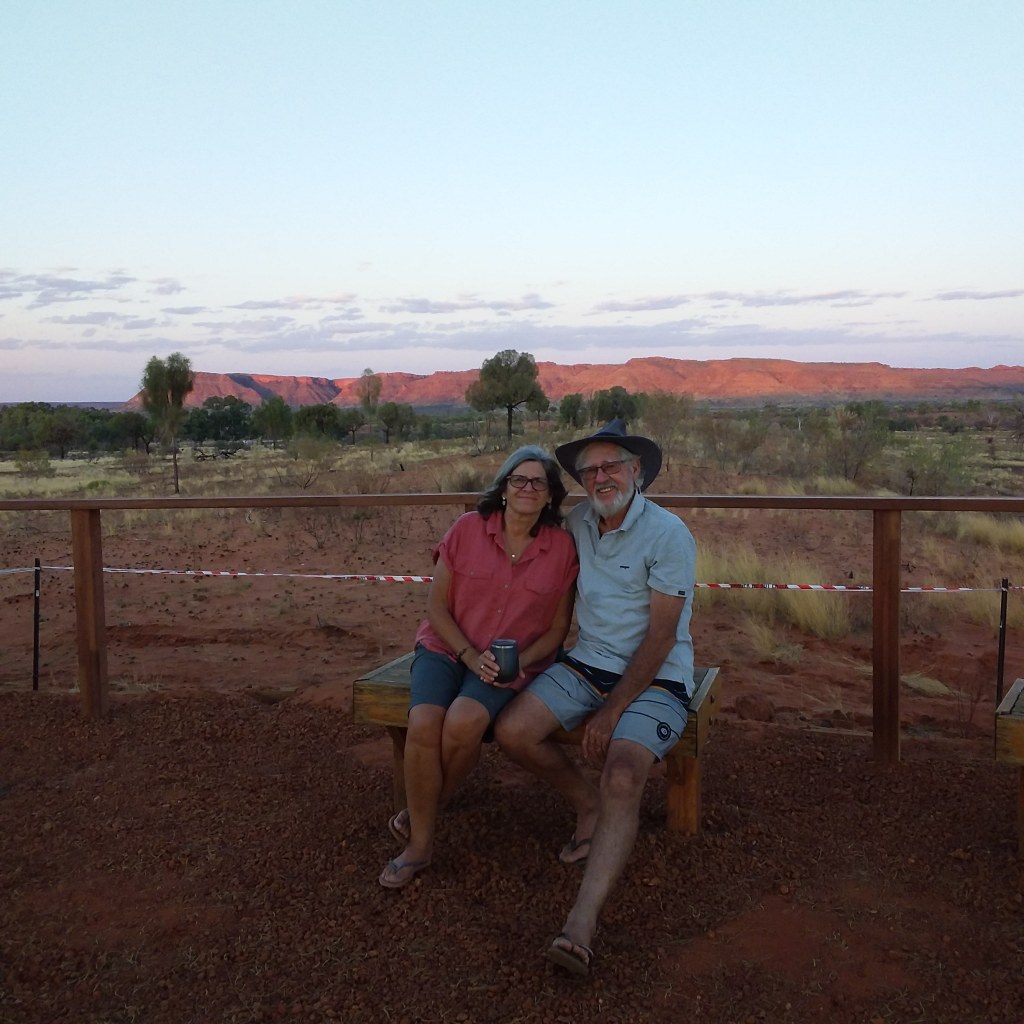
From our van, we had a lovely view of the Ranges and we loved watching the sun set on them.

Kings Canyon at sunset

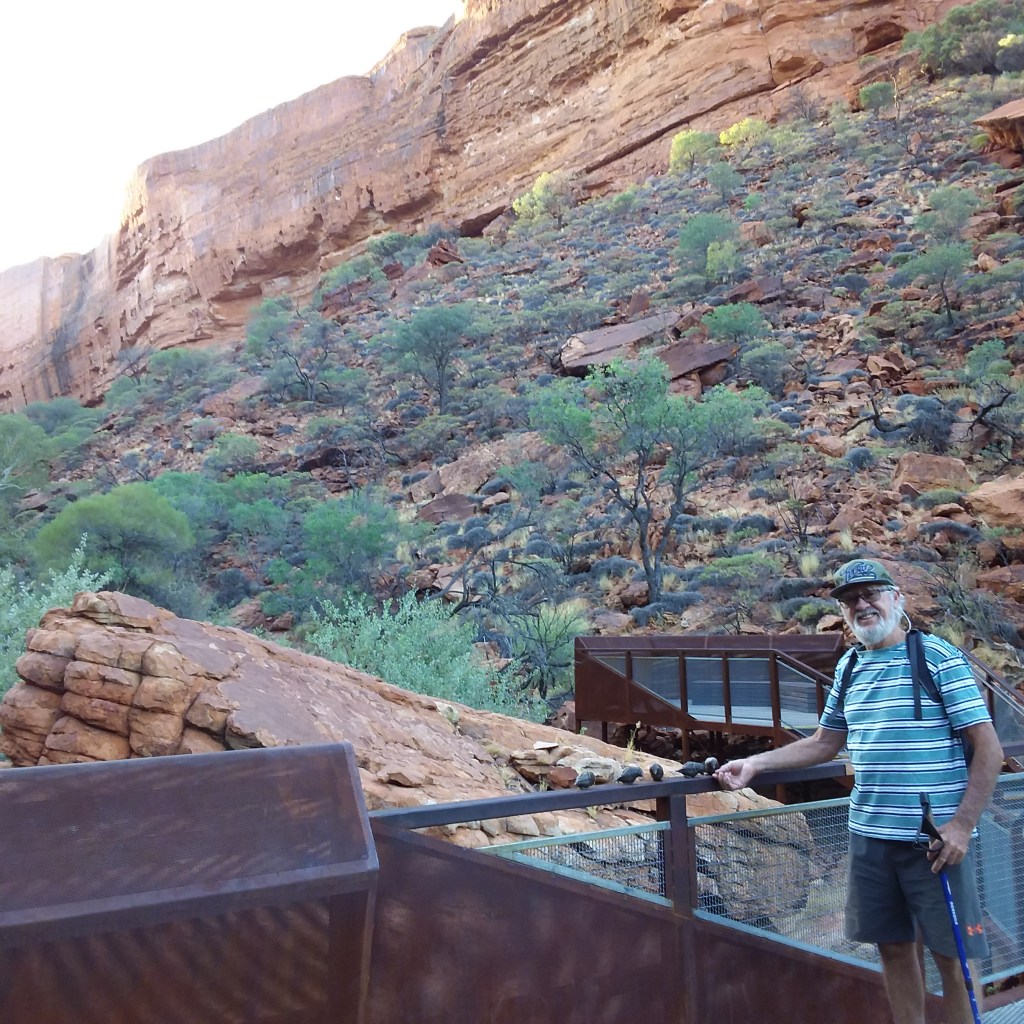
I tried to persuade John to do a helicopter ride over the Canyon but, with his vertigo, claustrophobia and fear of heights, there was no convincing him. I suggested it because John has very sore feet and is unable to walk far. The walks to see the Canyon at its best are very long, strenuous and uphill. We did the short Creek walk instead which we thoroughly enjoyed. We went very early in the morning to beat the heat, and were rewarded with beautiful views of Kings Canyon at sunrise.

We loved Kings Canyon and now look forward to visiting Uluru.

The Magnificent MacDonnell Ranges

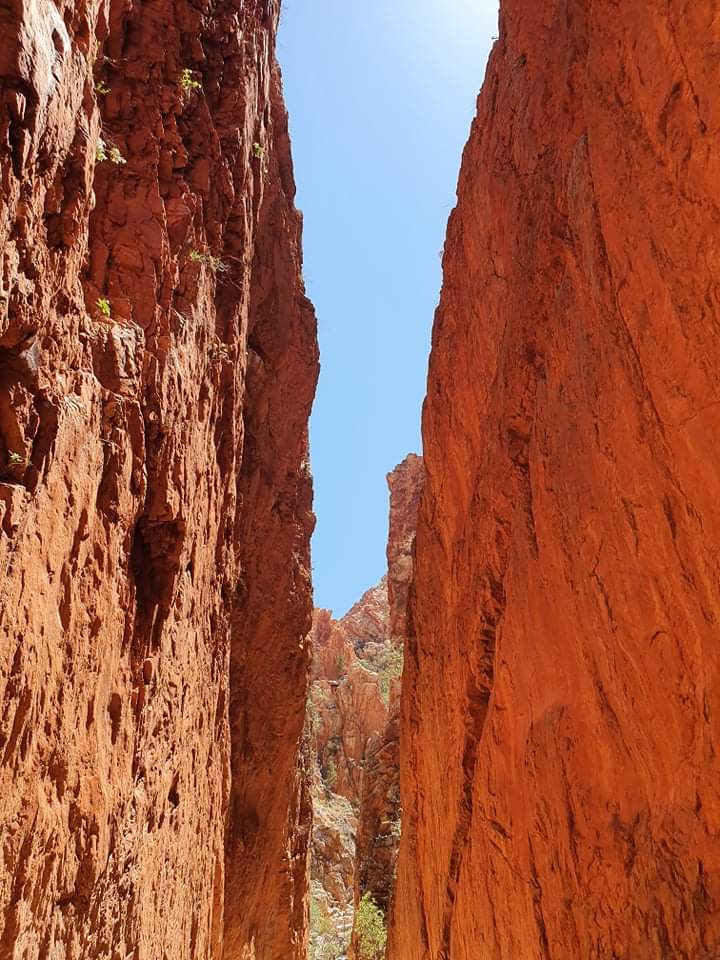
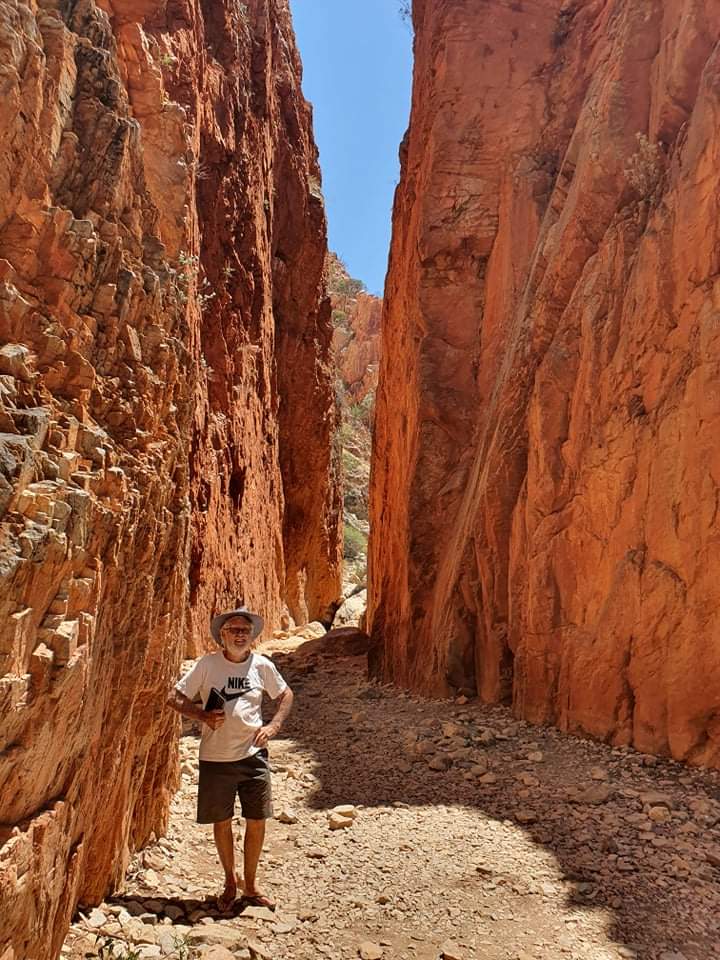
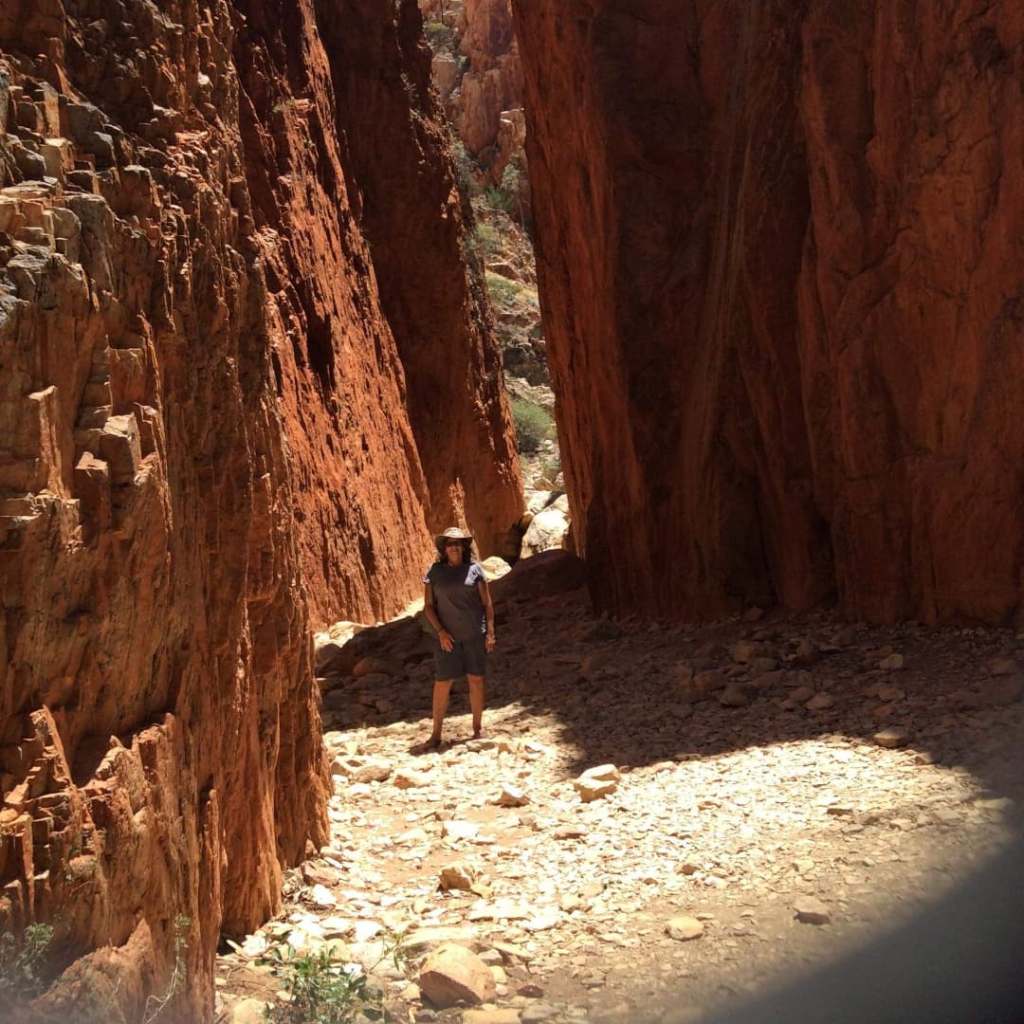
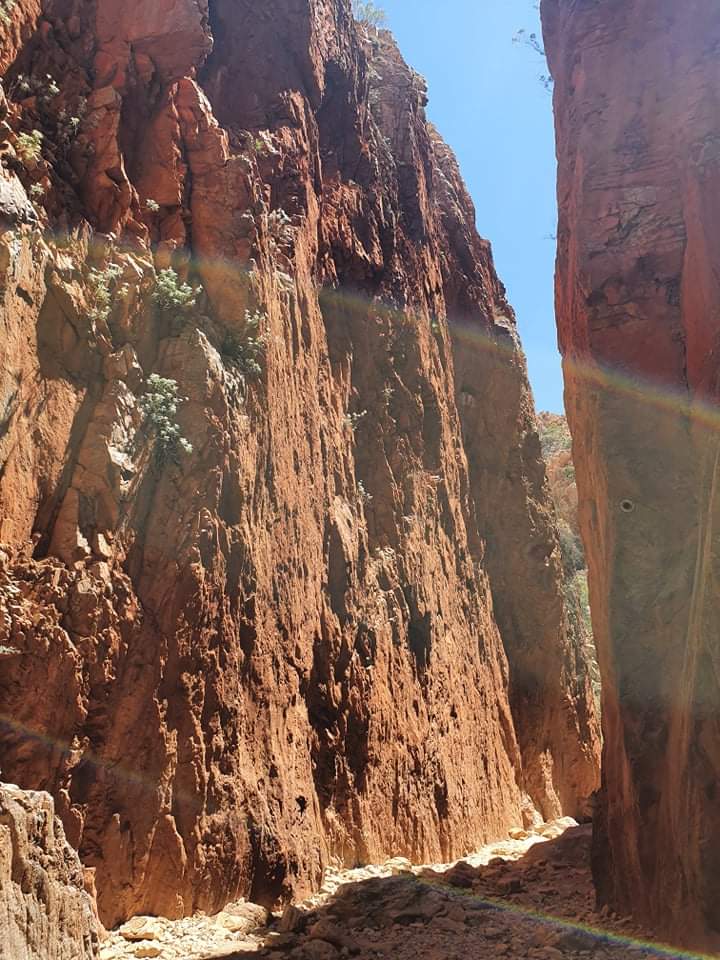
Standley Chasm

If we thought the east side of the MacDonnell Ranges was great, the west side was spectacular. This whole mountain range is an ancient landscape with many gaps and gorges caused by vast amounts of water pushing through the rock over millions of years. It doesn’t take much imagination to visualise it in the time of dinosaurs. The landscape is so rugged and raw. It is stunning.

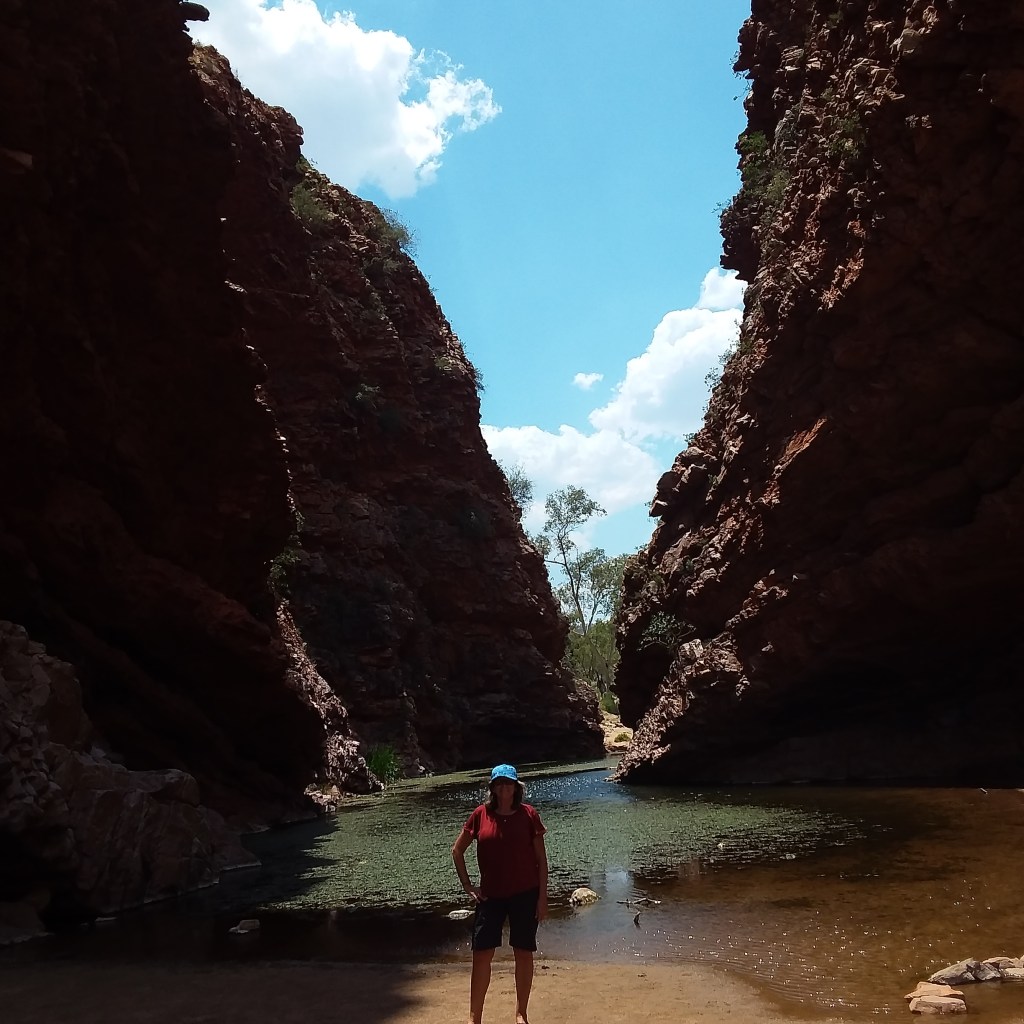
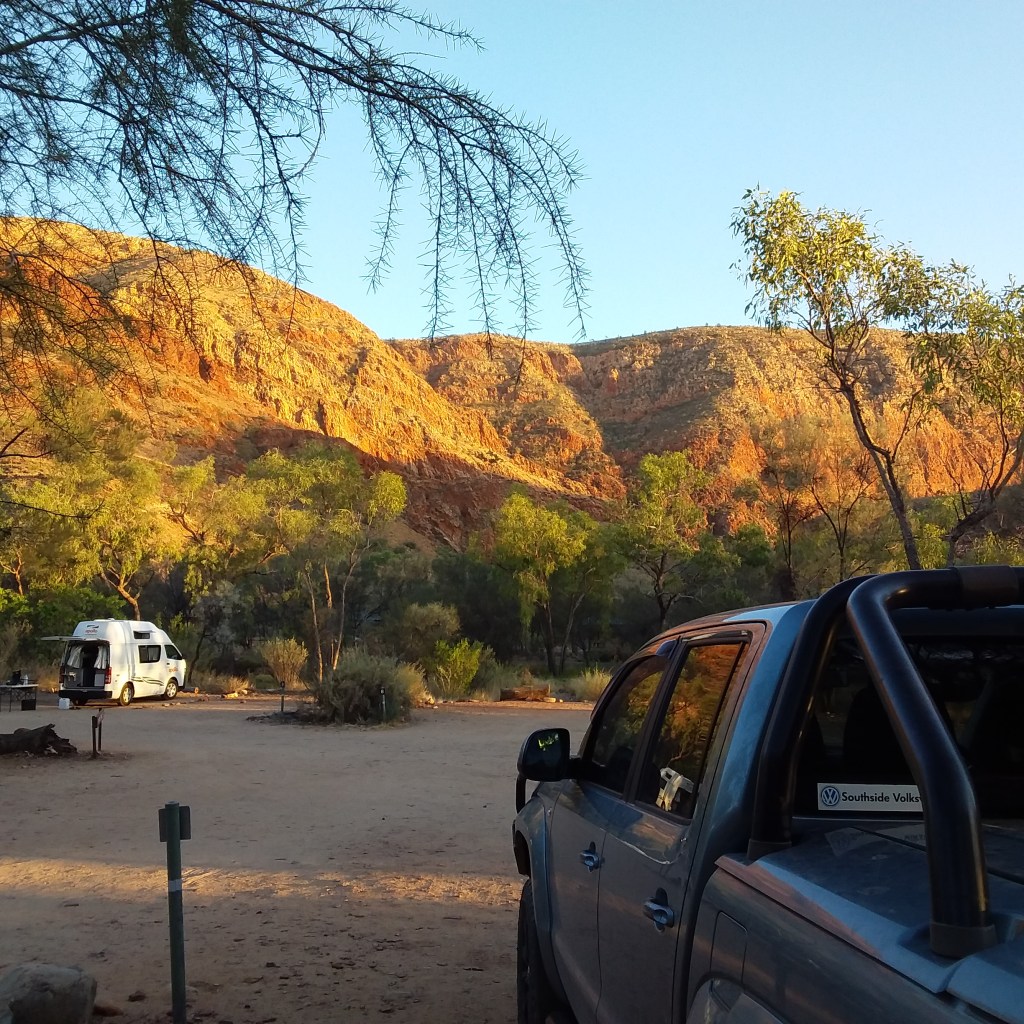
On day one we meandered along Larapinta Drive onto Namatjira Drive, stopping at Simpson’s Gap, Ellery Creek Water Hole and then camped at Ormiston Gorge. All three were lovely. We should have swum in Ellery Creek as there was plenty water but we wanted to wait until we had set up camp at Ormiston. Unfortunately there wasn’t as much water in the gorge there and we decided on a shower instead. The walking and camping facilities at these places are so well done. Ormiston Gorge even has a kiosk which sells Aboriginal art as well as amazing scones.

Simpson’s Gap
Ellery Creek Water Hole – good place to camp and swim
Our campsite at Ormiston Gorge

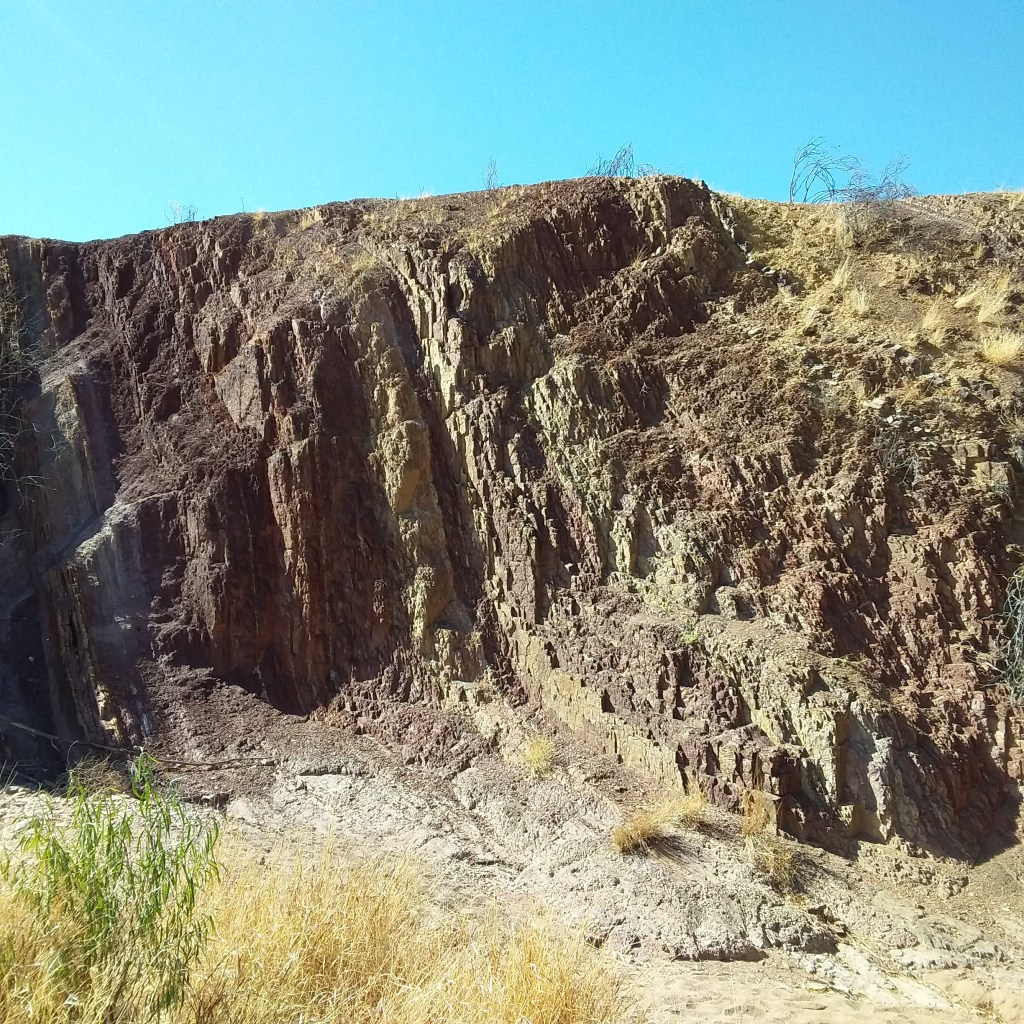
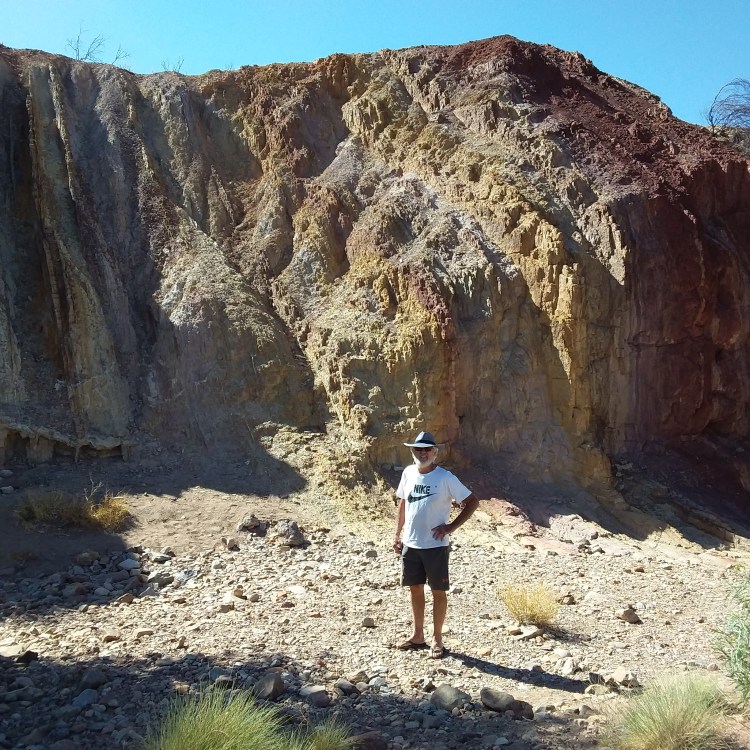
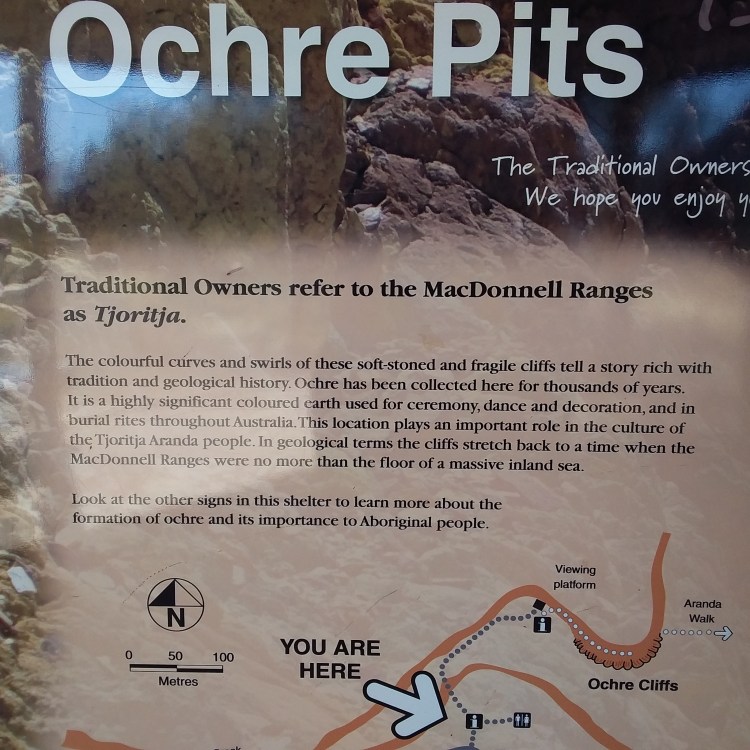
On day two, we stopped at the Ochre Pits. This was fascinating. The pits consist of many layers of multi-coloured, layered rock that is traditionally used by Indigenous Australians in ceremonies, as medicine and was once traded between different Aboriginal countries across Australia.

We moved on from the Ochre Pits to Standley Chasm. This is the only gorge we had to pay for and it was about $10 each. We were more than happy to pay as we had had so many beautiful gorges to enjoy for free. This area, like so many we have seen, has huge cultural importance to the First Nations People and is, in fact operated by the local Angkerle Aboriginal Corporation. There is a lovely little cafe and shop, and the walk up to the Chasm is on an easy track that is well maintained. The Chasm itself is incredible. The colours, as you can see by the picture above, are a vibrant red, particularly around midday. We loved it here!

Camping on a Cattle Station in Central Australia

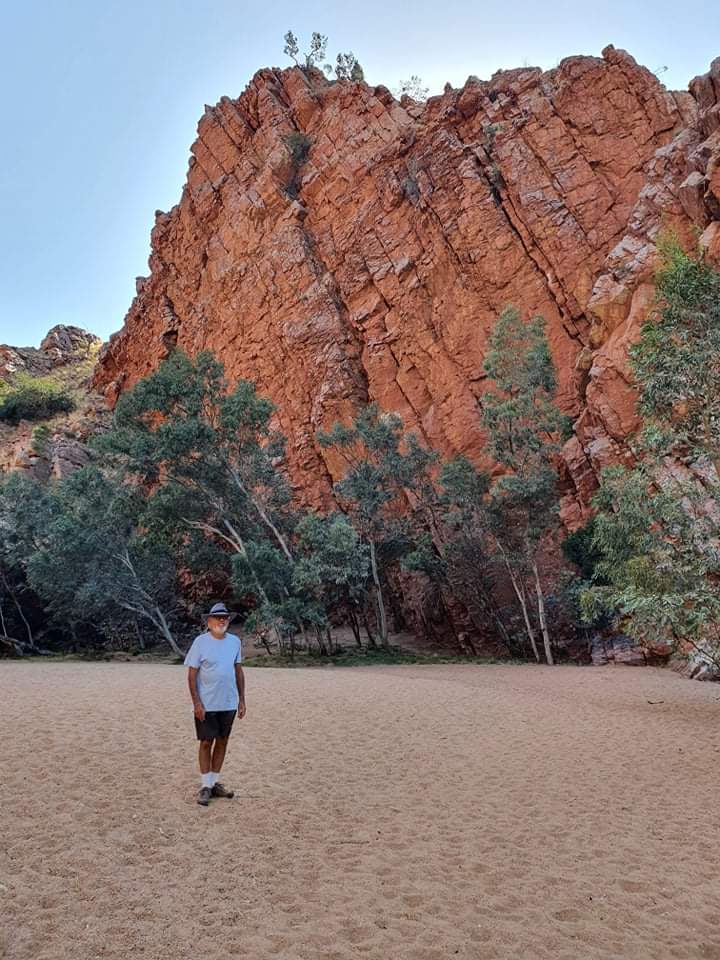
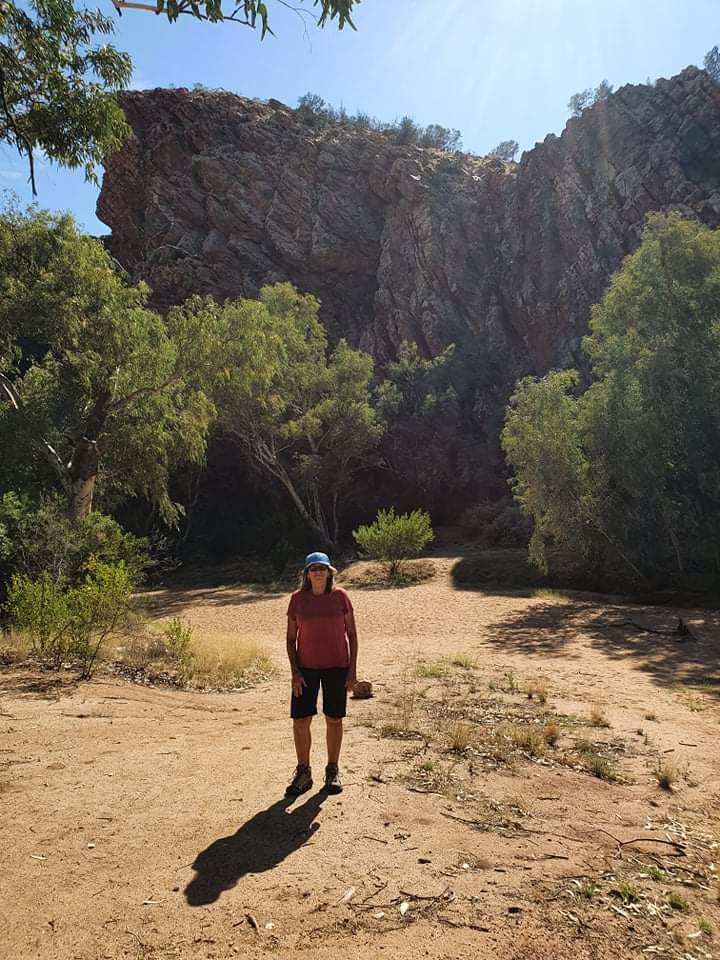
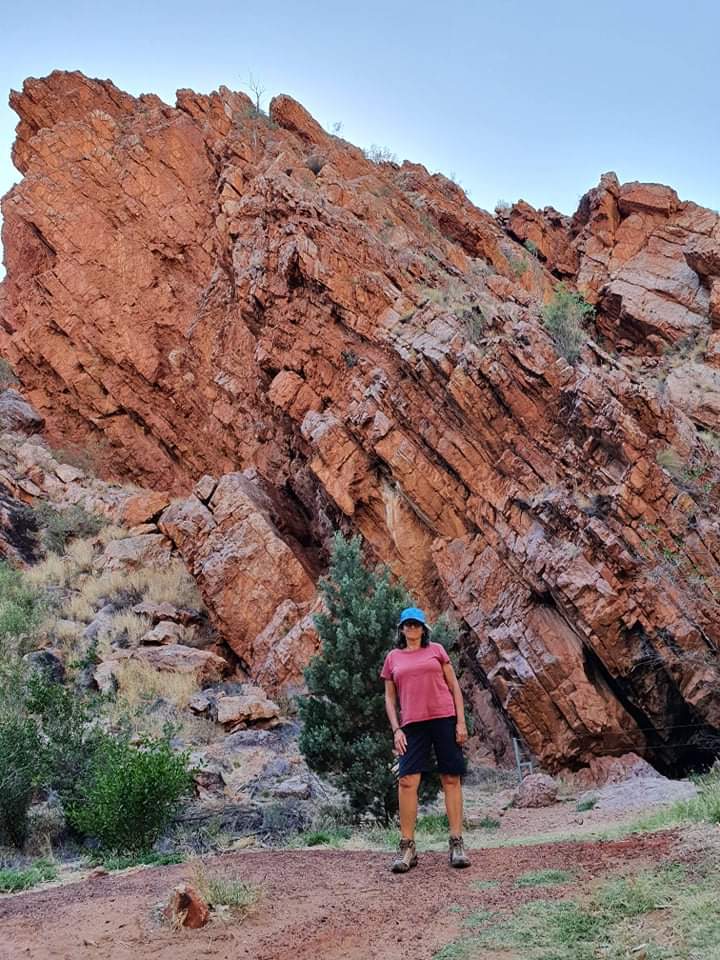
We left Alice Springs heading along the Ross Highway to explore the east side of the MacDonnell Ranges. Our first stop was Emily Gap which was a large empty gorge with some Aboriginal Rock Art depicting the story of three caterpillars which have huge spiritual significance in this area.

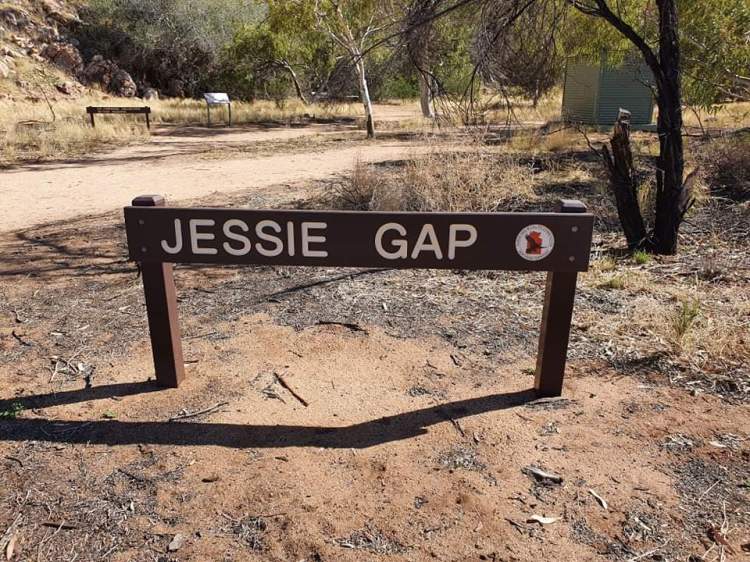
We moved onto Jessie Gap which was very similar and with similar rock art. We are requested by the elders not to photograph the rock art.  These gorges were stunning especially with the sun reflecting off them.

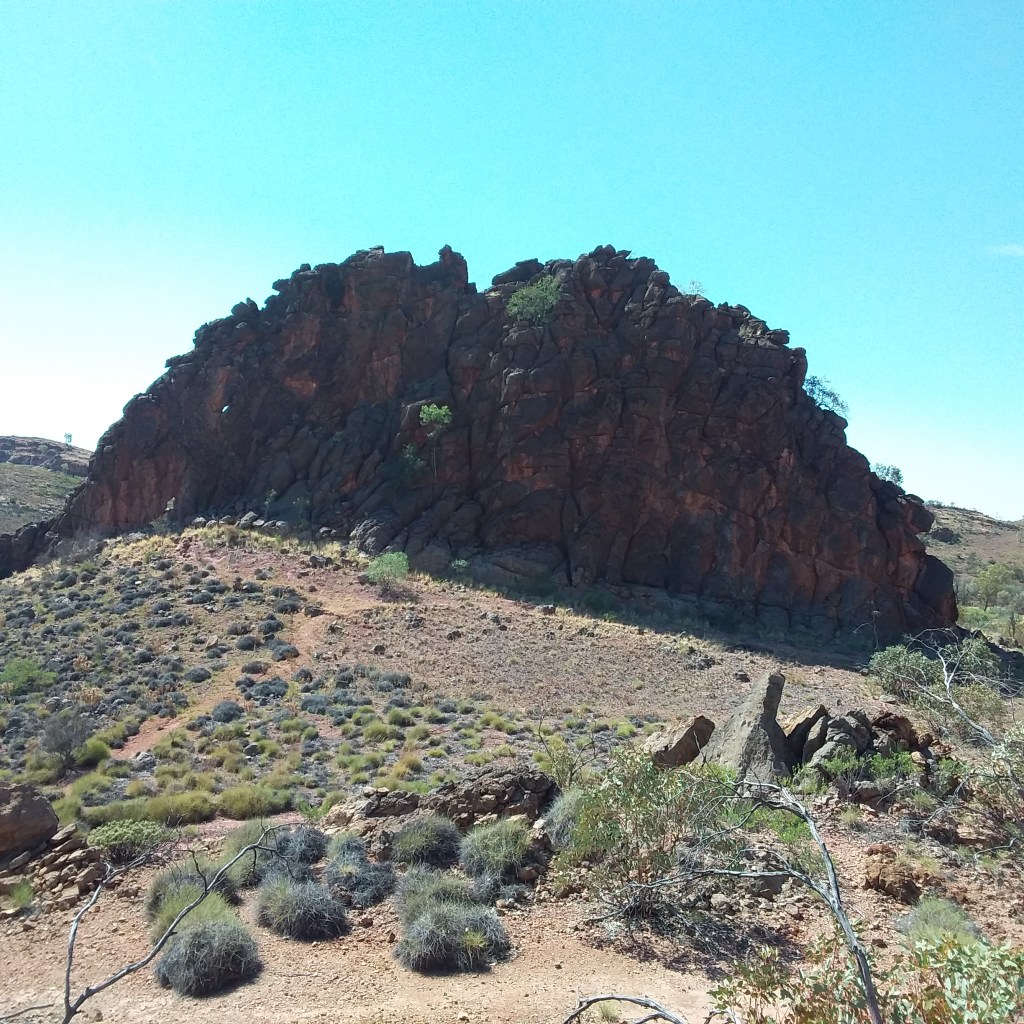
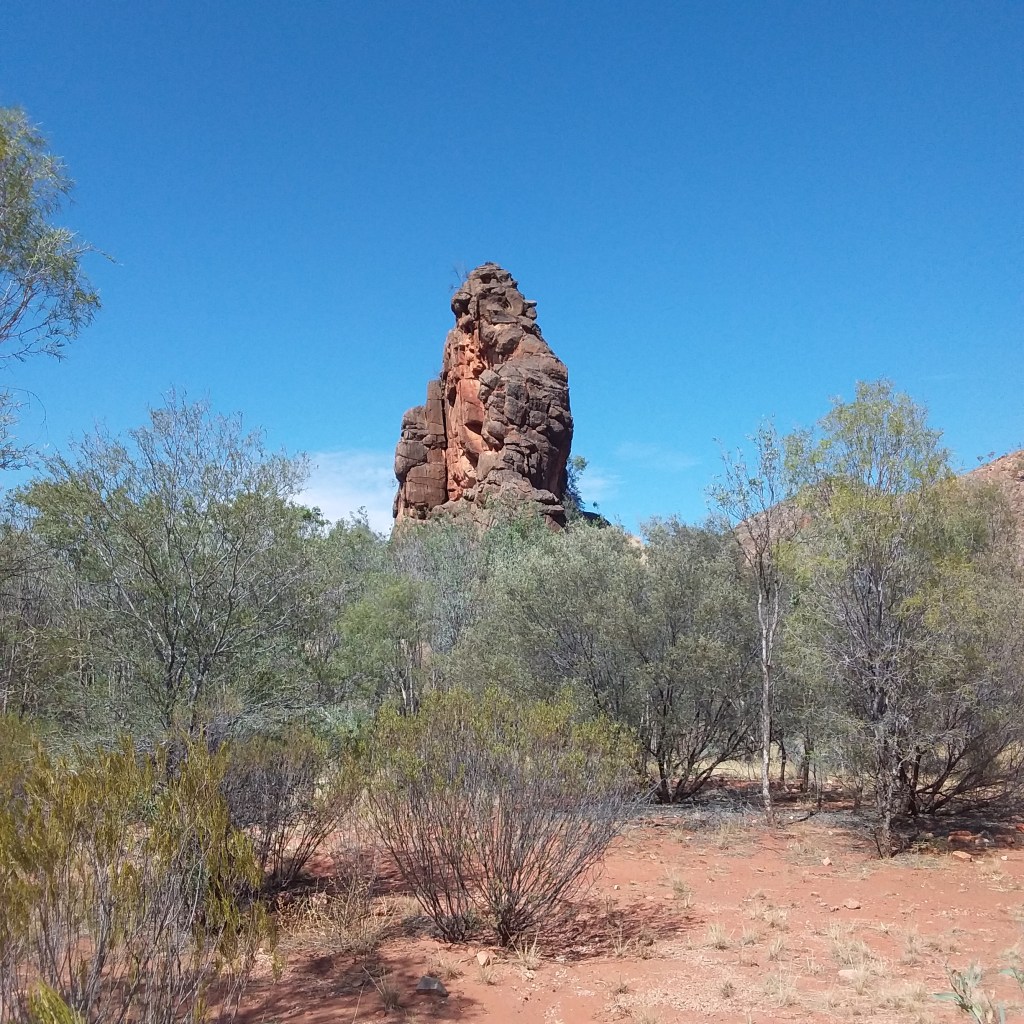
Our third stop was at Corroboree Rock, which we walked around. The gorges and rock formations are quite something,  going back millions of years. Of course, they all have spiritual significance to the First Nations People and all have dreamtime stories attached to them. We felt so blessed to be here looking at them.

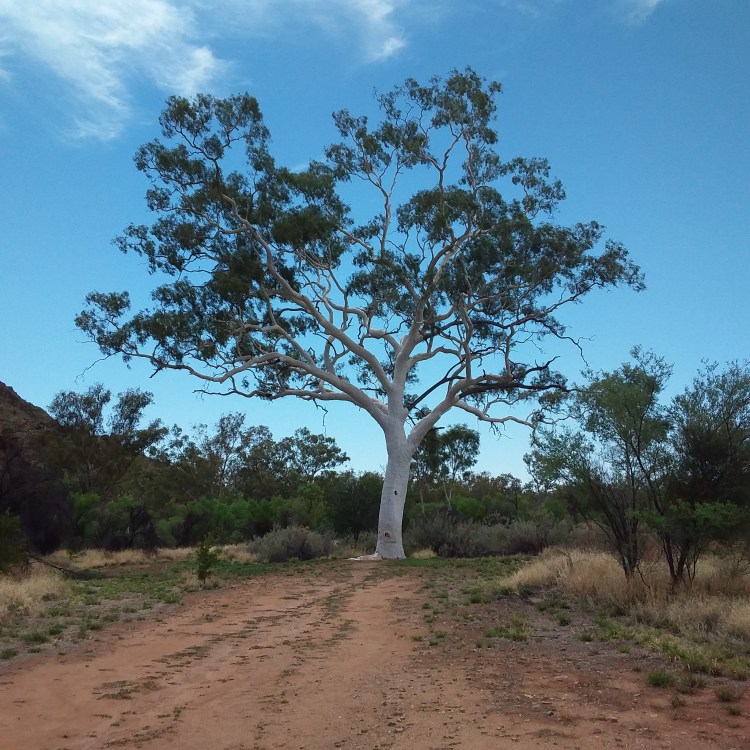
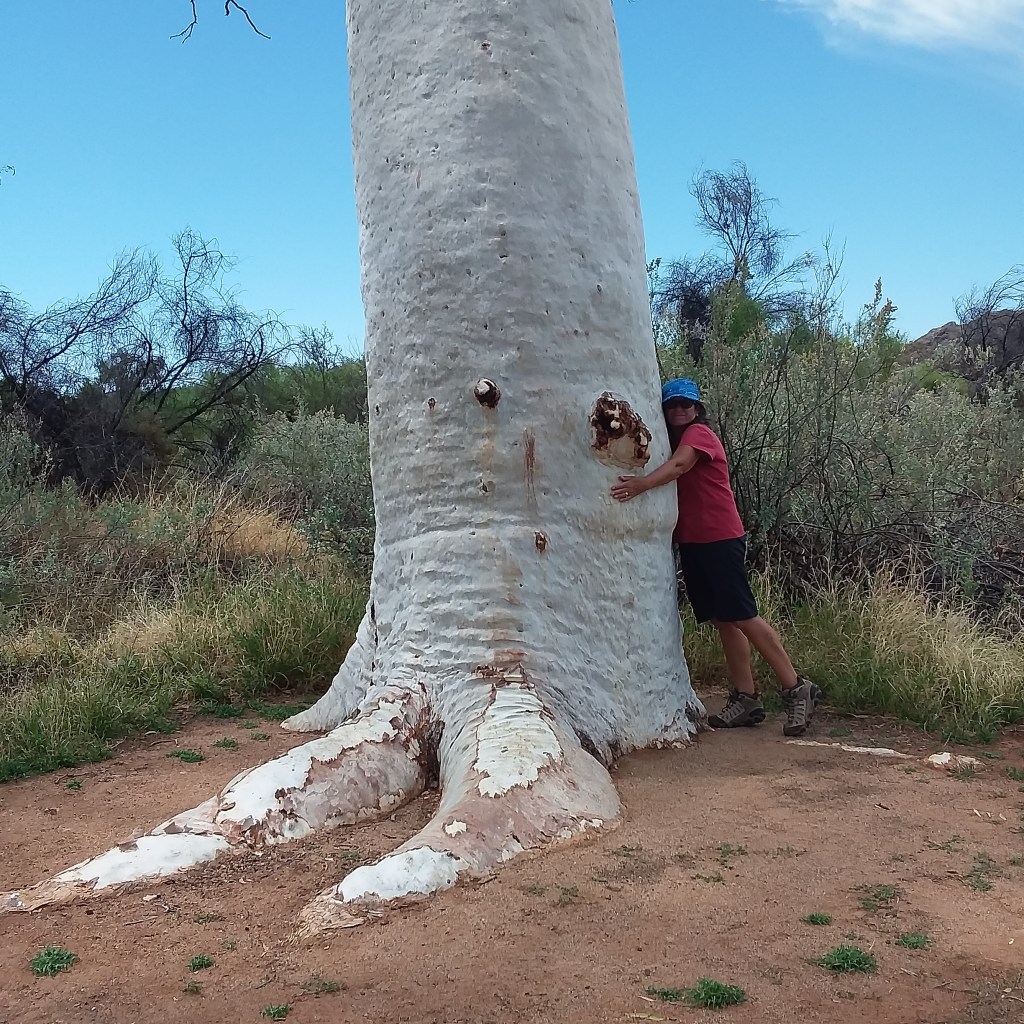
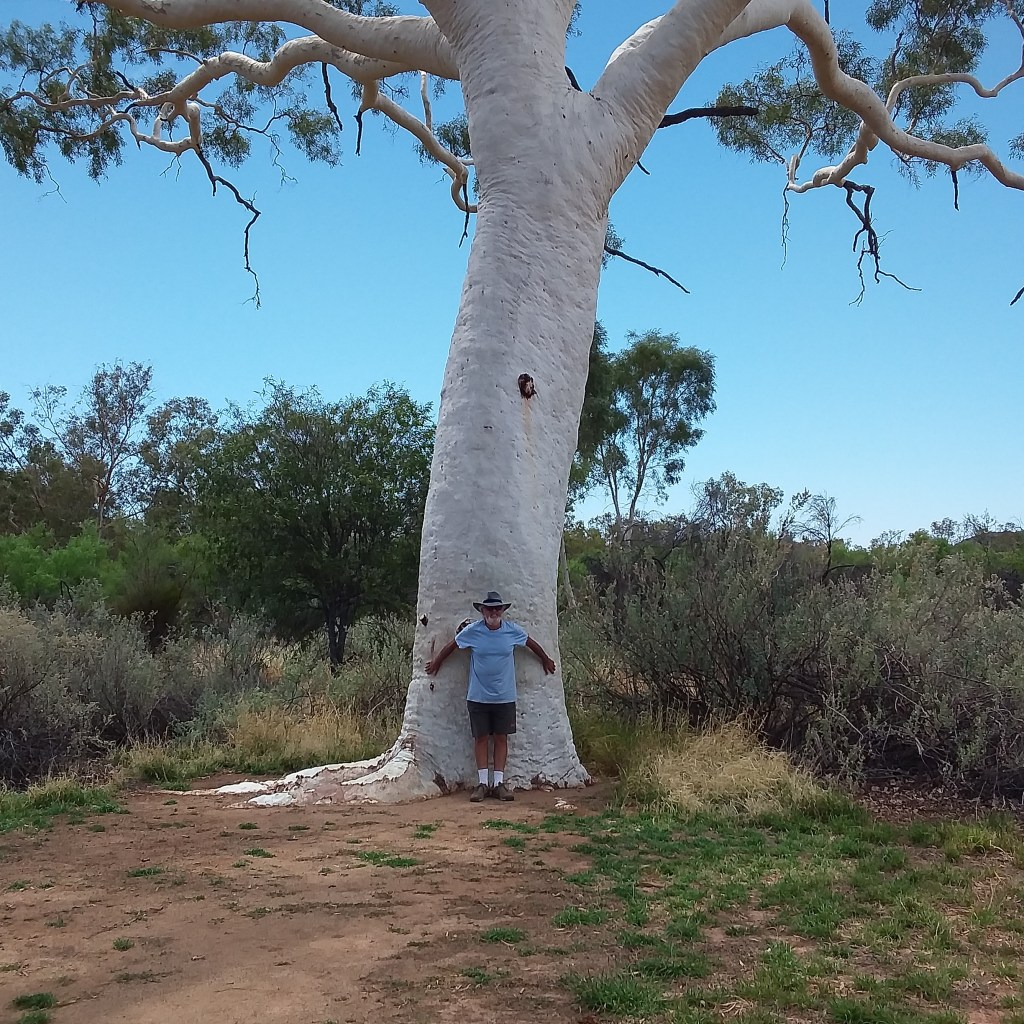
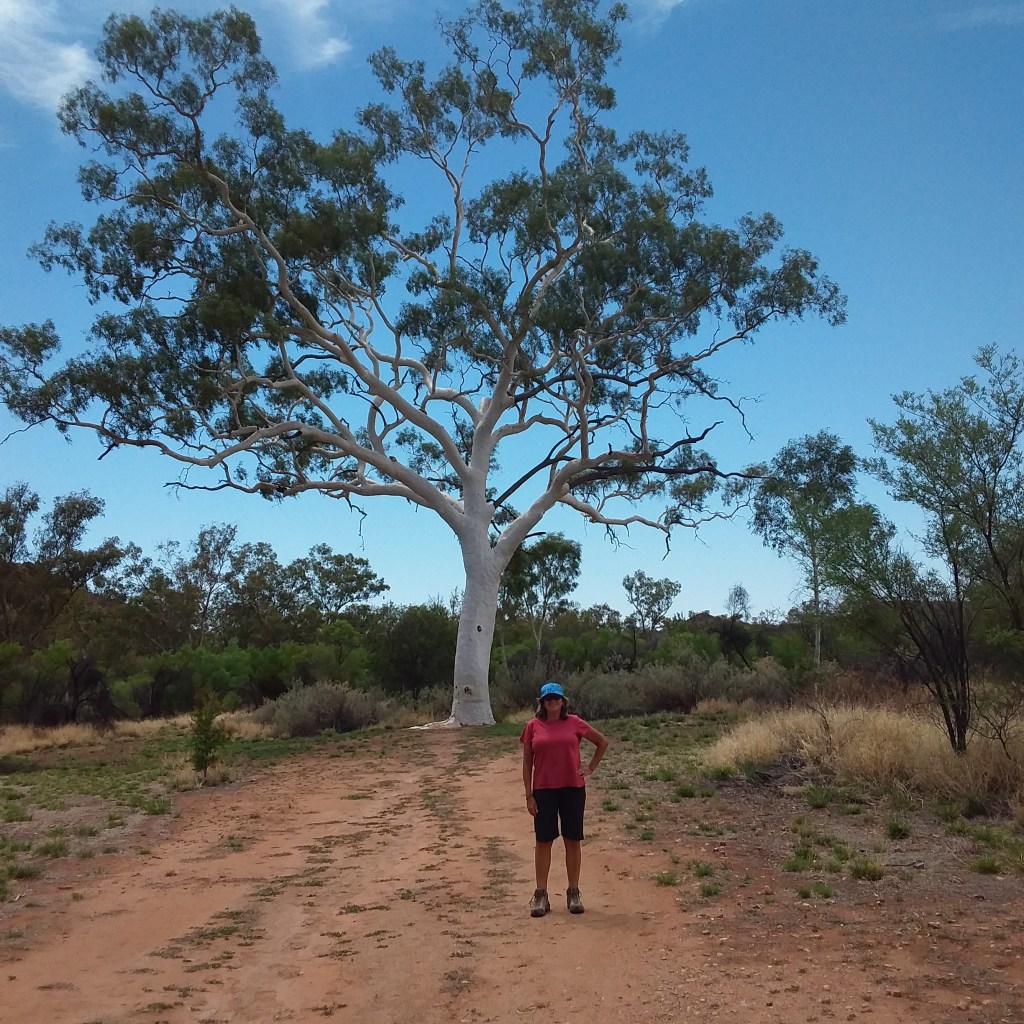
Along the track we came across an old ghost gum tree, over 300 years old. It was quite spectacular and I couldn’t help but hug it. This beautiful tree was standing proud in the middle of the desert. Amazing.

We considered camping at the gorgeous bush camps at Trephina Gorge National Park but it was still morning and 43 degrees. Instead we kept going heading for the Hale River Homestead at Old Ambalindum which we knew had some powered sites. We didn’t, however, realise it was a good couple of hours’ drive along a 4wd track. We finally arrived to discover both safety chains, attaching the caravan to the car, were trailing on the ground and both D shackles were gone!

This camping ground is lovely and well set up for groups and events with a bar, a lap pool and lots of areas to sit around the campfire. It is in fact a “very small” cattle station, just 60 sq km.  Being mid October, they were winding down to close for the wet season and we were the only campers there. The bar and food were finished but it didn’t matter as our fridge was full. We actually enjoyed the peace and quiet.

As we sat outside the van watching the sun set behind a windmill we almost had to pinch ourselves. Here we were, glass of red in hand, camping on a cattle station in the centre of Australia.  How lucky we are.

On the Road to Alice

I was looking forward to ticking something else off my bucketlist. I have wanted to go to Alice Springs since I read A Town like Alice as a girl. Of course, I have just re-read it for the umpteenth time knowing I was finally going to visit. John was there in the 1980s but did not get to Uluru so we are both looking forward to this next part of our journey. But it is a long drive from Katherine to Alice Springs.

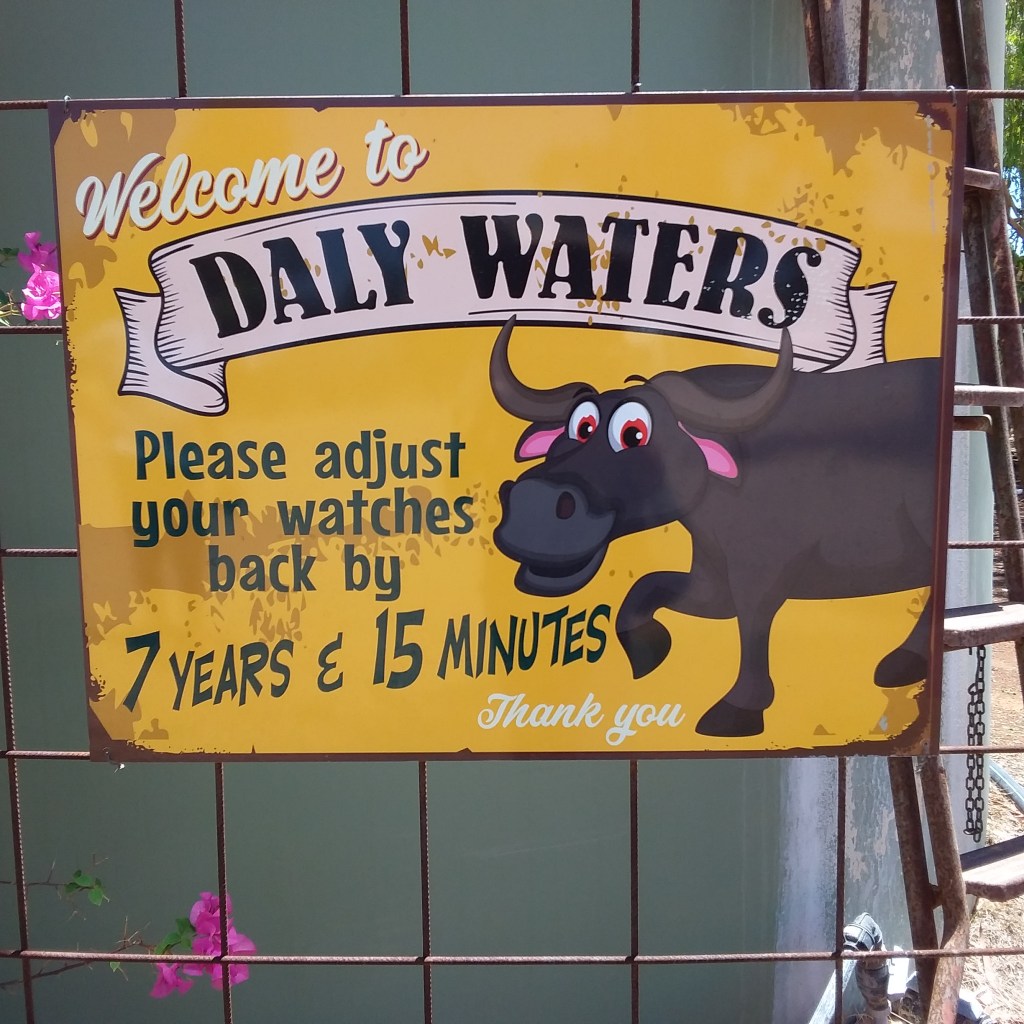
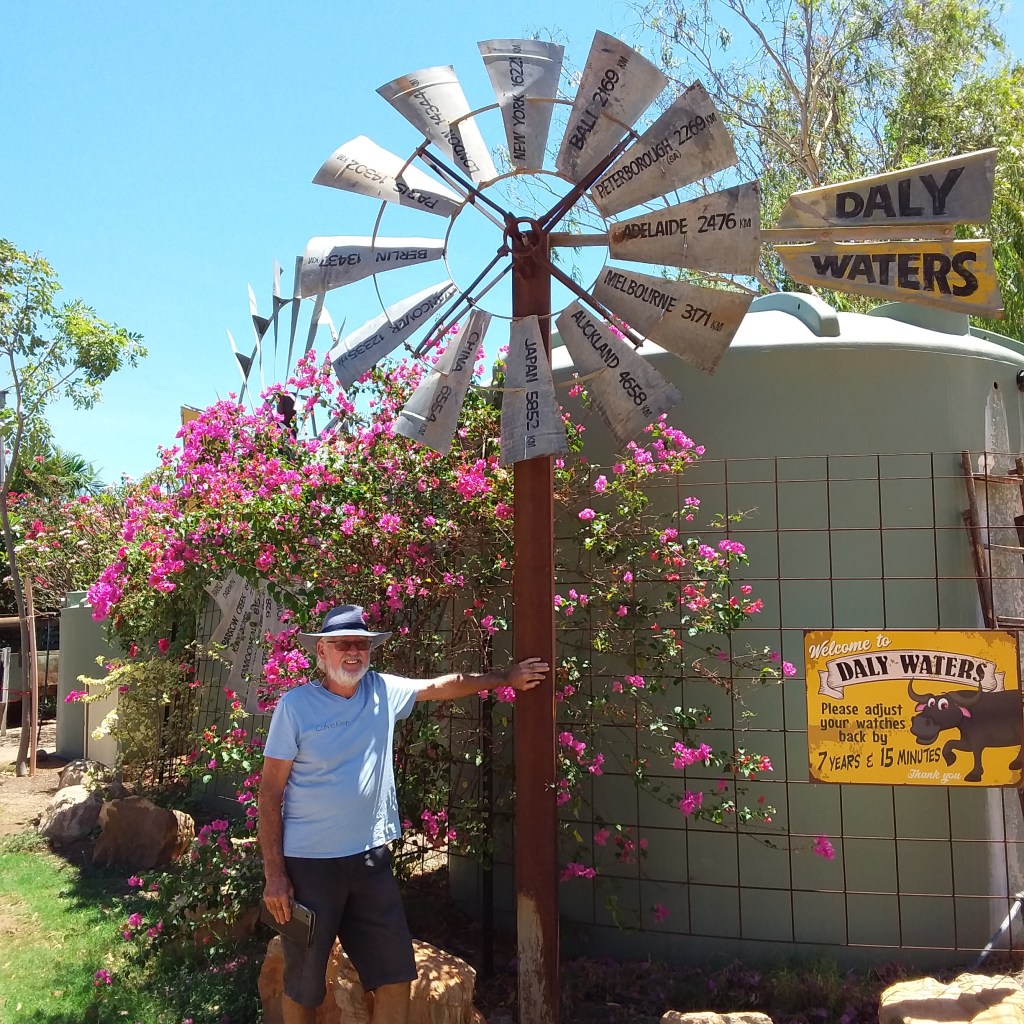
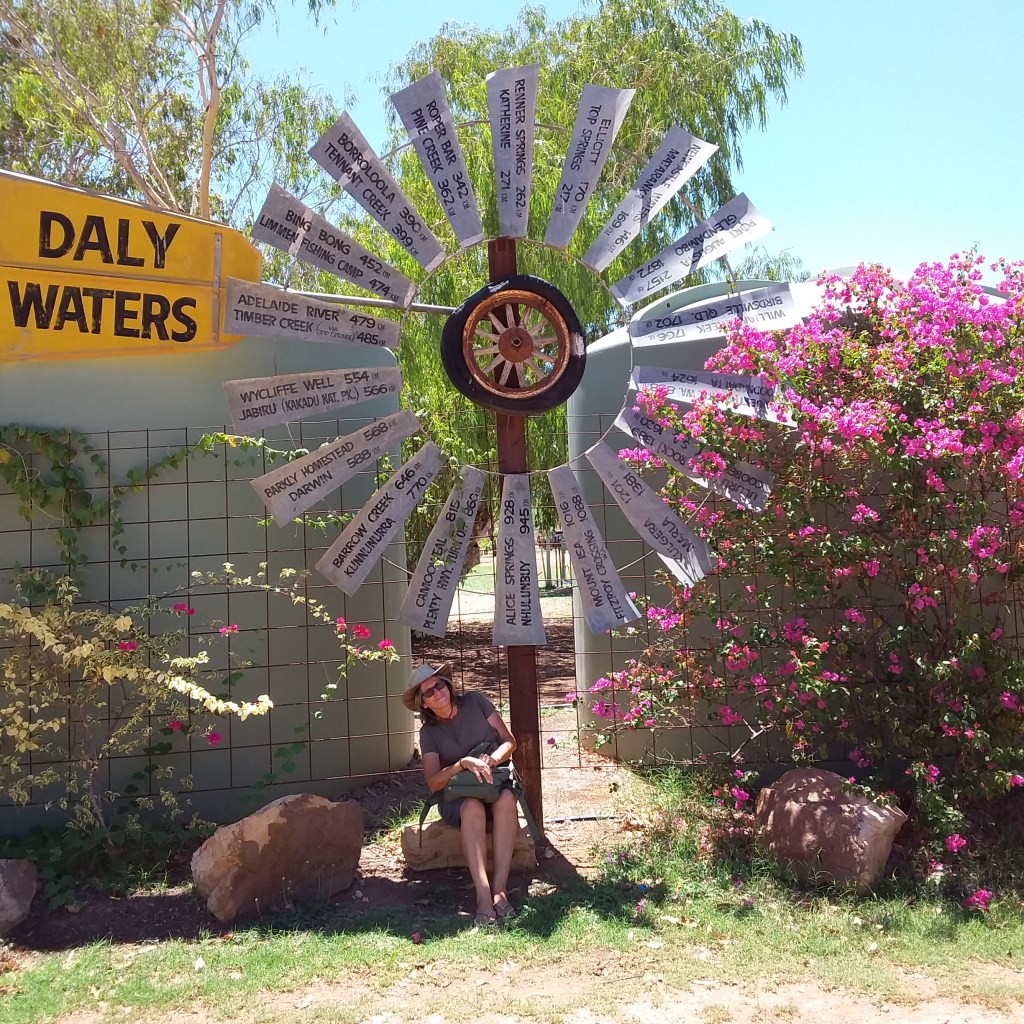
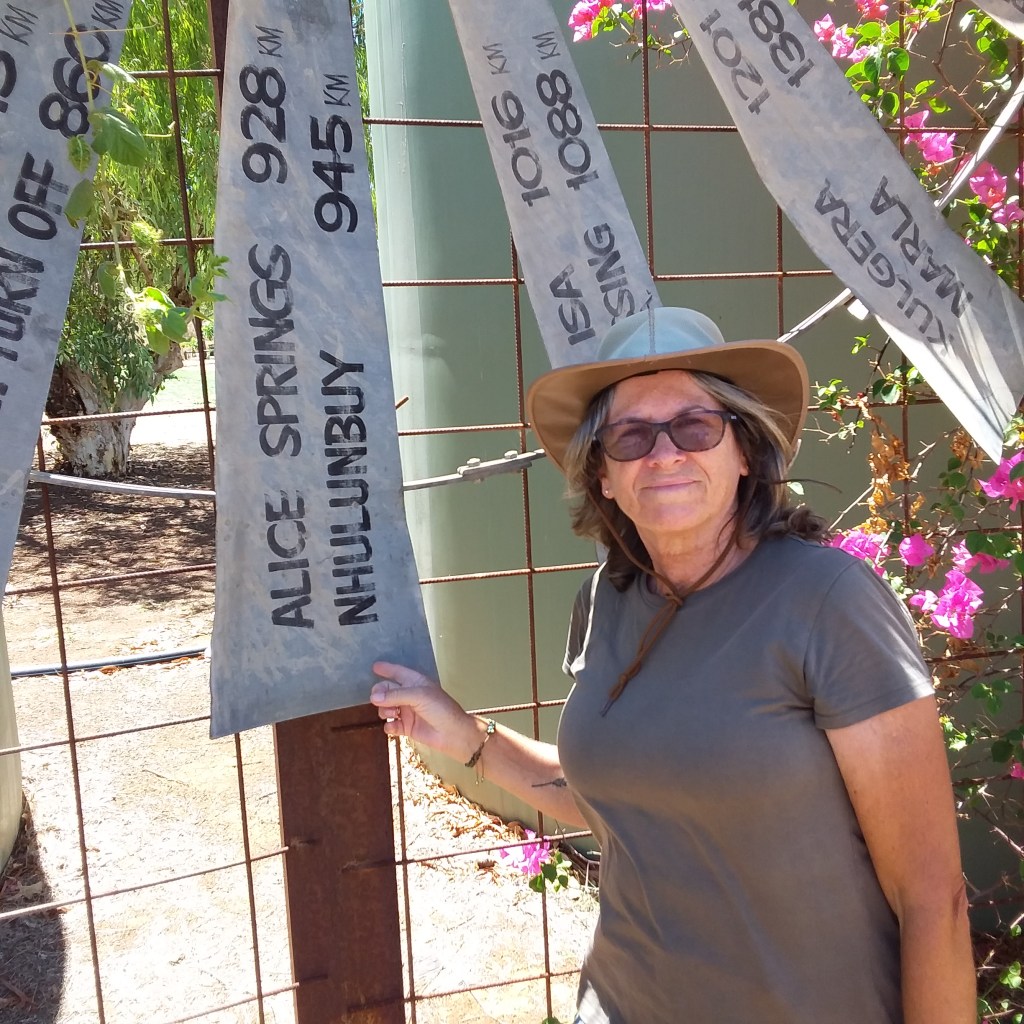
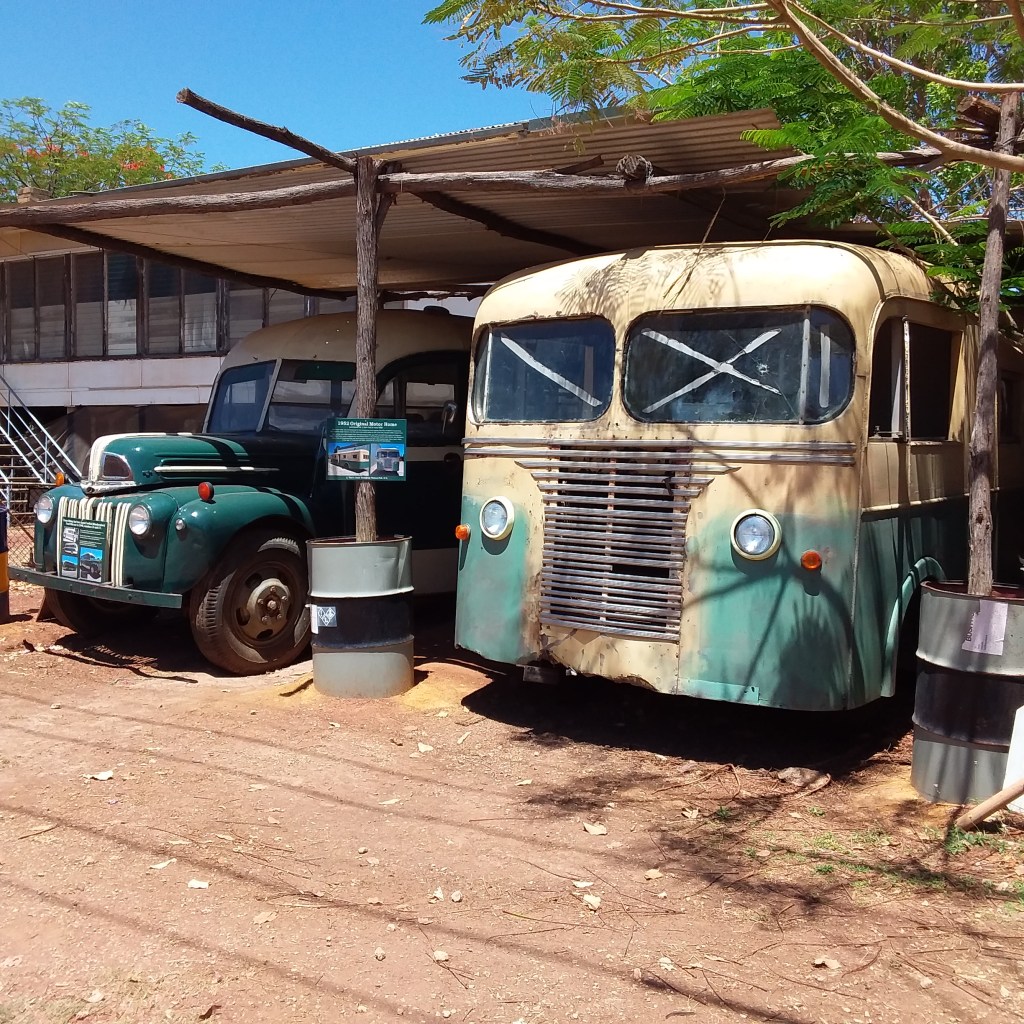
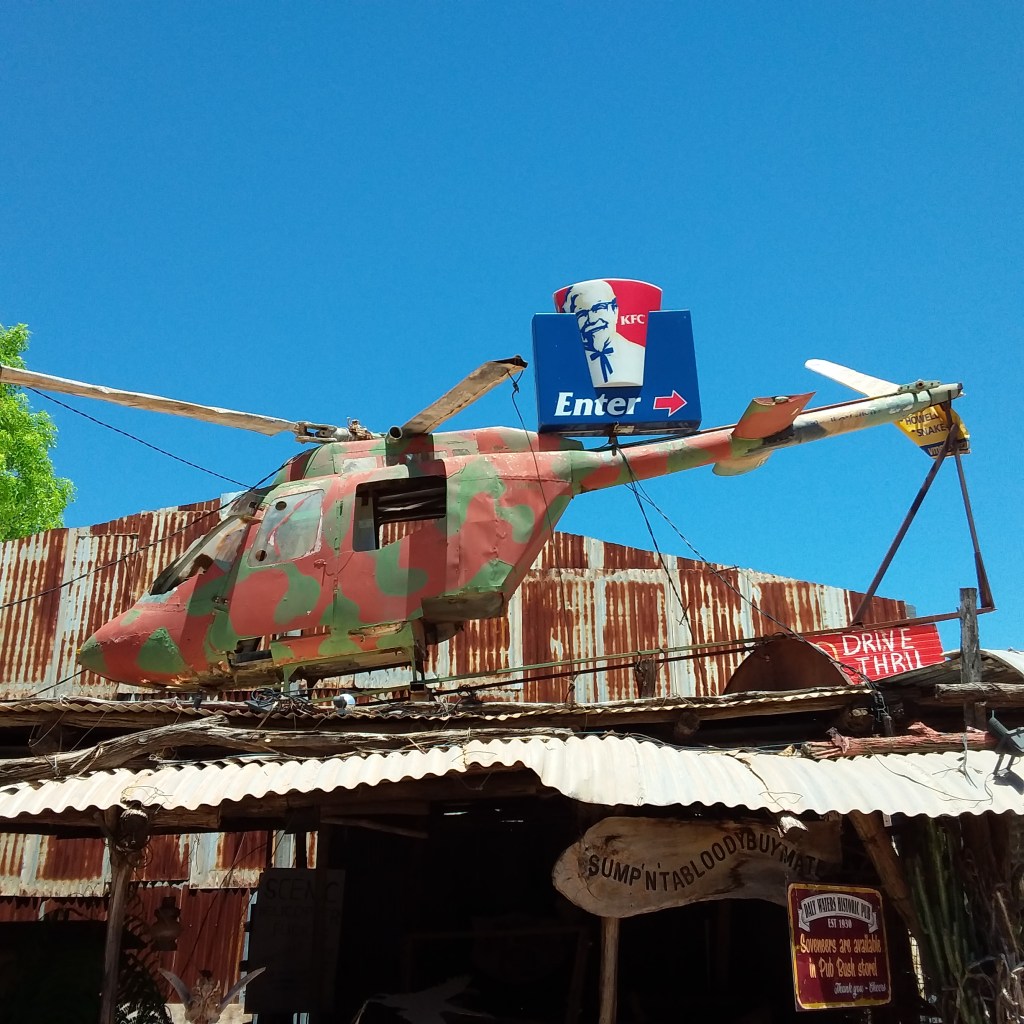
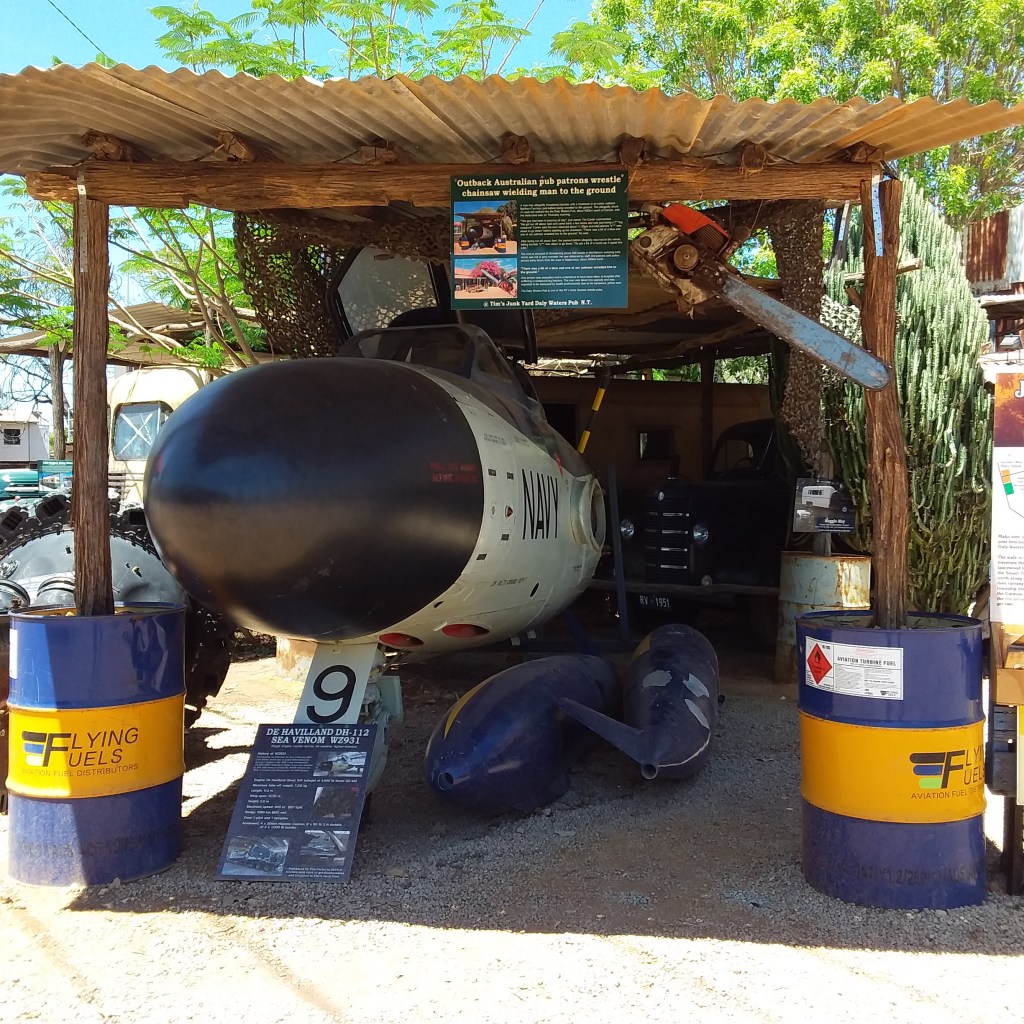
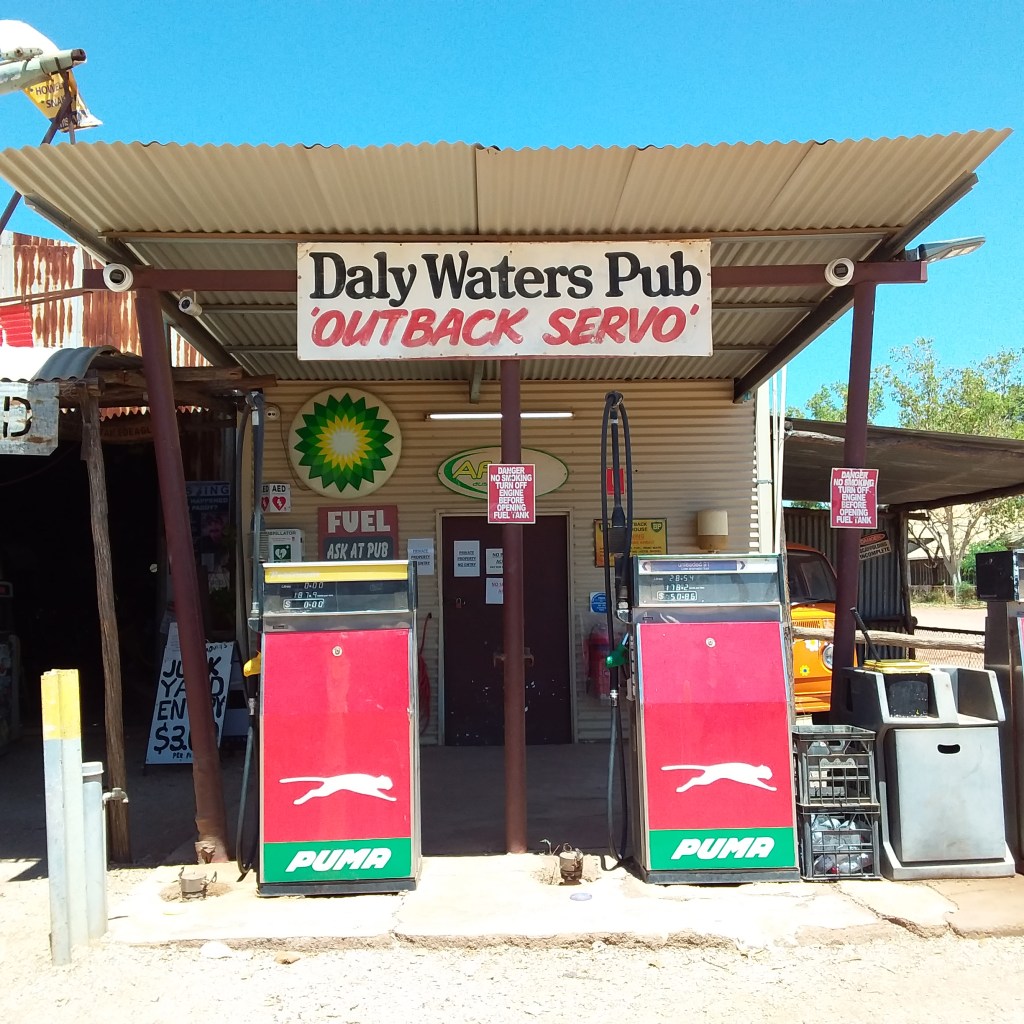
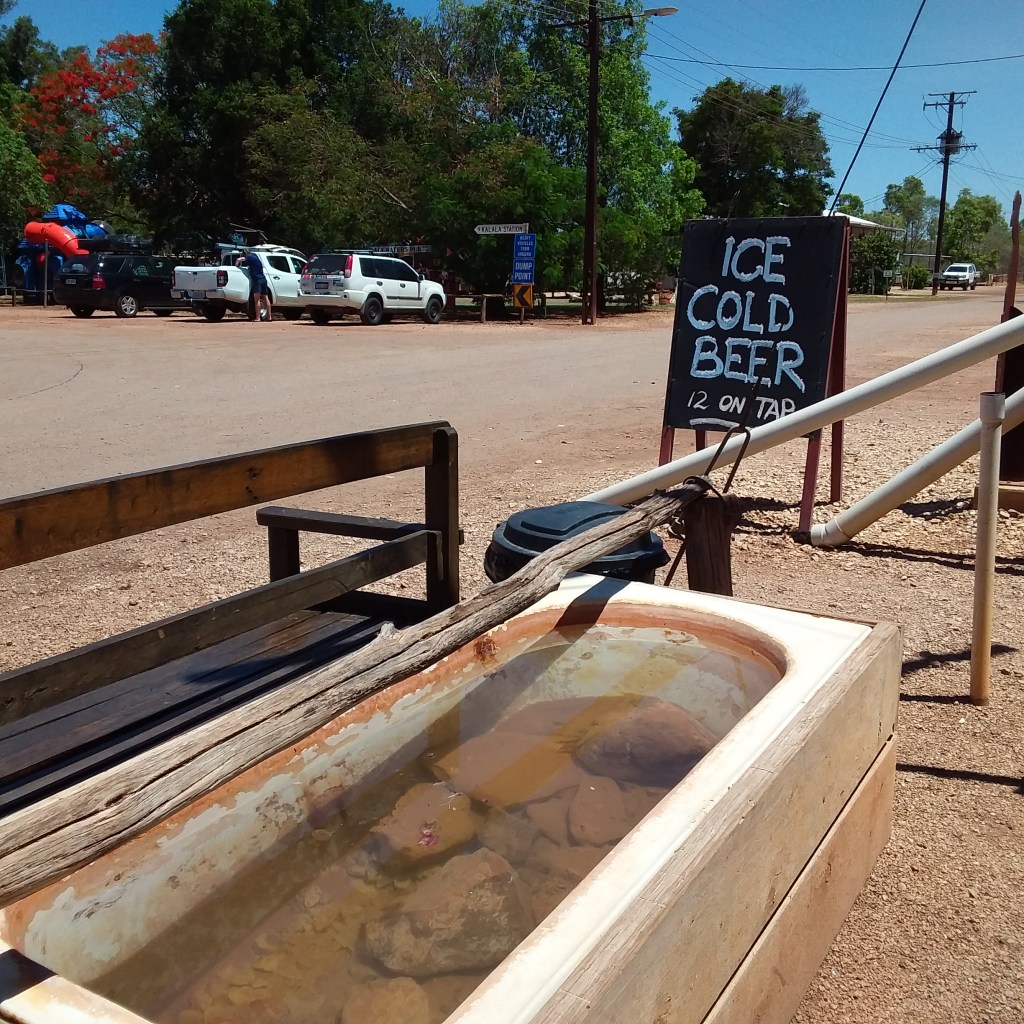
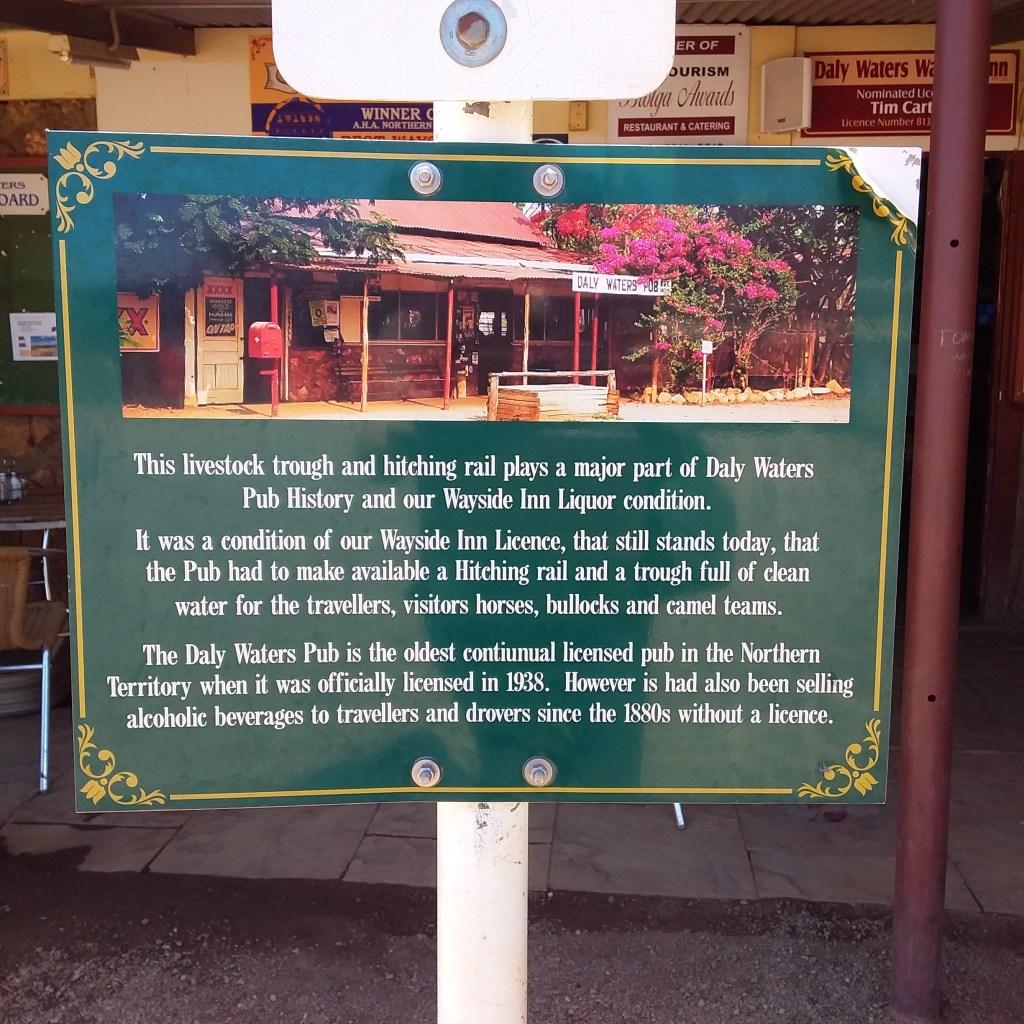
Our first stop was the historic Daly Waters pub. This is a very quirky pub with bras, hats and thongs hanging from the bar. There is mishmash of all things old on display. At the entrance to the pub there is horse trough and hitching rail, and across the road are remnants of helicopters and aeroplanes.

We had a cold drink and wandered around before continuing on our way.

We stopped to camp for the night at Banka Banka Station which was lovely. No sooner had we set up camp than the manager rang a cow bell letting us campers know it was 5pm and so happy hour. There weren’t very many campers – the NT has been very light on travellers – but those there were joined us and the managers on the verandah of the homestead for a few drinks. It was lovely chatting to the others and getting (and passing on) tips on good bush camps etc

Banka Banka Camping Ground

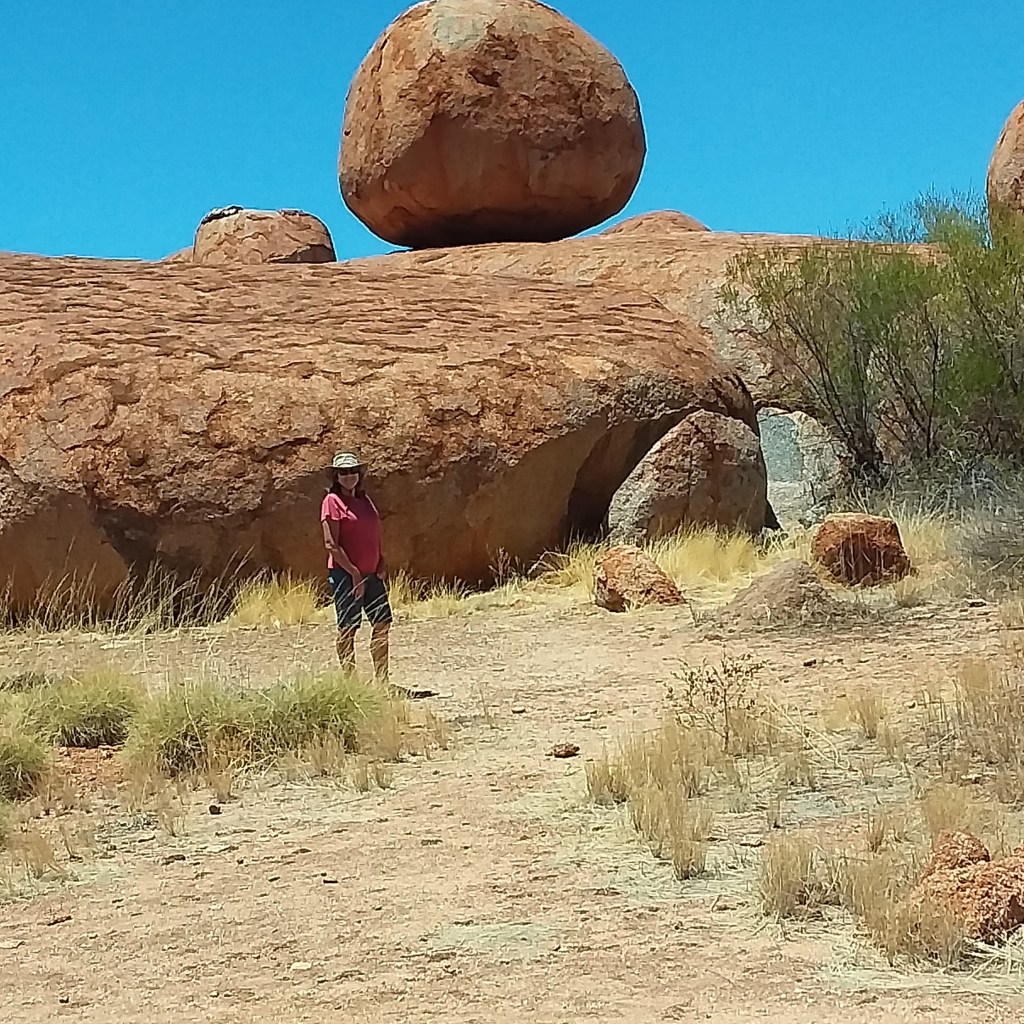
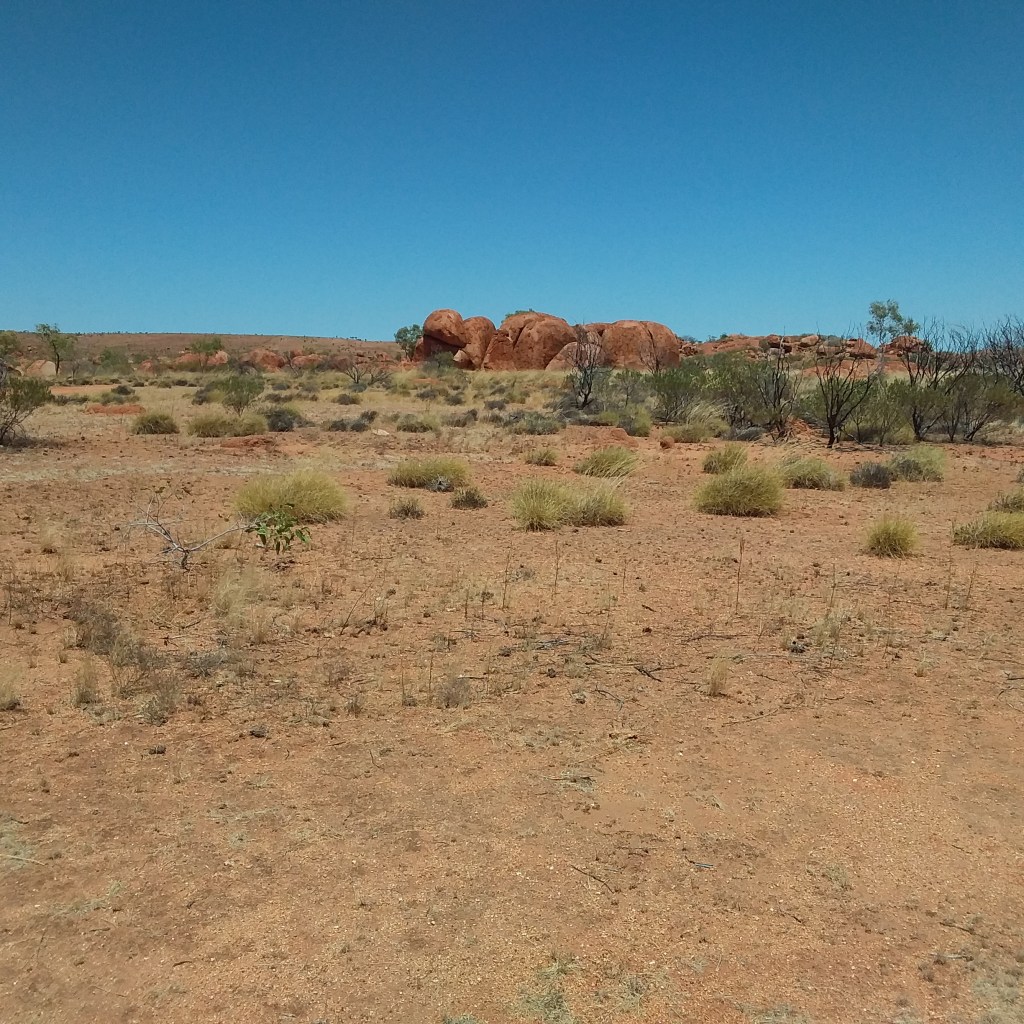
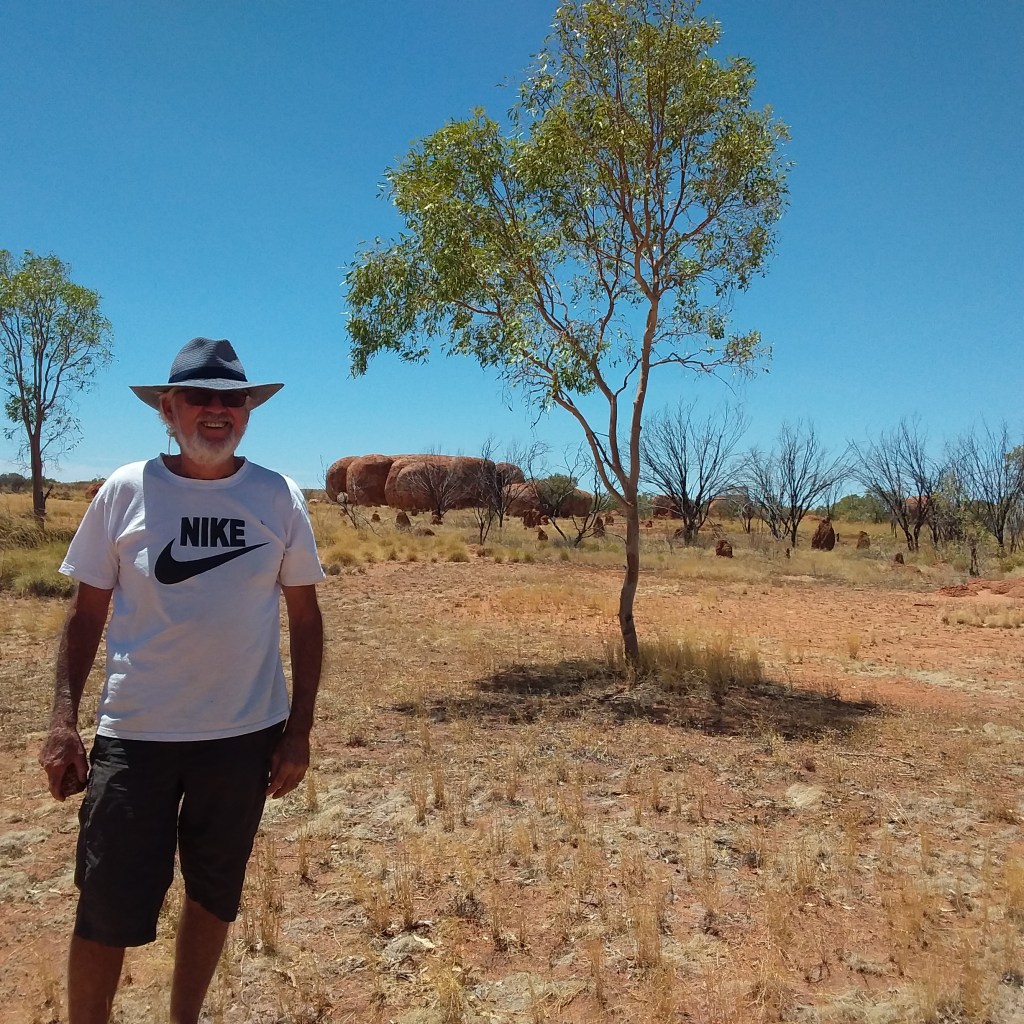
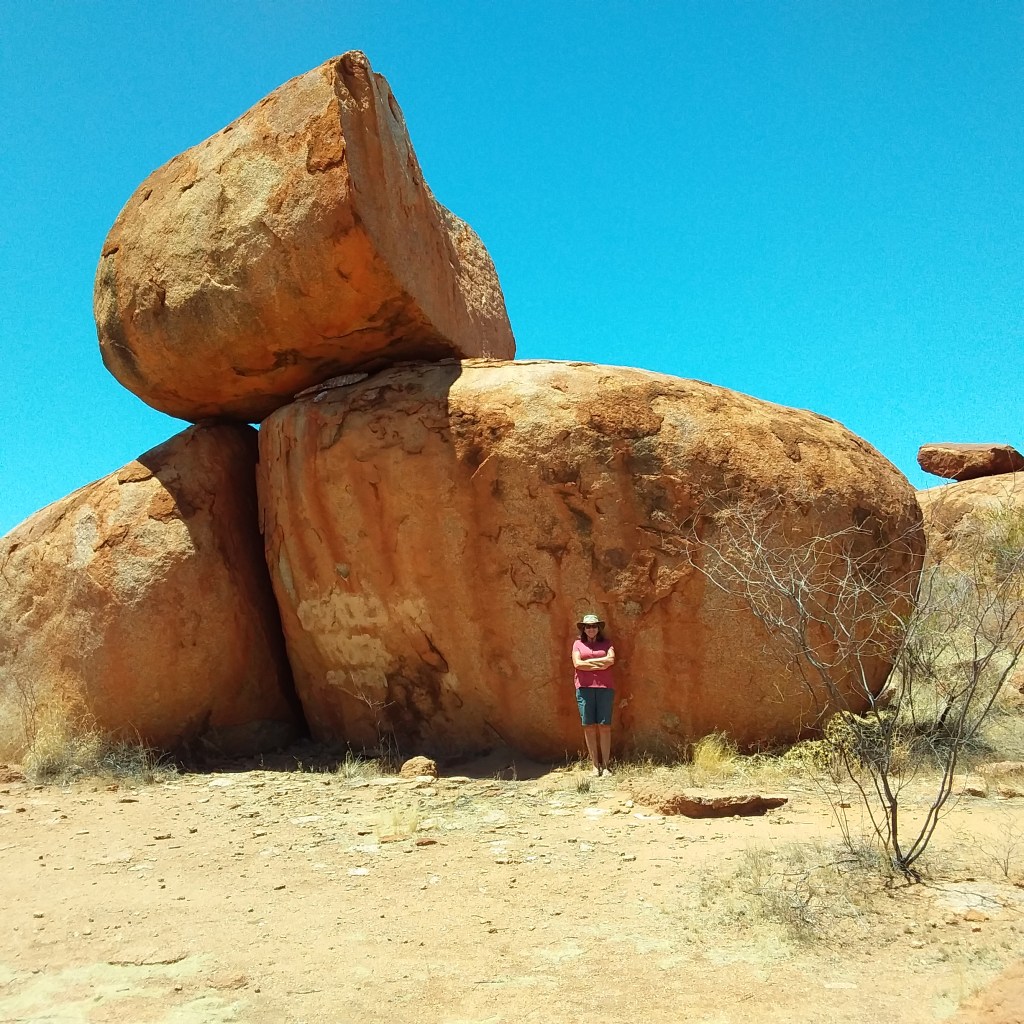
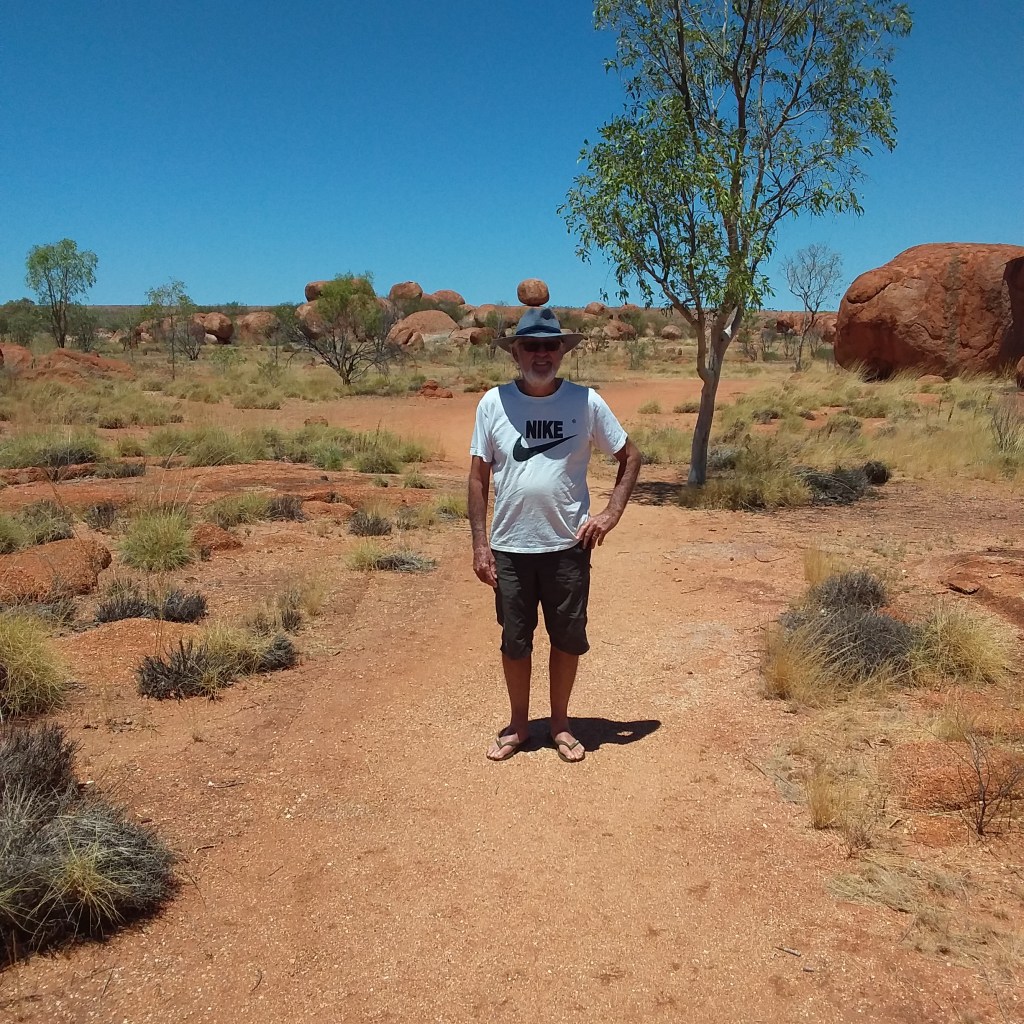
We left the next morning and stopped at Devil’s Marbles. This is a protected area due to the cultural and spiritual significance for traditional Aboriginal people. Apparently this place is magnificent at sunrise and sunset. There is a camping ground nearby but we decided to push on.

We did, however, stop at the Devil’s Marbles Hotel for fuel and lunch. It was a lovely hotel in the middle of the desert and we had a terrific barra burger.

We stopped for the night at Wauchope and had happy hour with a nice couple from Hobart – Anne and Tony – whom we had chatted to earlier in the day at Devil’s Marbles.

After another pleasant evening and comfortable night, we left for the Alice.

I love driving through the desert . It just always reminds me of when I first came to Australia as a 21 year old. I had no idea a country could be so vast. And I still find it hard to get my head around.

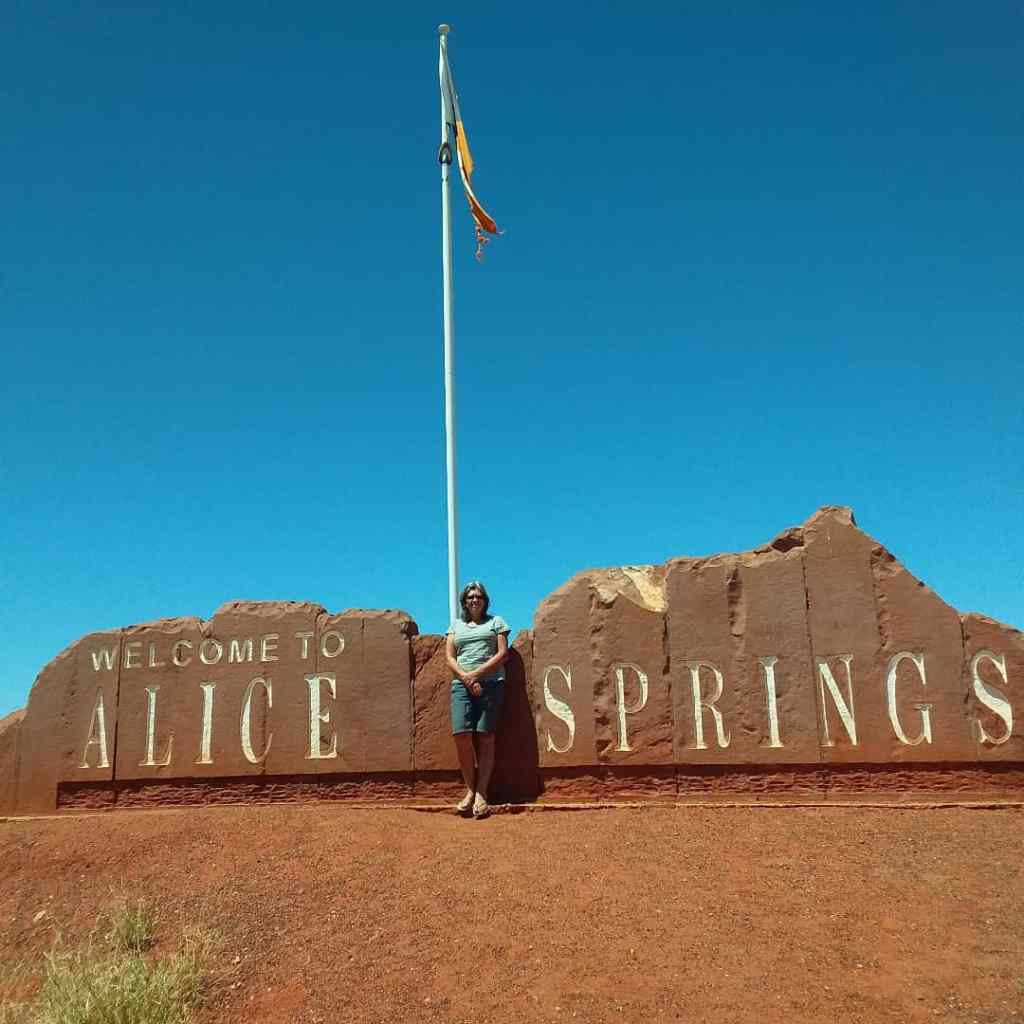
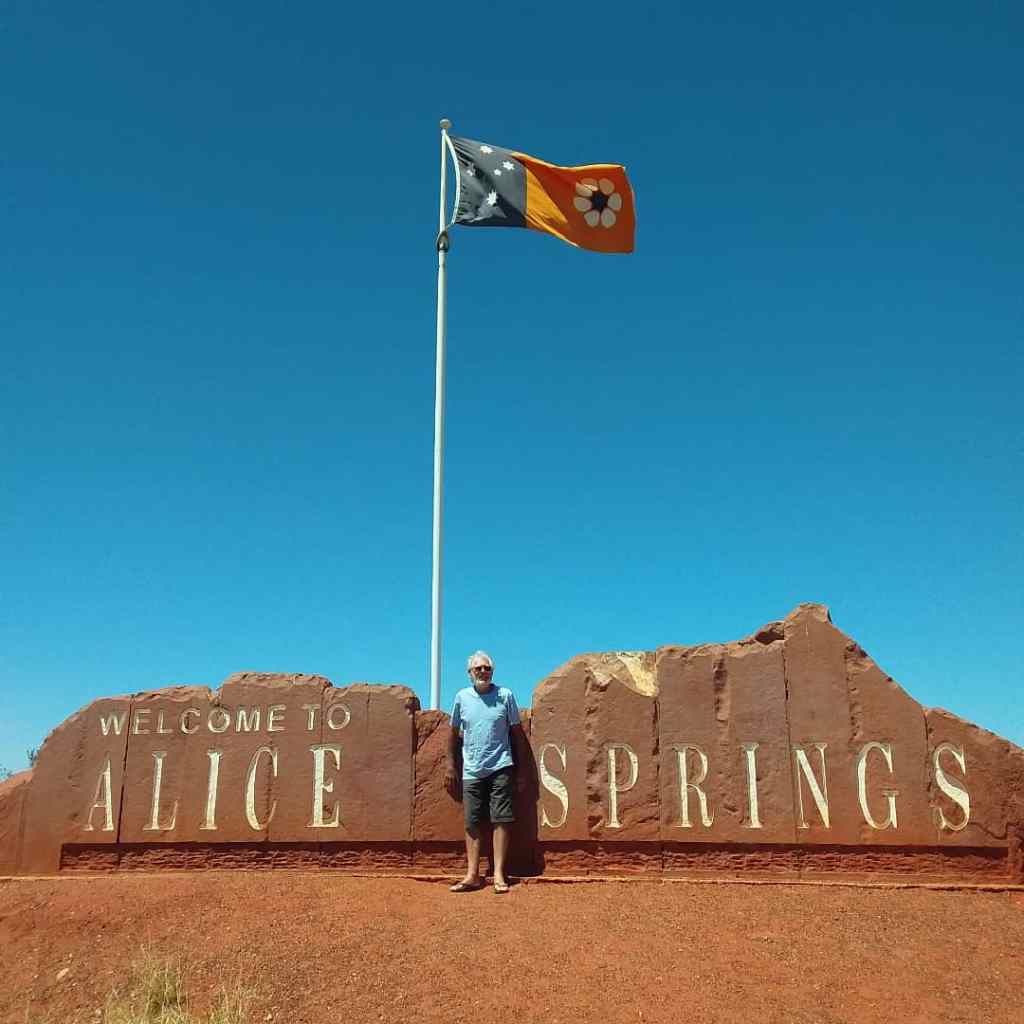
Then finally we were in Alice Springs! We made our way to the G’day Mate Caravan Park which had good reviews on Wikicamps, set up camp then headed out to the golf club to book John a game, then browsed the Visitors’ Centre in town.

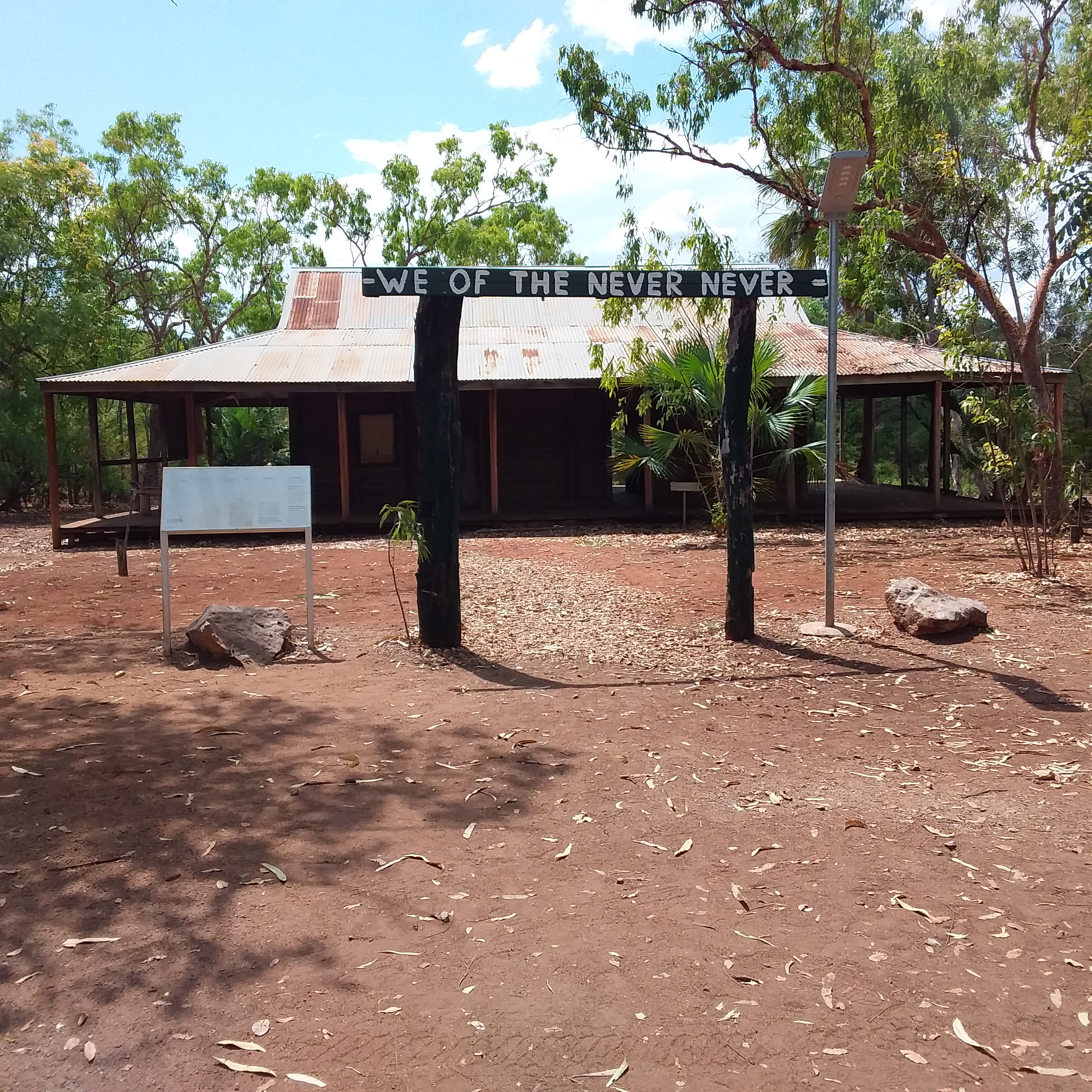
Here we are in the Never Never

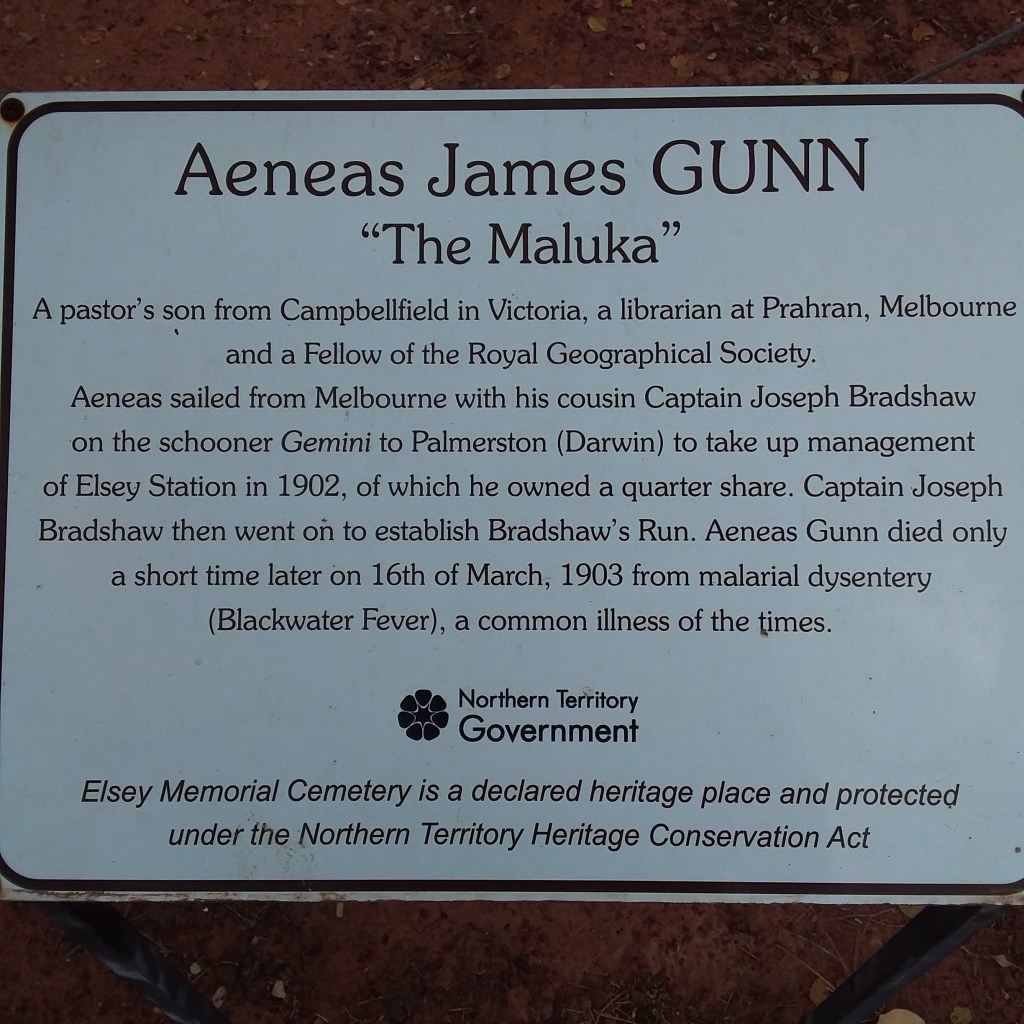
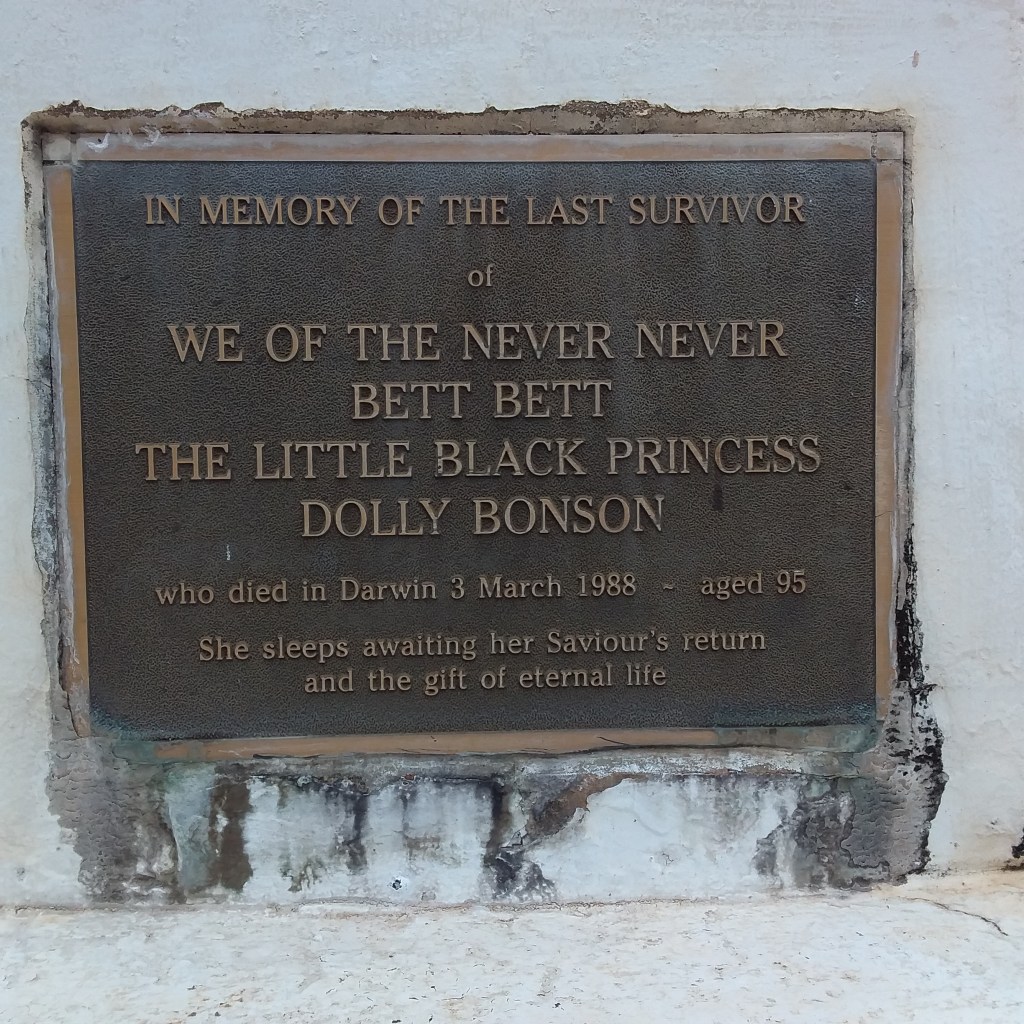
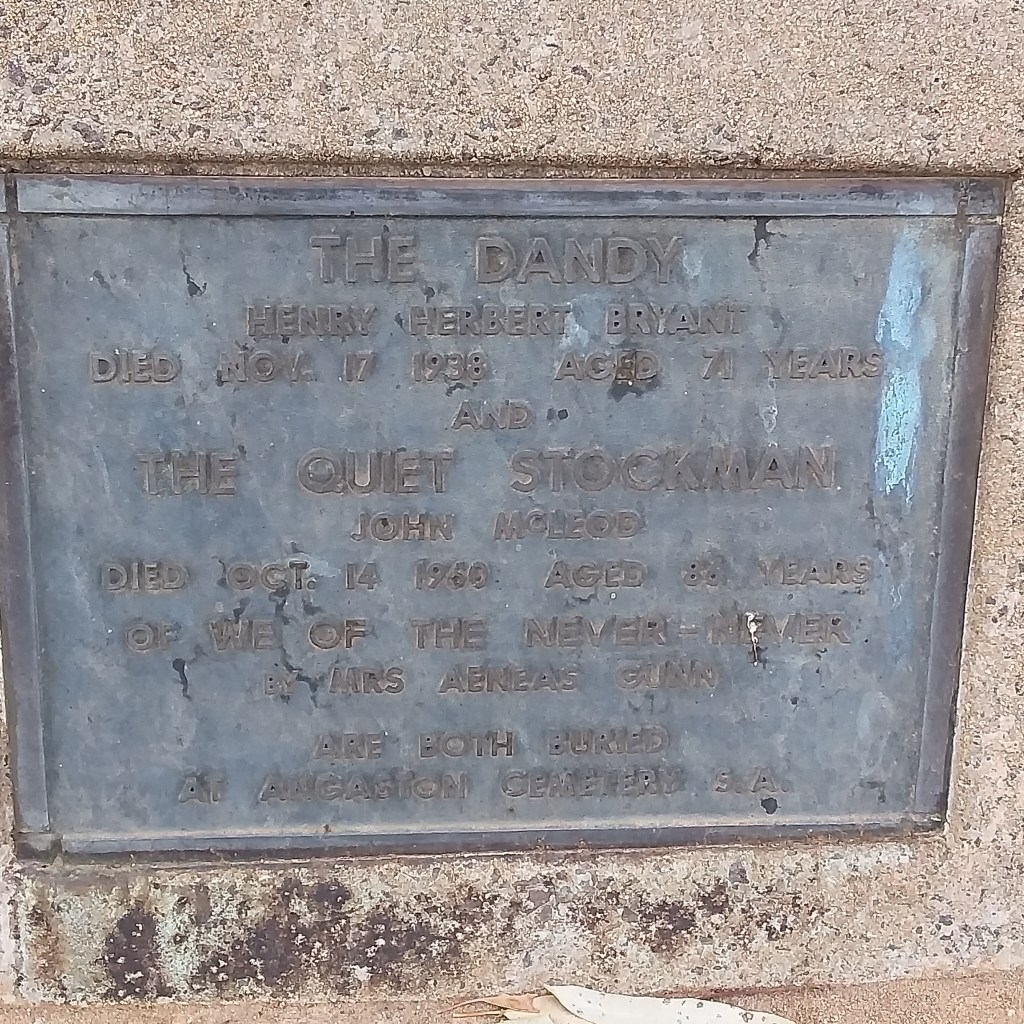
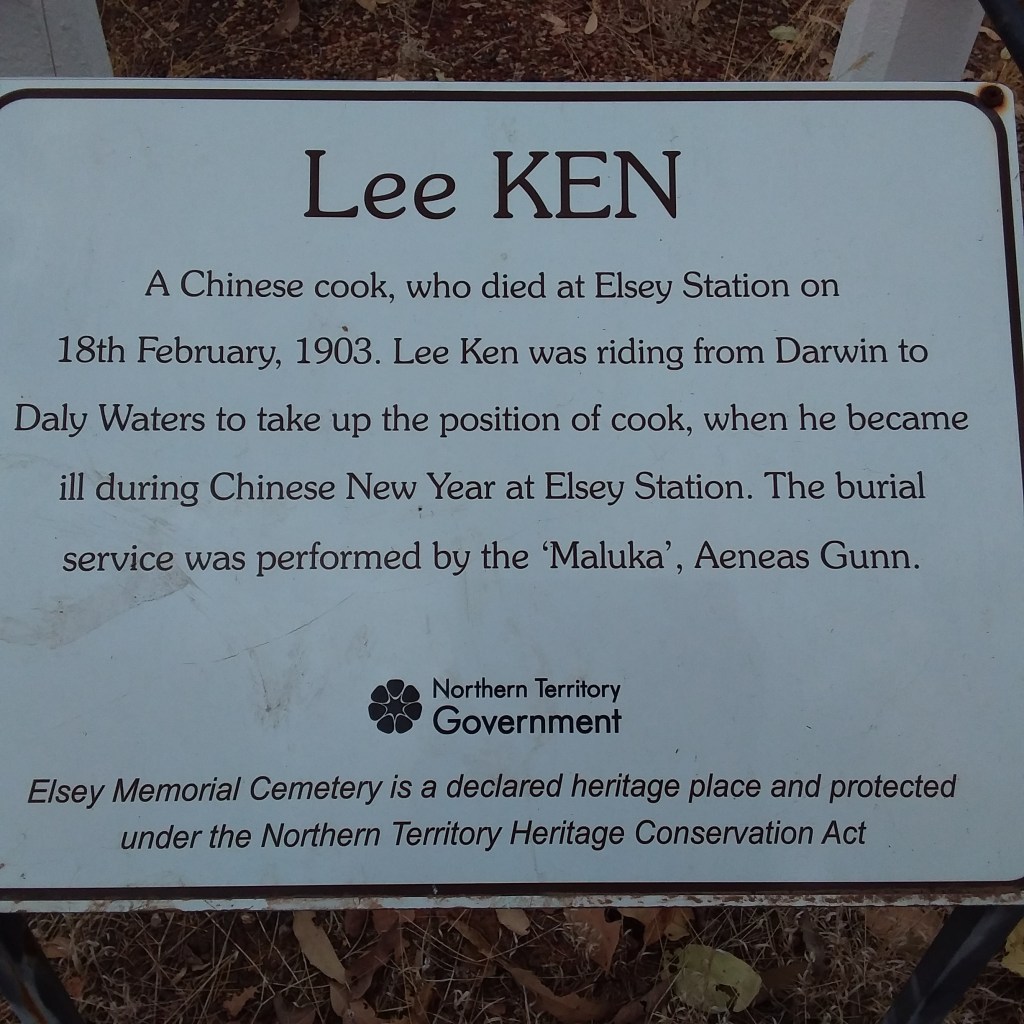
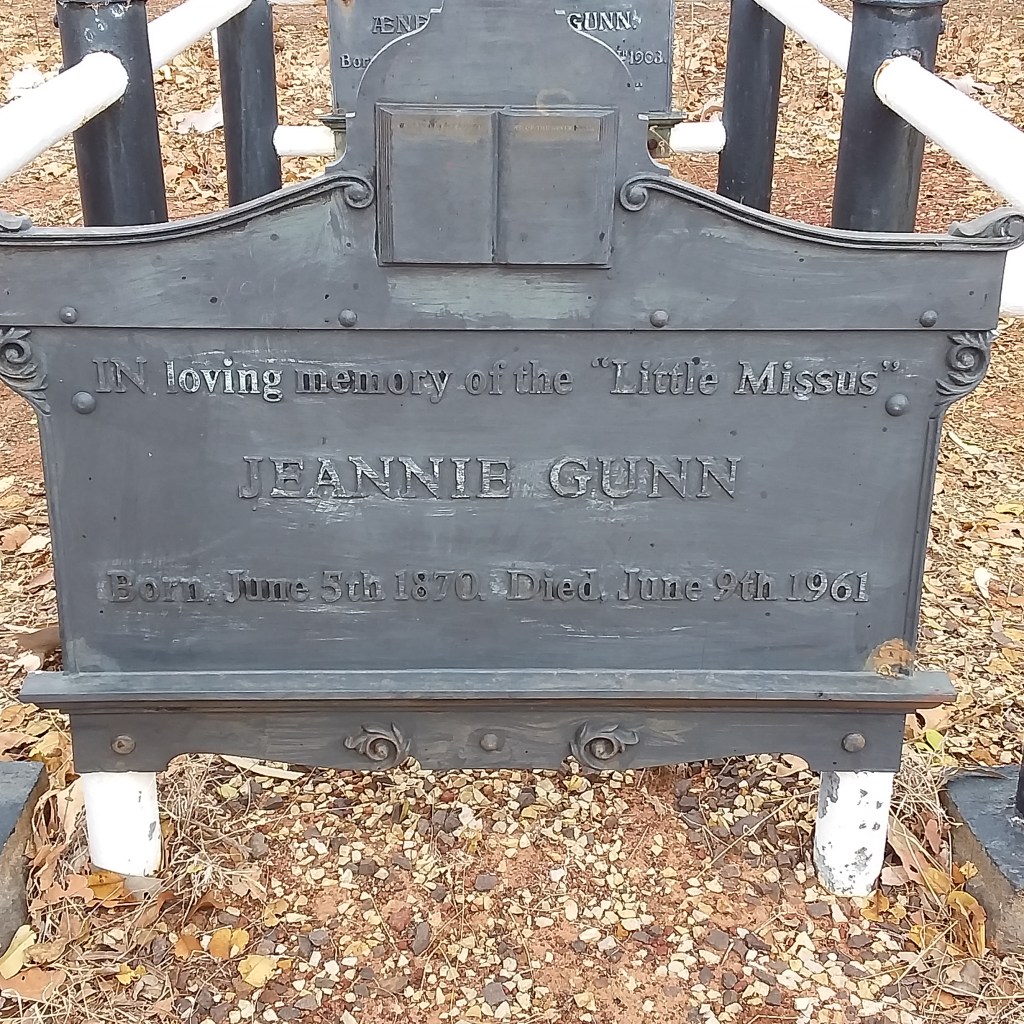
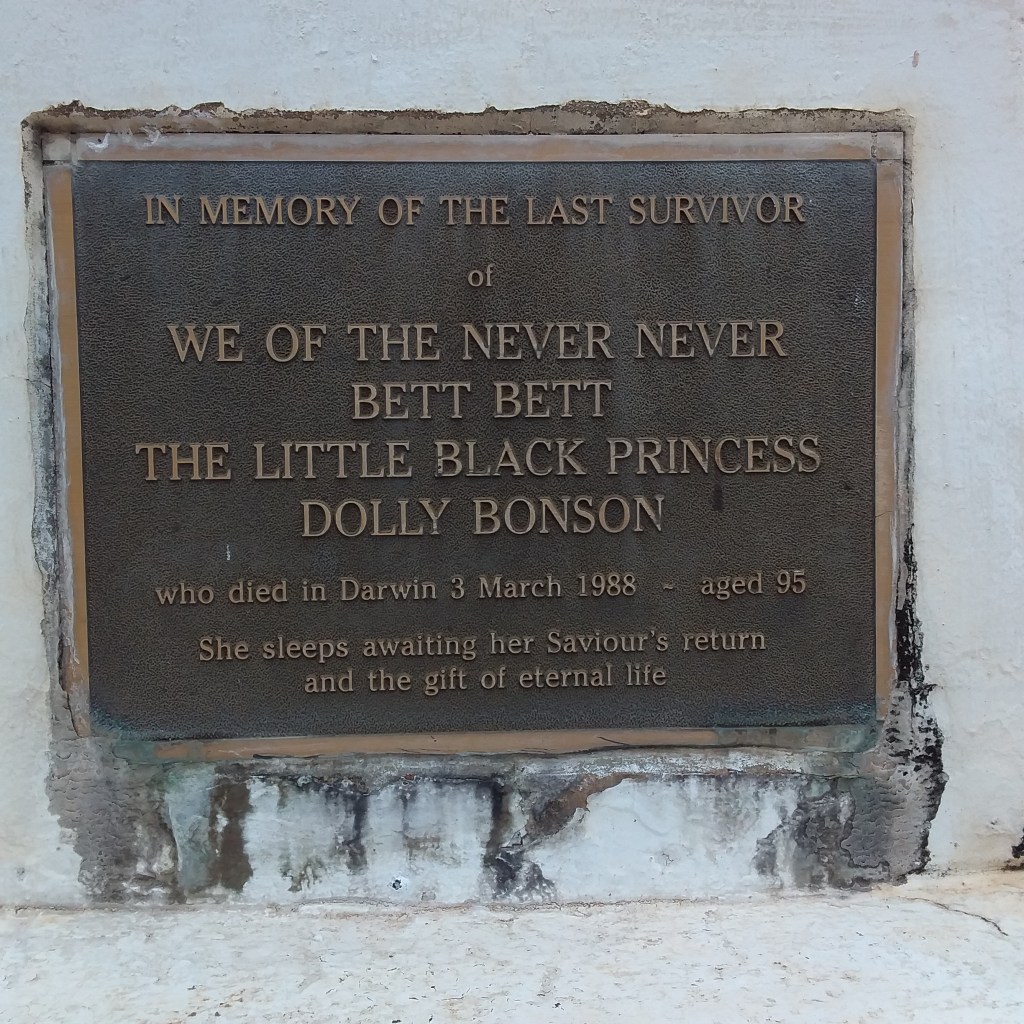
I had been re-reading the old Australian classic, We of the Never Never, before coming through Mataranka where it all happened. Sure enough, as we drove into the tiny town, I noticed Gunn Street named after the author. If you are not familiar with the book, it tells the true story of a young Melbourne woman (Jeannie Gunn) who travels to the Never Never with her new husband who inherits part of a station. It is very rough country which they cross mainly on horseback, and it is very hot. She experiences both seasons – the dry and the wet, and befriends the local Aboriginal women. Unfortunately her husband, Aeneas Gunn, dies just a year after their arrival. A film was made of the story in 1982.

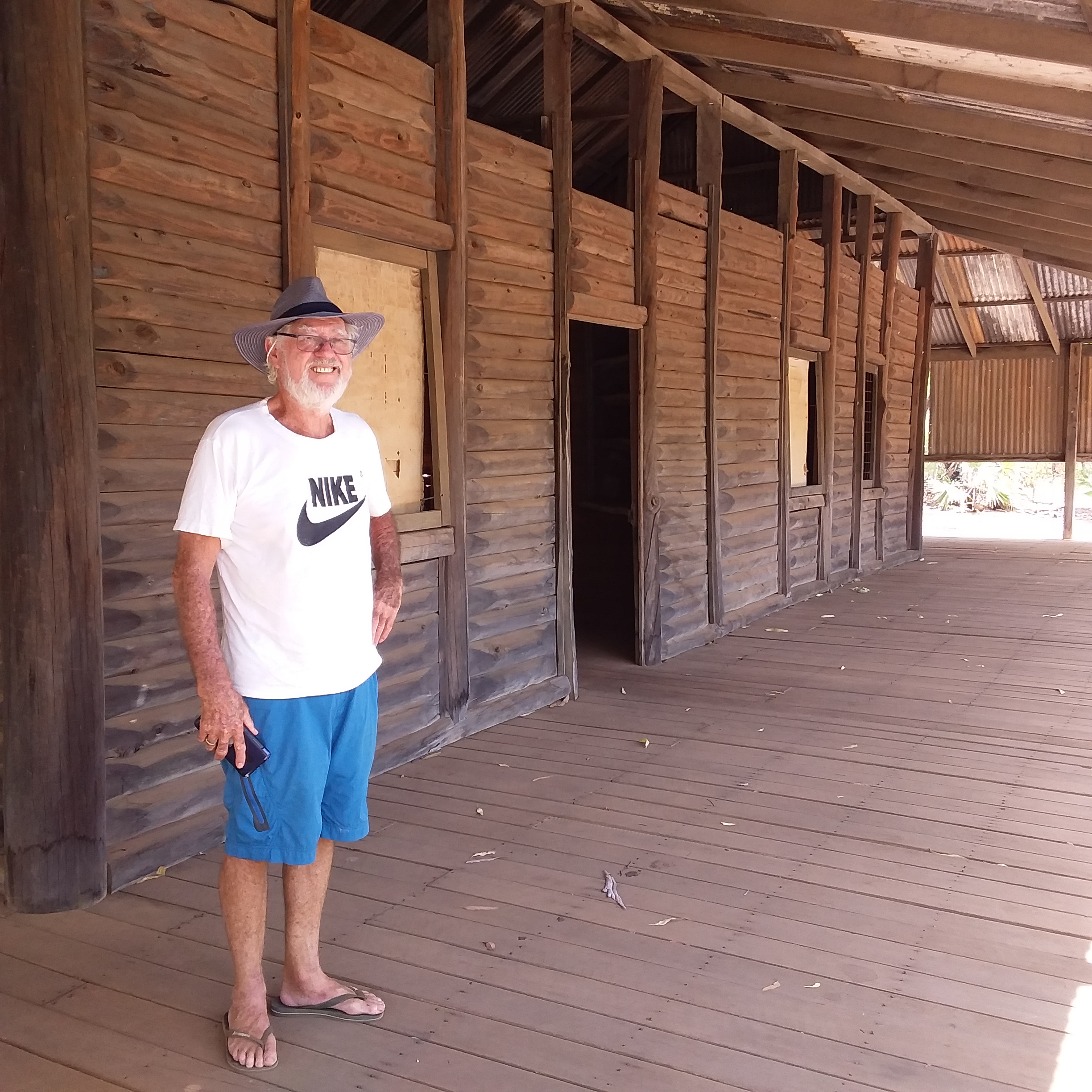
We camped at the Homestead which is where the house used in the film still sits, although I have to say it’s very neglected. It’s a pity really as the whole town looks tired to me. I think Mataranka, with its history, could be a much more exciting place. Maybe they are waiting on the wet season to come through and freshen up the whole area?

The camping ground also had allusions to We of the Never Never.

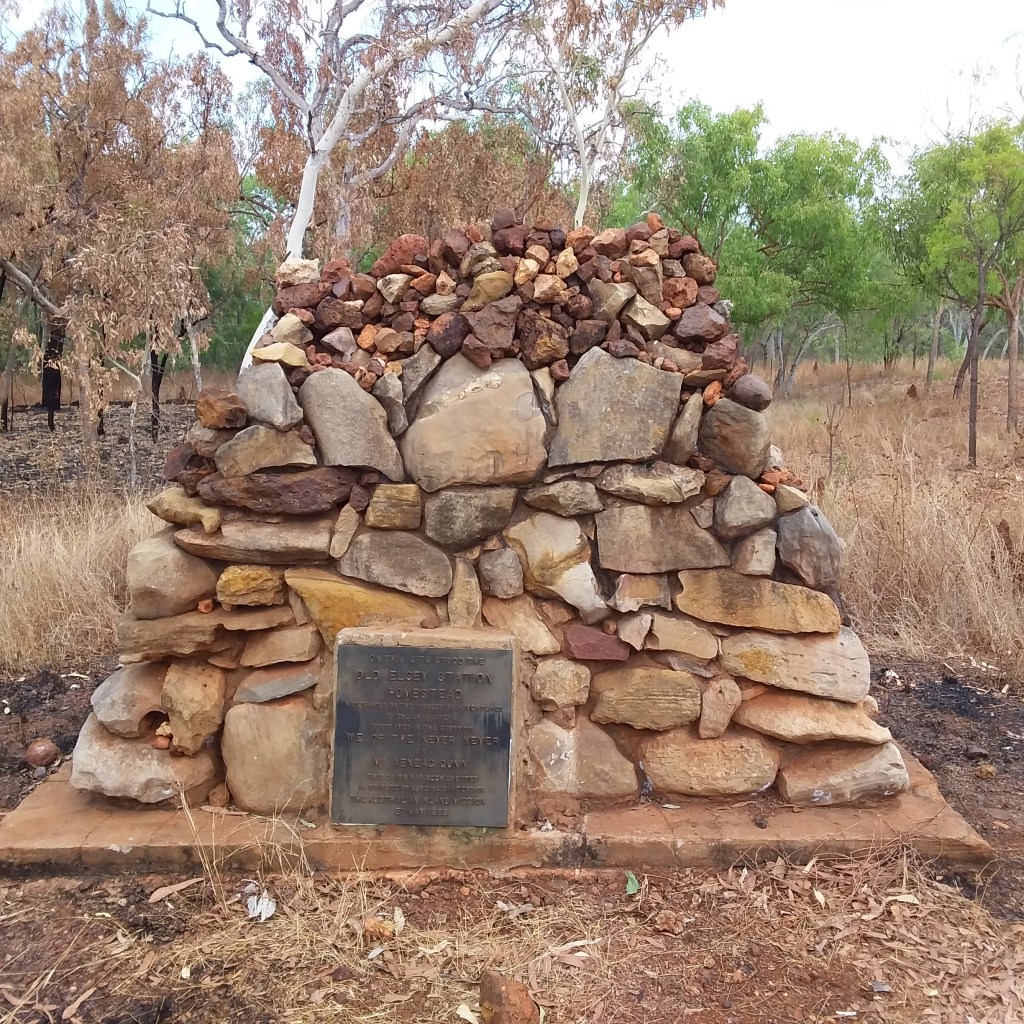
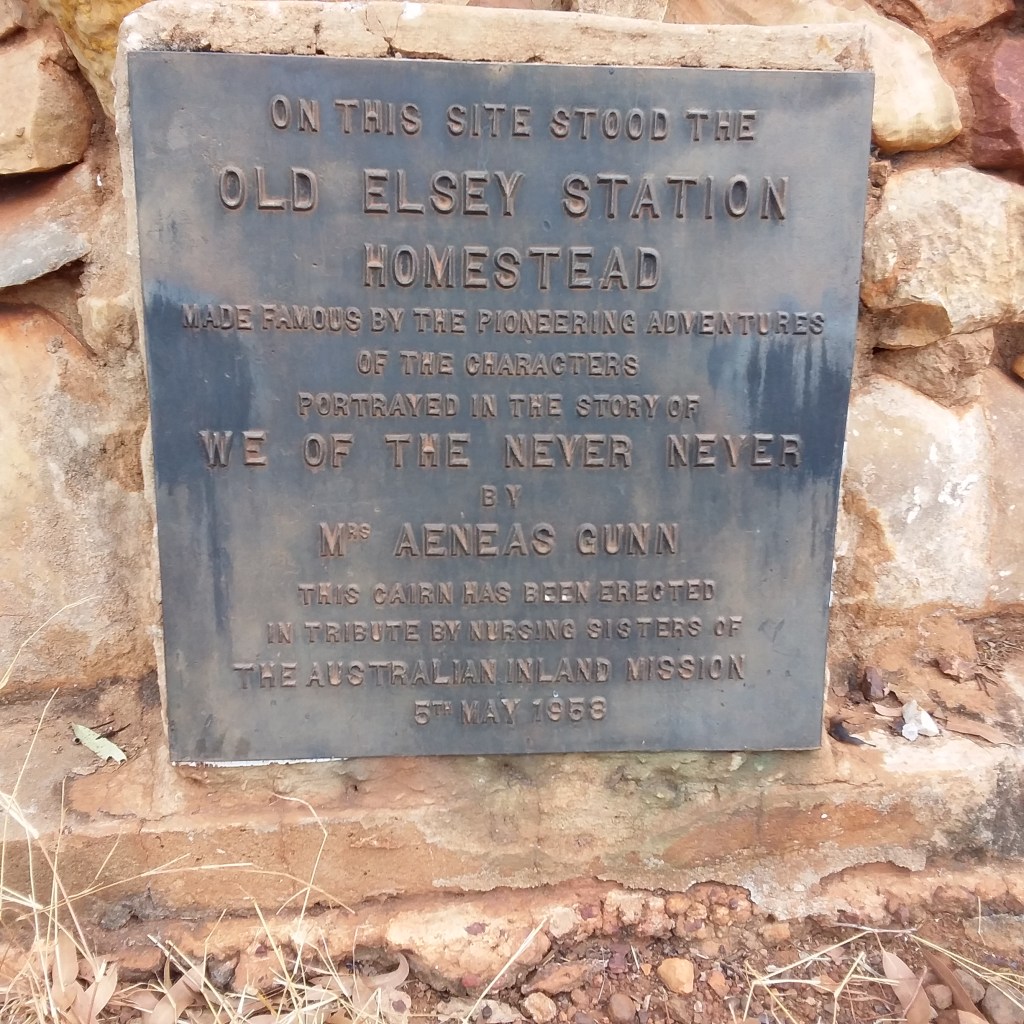
The original Homestead was a few kilometres from here but no longer stands. A cairn stands there in its place.

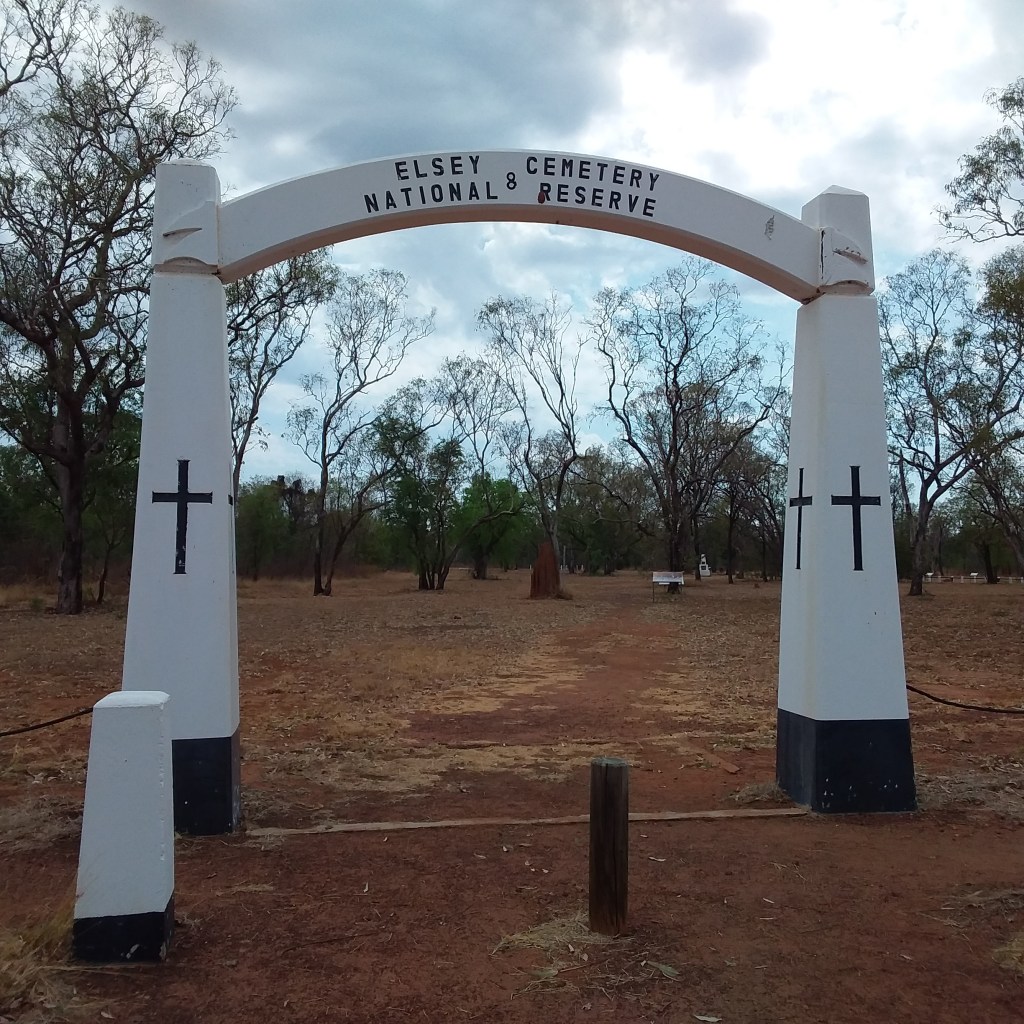
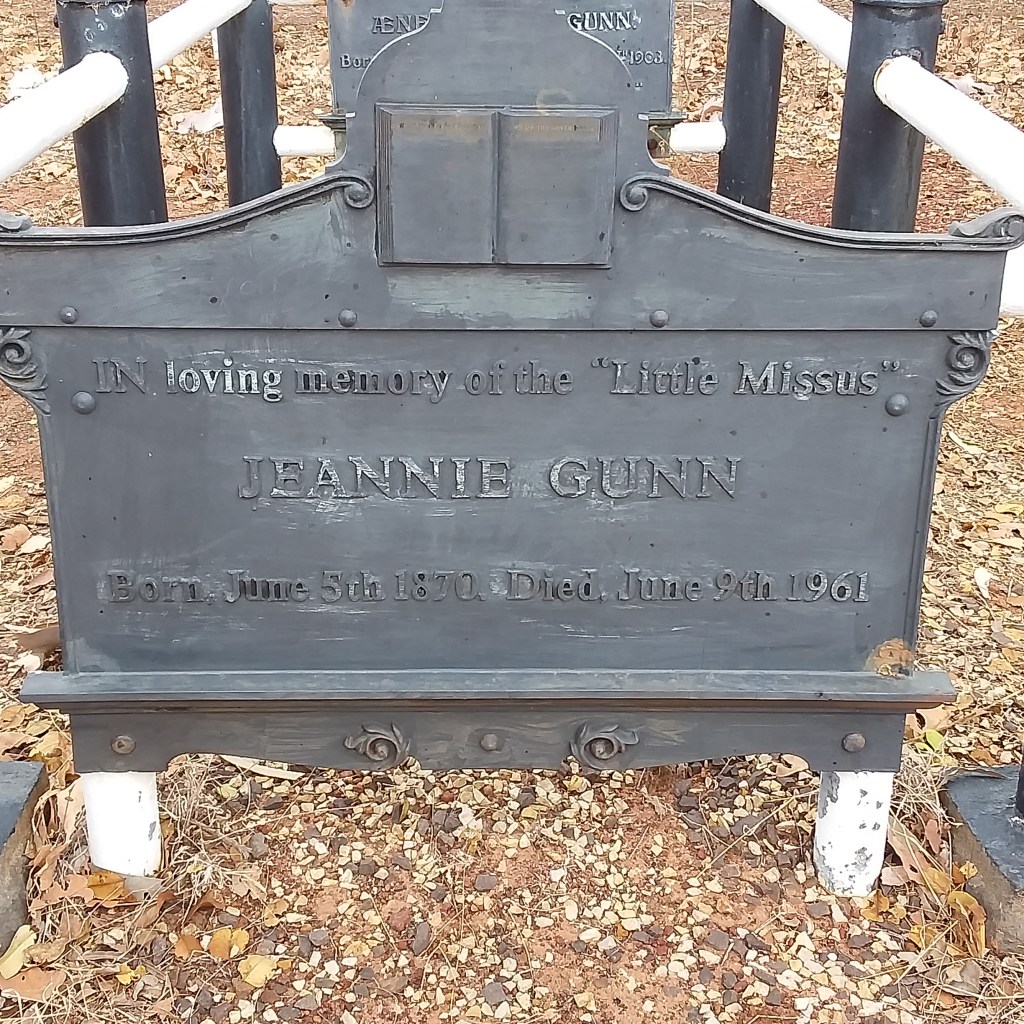
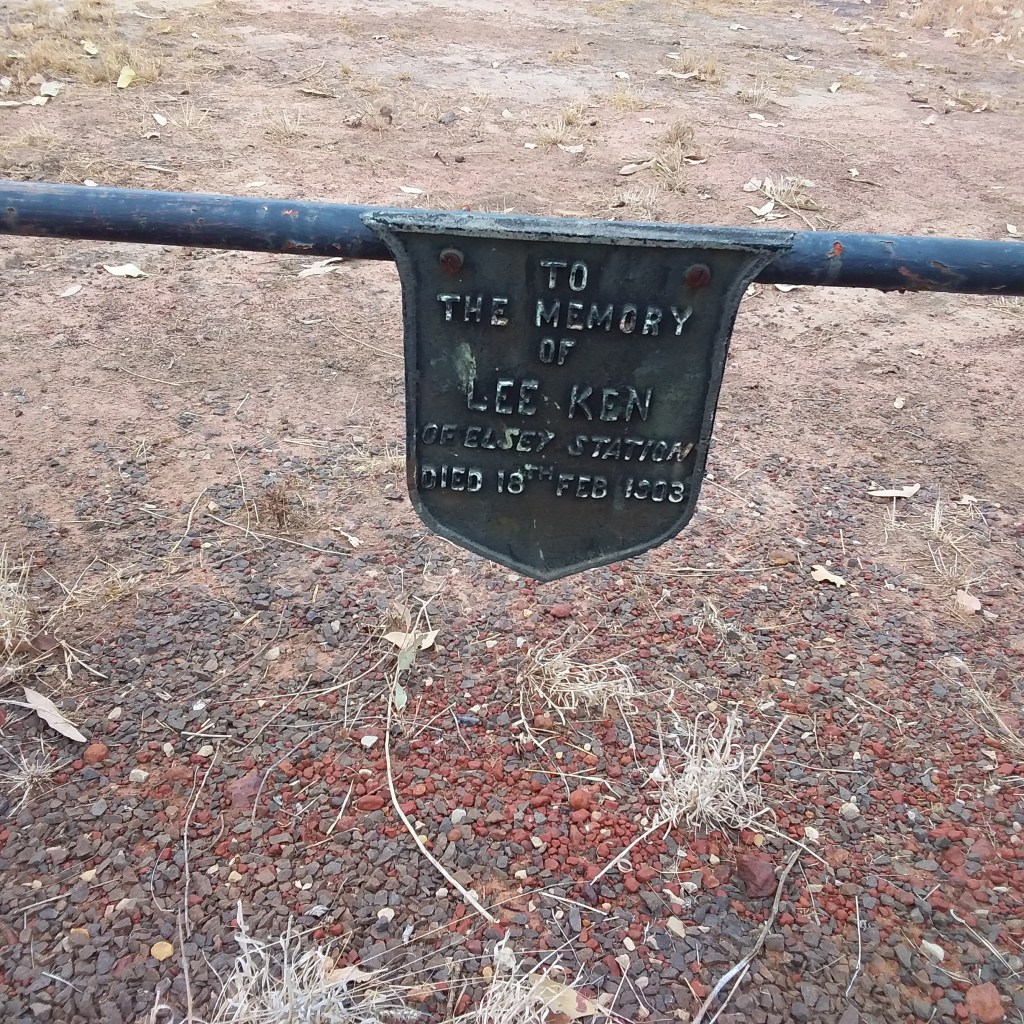
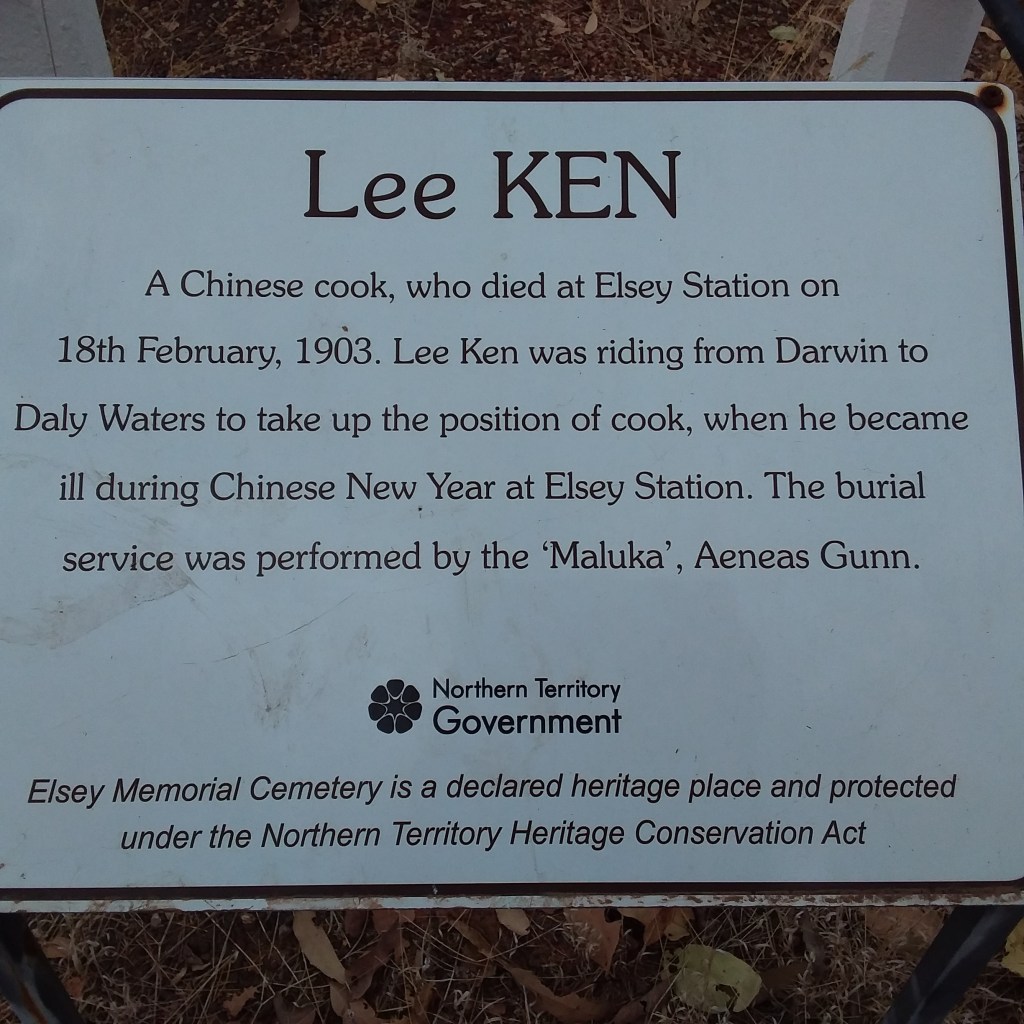
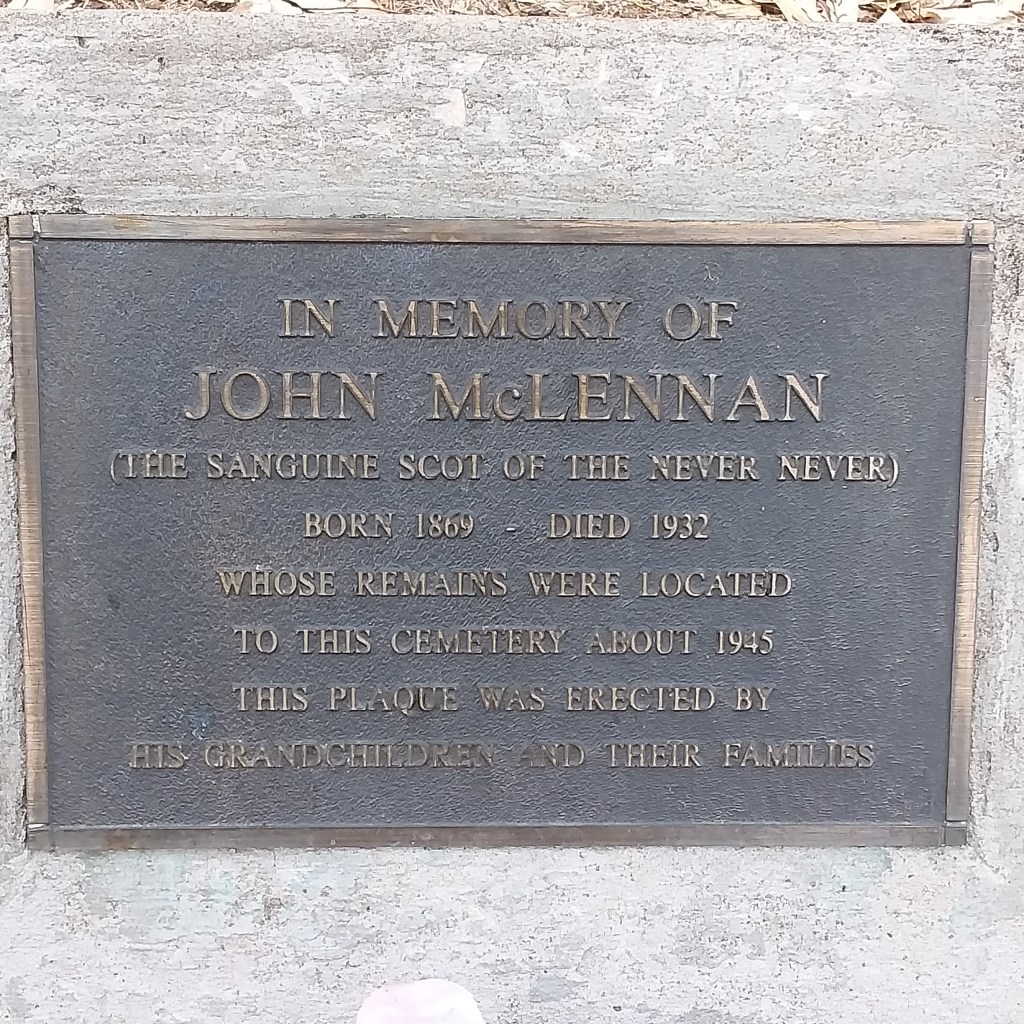
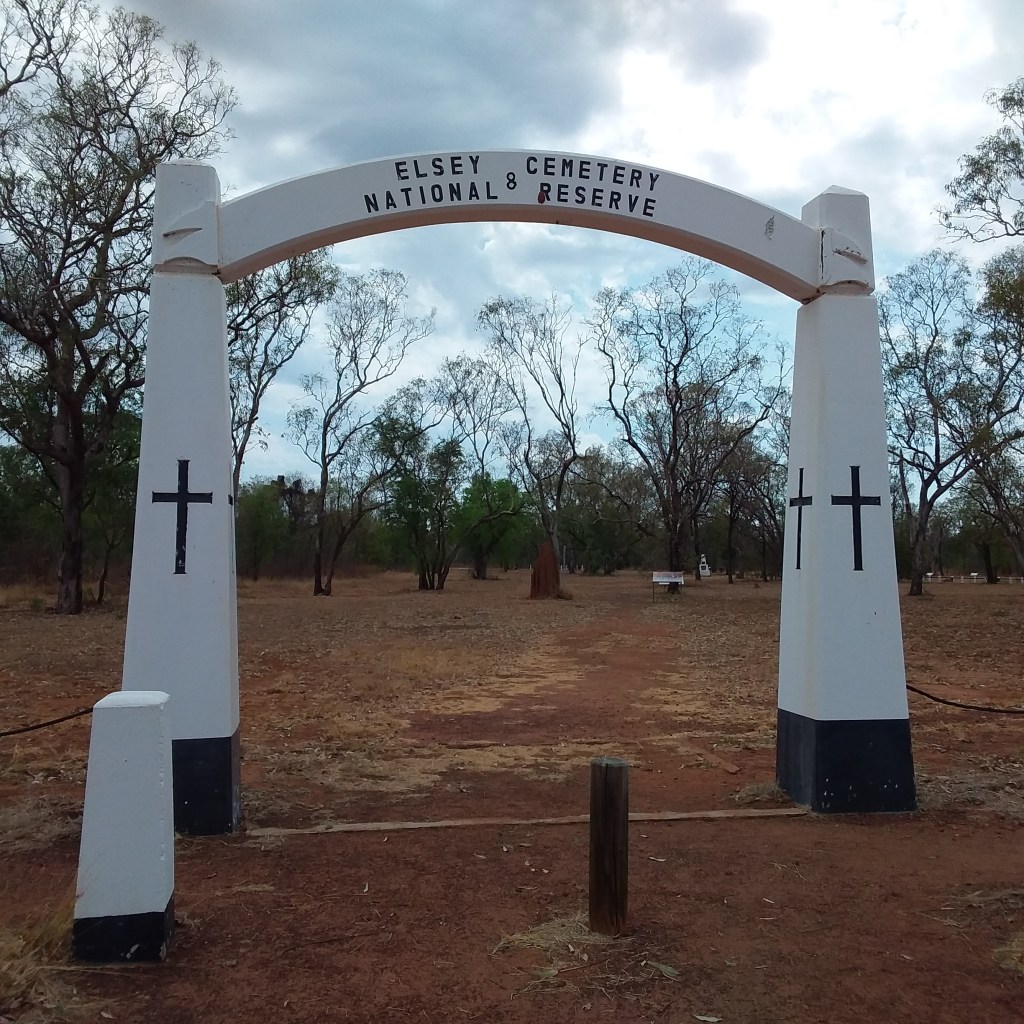
Jeannie Gunn returned to Melbourne after her husband died, and is buried there. The others are laid to rest in Elsey Cemetery near the cairn. John doesn’t share my interest in cemeteries so he stayed in the car while I strolled through looking at the gravestones.

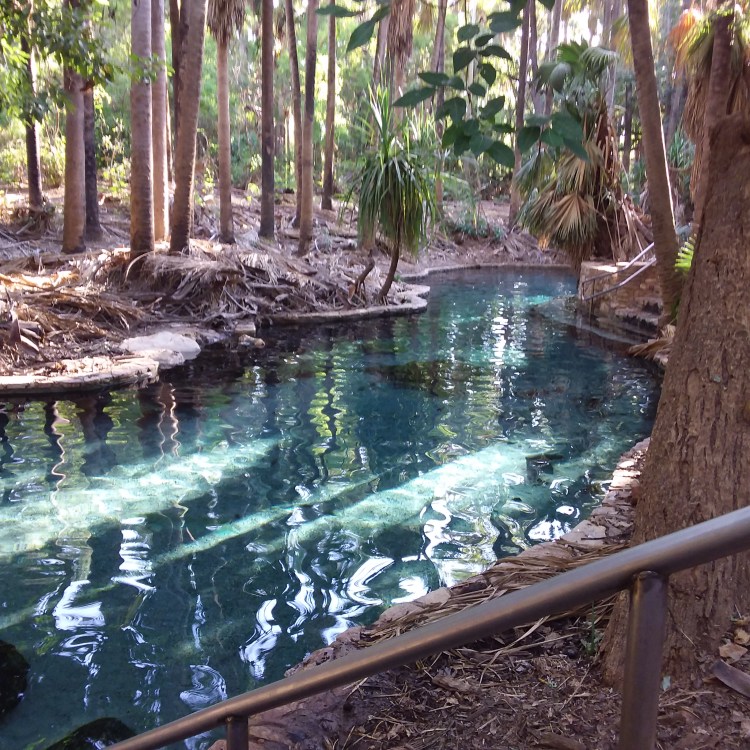
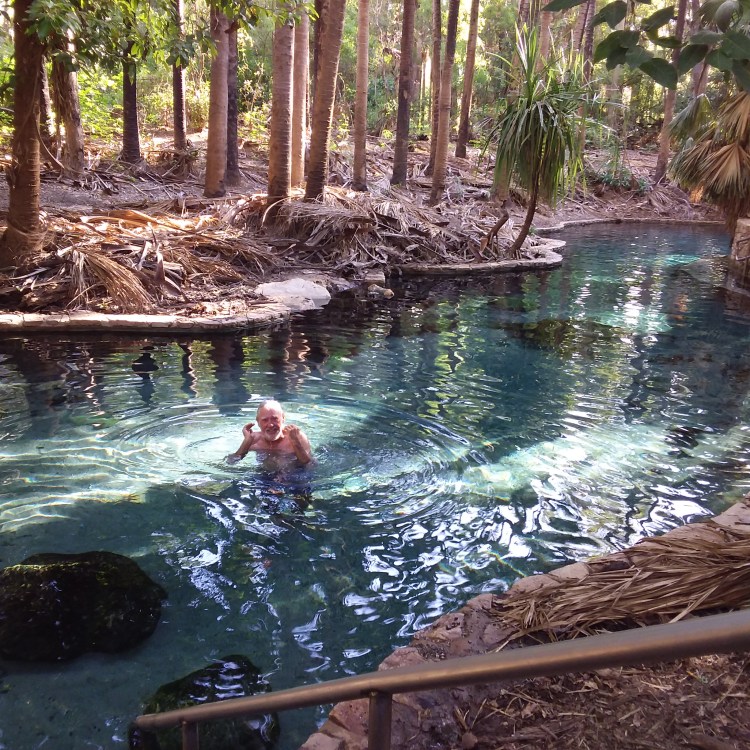
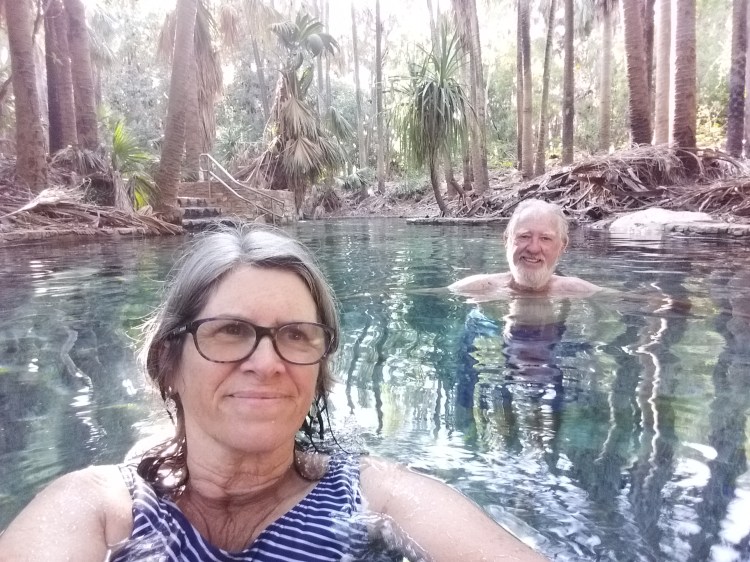
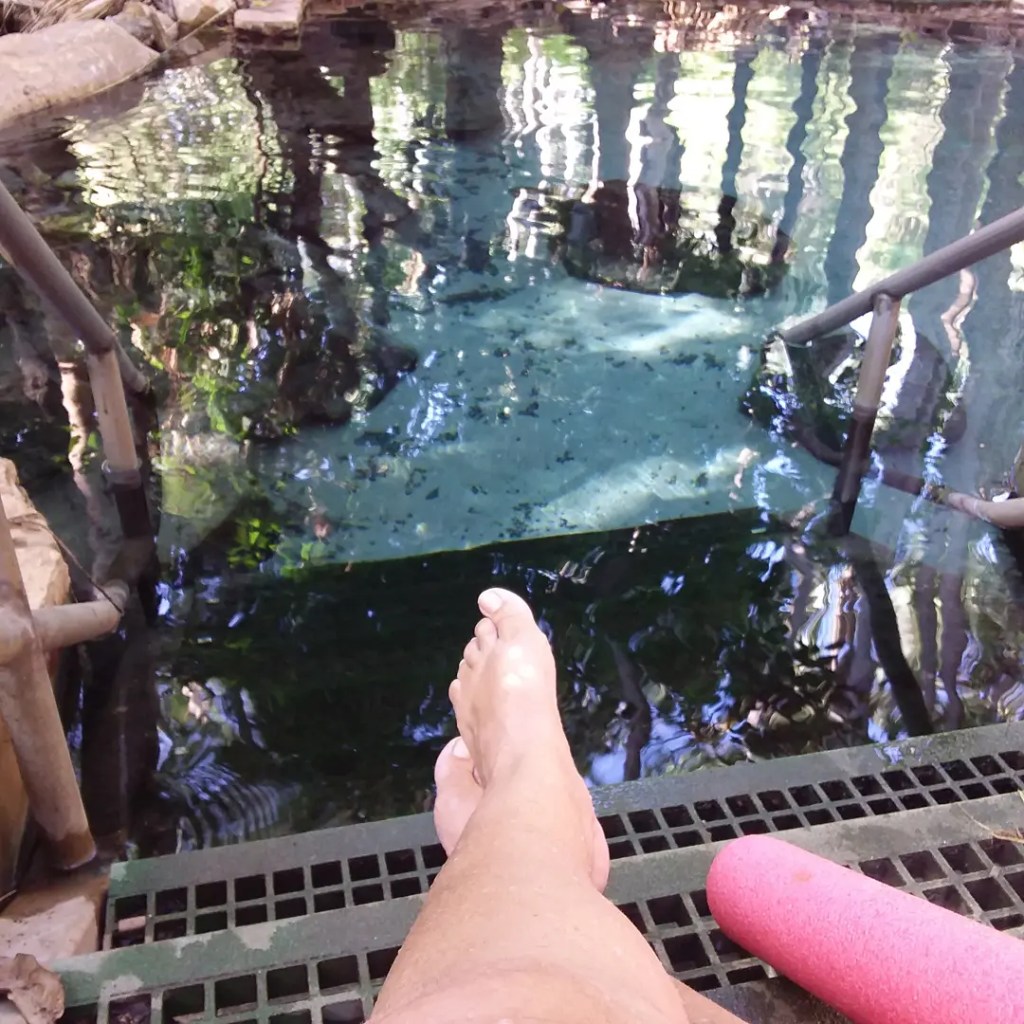
Exploring the history of We of the Never Never was one thing I enjoyed doing at Mataranka. The other was soaking in the thermal springs which were just a short walk from our camp. The springs at Mataranka have been enclosed at parts with stairs leading you in. A couple of kilometres along the road, Bitter Springs have been left almost untouched with the exception of steps into the water. We soaked in both. Both were clean and warm and refreshing.

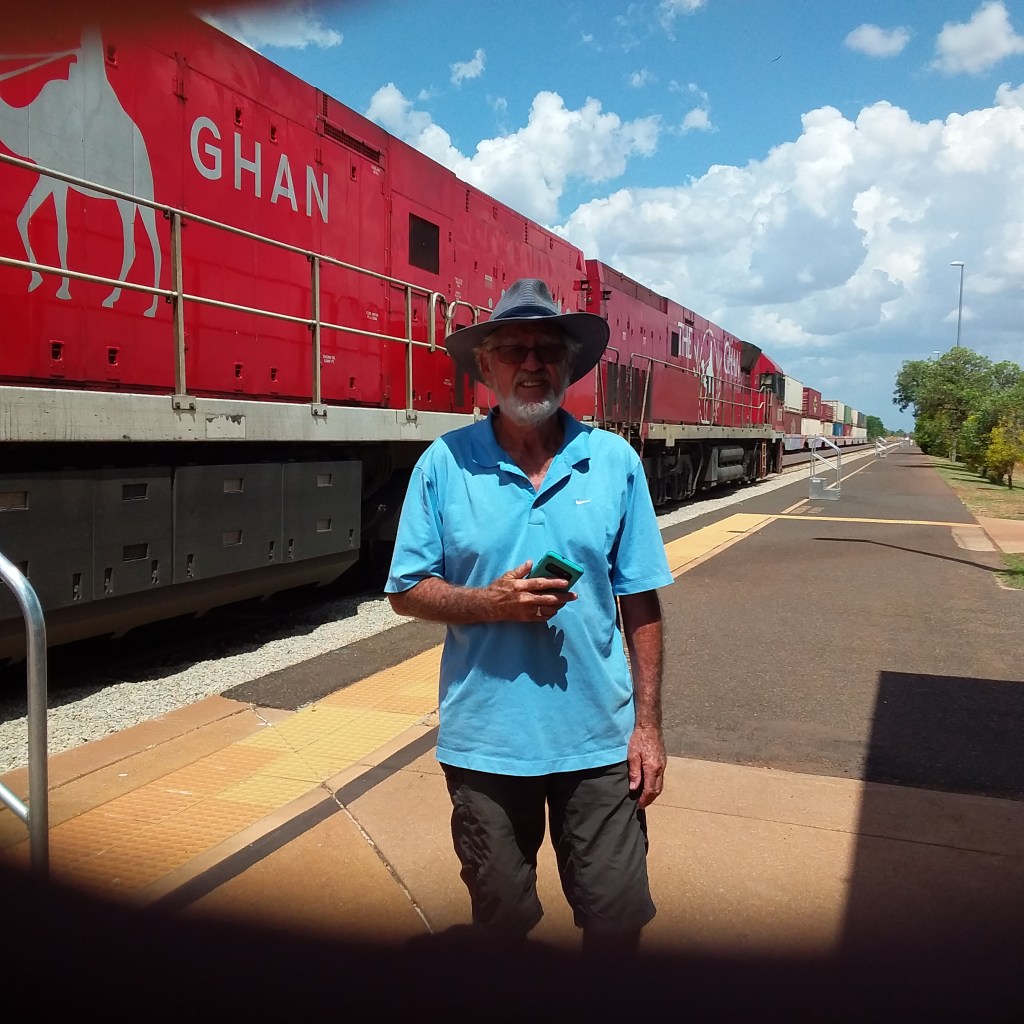
We had three relaxing nights at Mataranka Homestead before making our way back to Katherine for the day to catch up with our friends, Sue and Marg, who were holidaying on the Ghan, travelling from Darwin to Adelaide.

The Ghan is still on my bucketlist so I was keen to hear all about it. John, Sue and I went to the Katherine Golf Club for a drink and to catch up, while Marg went off on an excursion to see the Katherine gorges. From all accounts, they were having a wonderful trip and both looked very relaxed and happy.

Crocs, a Cruise and Rock Art in Kakadu

A stop at Bark Hut en route to Kakadu NP
Looks like a great camping spot

We took off for Kakadu stopping to look at Bark Hut Inn as it had been recommended to us as a possible spot to camp. We would definitely have stayed had we not already decided to stay at Cooinda.

We agreed not to camp here as we didn’t know how to pronounce it!

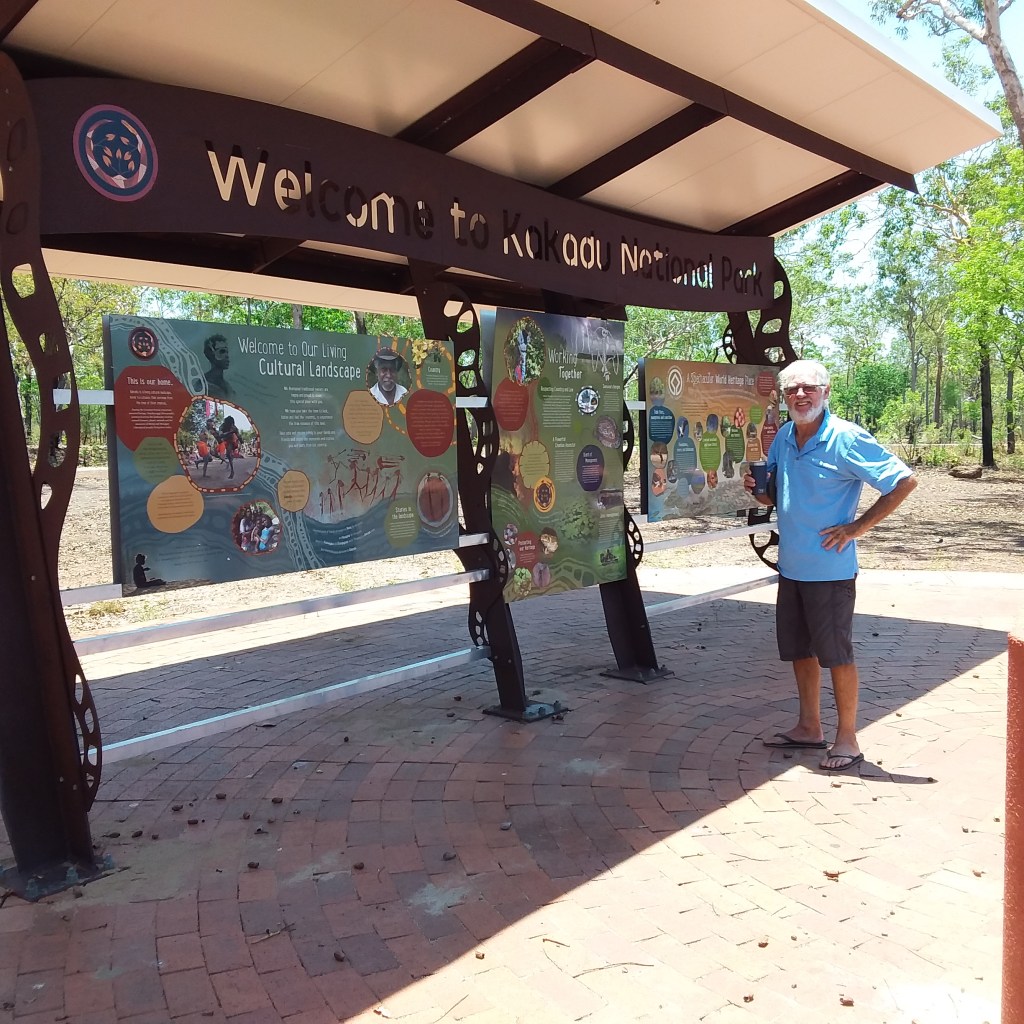
Entering Kakadu National Park, we drove straight to Jabiru to have lunch and a look around.

They say only mad dogs and Englishmen go out in the midday sun, but with 40 degrees forecast for the whole week ahead, we had no choice but to do our exploring in the searing heat of the day.

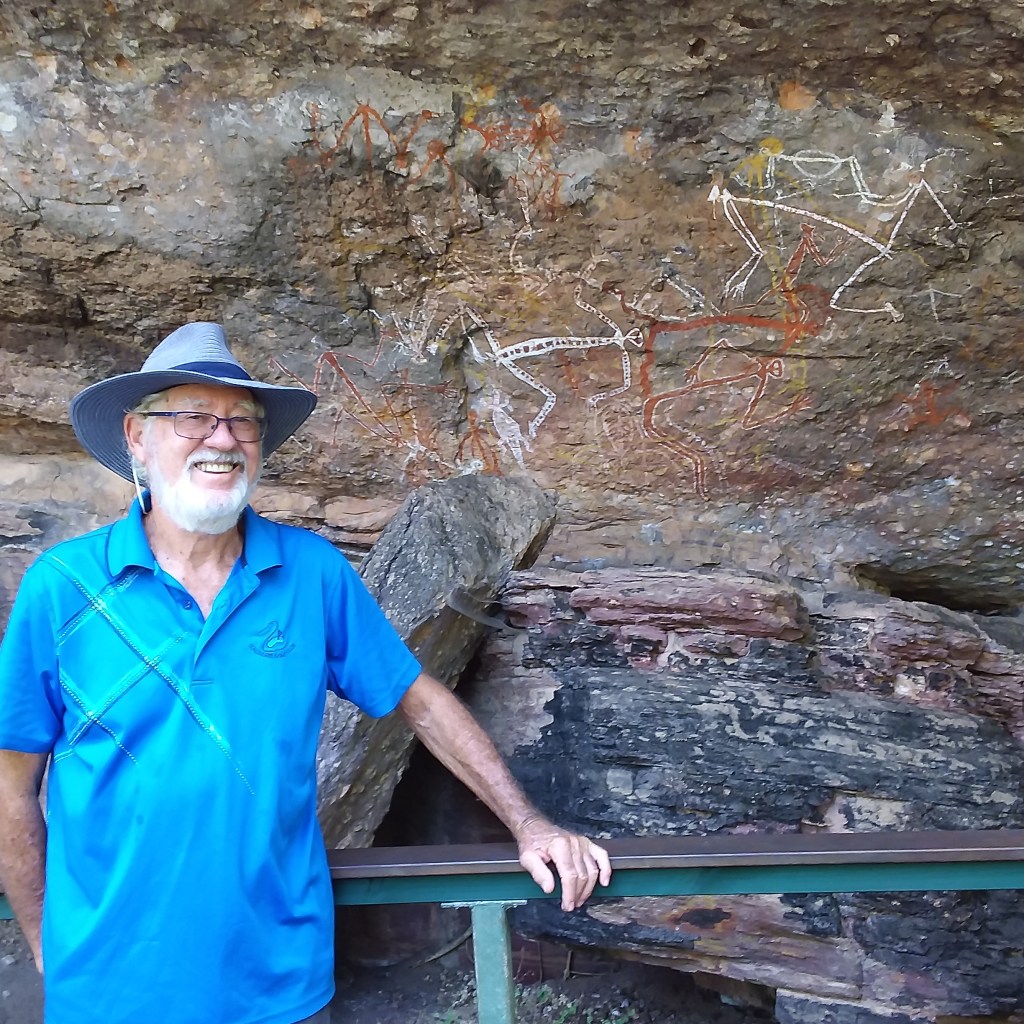
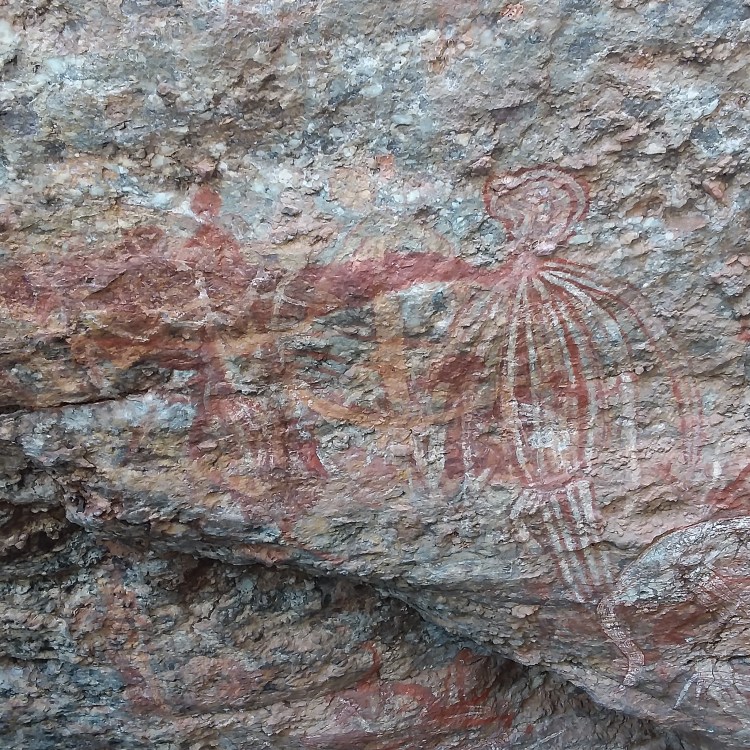
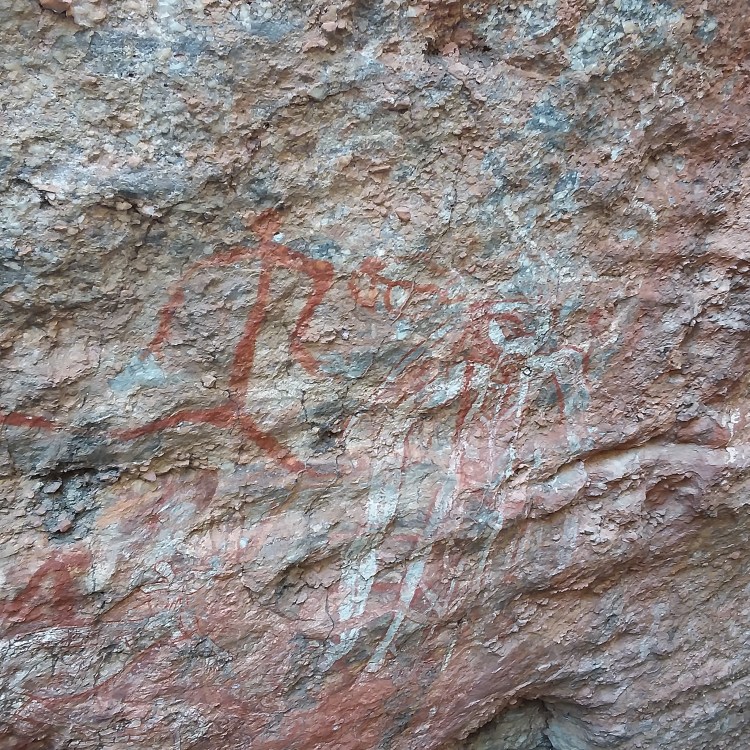
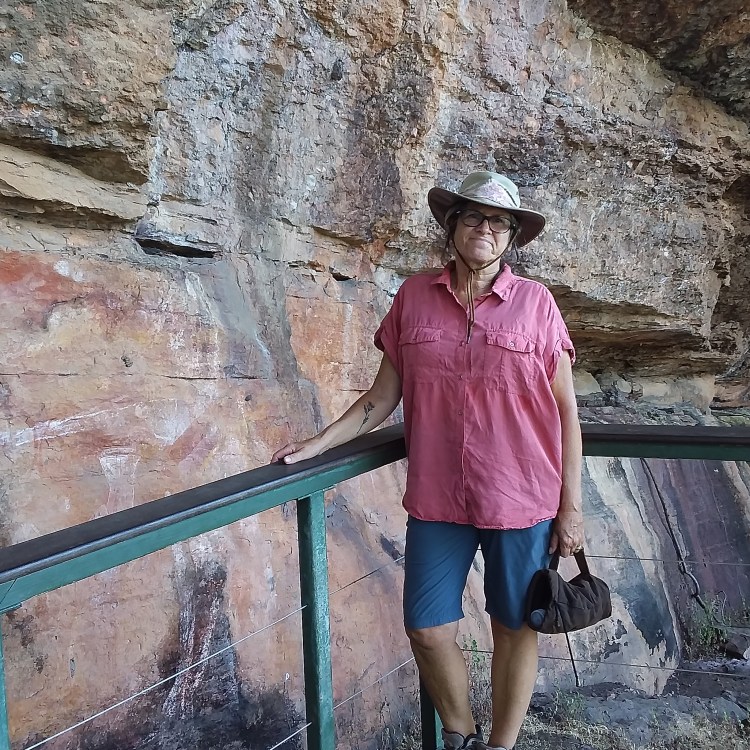
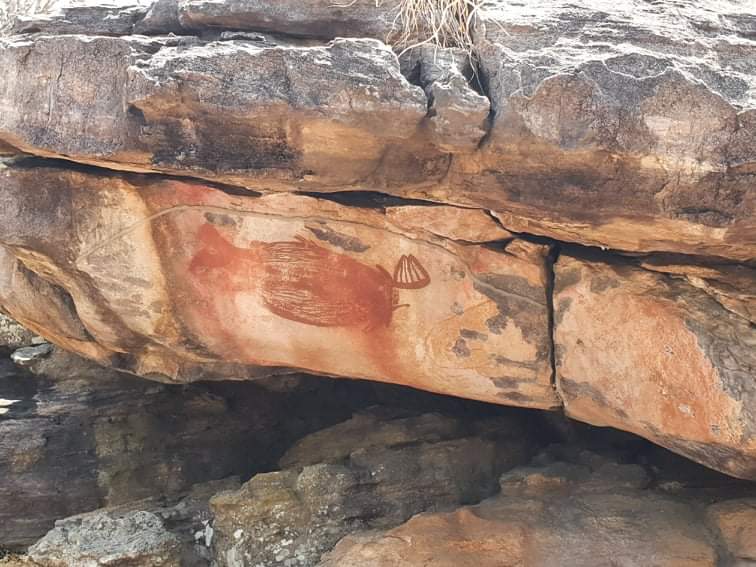
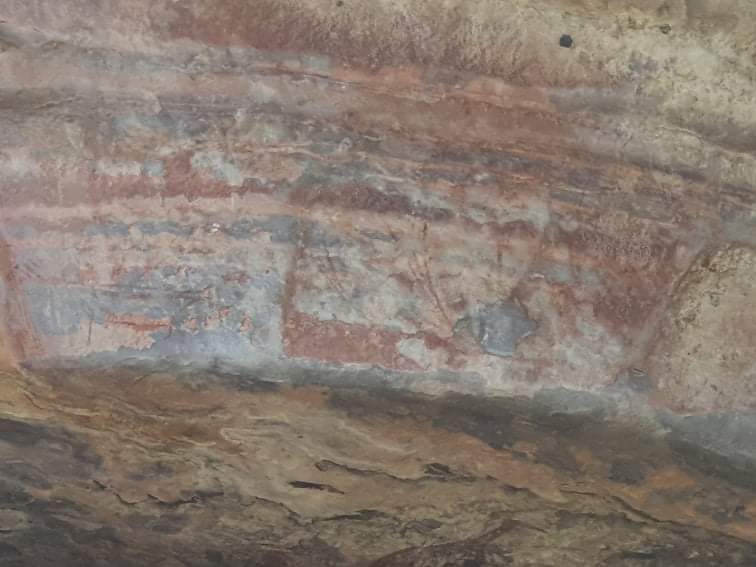
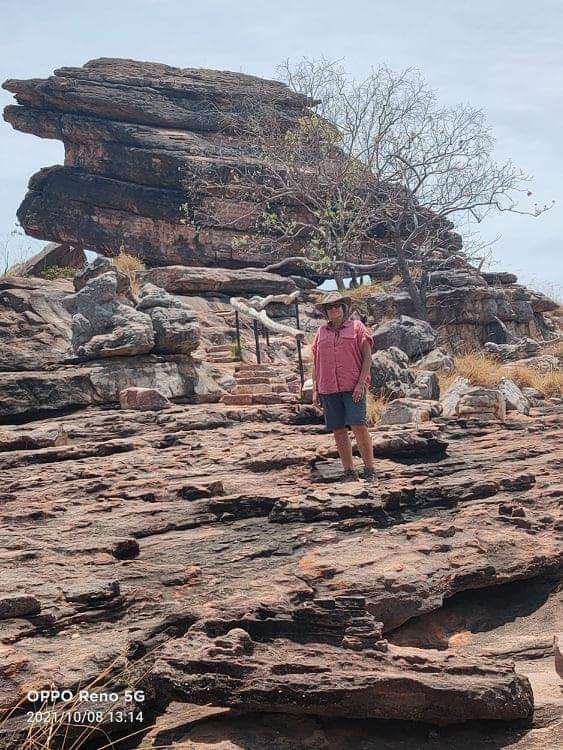
We began at Nourlangie as we hoped to see some Aboriginal Rock Art. And we saw a lot more than we bargained for. It was incredible.

We left Nourlangie feeling very satisfied with the ancient rock art we had seen. Some were as old as 20,000 years, others relatively new – 5,000 to 1,000 years old. However, there was a lot more to see at Ubirr.

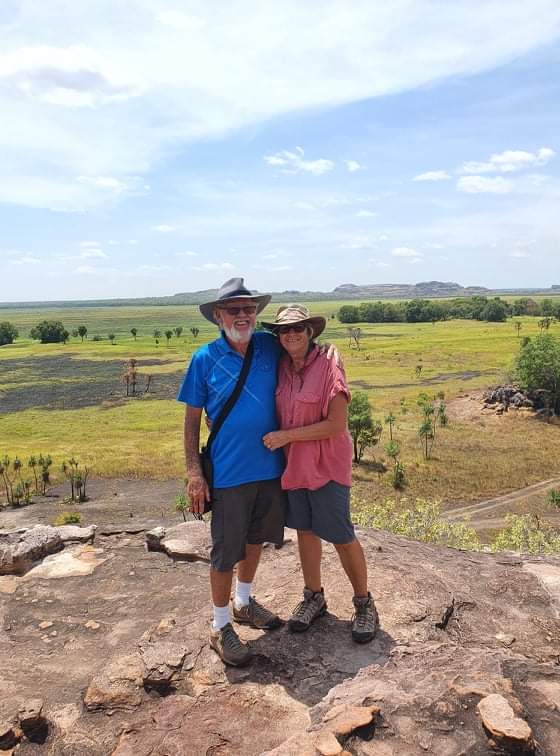
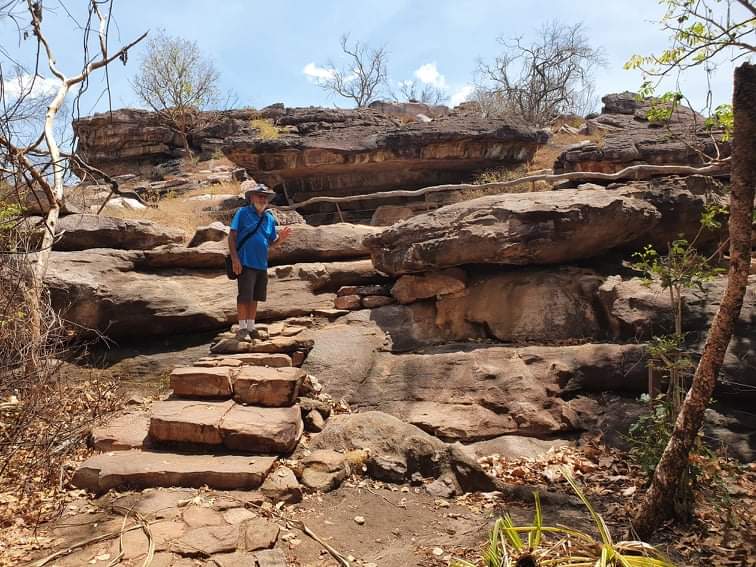
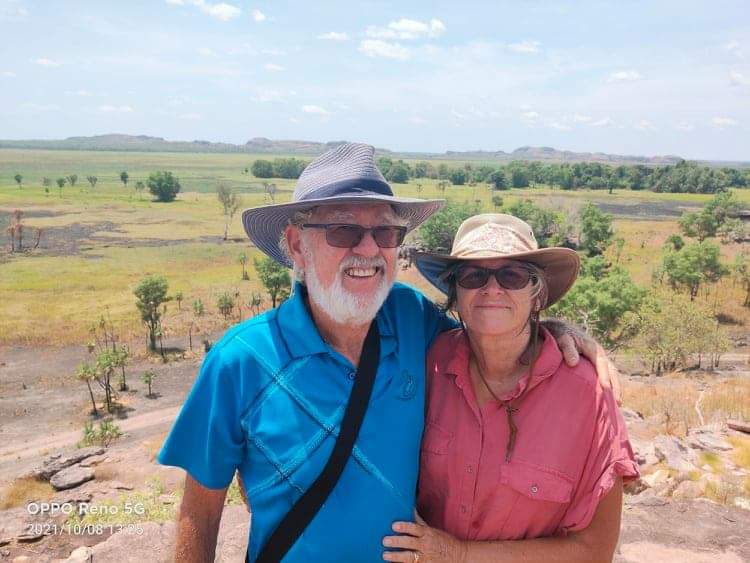
Because of the heat (and the fact that I was battling a sore throat), we agreed to look at some of the rock art only and to forget walking up to the lookout. But we ended up doing it all as it was far too fabulous to stop!

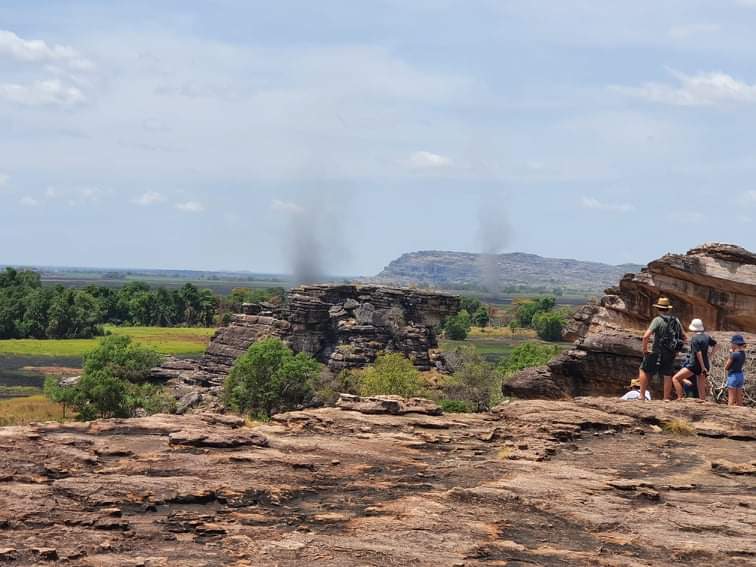
As we reached the top, two willy willies came across the Plains. It just added to the amazing view of the wetlands.

view from the lookout at Ubirr

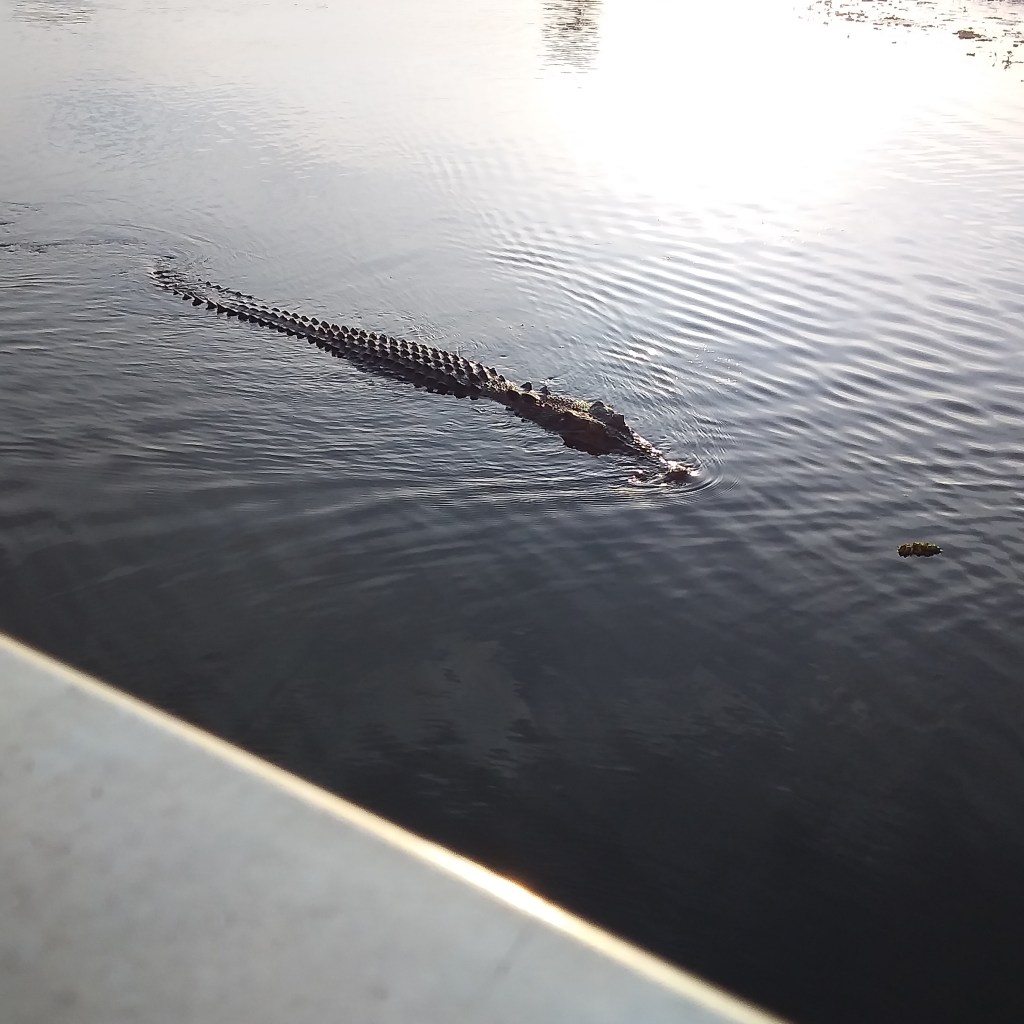
Next stop was Cahill’s Crossing where we hoped we might see some crocodiles. We were told they gathered there at high tide to catch Barramundi as they swam through. Sure enough they were there waiting. I counted at least fourteen crocs!

Cahill’s Crossing

We watched while trucks and 4 wheel drives made the crossing but were worried, as the tide got higher, when a couple of sedans crossed.

Kyran and Vanessa had bought us a gift voucher for a Yellow Water Cruise. So the following morning we were taken by bus to the boat for 6.45am start.

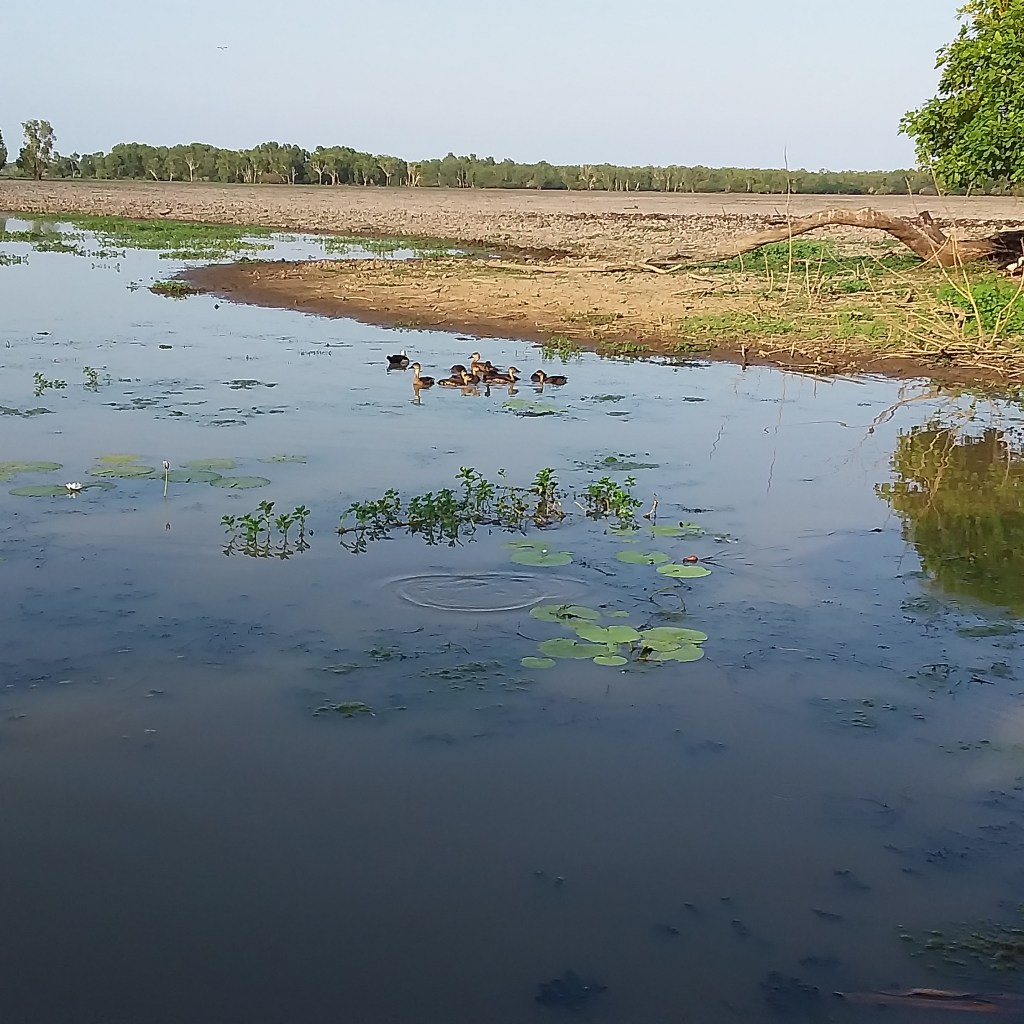
There’s nothing nicer than an early morning cruise, sitting in the shade of the boat with a cool breeze keeping the heat at bay. But that was only the beginning. We cruised the Yellow Water billabongs, enjoying the views of the wetlands and learning about the rich variety of resident wildlife. The skipper identified the many birds, plants and trees and explained their importance in the fascinating ecosystem of the wetlands. She was always happy to answer questions and double back to see something one of the kids onboard had seen. They had younger eyes than us and spotted wild pigs and also a crocodile’s skull.

We pulled up beside at least fifty crocodiles and watched them stalk their prey. In fact we saw one near us catch and eat a Barramundi. We watched another try to pick a fight with a nearby crocodile but the ‘victim’ raised its head out of the water and let out a very loud growl. The skipper explained this was the croc saying it didn’t want to fight, and sure enough it took off with a splash.

It was a couple of hours well spent. Thanks so much Kyran and Vanessa. We thoroughly enjoyed cruising Yellow Waters and seeing the amazing wildlife.

That evening we went back down to the boat ramp to watch the sun setting over the wetlands. It was beautiful.

Kakadu has been on my bucketlist for a very long time and it didn’t disappoint. We did plan another stopover on the way out but both Gunlom and Mary River Roadhouse were already closed for the wet season , so we kept driving. On the way we saw lots of wild donkeys, brumbies, wallabies and buffalo.

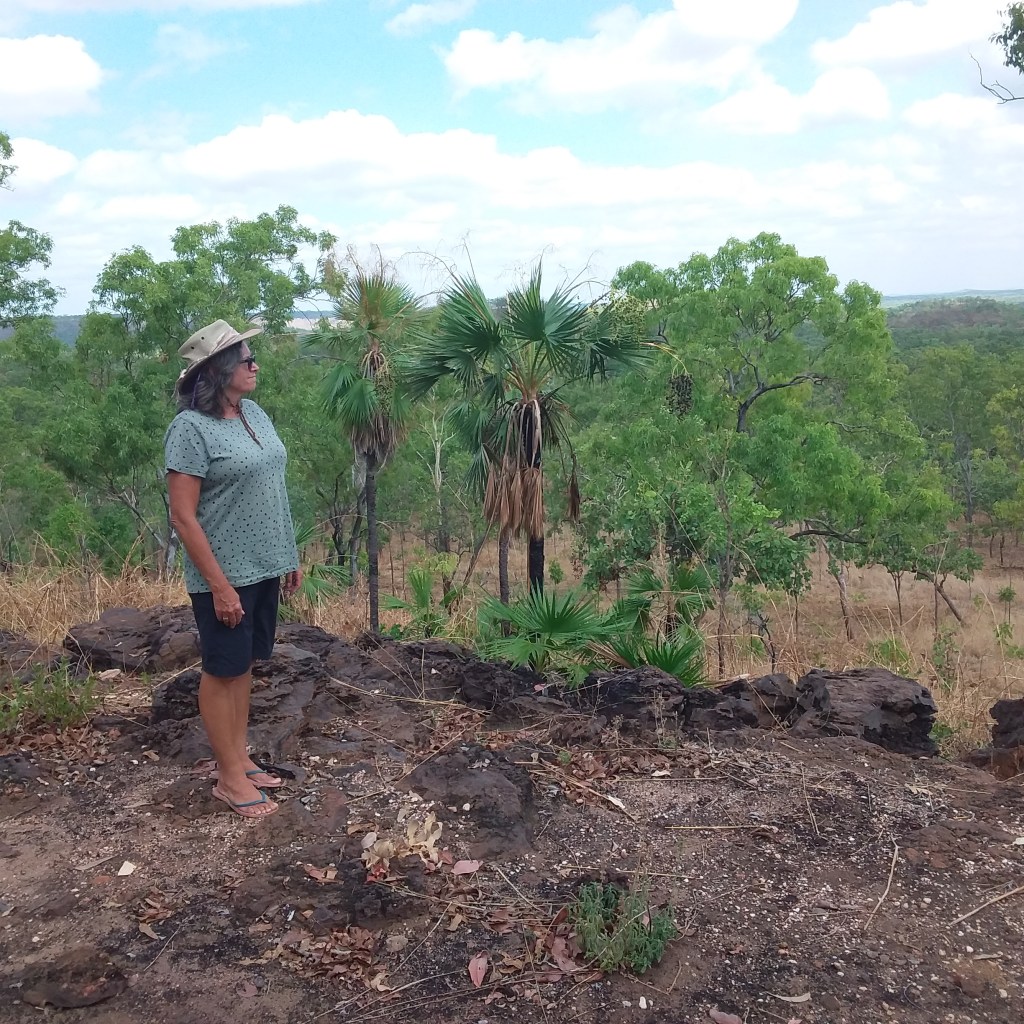
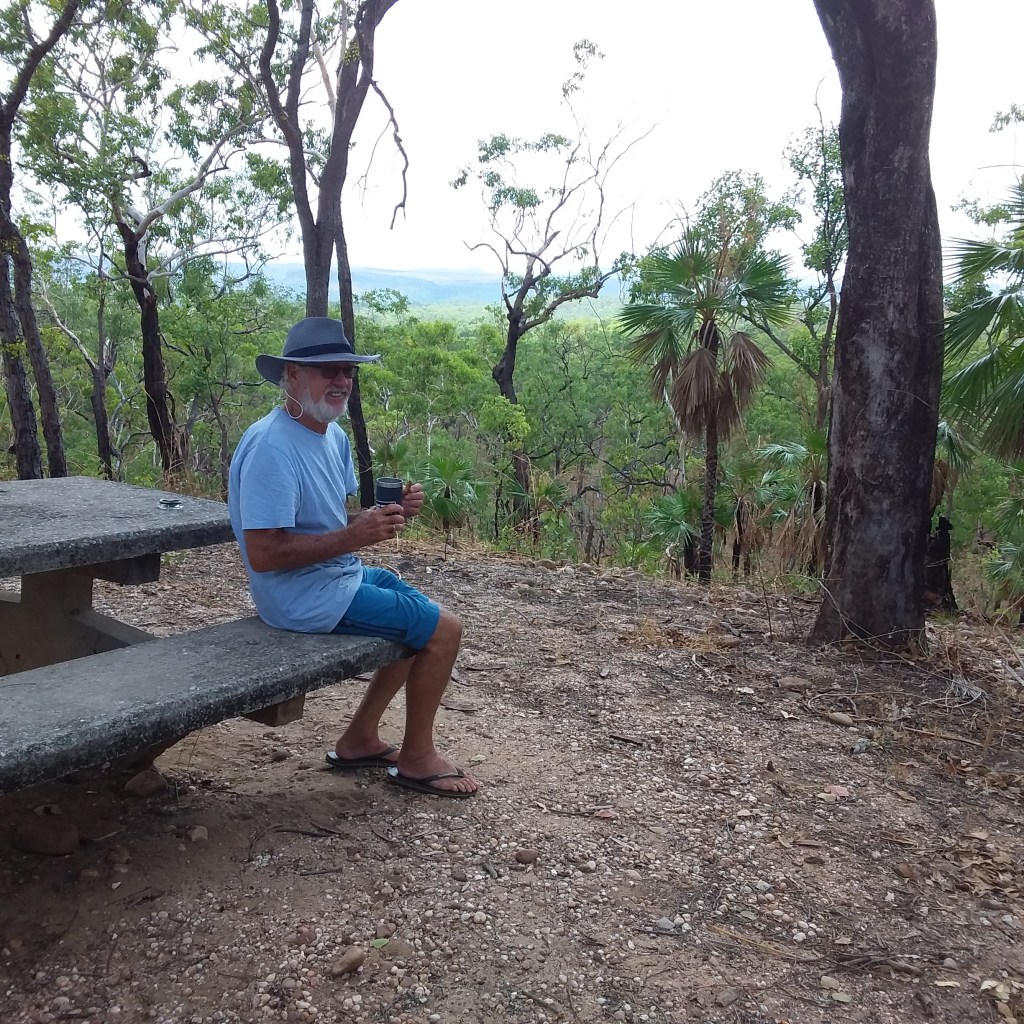
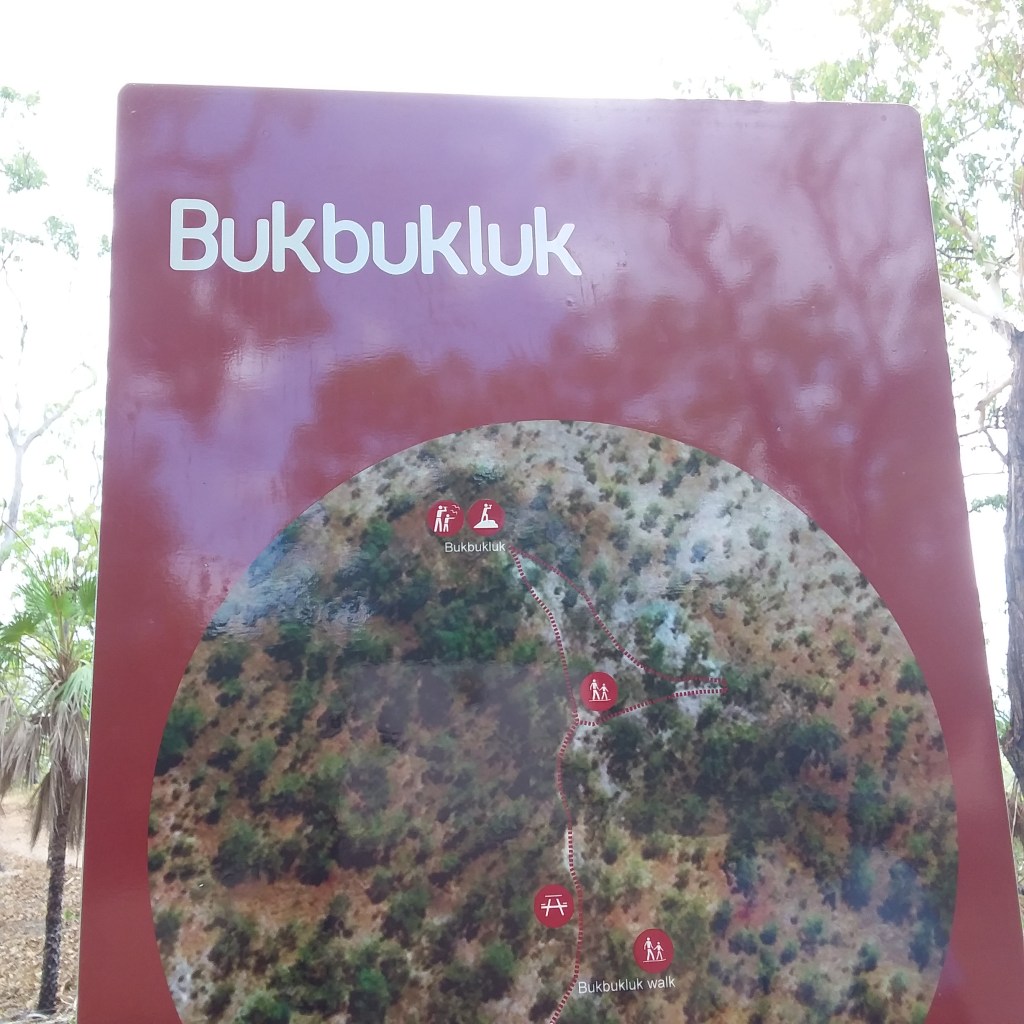
We did pull off the road for a cuppa at Bukbukluk, a beautiful, peaceful spot.

A Must-See if you visit Darwin!

We drove to Stoke’s Wharf in the city to visit the Royal Flying Doctor Service and the Bombing of Darwin exhibitions. Wow! It was great. The RFDS had one of their planes on display for visitors to check out. They also had a couple of holograms of RFDS nurses who talked to us, giving extra information. And, lastly, they had a short film with a hologram of John Flynn, the founder of the RFDS, telling his story of how it all began and expanded through the years. It was very interesting.

We enjoyed looking through the RFDS plane

The WW2 Bombing of Darwin by the Japanese display took up the the rest of the building and was fantastic! We started with another hologram film narrated by the captain of a ship that was bombed in Darwin Harbour. We learned so much about what happened. In the centre of the exhibition was a platform. Every so often an air raid siren would sound and we were told to hop onto the platform. The lights dimmed and the noise of bombs dropping was all around us. Out the windows we could see Japanese bombers coming towards us and bombs going off in the sea. It really gave us a sense of what it would have been like to be there at the time.

The best was yet to come though. We picked up the goggles for a virtual reality show and that was incredible. Suddenly we were thrust into the middle of the bombing with noise and chaos all around. One minute we were on the ground avoiding being hit by bombs, then we were up in the clouds next to a fighter pilot. It was fantastic!

We would highly recommend anyone visiting Darwin to go along. It is so worthwhile. However, I must say very little kids might find it frightening.

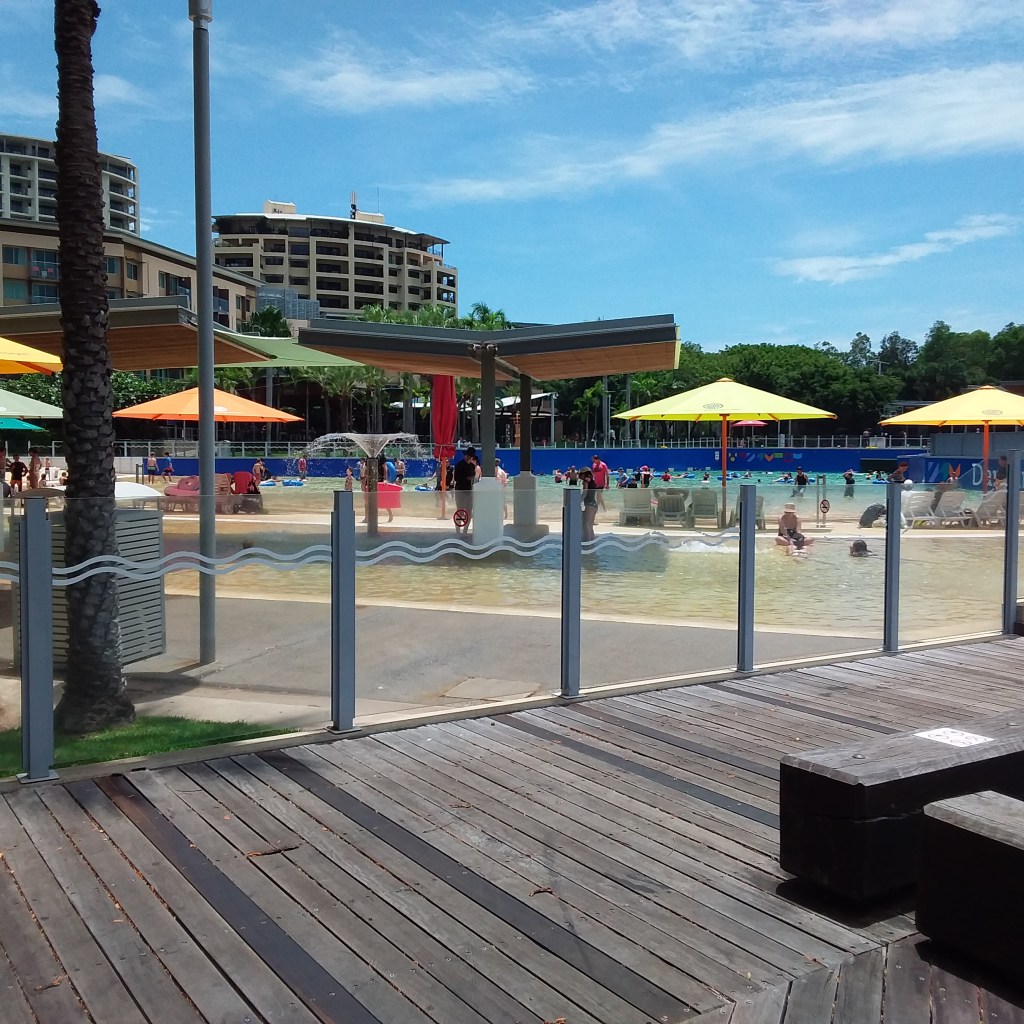
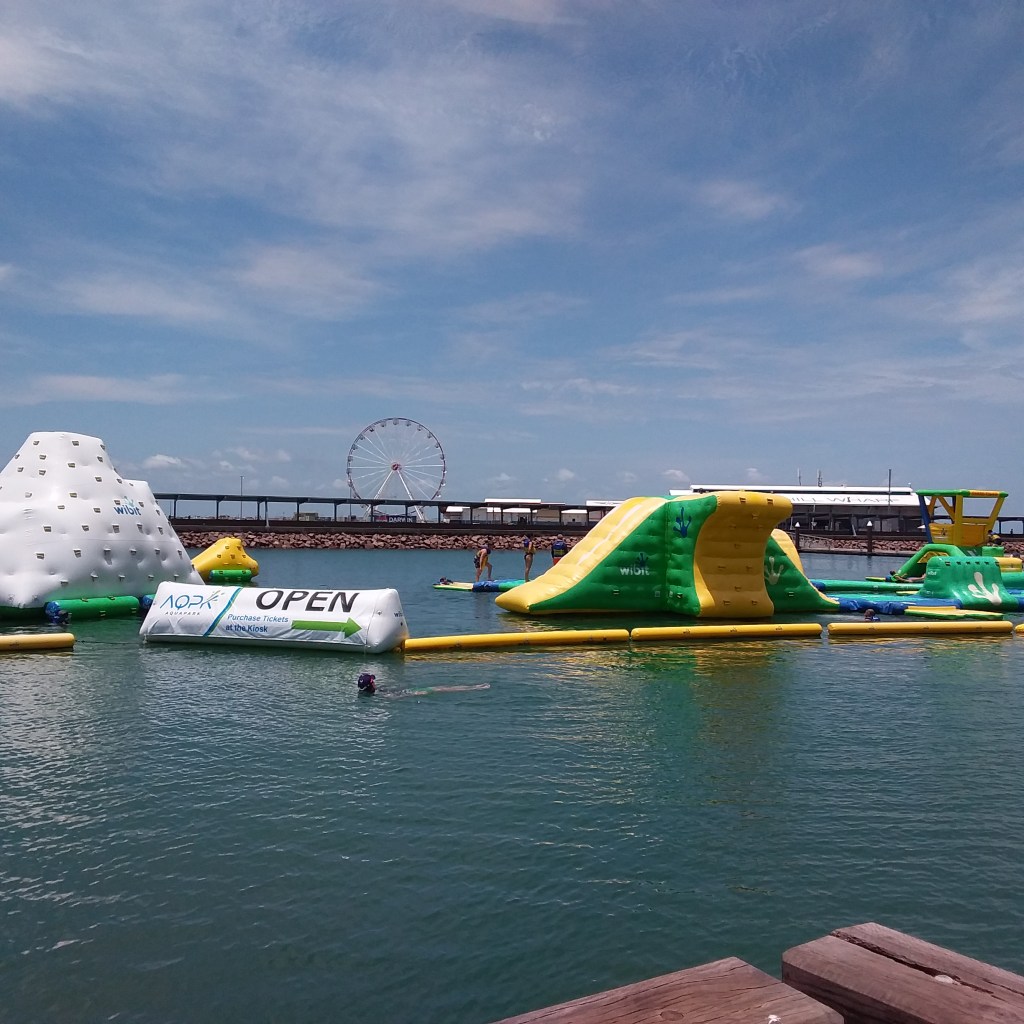
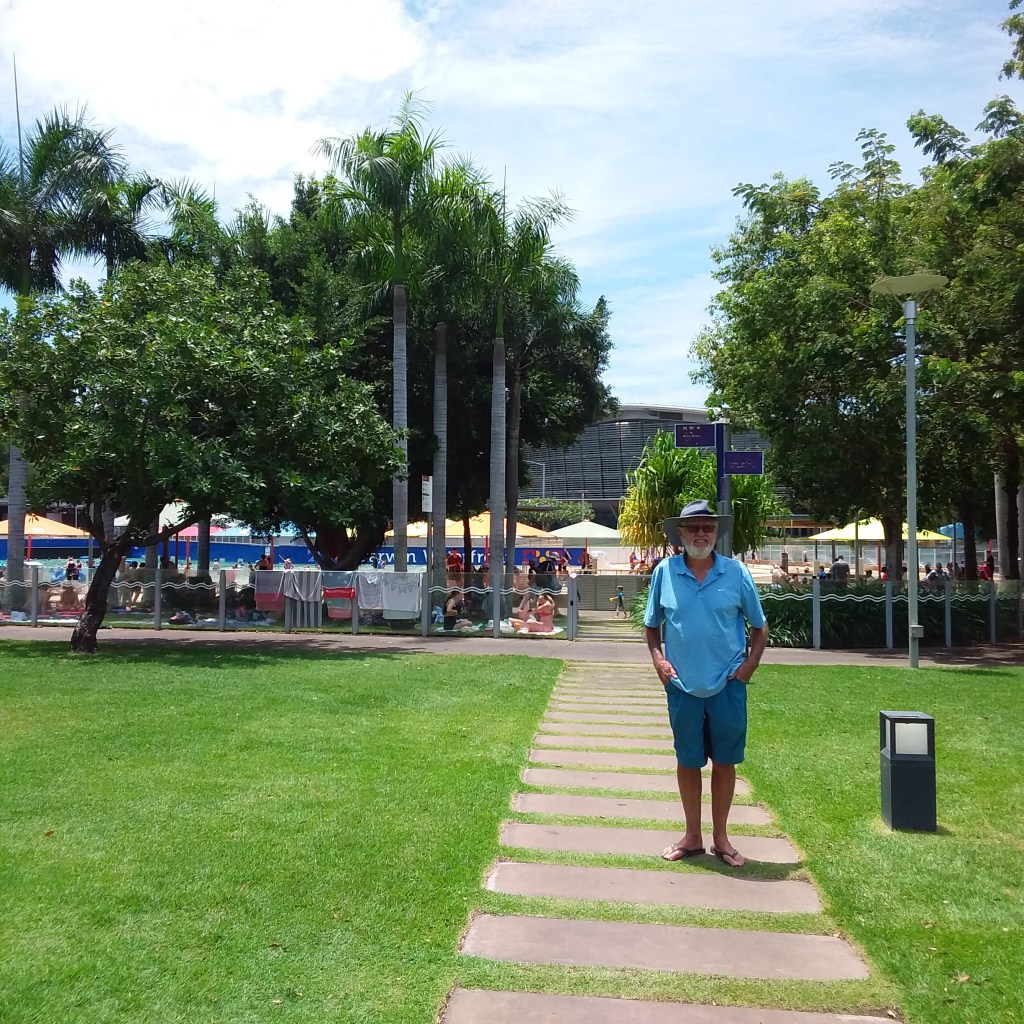
We spent a little while in the gift shop before heading off for coffee. There were quite a few food outlets at the Wharf but, unfortunately no cafe. So we drove five minutes across to the waterfront which was bustling. People were enjoying their Sunday morning swimming at the wave pool or beach, cycling, walking, riding scooters around or, like us, enjoying a relaxing coffee and taking it all in.

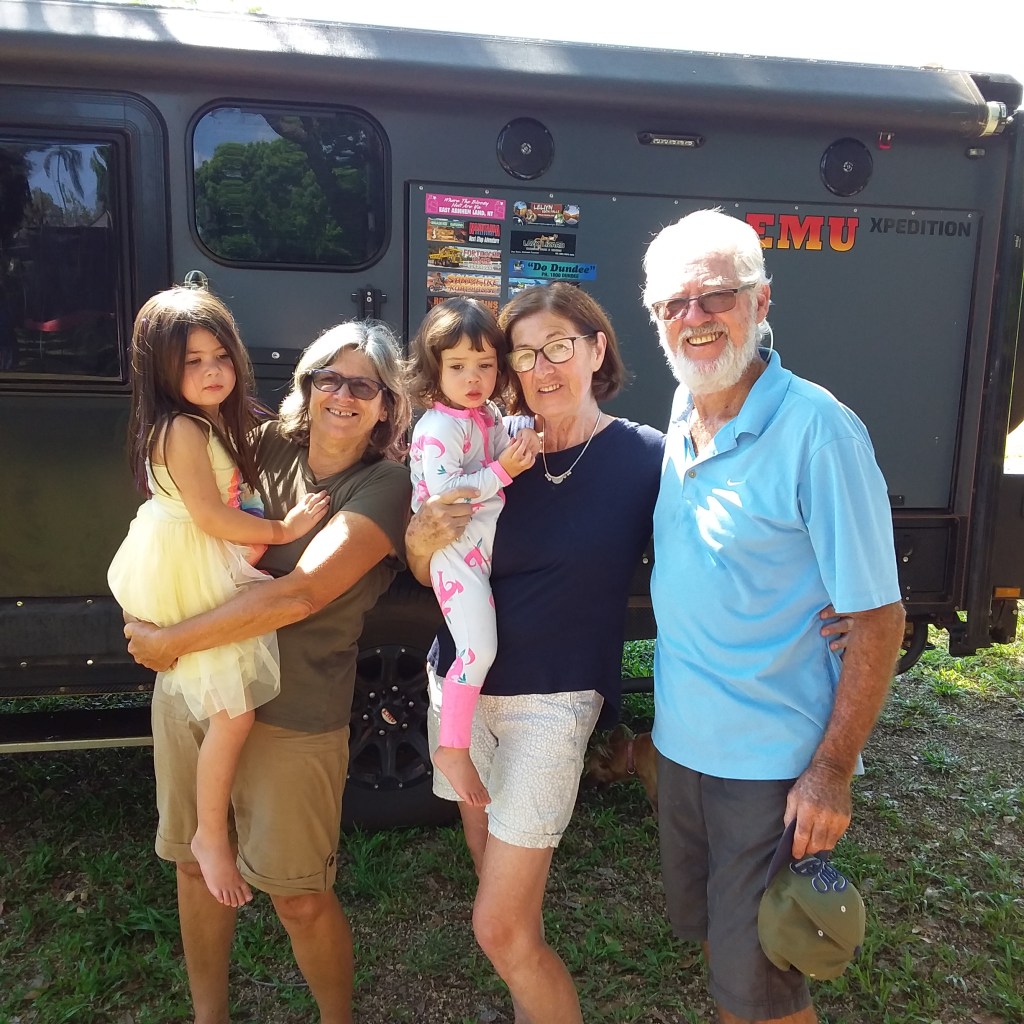
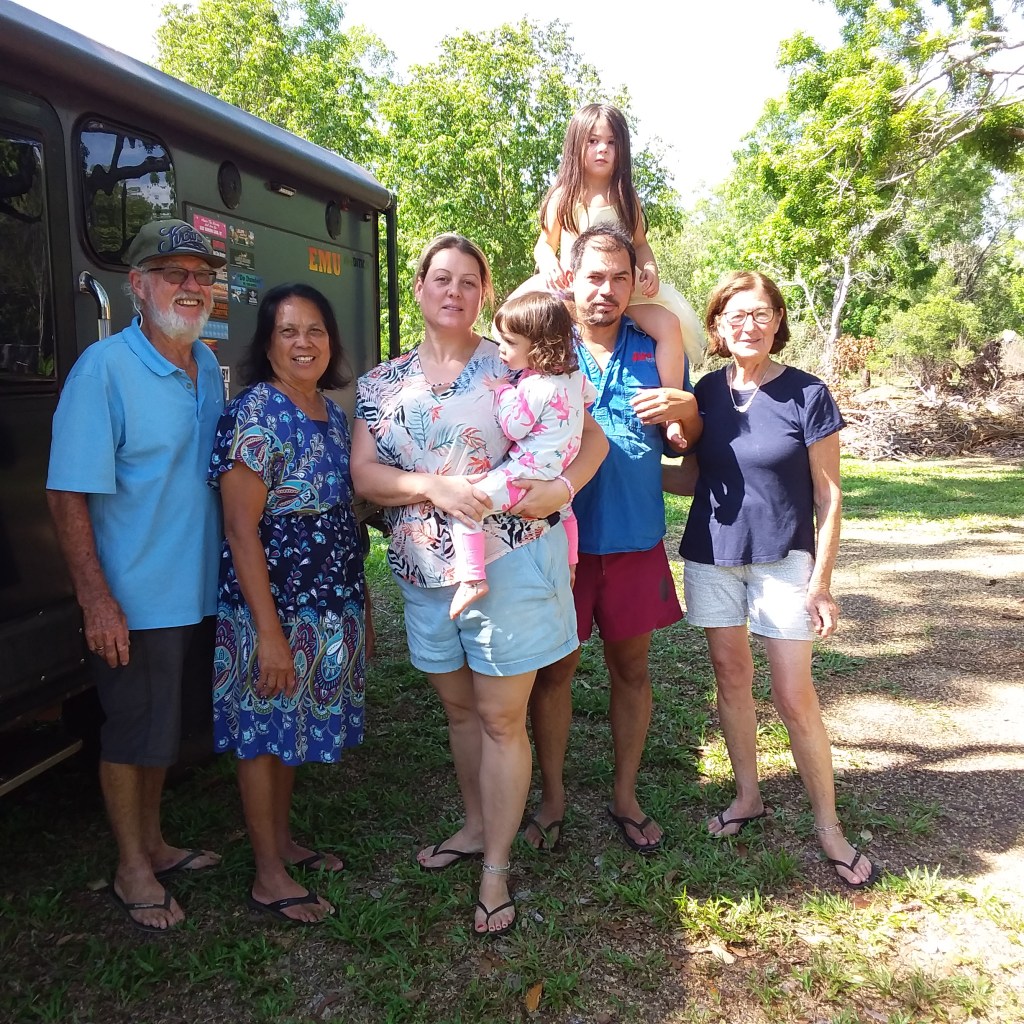
We had a terrific couple of weeks in Darwin. It was lovely to catch up with family and use Summer and Stewart’s place as a base. Although we were looking forward to seeing Kakadu, we also felt sad leaving them.

bye for now